




Can teething really cause your baby’s runny nose?
Your little one is drooling and gnawing on everything, and suddenly, a runny nose appears. Everyone from Grandma to Google blames teething.
But here’s the truth pediatricians don’t want you to miss: teething doesn’t cause runny noses.
Understanding this distinction helps you treat symptoms correctly and explains whether teething causes a runny nose. It also helps you recognize when your baby actually needs medical attention beyond teething remedies.
Can Teething Cause a Runny Nose?
No, teething does not directly cause a runny nose. Medical research shows no scientific connection between teething and nasal congestion.
The confusion exists because teething occurs between 6 and 24 months, when babies get frequent colds due to developing immune systems.
Teething babies also put their hands and objects in their mouths constantly, spreading germs that cause viral infections.
Real teething symptoms: Gum swelling, drooling, irritability, mild discomfort
NOT teething symptoms: Runny nose, cough, high fever
If your teething baby has a runny nose, it’s likely a coincidental cold.
Consult your pediatrician if the fever exceeds 100.4°F or symptoms worsen.
Why Teething and a Runny Nose Often Happen at the Same Time

Teething and runny noses coincide due to timing, not causation.
- Peak timing overlap: Babies teethe between 6 and 24 months, the same period when they catch 6-8 colds per year as their immune systems develop.
- Increased germ exposure: Teething babies constantly put their hands, toys, and objects in their mouths to soothe their gums. This hand-to-mouth behavior spreads viruses, causing more frequent colds.
- Daycare exposure: Many babies start daycare during teething age, encountering more viruses from other children.
- Developing immunity: Babies are building immunity to common viruses during this period. Each cold is a normal immune development, not a teething symptom.
Parents see drooling, fussiness, and a runny nose together and assume it’s all teething, when the runny nose is actually from a coincidental viral infection.
Teething Runny Nose vs Cold: How to Tell the Difference
Teething doesn’t cause a runny nose; colds do.
| Teething Symptoms | Cold Symptoms |
|---|---|
| Clear drooling from the mouth | Runny nose with mucus |
| Swollen, red gums | Nasal congestion, sneezing |
| Chewing on objects | Cough, sore throat |
| Mild fussiness | Decreased appetite, lethargy |
| Temp under 100.4°F (if any) | Fever above 100.4°F possible |
| Lasts 3-5 days per tooth | Lasts 7-10 days |
If your baby has actual nasal discharge (not just drool), it’s a cold or viral infection, not teething. Both can happen simultaneously, so address each symptom appropriately.
Can Teething Cause Congestion, Sneezing, or a Cough?
No, teething does not cause congestion, sneezing, or coughing. These are respiratory symptoms from viral infections or allergies, not teething.
Why these aren’t teething symptoms:
Teething is localized to the gums where teeth emerge. It doesn’t involve the respiratory system or nasal passages.
Congestion, sneezing, and coughing result from viruses triggering immune responses in the airways, completely separate from tooth eruption.
The one exception:
Excessive drooling from teething can sometimes cause a mild cough when babies lie down and drool pools in the throat.
This is brief gagging or throat-clearing, not a persistent respiratory cough.
If your teething baby has congestion, sneezing, or persistent coughing, they have a coincidental cold or respiratory infection occurring during the same period.
How Long Is a Runny Nose Normal During Teething?
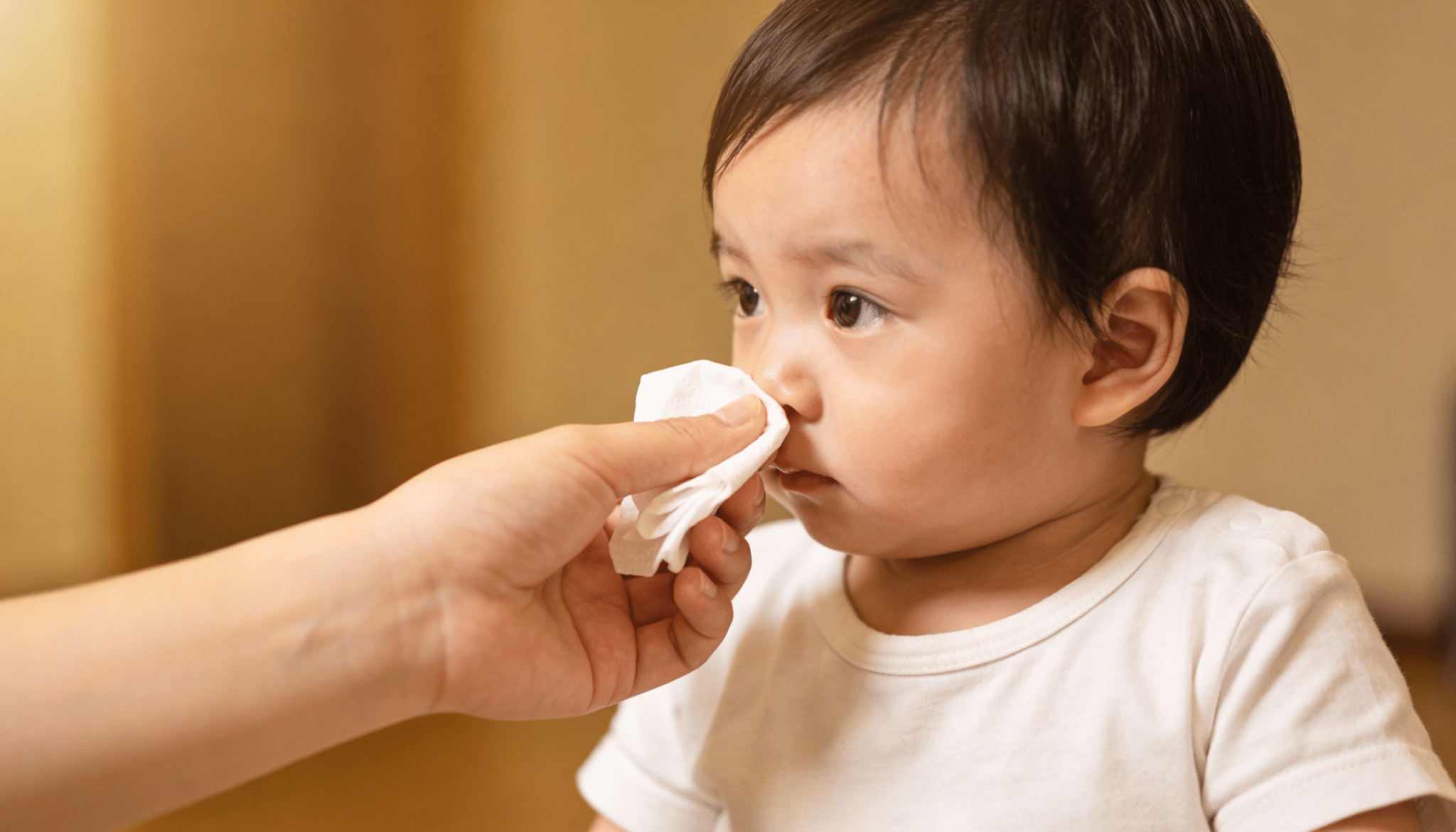
A runny nose is never normal during teething because teething doesn’t cause a runny nose.
If your baby has nasal discharge while teething, it’s from a separate viral infection.
A runny nose from a cold lasts 7-10 days in babies. It usually starts clear and watery, then may become thicker as the immune system fights the virus.
Each tooth causes discomfort for 3-5 days before breaking through the gum.
If nasal discharge lasts longer while gum swelling and irritability have resolved, it confirms the runny nose was from an illness, not teething.
When to call your pediatrician:
- Runny nose lasting over 10-14 days
- Thick, colored mucus for more than two weeks
- Fever above 100.4°F
- Difficulty breathing or eating
- Ear pulling or worsening symptoms
Any runny nose is a separate cold occurring during teething. Normal colds resolve in 7-10 days; anything longer needs medical evaluation.
What Parents Can Safely Do If Their Teething Baby Has a Runny Nose
Treat teething discomfort and runny nose symptoms separately; they’re unrelated issues.
For teething relief
- Chilled (not frozen) teething rings or clean teething toys
- Clean, wet washcloth to chew
- Gentle gum massage with a clean finger
- Pediatrician-approved acetaminophen or ibuprofen (age-appropriate dosing)
For a runny nose from a cold
- Saline nasal drops followed by gentle bulb syringe suction
- Cool-mist humidifier in baby’s room
- Frequent nursing or formula to maintain hydration
- Elevate crib mattress slightly (never use pillows)
- Keep nasal passages clear before feedings and sleep
What to avoid
- OTC cough/cold medications (dangerous for babies under 4)
- Homeopathic teething tablets or gels with benzocaine (FDA warning)
- Amber teething necklaces (choking/strangulation hazard)
- Aspirating nose too frequently (irritates membranes)
Conclusion
Can teething cause a runny nose? No. While teething causes gum discomfort and drooling, runny noses come from separate viral infections that happen to occur during the same timeframe.
This distinction matters because dismissing symptoms as “just teething” can mean missing a real illness that needs treatment.
If your baby has a fever above 100.4°F, a persistent runny nose beyond 10 days, or difficulty breathing, call your pediatrician.
Trust your instincts; if something feels wrong beyond normal teething fussiness, seek medical advice.
Your baby’s health comes first.