

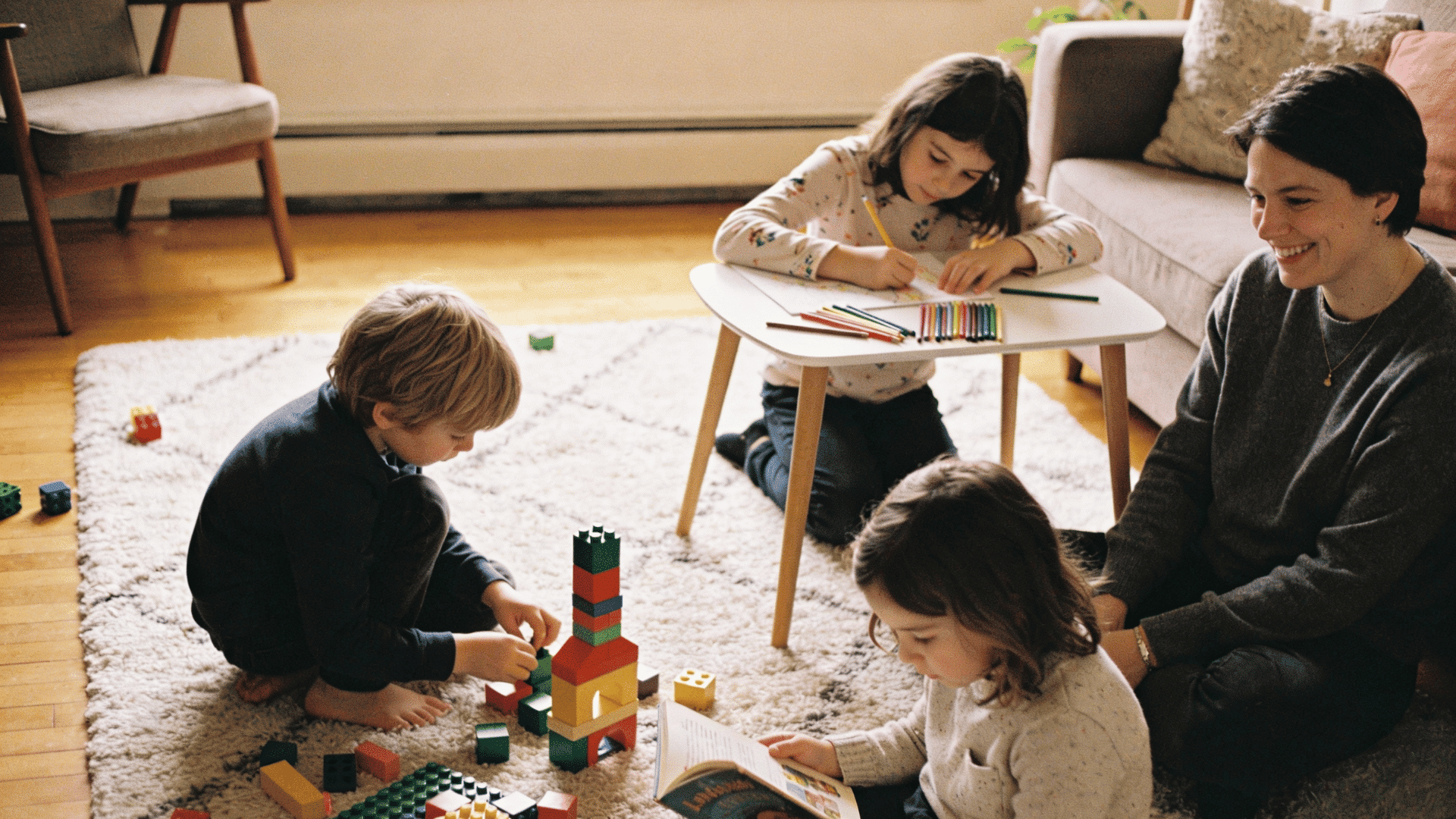
“I’m bored!” Sound familiar?
If you’re tired of hearing those words on repeat, you’re in the right place. This blog has simple indoor fun activities for kids at home that actually work, sorted by energy level and age, so you can find the perfect fit fast.
No fancy supplies. No complicated setup. Just fun, engaging activities using things you already have at home.
Ready to banish boredom for good? Let’s get started.
Fun Activities for Kids at Home by Energy Level
Engaging indoor activities categorized by energy level to match your child’s current state, from high-energy games to calm, focused pursuits for every moment of the day.
High-Energy Activities
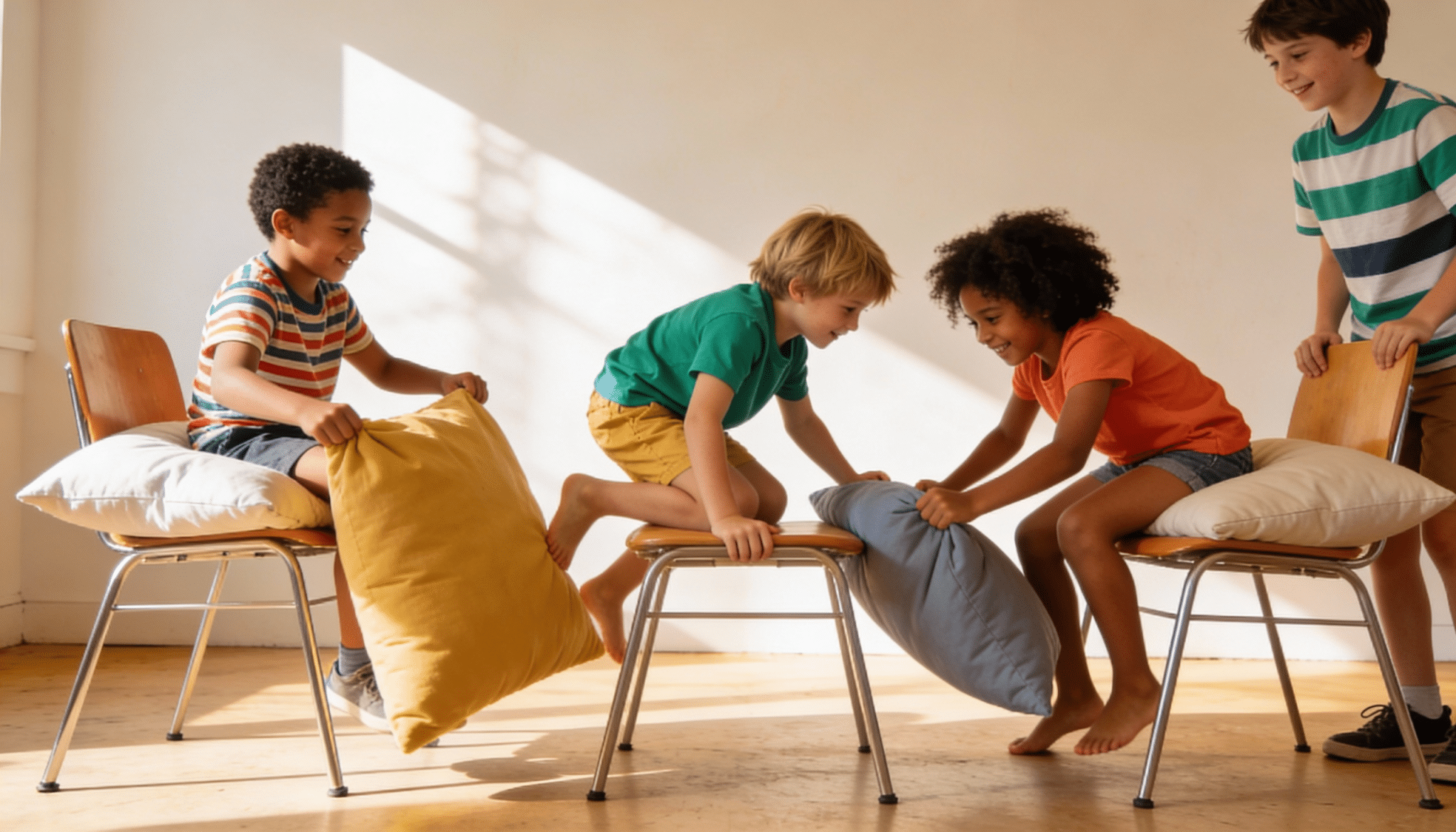
Get those wiggles out with these fun activities for kids at home that help kids burn energy, improve coordination, and stay engaged through movement-based play.
1. Indoor Obstacle Course with Cushions
Convert your living room into an adventure zone by arranging couch cushions, pillows, and furniture to create a challenging path.
Kids can crawl under tables, jump over cushion stacks, and balance along taped lines on the floor.
Tip: Time each round and encourage kids to beat their personal best rather than competing against siblings to keep things positive.
2. Freeze Dance Challenge
Crank up favorite songs and let kids dance freely until the music stops, then they must freeze in place like statues.
Anyone who moves or wobbles is out for that round. The unpredictability keeps children engaged and laughing while getting their heart rates up.
3. Balloon Volleyball
Set up a “net” using string or tape stretched across the room, then use an inflated balloon as your ball.
Kids can hit it back and forth without the risk of breaking anything or getting hurt.
The slow-motion nature of balloon movement makes it perfect for younger children while still providing active play.
4. Animal Movement Race (Hop, Crawl, Waddle)
Create a race course where kids must move like different animals, hop like a bunny, crawl like a bear, or waddle like a penguin.
At random intervals, introduce new animals to keep the kids engaged.
Tip: Let kids take turns being the “caller” who chooses which animal everyone should imitate next.
5. Indoor Scavenger Hunt with Clues
Write age-appropriate clues that lead from one household item to the next, ending with a small prize or treat.
Each clue should describe the next location using riddles or simple descriptions.
This gets kids moving throughout the house while exercising their problem-solving skills.
6. Kids Yoga Flow
Lead children through simple yoga poses designed for their age group, holding each position for a few breaths.
Include fun animal-themed poses like downward dog, cat-cow, and butterfly.
Yoga improves flexibility, balance, and body awareness while teaching breathing techniques that help with emotional regulation.
7. Sock Basketball (Laundry Basket Hoop)
Roll up clean socks into balls and position a laundry basket across the room as your hoop. Kids can take shots from different distances, earning points based on how far away they stand.
Move the basket to new locations to keep the challenge fresh and exciting.
Tip: Create different “levels” by varying the distance, with harder shots worth more points.
8. Musical Chairs
Set up chairs in a circle (one fewer than the number of players) and play upbeat music.
When the music stops, everyone rushes to sit down, and whoever’s left standing is out. Continue removing chairs until only one winner remains seated.
9. Simon Says (Movement-Only Version)
Play the classic game but focus exclusively on physical actions like jumping, spinning, touching toes, or doing arm circles.
Only perform the action if the leader says “Simon says” first. This tests listening skills and self-control while keeping bodies active.
10. Shadow Tag Using a Lamp
Turn off most lights and use a bright lamp to create shadows on the wall.
One player tries to “tag” another player’s shadow by touching it with their own. The constantly shifting shadows add an exciting twist to traditional tag without requiring much space.
Medium-Energy Activities
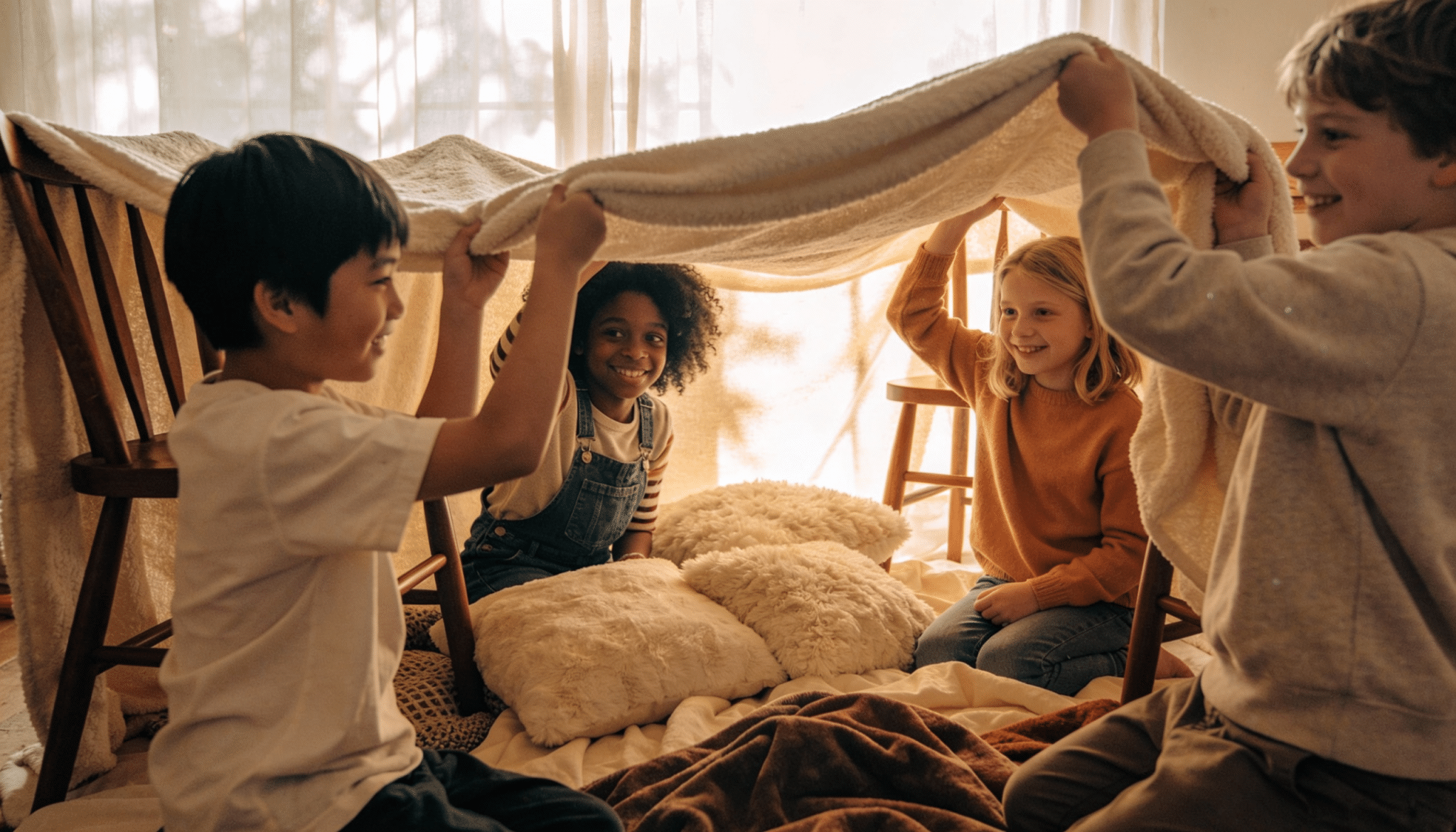
Balance activity and focus with hands-on projects and creative fun activities for kids at home that keep kids engaged without overwhelming them, perfect for midday entertainment.
11. Blanket Fort Engineering Challenge
Provide sheets, blankets, clothespins, and cushions, then challenge kids to design and build the most creative fort possible.
They can create tunnels, rooms, or secret entrances using furniture as anchor points.
Tip: Once built, equip the fort with flashlights and books to extend the activity into reading time.
12. Pretend Restaurant with Menus
Kids can create their own restaurant complete with hand-drawn menus, a kitchen area, and a dining section.
They take turns being servers, chefs, and customers, practicing social skills and creativity.
Use play food or snacks to make the experience more realistic and engaging.
13. Board Game Rotation Hour
Set up several age-appropriate board games around the house and rotate between them every 15-20 minutes.
This prevents boredom while teaching kids different game rules and strategies. Choose a mix of competitive and cooperative games to vary the experience.
14. Card Games (Go Fish, Old Maid)
Teach traditional card games that are simple enough for young children but still entertaining. These games develop memory, matching skills, and turn-taking patience.
A standard deck of cards can provide hours of different gaming options.
15. Bake-and-Decorate Cookies
Mix up simple cookie dough and let kids help with measuring, mixing, and cutting shapes. After baking and cooling, set out frosting and sprinkles for creative decorating.
This teaches following directions and measurement while resulting in a tasty reward that everyone can enjoy.
Tip: Use pre-made dough or slice-and-bake cookies if time is limited.
16. LEGO Speed Build Challenge
Give each child the same number of LEGO pieces and set a timer for 10-15 minutes.
They must create something specific (a house, vehicle, or animal) within the time limit. Compare the different interpretations and creativity at the end.
17. Dress-Up Character Role Play
Pull out costumes, old clothes, hats, and accessories for kids to create characters and act out scenes.
They can become superheroes, princesses, doctors, or any person they imagine.
This type of imaginative play builds confidence and storytelling abilities.
18. Puppet Theater Performance
Create simple puppets from socks, paper bags, or popsicle sticks, then set up a “stage” using the back of a couch.
Kids can perform stories they know or make up new adventures for their puppet characters.
This encourages public speaking and creative narrative development.
19. Indoor Camping Setup
Pitch a small tent or create a camping area with sleeping bags and flashlights.
Make “campfire” snacks like s’mores in the microwave and tell stories. This brings outdoor adventure inside and creates a special, novel experience in a familiar space.
Tip: Add camping-themed activities like “fishing” with a stick and magnet for paper fish.
20. DIY Marble Maze
Use cardboard, paper towel tubes, tape, and scissors to construct a marble run down a wall or large cardboard piece.
Test different angles and pathways to see which design makes the marble move fastest.
This combines engineering principles with hands-on construction.
Low-Energy/Calm Activities
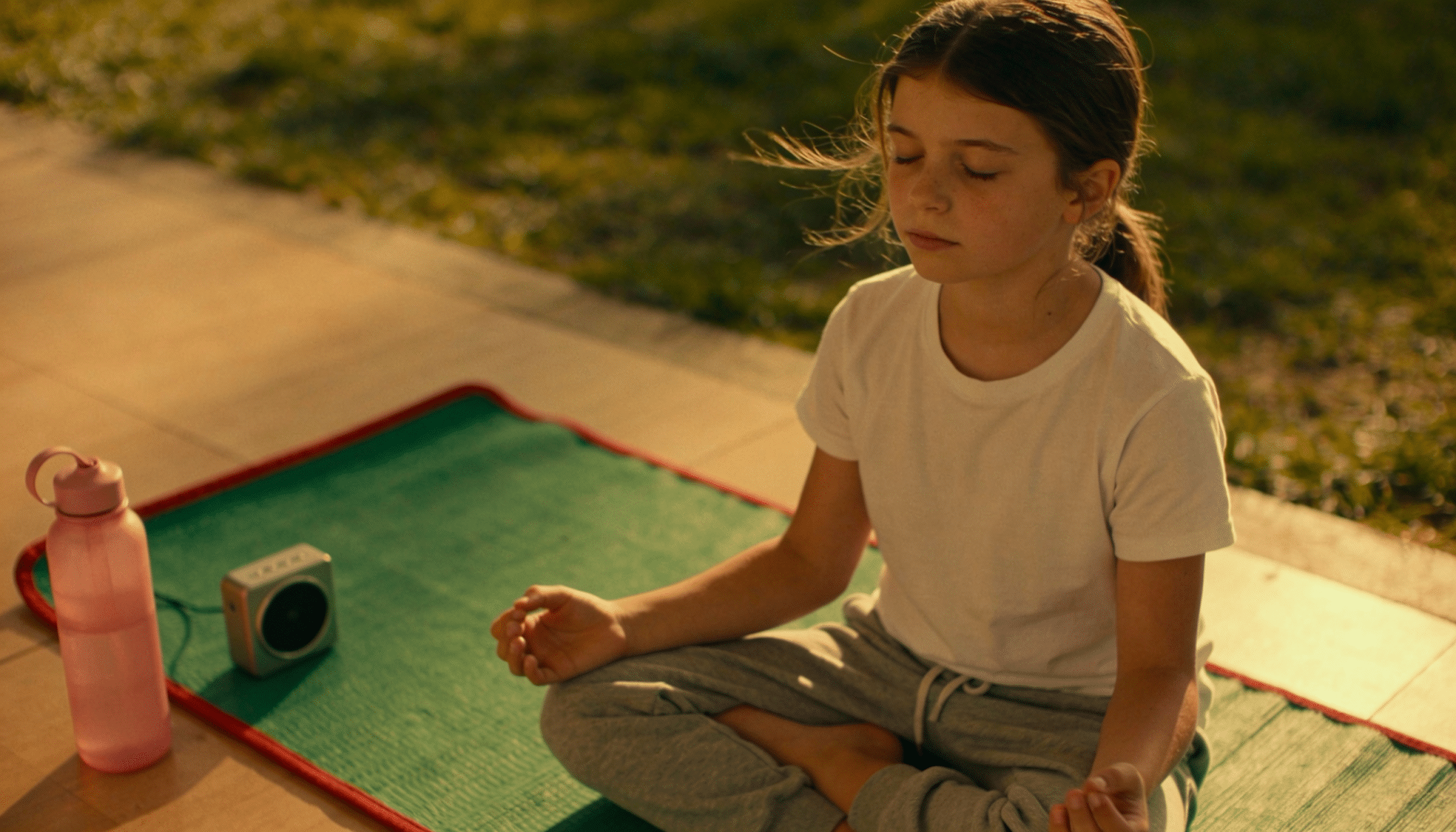
Wind down with quiet, focused fun activities for kids that promote relaxation and concentration, ideal for rest time, before bed, or when kids need a peaceful break.
21. Silent Reading Nook Time
Set up a comfortable reading area with pillows, blankets, and good lighting. Let each child choose their favorite books and read independently for 20-30 minutes.
This quiet time helps kids wind down while building literacy skills and fostering a love of reading.
22. Large Jigsaw Puzzle Build
Spread out a puzzle on a table or floor space and work together to complete it. Start with edge pieces and gradually fill in the middle sections.
Working on puzzles develops patience, spatial reasoning, and the satisfaction of completing something challenging.
Tip: Choose puzzles slightly above their usual skill level to keep them engaged without causing frustration.
23. Watercolor Painting
Set up a painting station with watercolors, thick paper, and cups of water. Let kids paint whatever they imagine, landscapes, abstract designs, or favorite characters.
The gentle, flowing nature of watercolors makes this a naturally calming artistic activity.
24. Sticker Storytelling Scenes
Provide blank paper and sheets of stickers, then ask kids to create a scene or tell a story using only stickers.
They can make underwater worlds, space adventures, or everyday scenarios.
This quiet activity exercises creativity without requiring drawing skills.
25. Guided Drawing Prompts
Lead kids through step-by-step drawing instructions for simple subjects like animals, houses, or flowers.
Break each drawing into basic shapes and lines that they can follow along with. This builds artistic confidence and provides a sense of accomplishment when they see the finished result.
26. Scented Playdough Modeling
Make or buy playdough in different colors and add safe scents like vanilla, peppermint, or lemon extract.
Kids can sculpt, roll, and create while enjoying the sensory experience of different smells and textures.
The repetitive squeezing and shaping motion is naturally soothing.
Tip: Store different scents in separate containers so smells don’t blend together.
27. Group Storytelling (One Sentence Each)
Sit in a circle and create a story together, with each person adding one sentence before passing it to the next person.
The unpredictable direction keeps everyone listening carefully and thinking creatively. Record the story on paper or audio to enjoy later.
28. Audiobook Listening Hour
Choose an engaging audiobook appropriate for your children’s age and let them listen while doing quiet activities like coloring or resting.
This combines literature exposure with relaxation and can be especially helpful before nap time or bedtime.
Many libraries offer free audiobook access through apps.
29. Button or Bead Sorting Trays
Provide a mixed collection of buttons, beads, or other small objects along with sorting trays or muffin tins.
Kids can organize items by color, size, or shape.
This activity develops fine motor skills and mathematical thinking while keeping hands busy in a calm way.
30. Kids’ Breathing and Mindfulness Exercises
Guide children through simple breathing techniques like “smell the flower, blow out the candle” or “balloon breathing.”
Add visualization exercises where they imagine calm places like beaches or forests.
These practices teach emotional self-regulation tools that they can use throughout their lives.
Fun Activities for Kids at Home by Age Group
Age-appropriate activities tailored to different developmental stages, ensuring every child finds engaging and suitable play options from toddlers to tweens.
Fun Activities for Toddlers
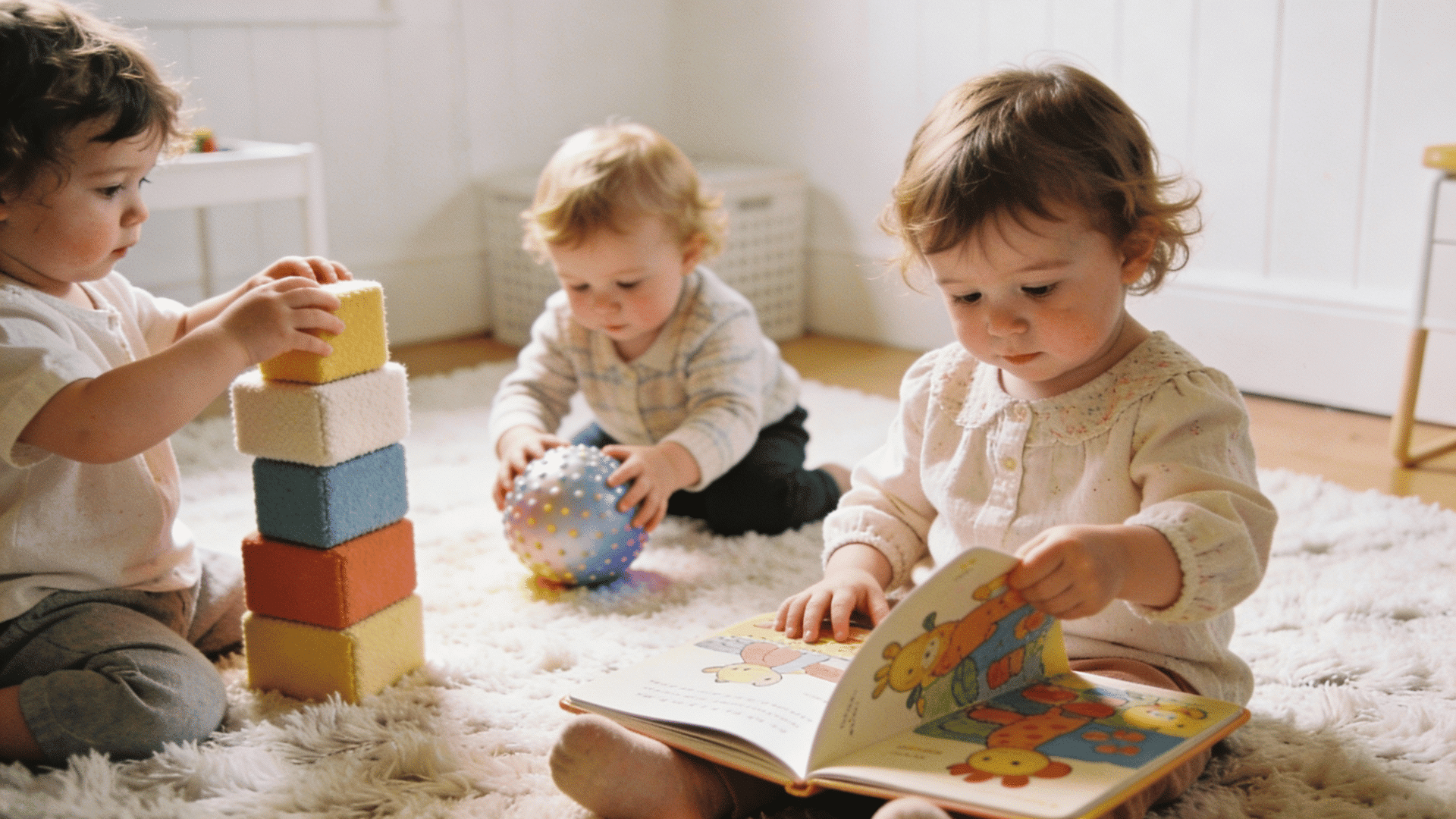
Simple, safe sensory activities and interactive play designed for little ones aged 1-3 to research, learn, and develop essential motor skills.
31. Sensory Bin with Dry Pasta
Fill a large plastic container with uncooked pasta in various shapes and sizes, then add scoops, cups, and small toys for exploration.
Toddlers can pour, scoop, and run their hands through the pasta, experiencing different textures and sounds.
Tip: Supervise closely to prevent choking, and consider using larger pasta shapes like rigatoni or penne for younger toddlers.
32. Stacking Cups Tower Play
Provide a set of colorful stacking cups that can be nested inside each other or stacked into towers.
Toddlers learn about size relationships, cause and effect, and hand-eye coordination as they build and knock down towers. The simple, repetitive action keeps them engaged while teaching important developmental concepts.
33. Shape Sorter Exploration
Give toddlers a shape sorter toy with different geometric shapes that fit through matching holes.
They’ll practice problem-solving as they figure out which shape goes where, developing spatial awareness and fine motor control.
Celebrate each successful match to build confidence and encourage persistence.
34. Action Songs with Hand Motions
Sing familiar songs like “Itsy Bitsy Spider,” “Wheels on the Bus,” or “Head, Shoulders, Knees and Toes” with accompanying hand movements.
These interactive songs combine music, movement, and language development in one fun activity.
Toddlers love the predictability and repetition while learning body parts and coordination.
Tip: Slow down the motions for younger toddlers and gradually increase speed as they become more confident.
35. Bubble Popping in the Bathtub
Add bubble bath to the tub and let toddlers pop, scoop, and play with the bubbles during bath time.
They can practice counting bubbles, making bubble beards, or transferring bubbles between cups. This turns routine bath time into an engaging sensory experience.
36. Texture Walk with Fabric Squares
Lay out different fabric squares (silk, corduroy, fleece, burlap) on the floor and let toddlers walk barefoot across them.
They’ll experience various textures under their feet while you describe each one using words like “soft,” “bumpy,” or “smooth.”
This builds vocabulary and sensory awareness simultaneously.
37. Rolling a Ball Back and Forth
Sit on the floor facing your toddler and roll a soft ball back and forth between you.
This simple game teaches turn-taking, tracking moving objects, and cause-and-effect relationships. Gradually increase the distance as their rolling skills improve.
38. Cushion Crawling Path
Create a path using couch cushions, pillows, and soft obstacles for toddlers to crawl over, under, and around.
This gross motor activity helps build strength, coordination, and confidence in their physical abilities. Change the layout regularly to keep the challenge interesting.
Tip: Make it more engaging by hiding small toys along the path for them to discover.
39. Finger Painting on Cardboard
Tape large pieces of cardboard to a washable surface and let toddlers explore finger painting with non-toxic, washable paints.
The textured cardboard surface creates interesting effects, and the mess is contained to an easy-to-clean area.
This sensory art experience encourages creativity without requiring advanced motor skills.
40. Ribbon Dancing
Attach colorful ribbons or streamers to wooden dowels or paper towel tubes and let toddlers wave them around.
They’ll love watching the ribbons swirl and flow as they move, developing arm strength and coordination.
Play music to encourage dancing and creative movement.
41. Water Scooping with Cups
Fill a shallow bin with water and provide various cups, containers, and spoons for pouring and scooping.
Toddlers can practice transferring water between containers, learning about volume and developing hand-eye coordination.
Place towels underneath for easy cleanup.
42. Color Sorting Pom-Poms
Provide colorful pom-poms and containers or bowls labeled with matching colors for sorting.
Toddlers can use their hands or child-safe tweezers to pick up and sort the pom-poms by color.
Tip: Use muffin tins as sorting containers, each cup can hold a different color for easy organization.
43. Push Toy Parade
Line up push toys, toy shopping carts, or sturdy walkers and let toddlers push them around the house.
This activity supports walking development, builds leg strength, and gives confident movers a sense of independence.
Create a “parade route” through different rooms for variety.
44. Nursery Rhyme Actions
Recite classic nursery rhymes with exaggerated actions and encourage toddlers to copy your movements.
Rhymes like “Pat-a-Cake,” “This Little Piggy,” and “Row, Row, Row Your Boat” combine language, rhythm, and physical interaction.
The repetitive nature helps with memory and language development.
45. Stuffed Animal Parade
Gather stuffed animals and create a parade by lining them up and walking them around the house.
Toddlers can practice carrying, organizing, and imaginative play as they give each animal a role.
This simple activity encourages nurturing behavior and storytelling.
46. Drop-and-Post Container Game
Cut a slot in the lid of a plastic container and give toddlers items to drop through (poker chips, popsicle sticks, or large buttons).
They’ll practice hand-eye coordination and problem-solving as they figure out how to orient objects to fit through the opening.
The satisfying sound of items dropping inside keeps them engaged.
Tip: Use a clear container so toddlers can see their items collect inside, reinforcing the cause-and-effect concept.
47. Toy Car Ramp Race
Create a simple ramp using a board or sturdy piece of cardboard propped against furniture.
Let toddlers roll toy cars down the ramp, watching them speed to the bottom. This introduces basic physics concepts like gravity and motion in a fun, hands-on way.
48. Mirror Face-Making Play
Sit with your toddler in front of a mirror and make funny faces together. Practice expressions like happy, sad, surprised, or silly while naming each emotion.
This activity builds emotional awareness and language skills while providing lots of giggles.
49. Chunky Knob Puzzles
Provide wooden puzzles with large knobs that are easy for small hands to grasp.
Toddlers can practice removing and replacing pieces, developing problem-solving skills, and hand-eye coordination.
Start with simple 3-4 piece puzzles and gradually increase difficulty.
50. Board Book Browsing
Create a cozy reading corner with a basket of sturdy board books and let toddlers independently explore.
They can flip pages, point at pictures, and “read” aloud in their own way.
This builds pre-literacy skills and fosters an early love of books.
Fun Activities for Preschoolers
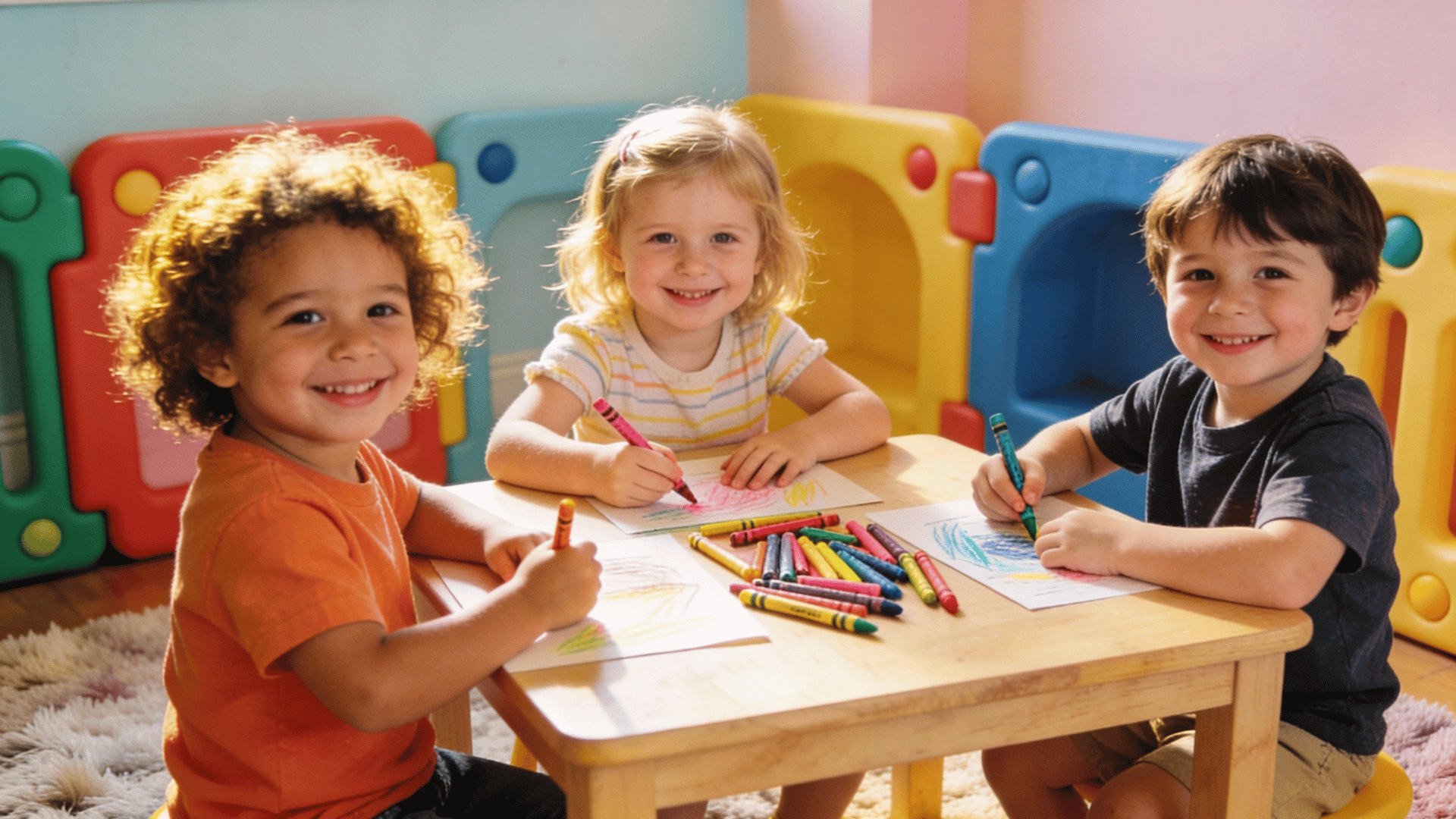
Creative and educational fun activities for kids aged 3-5 that build early learning skills while encouraging imagination, independence, and hands-on exploration.
51. Paper Plate Crafts
Provide paper plates, markers, glue, construction paper, and other craft supplies for open-ended creation. Preschoolers can make masks, animals, clocks, or decorative art pieces using the plate as a base.
This encourages creativity while developing fine motor skills through cutting, gluing, and decorating.
Tip: Pre-cut some shapes and pieces for younger preschoolers who are still developing scissor skills.
52. Cutting Practice with Safety Scissors
Set up a cutting station with child-safe scissors, construction paper strips, and old magazines for cutting practice.
Start with straight lines and progress to curves and shapes as their skills improve.
This strengthens hand muscles and builds the coordination needed for writing.
53. Alphabet Letter Hunt
Hide foam letters, magnetic letters, or paper letters around a room and send preschoolers on a hunt to find them.
As they find each letter, practice saying its name and sound. This combines physical activity with literacy learning in an engaging way.
54. Pretend Grocery Store Checkout
Set up a pretend grocery store with empty food boxes, play money, a toy cash register, and shopping bags.
Preschoolers can take turns being cashier and customer, practicing counting, social skills, and imaginative play.
This prepares them for real-world experiences while having fun.
55. Magnetic Tile Construction
Provide magnetic building tiles and let preschoolers construct towers, houses, and three-dimensional shapes.
These colorful tiles snap together easily, allowing children to explore engineering concepts and spatial relationships.
Tip: Challenge them to build specific structures like “a house for three bears” to add storytelling elements.
56. Playdough Number Forming
Roll out playdough and have preschoolers shape it into numbers from 1 to 10.
They can trace number cards, roll “snakes” to form digits, or press numbers into the dough.
This hands-on approach to number recognition makes early math learning tactile and fun.
57. Costume Storytelling
Pull out a box of dress-up clothes and let preschoolers create characters and act out stories.
They can retell favorite tales or invent new adventures based on their costume choices. This dramatic play builds language skills, creativity, and confidence in self-expression.
58. Sink-or-Float Experiment
Fill a large container with water and gather various household items to test.
Let preschoolers predict whether each object will sink or float before testing it.
This introduces scientific thinking and observation skills while satisfying their natural curiosity about how things work.
59. Counting Games with Snacks
Use small snacks like crackers, grapes, or cereal pieces for hands-on counting practice. Create simple addition and subtraction problems, sort by color or type, or make patterns.
This makes math concrete and delicious, reinforcing concepts through multiple senses.
Tip: After counting and sorting, they get to eat their “math manipulatives” as a reward!
60. Act Out a Favorite Storybook
Choose a familiar picture book and let preschoolers act out the story with simple props or just their imagination.
Assign roles, practice dialogue, and perform for family members. This deepens comprehension while building memory and public speaking skills.
61. Color-Matching Clothespins
Attach colored paper or paint samples to a cardboard strip and provide matching clothespins for preschoolers to clip on.
They practice color recognition and matching while building the finger strength needed for writing.
62. Homemade Shakers and Drums
Create musical instruments using household items; fill plastic bottles with rice for shakers or use overturned pots as drums.
Preschoolers can decorate their instruments and then have a marching band parade or follow-the-rhythm games.
63. Sponge Stamp Painting
Cut sponges into simple shapes and let preschoolers dip them in paint to create stamped designs. They can make patterns, scenes, or abstract art while exploring color mixing.
This painting technique is less messy than brushes and creates satisfying, immediate results.
Tip: Use cookie cutters pressed into thick sponges to create themed shapes for holidays or seasons.
64. Shape Hopping Game
Create large shapes on the floor using tape or cut paper, then call out shapes for preschoolers to hop to.
Add variations like “hop on one foot to the circle” or “jump to a red shape.” This combines shape recognition with gross motor movement and listening skills.
65. Nature Collage Art
Collect safe, natural items like leaves, flower petals, small twigs, and pebbles during outdoor time.
Bring them inside and glue them onto cardboard to create nature-inspired art.
This connects children to the natural world while developing creativity and observation skills.
66. Memory Card Matching
Use a simple matching card game with pairs of pictures and lay them face down.
Preschoolers take turns flipping two cards, trying to find matches while remembering locations. This builds memory, concentration, and turn-taking skills in a game format.
67. Bead Threading Necklaces
Provide large beads and thick string or pipe cleaners for threading practice.
Preschoolers can create patterns, sort by color, or simply string beads to make necklaces or bracelets.
This activity strengthens fine motor skills and hand-eye coordination while creating wearable art.
68. Timed Puzzle Assembly
Set a gentle timer and see if preschoolers can complete an age-appropriate puzzle before it goes off.
This adds a motivating challenge element while building problem-solving skills and persistence. Celebrate completion regardless of whether they beat the timer.
Tip: Start with generous time limits and gradually reduce them as their puzzle skills improve.
69. Crown and Tiara Crafting
Provide paper strips, stickers, gems, glitter glue, and markers for creating royal headwear.
Preschoolers can design and decorate their own crowns or tiaras, then wear them for pretend play.
This combines fine motor practice with creativity and imaginative role-play.
70. Flashlight Shadow Tracing
In a darkened room, shine a flashlight to create shadows of toys, hands, or simple objects on the wall.
Let preschoolers trace the shadows with their fingers or guess what’s making each shadow. This explores light, shadows, and shapes through playful experimentation.
71. LEGO Bridge-Building Challenge
Challenge kids to build the longest or strongest bridge using only LEGO bricks, then test it by placing items on top.
They’ll experiment with engineering principles like support, weight distribution, and structural design.
This combines creativity with problem-solving and introduces basic physics concepts.
Tip: Add constraints like “use only 50 pieces” or “must span between two chairs” to increase difficulty.
72. Baking Soda Volcano Experiment
Create a classic volcano using baking soda, vinegar, food coloring, and a container shaped like a mountain.
Kids learn about chemical reactions while experiencing the exciting “eruption.”
This hands-on science demonstration explains acid-base reactions in a memorable, visual way.
73. Board Game Tournament Bracket
Select several board games and create a tournament-style bracket where winners advance to the next round.
This structure adds competition and excitement to regular gameplay while teaching bracket formats. Keep score and crown a family champion at the end.
74. Make-Your-Own Sandwich Bar
Set out bread, spreads, meats, cheeses, and vegetables for kids to build custom sandwiches.
They practice decision-making, following preferences, and basic food preparation skills. This also teaches kitchen independence and can become a regular lunch tradition.
75. Five-Minute Art Challenge
Set a timer for five minutes and give a specific drawing or creation prompt for kids to complete quickly.
The time pressure encourages spontaneity and reduces overthinking, often resulting in creative, expressive artwork. Rotate different challenges like “draw your dream house” or “create an alien creature.”
Tip: Display completed artworks on a rotating “gallery wall” to celebrate their quick creative thinking.
76. Write and Illustrate a Mini Book
Fold several sheets of paper in half and staple them to create a blank book. Kids can write and illustrate their own stories, creating covers and page layouts.
This combines literacy practice with artistic expression and results in a keepsake they’ll treasure.
77. Indoor Bowling with Bottles
Line up empty plastic bottles or cans as bowling pins and use a soft ball to knock them down.
Kids can keep score, practice addition, and work on aim and coordination. Decorate the bottles for added fun and personalization.
78. Dice-Based Math Games
Use dice to create math problems; roll two dice and add, subtract, or multiply the numbers. Create variations like “race to 100” or “closest to zero” games.
This makes math practice engaging and introduces probability concepts through play.
79. DIY Marble Run from Recyclables
Collect cardboard tubes, boxes, tape, and other recyclables to construct an elaborate marble run.
Kids experiment with angles, speed, and momentum while engineering a functional creation. Test and modify the design until the marble successfully completes the course.
80. Origami Animal Folding
Follow simple origami instructions to fold paper into animals, flowers, or geometric shapes. This ancient art form teaches patience, precision, and following sequential directions.
Start with basic designs like paper airplanes or fortune tellers before progressing to complex creations.
Tip: Use origami instruction books or video tutorials specifically designed for beginners to avoid frustration.
81. Riddle-Based Scavenger Hunt
Write riddles or clues that describe locations around the house where the next clue is hidden.
The final clue leads to a small prize or treat. This combines problem-solving, reading comprehension, and physical activity into one exciting game.
82. Card Tower Engineering Test
Challenge kids to build the tallest freestanding tower using only playing cards. They’ll learn about balance, stability, and engineering through trial and error.
Experimenting with different folding and stacking techniques develops spatial reasoning and patience.
83. Comic Strip Creation
Provide paper divided into panels and let kids create original comic strips with characters, dialogue, and storylines.
They practice sequential storytelling, visual narrative, and creative writing simultaneously. Share completed comics with family members for an appreciative audience.
84. Logic Puzzles and Brain Teasers
Introduce age-appropriate logic puzzles, sudoku, or riddles that challenge critical thinking skills.
Kids work through problems systematically, learning to eliminate possibilities and think strategically. Start with simpler puzzles and gradually increase complexity as skills develop.
Tip: Work through the first few puzzles together to teach problem-solving strategies before letting them work independently.
85. Crossword or Word Search Creation
Have kids design their own crosswords or word searches for family members to solve. They choose vocabulary words, create clues, and design the grid layout.
This reinforces spelling and vocabulary while putting them in the creator role.
86. Family Talent Show Rehearsal
Let each child prepare and practice a talent to perform, such as singing, dancing, magic tricks, or comedy routines.
Schedule a performance time for the whole family to watch and applaud. This builds confidence and public speaking skills and celebrates individual strengths.
87. Homemade Slime Experiment
Mix glue, borax (or contact lens solution), and food coloring to create stretchy, satisfying slime.
Kids observe chemical reactions and polymer formation while making a tactile toy. Experiment with different ratios and add-ins like glitter or foam beads for variations.
88. Draw a Map of an Imaginary World
Challenge kids to create a detailed fantasy map complete with terrain features, cities, landmarks, and a legend.
They can name locations, draw paths, and add creative details like dragon lairs or treasure locations. This combines geography concepts with imaginative storytelling.
Tip: Use their map as the setting for future storytelling or role-playing games.
89. Charades with Action Cards
Write actions, animals, or movie titles on placards, and take turns acting them out without speaking while others guess.
This classic game builds non-verbal communication, creativity, and observation skills. Create themed card sets for added variety.
90. Build a Model from Recycled Boxes
Collect cardboard boxes, tubes, egg cartons, and other recyclables for constructing 3D models.
Kids can build cities, spaceships, castles, or vehicles using tape and creativity. This eco-friendly activity develops spatial thinking and resourcefulness.
Fun Activities for Older Kids & Tweens
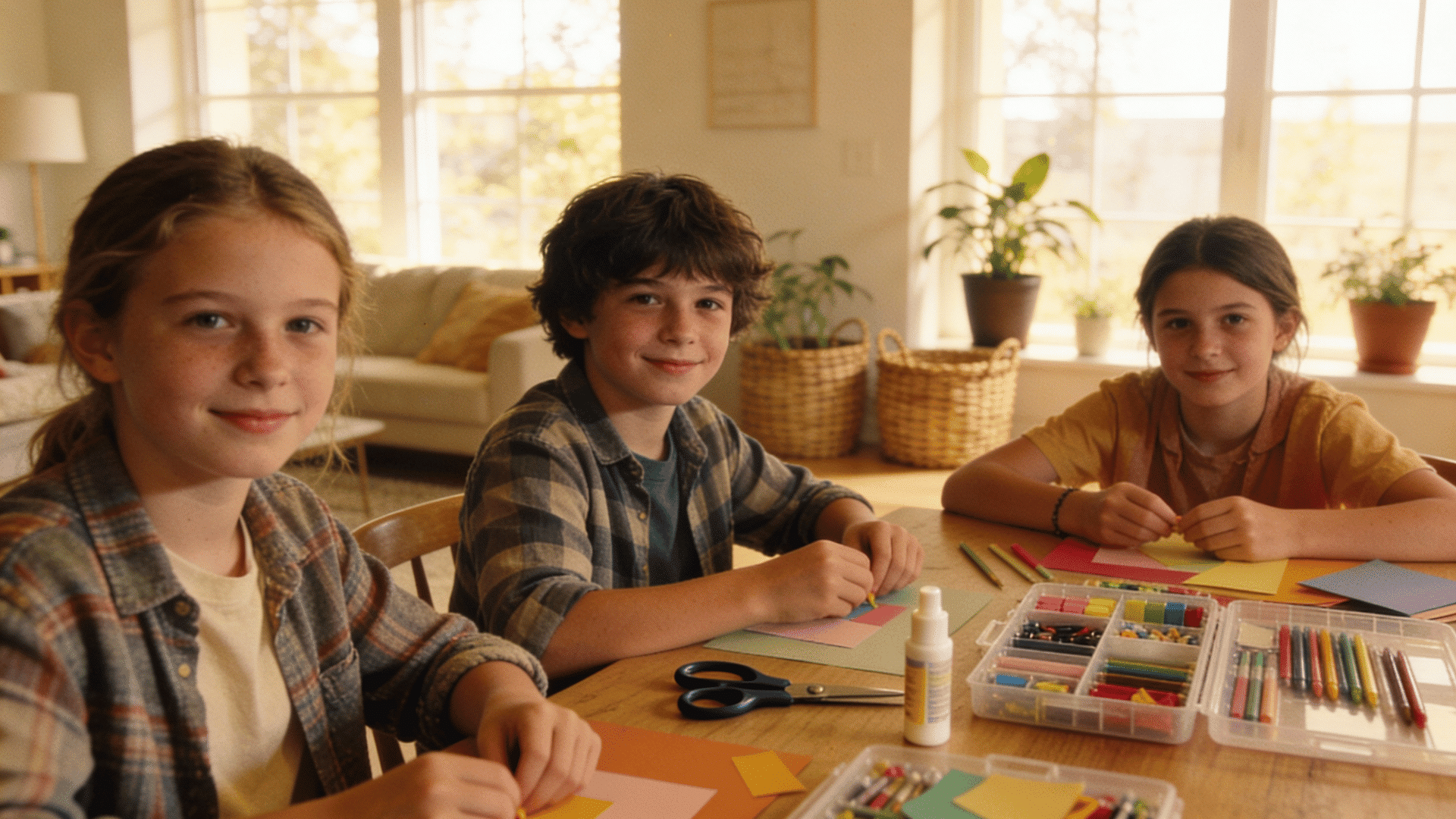
Worldly-wise projects and strategic fun activities for kids aged 11-13 that challenge growing minds while developing real-world skills and creative expression.
91. Mystery Box Cooking Challenge
Place several random ingredients in a box and challenge tweens to create a dish using everything inside.
They must plan, prepare, and present their culinary creation within a time limit. This teaches improvisation, cooking skills, and creative problem-solving under pressure.
Tip: Include at least one “challenging ingredient,” like pickles or coconut, to make it more interesting.
92. Family Trivia Quiz Night
Create trivia questions across various categories, history, science, pop culture, and family memories, for a competitive quiz game.
Tweens can help write questions and keep score, practicing research and organizational skills. Offer small prizes for winners to increase motivation.
93. Creative Writing Prompt Jar
Fill a jar with interesting writing prompts and story starters for tweens to randomly select.
They write short stories, poems, or journal entries based on the prompt they choose. This removes “blank page anxiety” and encourages regular creative writing practice.
94. DIY Bracelet or Jewelry Making
Provide beads, string, wire, and jewelry-making supplies for creating custom accessories.
Tweens can follow patterns or design original pieces to wear or give as gifts.
This combines creativity with fine motor skills and can even become a small business venture.
95. Strategy Board Games (Chess, Catan-Style)
Introduce more complex board games that require strategic thinking, planning ahead, and tactical decision-making.
Games like chess, Settlers of Catan, or Ticket to Ride teach logic, probability, and consequence analysis.
These games grow with players as strategies deepen over time.
Tip: Watch tutorial videos together before the first play-through to understand rules and strategy basics.
96. Plan a Pretend Small Business
Have tweens develop a complete business plan for an imaginary company, choosing products, setting prices, creating marketing materials, and budgeting expenses.
This teaches entrepreneurship, math application, and creative thinking.
They can even create a mock website or social media presence.
97. Stop-Motion Video Using Toys
Use a smartphone or tablet to create stop-motion animation videos by photographing toys or objects in slightly different positions.
Tweens learn about frame rates, storytelling, and patience while creating short films.
Free apps make editing and adding sound effects easy.
98. Crystal-Growing Science Project
Follow instructions to grow real crystals using household materials like sugar, salt, or borax.
Tweens observe the crystallization process over several days, documenting changes and learning about supersaturated solutions.
This long-term experiment teaches patience and scientific observation.
99. Design a Custom Board Game
Challenge tweens to invent an original board game complete with rules, a game board, playing pieces, and cards.
They consider game mechanics, balance, and player engagement while creating something entirely their own.
Test-play and refine the game together as a family.
Tip: Start by modifying an existing game’s rules before creating something completely from scratch.
100. Indoor Fitness Circuit Challenge
Set up exercise stations around the house with jumping jacks, push-ups, planks, and stretches, and complete circuits with timed intervals.
Tweens can design their own workout routines, track progress, and challenge family members.
This builds physical fitness and healthy exercise habits.
101. Themed Photography Scavenger Hunt
Create a list of photography prompts like “something blue,” “an interesting shadow,” or “symmetry in nature.”
Tweens use cameras or phones to capture creative shots meeting each requirement.
This develops artistic vision, composition skills, and observational awareness.
102. Scrapbooking or Memory Journal
Provide supplies for creating a scrapbook or journal documenting favorite memories, trips, or daily life.
Tweens can include photos, tickets, drawings, and written reflections.
This creative project preserves memories while practicing organization and narrative skills.
103. Mini Debate on Fun Topics
Choose lighthearted debate topics like “cats vs. dogs” or “pizza vs. tacos” and have tweens argue assigned positions.
They practice formulating arguments, public speaking, and considering multiple perspectives.
Keep it fun and respectful while building communication skills.
Tip: Switch sides halfway through so they practice arguing both positions effectively.
104. Learn and Perform a Magic Trick
Watch online tutorials to learn card tricks, sleight of hand, or illusions that tweens can master and perform. Magic requires practice, patience, and presentation skills.
Once perfected, they can put on shows for family and friends.
105. Closet or Desk Reorganization Project
Give tweens ownership of organizing their personal spaces by sorting, decluttering, and creating better systems.
They make decisions about what to keep, donate, or discard while learning organizational skills. Providing storage solutions and labels makes the project more satisfying.
106. Rube Goldberg Chain-Reaction Build
Construct an elaborate chain-reaction machine where one action triggers the next in a sequence.
Use dominoes, balls, ramps, and household items to create an unnecessarily complex way to accomplish a simple task. This engineering challenge teaches cause-and-effect and perseverance through failure.
107. Write and Perform a Short Skit
Have tweens write a short comedy or drama script, assign roles, and rehearse for a family performance.
They practice playwriting, memorization, and acting while creating original entertainment. Simple costumes and props enhance the production value.
108. Money Math Budgeting Game
Give tweens a hypothetical monthly income and list of expenses to manage through budgeting decisions.
They allocate funds for needs versus wants, practice calculating percentages for savings, and make trade-off decisions.
Tip: Use real store circulars or online shopping sites to make price research more authentic and engaging.
109. DIY Escape-Room Puzzle Setup
Design a series of puzzles, riddles, and clues that must be solved in sequence to “escape” a room.
Tweens can create this challenge for family members or solve one created for them.
This combines logic, creativity, and problem-solving in an immersive game format.
110. Plan and Host Family Game Night
Put tweens in charge of organizing a complete game night, selecting games, creating schedules, preparing snacks, and hosting the event.
This teaches planning, time management, and hospitality skills. They take pride in successfully executing an event they designed.
Conclusion
Boredom solved. With these activities ready to go, you’re prepared for rainy days, restless afternoons, and every “I’m bored!” moment that comes your way.
The most fun often comes from simple activities, like building forts, baking cookies, or having silly dance parties together.
Please bookmark this guide and refer to it whenever you seek fresh ideas. Mix high-energy games with calm, fun activities for kids based on your child’s mood, and you’ll always have the perfect option ready.
Now pick an activity and turn boredom into fun. Your kids are going to love it.