


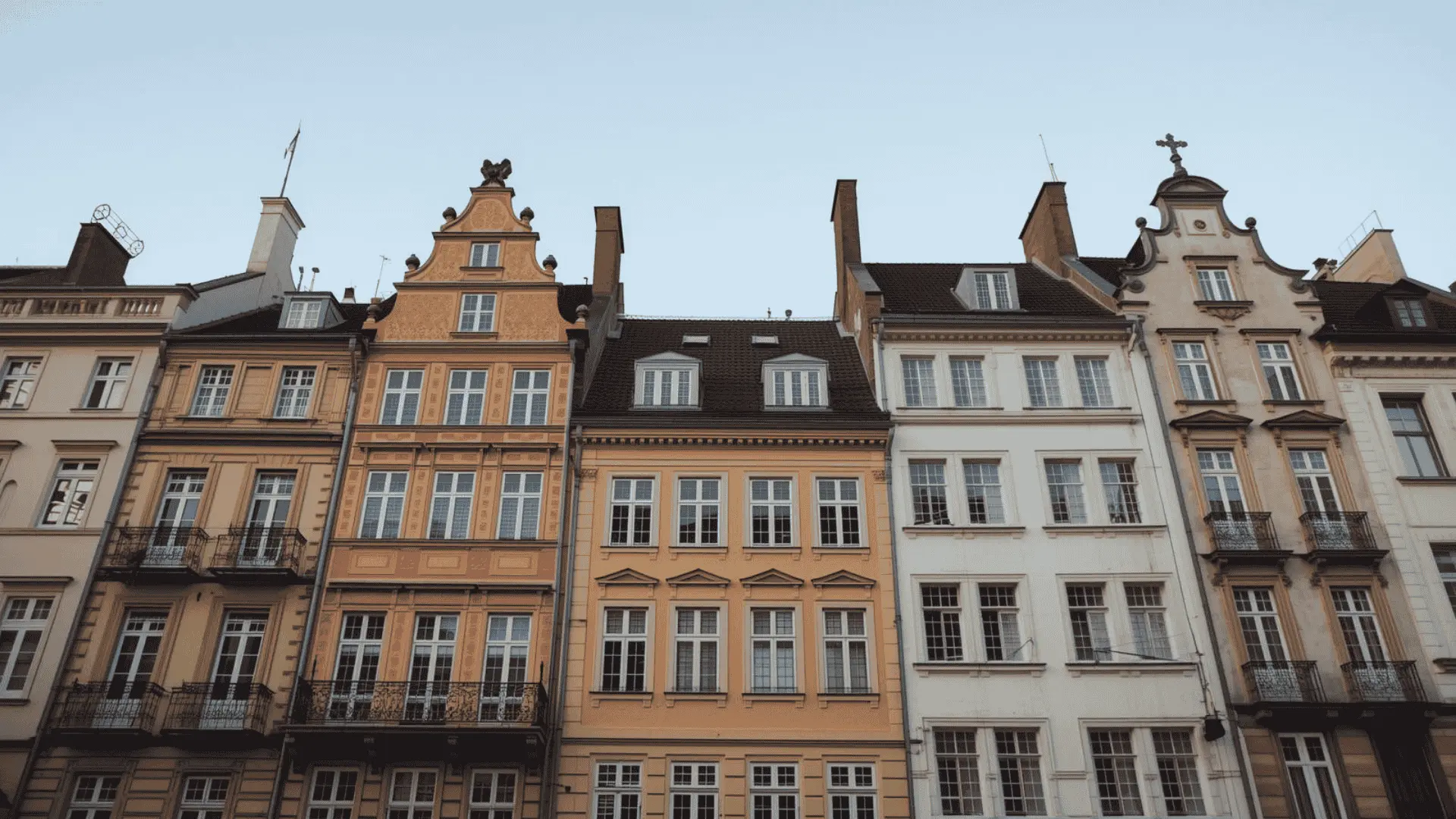
Walk through any European city and something will catch your eye. Maybe it is a towering cathedral. Maybe it is a curved doorway covered in stone carvings. Maybe it is a concrete building that looks like nothing else in the area.
European architecture is everywhere, and it tells a story. Every arch, column, and roofline has a meaning. Each style grew from a specific time in history.
People built differently depending on what they believed, what they had, and what they wanted to say. Knowing the difference between Gothic and Baroque, or Modernism and Brutalism, changes the way travel feels.
Familiar buildings start to make sense. Details become interesting instead of confusing. The sections below break down the key styles of European architecture so anyone can start recognizing them.
What Is European Architecture?
European architecture refers to the building styles that developed across Europe over thousands of years. From ancient Greek temples to Gothic cathedrals to Renaissance palaces, each style tells a story about the time and place it came from.
These styles spread across countries and centuries, shaping the cities and towns we see today.
When you walk through Rome, Paris, or Prague, you are looking at layers of European architecture side by side.
Learning to recognize these styles helps you understand what you are seeing and why it looks the way it does. Each style has its own shapes, materials, and details worth knowing.
A Brief History of European Architecture
European architecture has been developing for over 2,500 years. It started with the temples and public buildings of ancient Greece and Rome.
These early structures set the foundation for much of what followed. Through the Middle Ages, builders raised massive cathedrals and fortified churches.
The Renaissance brought back the clean, ordered forms of the ancient world. Then came Baroque, Neoclassical, and eventually the modern styles of the 20th century.
Each period built on what came before it. Sometimes, architects returned to older ideas. Other times, they broke away completely. The result is a rich and varied history that still shapes the buildings standing across Europe today.
Top European Cities for Architecture Lovers
Some cities are like open-air museums. These destinations are home to some of the finest examples of European architecture, spanning centuries of history and many distinct styles.
| City | What Makes It Great For Architecture Lovers |
|---|---|
| Rome, Italy | Ancient Roman layers (Colosseum, Pantheon, forums) plus Renaissance and Baroque churches and piazzas. |
| Paris, France | Gothic landmarks, Haussmann boulevards, and major modern works across the city. |
| Barcelona, Spain | Gaudí and Catalan Modernisme (Art Nouveau) alongside medieval Gothic Quarter streets. |
| Florence, Italy | The Italian Renaissance is characterized by famous domes, palazzos, and classic city planning. |
| Prague, Czech Republic | Strong mix of Gothic, Baroque, and later styles across a walkable historic core. |
| Vienna, Austria | Grand Baroque and imperial-era architecture, plus key modern movements. |
| London, UK | A huge range from Gothic and Georgian to Brutalism and contemporary icons. |
| Amsterdam, Netherlands | Signature canal houses and urban design, plus standout modern buildings. |
| Berlin, Germany | Modernism, post-war architecture, and bold contemporary rebuilds. |
| Brussels, Belgium | Major Art Nouveau scenes and strong Art Deco pockets. |
| Riga, Latvia | One of Europe’s best concentrations of Art Nouveau facades. |
| Granada, Spain | Moorish (Islamic) architecture highlights, especially the Alhambra area. |
The Major European Architecture Styles
European architecture spans thousands of years and dozens of styles. Here is a look at the key periods, what they look like, and where you can spot them.
1. Classical Greek and Roman (c. 850 BCE to 476 CE)
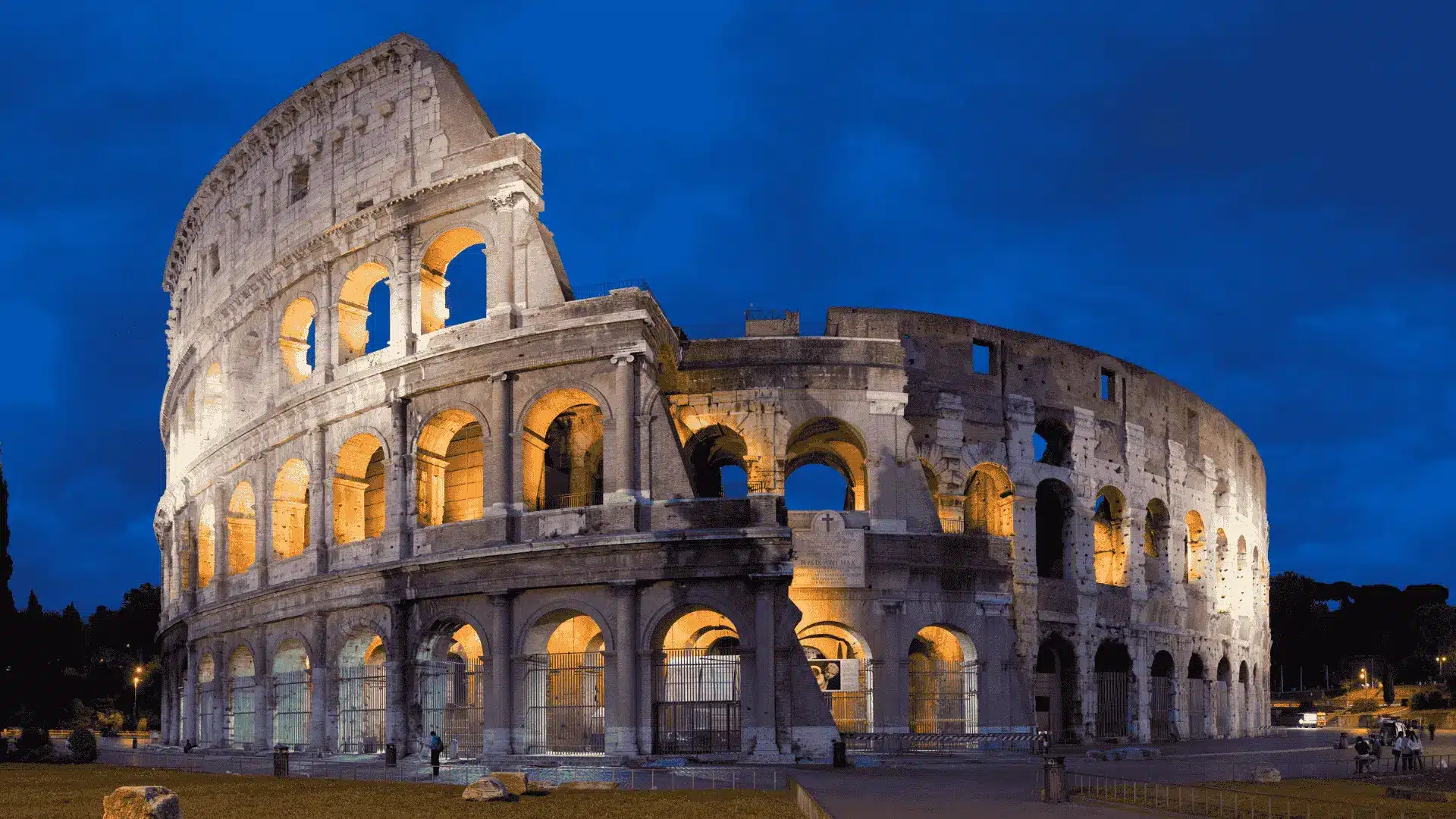
Classical architecture comes from ancient Greece and Rome. It is one of the oldest and most copied styles in European architecture. Buildings were designed with strict symmetry and a strong sense of order.
- Key Features: Columns in three styles (Doric, Ionic, Corinthian), symmetrical layouts, triangular pediments above entrances, and marble or stone construction.
- Famous Examples: The Parthenon (Athens), and The Roman Colosseum (Rome)
- Identifying Tip: Look for rows of columns at the front of a building. If the tops are plain, it is Doric. Scrolled tops mean Ionic.
2. Byzantine (c. 330 – 1453)
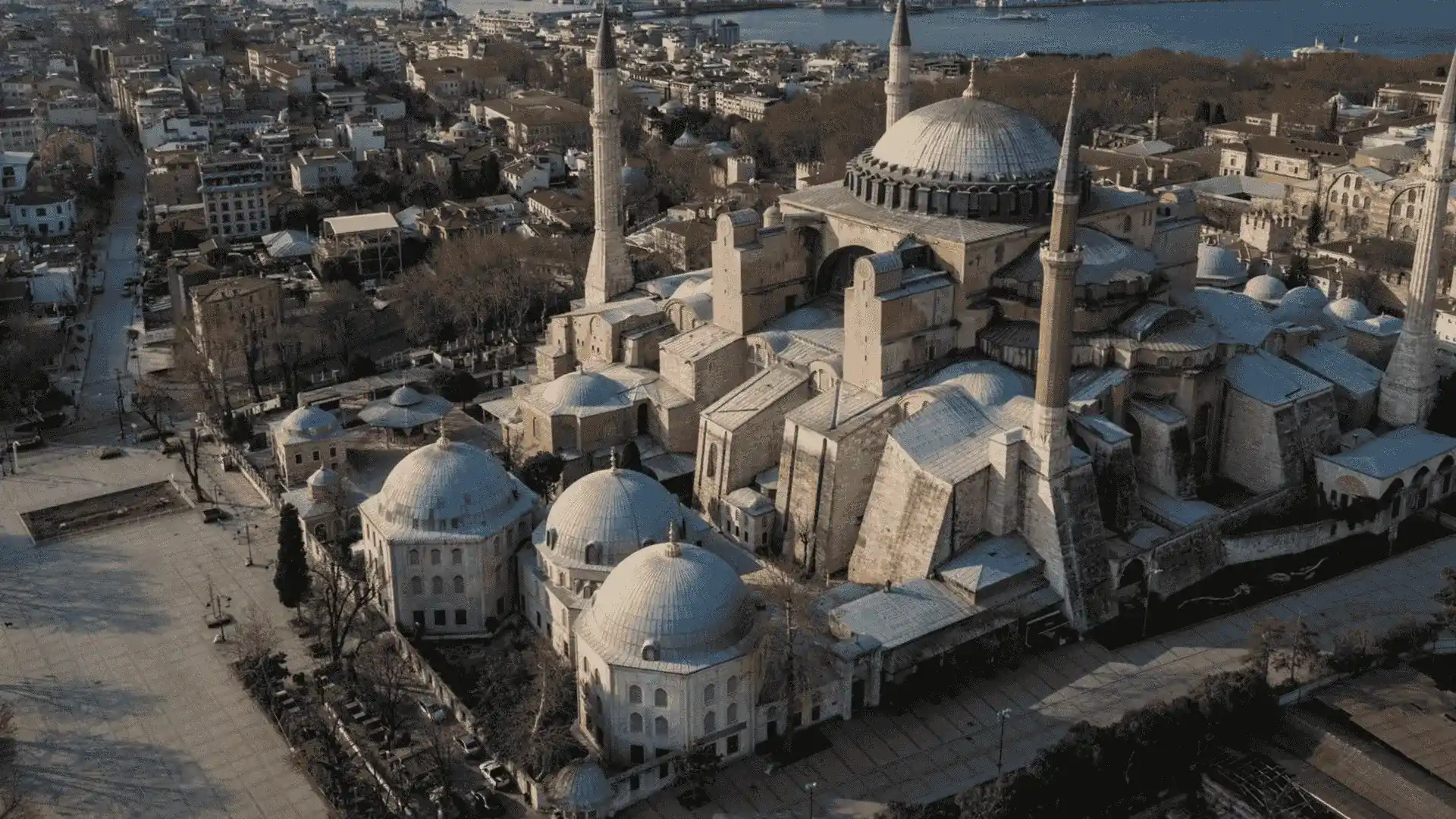
Byzantine architecture developed in the Eastern Roman Empire. It is known for its grand religious buildings and rich decorative work. This style had a strong influence on Eastern Europe and the Middle East.
- Key Features: Large central domes, rounded arches, gold mosaic artwork on interior walls, and colored glass tiles used throughout.
- Famous Examples: Hagia Sophia (Istanbul), and St. Mark’s Basilica (Venice)
- Identifying Tip: Look for a wide, low dome above a square building. Step inside and check the walls for gold mosaic artwork.
3. Romanesque (c.1000 – 1150)
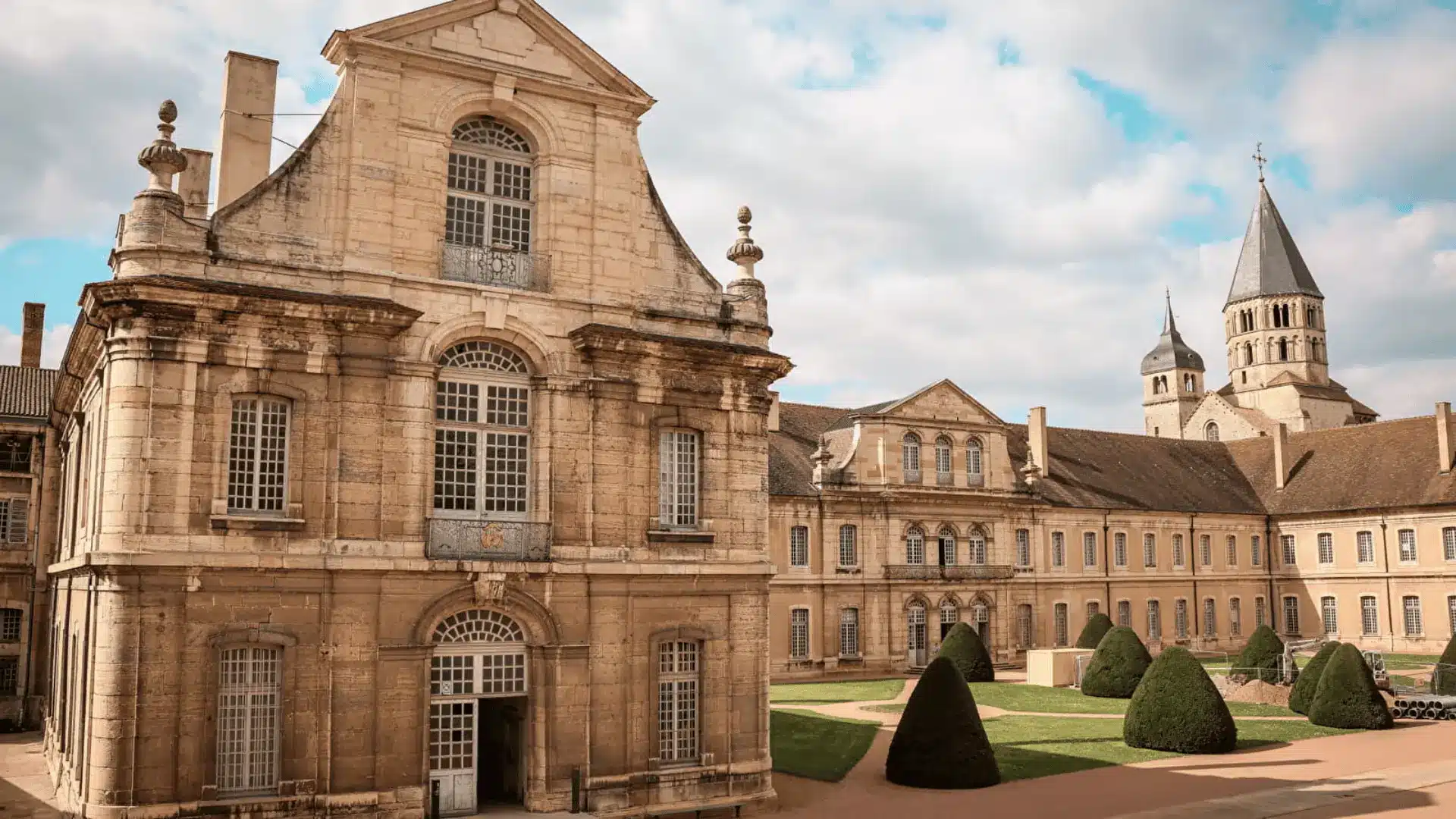
Romanesque is one of the earliest medieval styles in European architecture. These buildings were built to last, with thick walls and a fortress-like feel. Churches and monasteries were the main building types.
- Key Features: Thick stone walls, small windows, round arches over doors and walkways, heavy towers, and simple stone carvings around entrances.
- Famous Examples: Cluny Abbey (France), Castle Rising (England)
- Identifying Tip: Romanesque buildings are defined by the “Pillar and Arch” system, utilizing massive piers and thick walls to support heavy stone barrel vaults.
4. Gothic (c. 1140 – 1500)
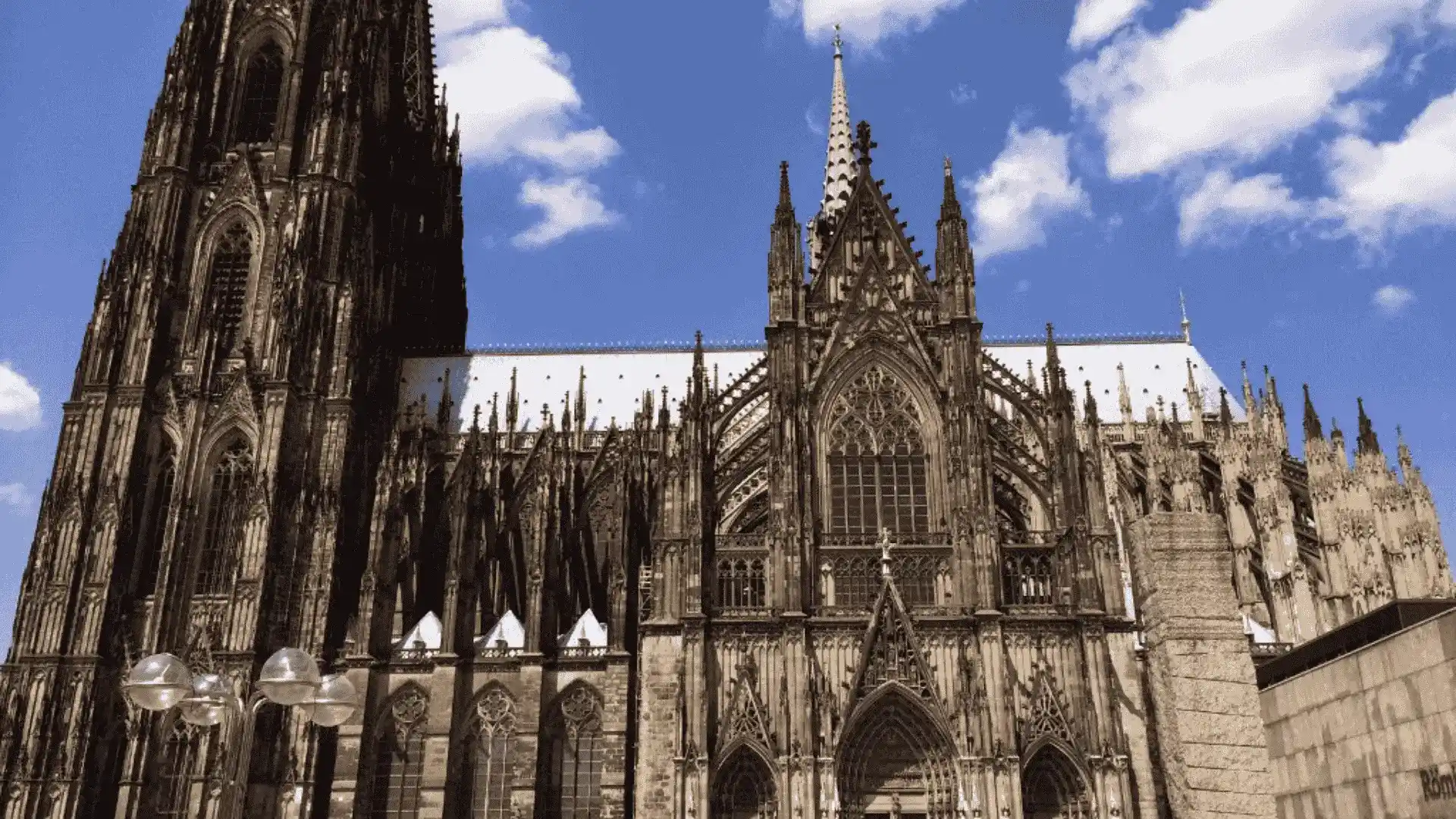
Gothic architecture was all about building higher and letting in more light. It replaced the heavy look of Romanesque with something much taller and more open. Cathedrals were the most common Gothic buildings in Europe.
- Key Features: Pointed arches, flying buttresses on the outer walls, large stained-glass windows in bright colors, and tall spires above the rooflines.
- Famous Examples: Notre-Dame Cathedral (Paris), and Cologne Cathedral (Germany)
- Identifying Tip: Look for Flying Buttresses. These are external masonry struts that transmit the thrust of the roof away from the walls, allowing for those massive stained-glass windows.
5. Renaissance (c. 1400 – 1600)
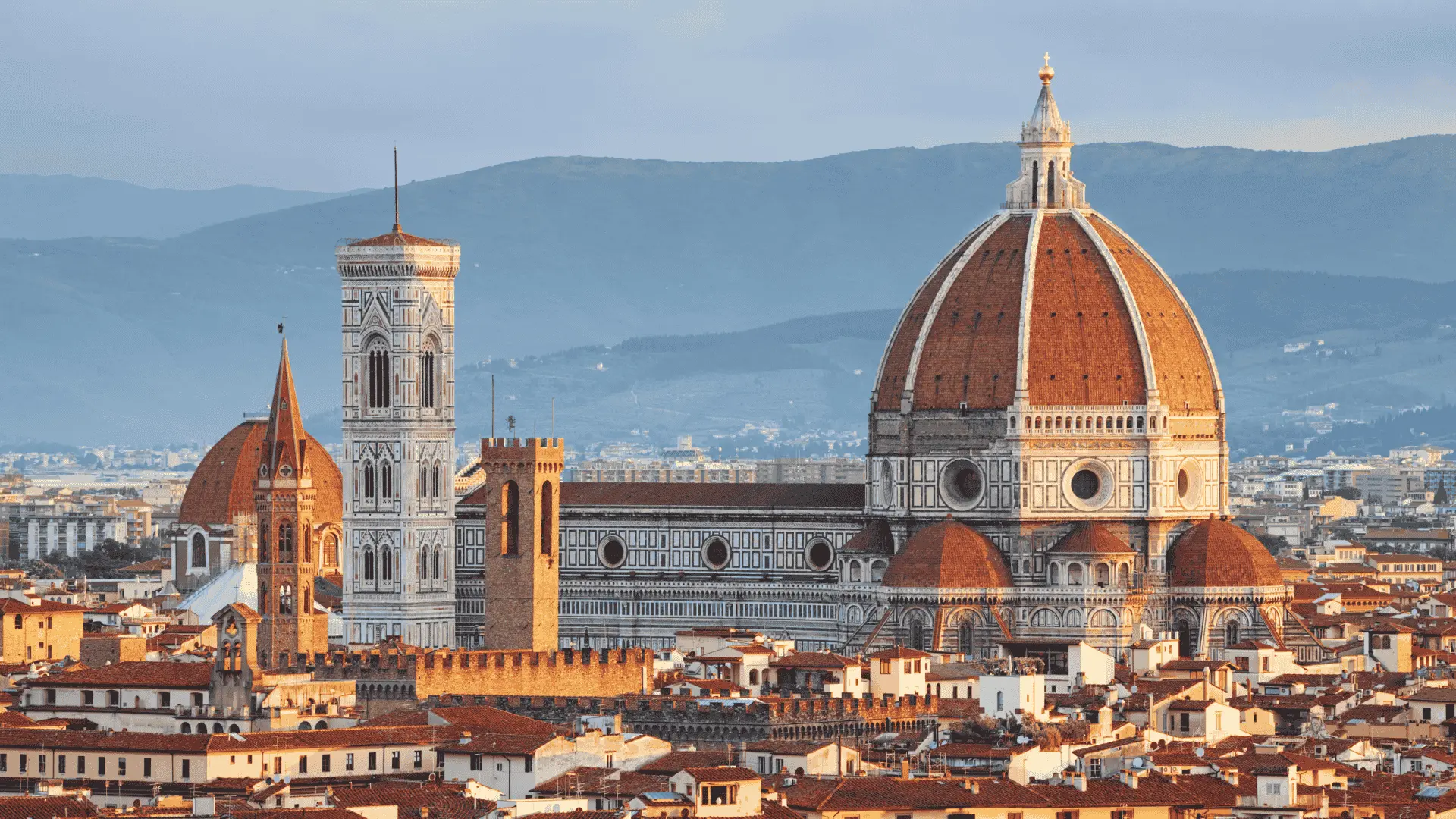
Renaissance architects drew on ancient Greece and Rome for inspiration. They brought order, balance, and proportion back to building design. This style started in Italy and spread across the rest of Europe over time.
- Key Features: Domes as a central feature, decorative columns and pilasters, symmetrical layouts, and arched windows with clean, simple frames.
- Famous Examples: Florence Cathedral dome (Brunelleschi), St. Peter’s Basilica (Rome), Palazzo Medici Riccardi (Florence)
- Identifying Tip: Look for Pedimented windows (windows with small triangular or curved “roofs” over them) and a sense of horizontal rhythm rather than Gothic verticality.
6. Baroque (c. 1600 – 1750)
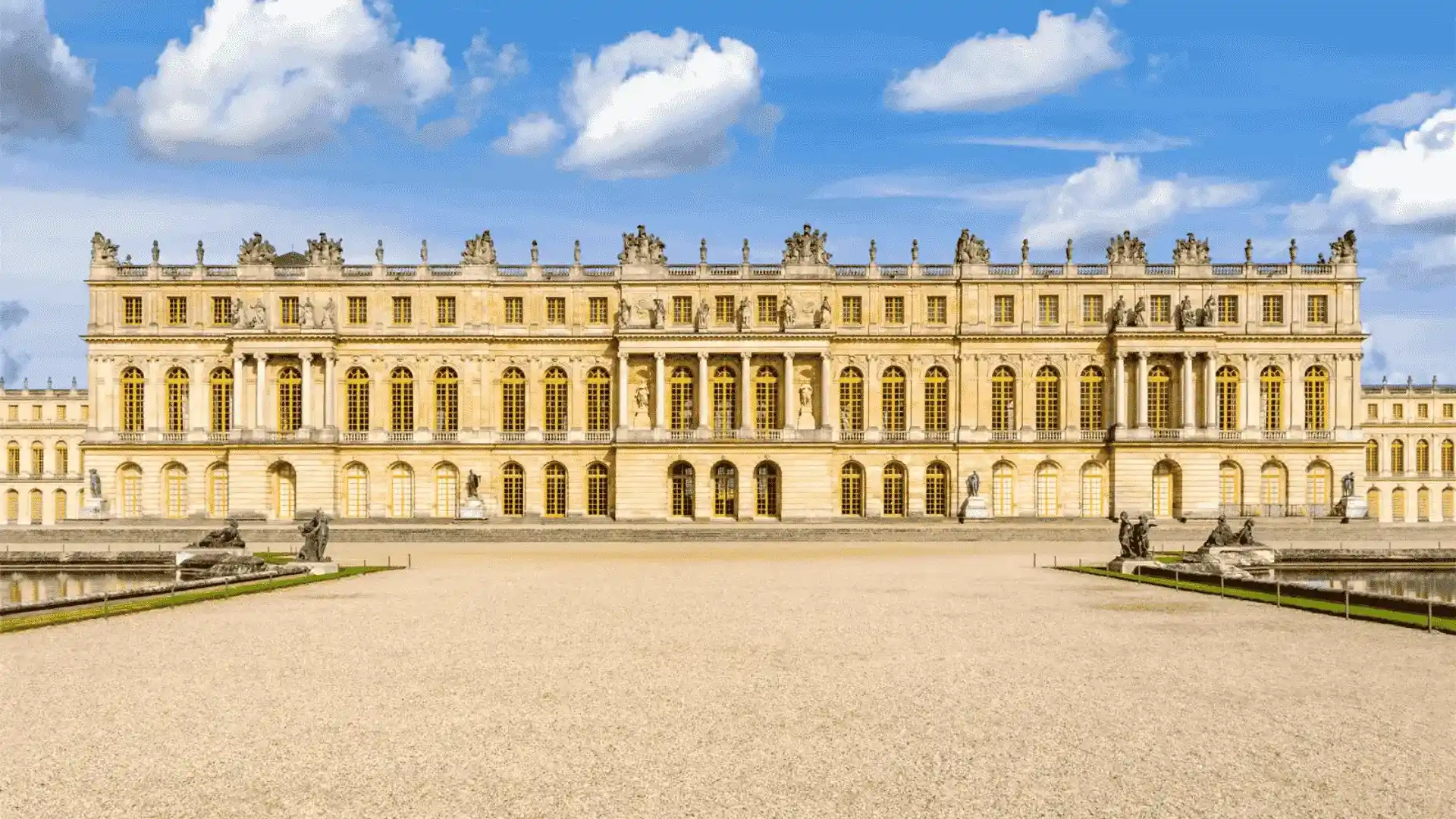
Baroque architecture is bold, dramatic, and full of detail. It was designed to impress and to show the power of the church and royalty. This style is one of the most theatrical in all of European architecture.
- Key Features: Curved facades, large columns, heavy stone decoration, grand staircases, and dramatic light through high windows and painted ceilings.
- Famous Examples: Palace of Versailles (France), St. Peter’s Square colonnade (Rome), Church of the Gesù (Rome)
- Identifying Tip: If a building feels grand and almost over-the-top in detail, it is likely Baroque. Look for curves and large columns at the entrance.
7. Rococo (c. 1730 – 1780)
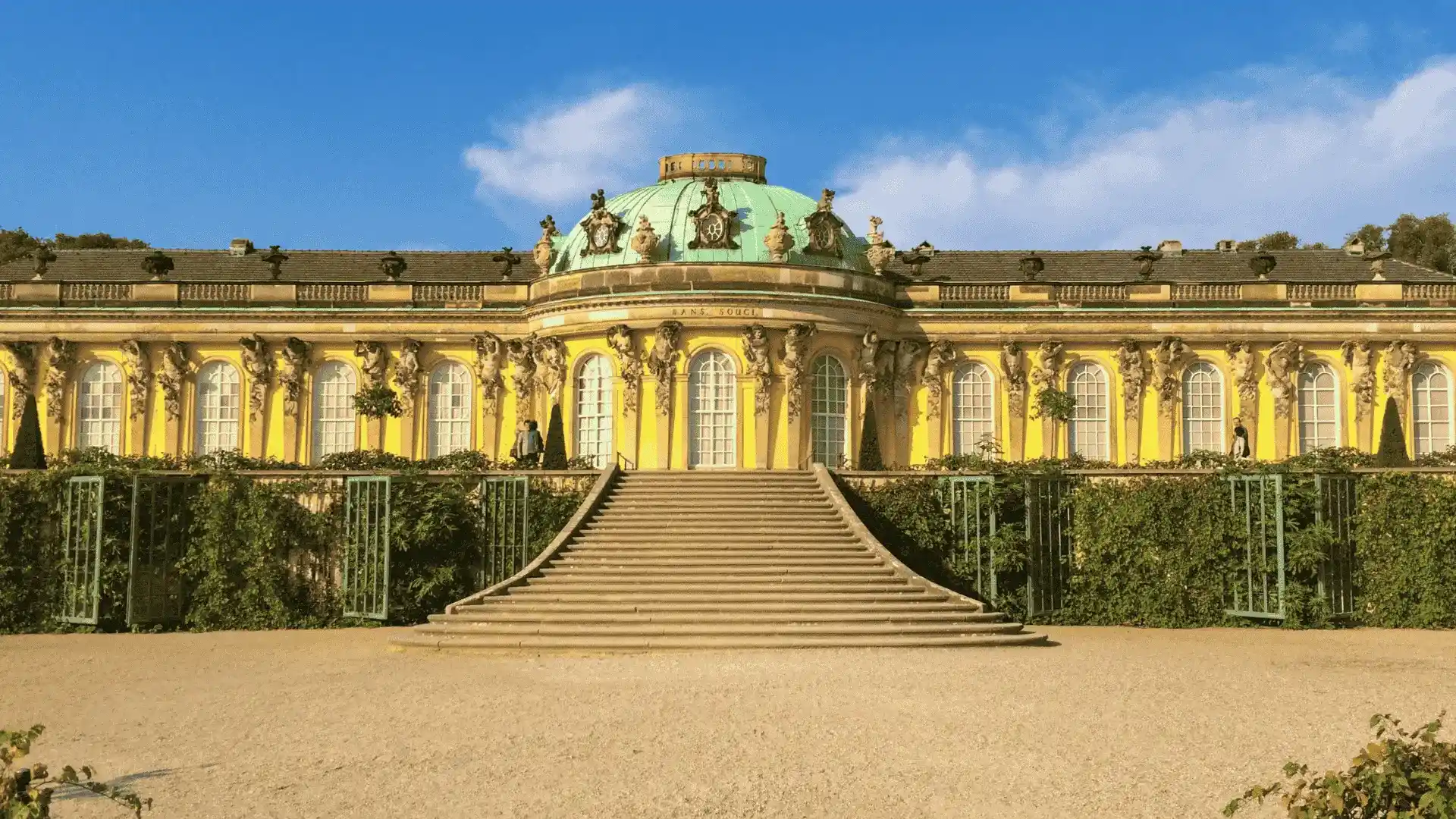
Rococo grew out of Baroque but took a much lighter approach. It was less about power and more about beauty and comfort. This style was mostly used for palace interiors across Europe.
- Key Features: Soft curves, pastel colors, fine floral and shell patterns, and mirrors with gilded frames in interior spaces.
- Famous Examples: Palace of Sanssouci (Potsdam, Germany), Amalienburg Pavilion (Munich)
- Identifying Tip: Rococo is easier to spot indoors. Look for soft colors, curved details, and delicate gold decoration on the walls and ceilings.
8. Neoclassical (c. 1750 – 1850)
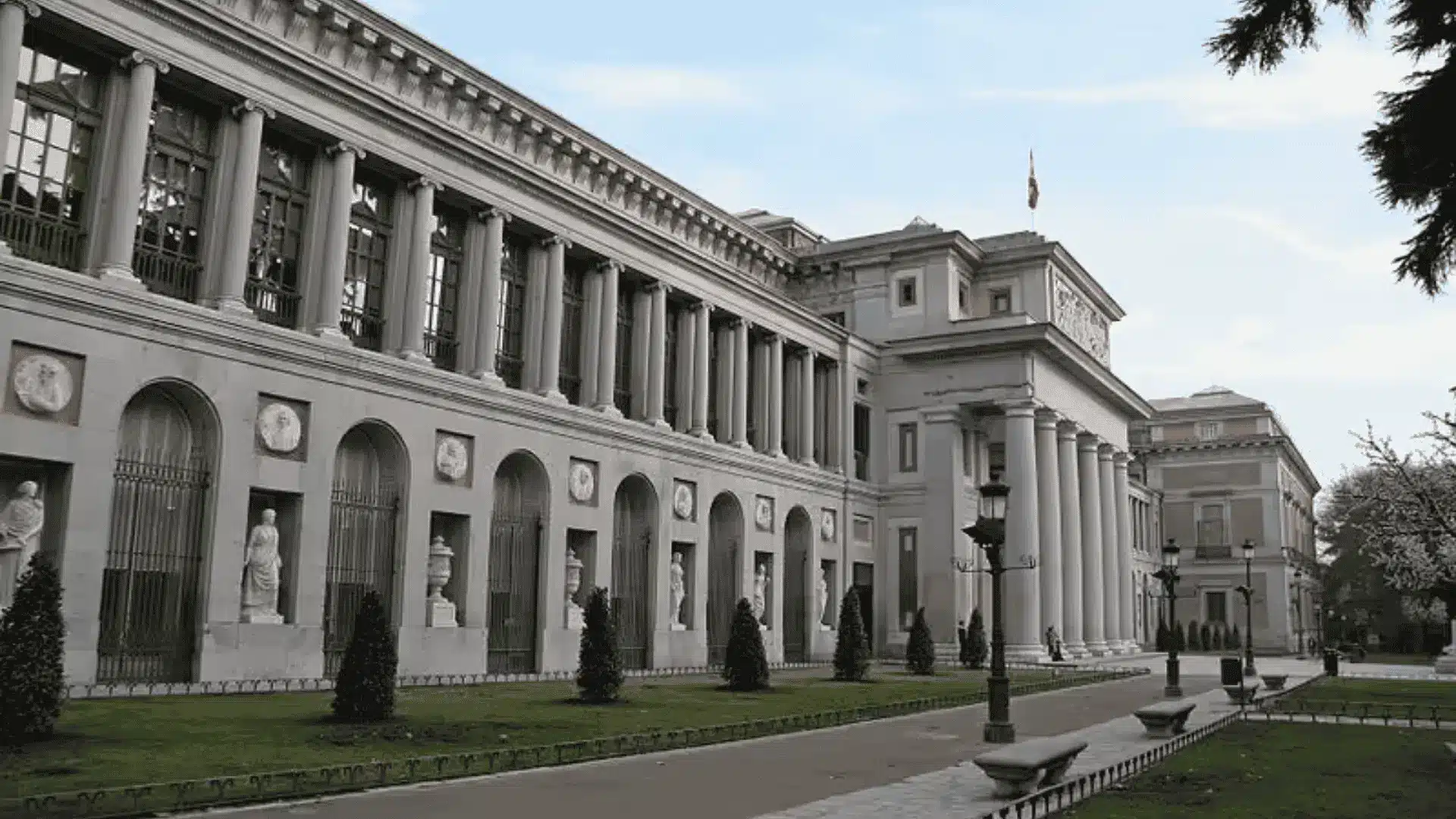
Neoclassical architecture drew on the clean, simple forms of ancient Greece and Rome. It came about as a reaction against the heavy decoration of Baroque and Rococo. Government buildings and museums were the most common uses for this style.
- Key Features: Columns at the front in Classical style, flat or low-pitched roofs, symmetrical layouts with minimal decoration, and triangular pediments above the main entrance.
- Famous Examples: The Panthéon (Paris), British Museum (London), Museo Nacional del Prado (Madrid)
- Identifying Tip: If the building looks like a Greek temple, calm and orderly with columns at the front, it is likely Neoclassical.
9. Gothic Revival and Romanticism (c. 1740 – 1900)
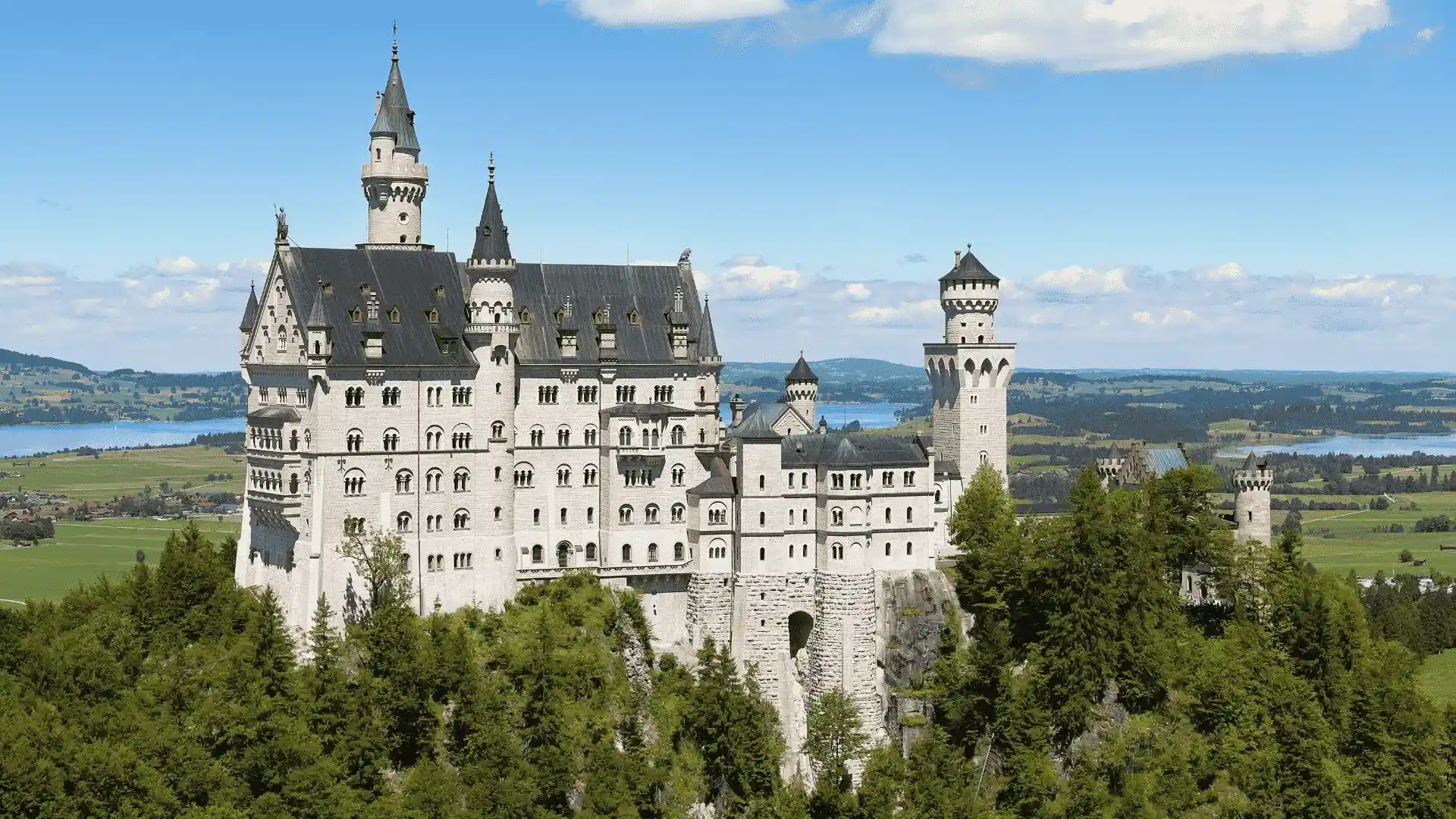
Gothic Revival brought medieval-style pointed arches and stone details back into European architecture. It started as a pushback against the plain, orderly look of Neoclassical buildings. Architects wanted structures that felt rich in history and character.
- Key Features: Pointed arches, decorative stonework, towers and spires, and stained glass windows in churches and public buildings.
- Famous Examples: Houses of Parliament (London), Neuschwanstein Castle (Germany), Prague National Theater
- Identifying Tip: Gothic Revival buildings look medieval, but were built in the 1800s. If it has pointed arches but was built after 1750, it is likely Gothic Revival.
10. Art Nouveau (c. 1890 – 1914)
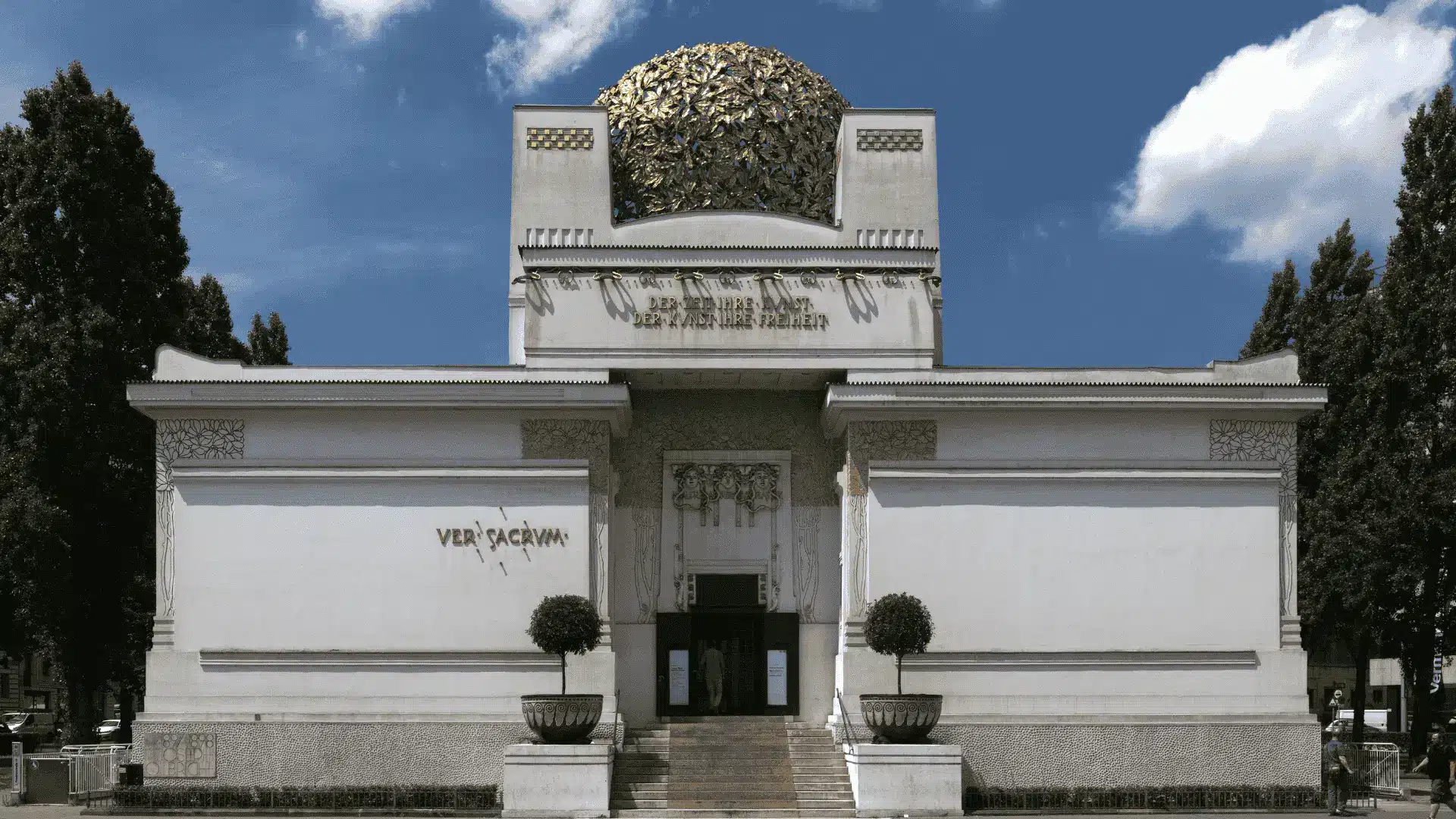
Art Nouveau moved away from all historical styles. It took inspiration from nature, using flowing lines and organic shapes. This style appeared in buildings, furniture, and everyday objects across Europe.
- Key Features: Curved lines inspired by plants, decorative ironwork on facades, mosaic tiles in organic patterns, and asymmetrical layouts that feel free and flowing.
- Famous Examples: Casa Batlló & Sagrada Família (Gaudí, Barcelona), Paris Métro entrances (Guimard), Secession Building (Vienna)
- Identifying Tip: Look for ironwork resembling vines or stems. If the building’s details feel more like a plant than a pattern, it is likely Art Nouveau.
11. Art Deco (c. 1910 – 1940)
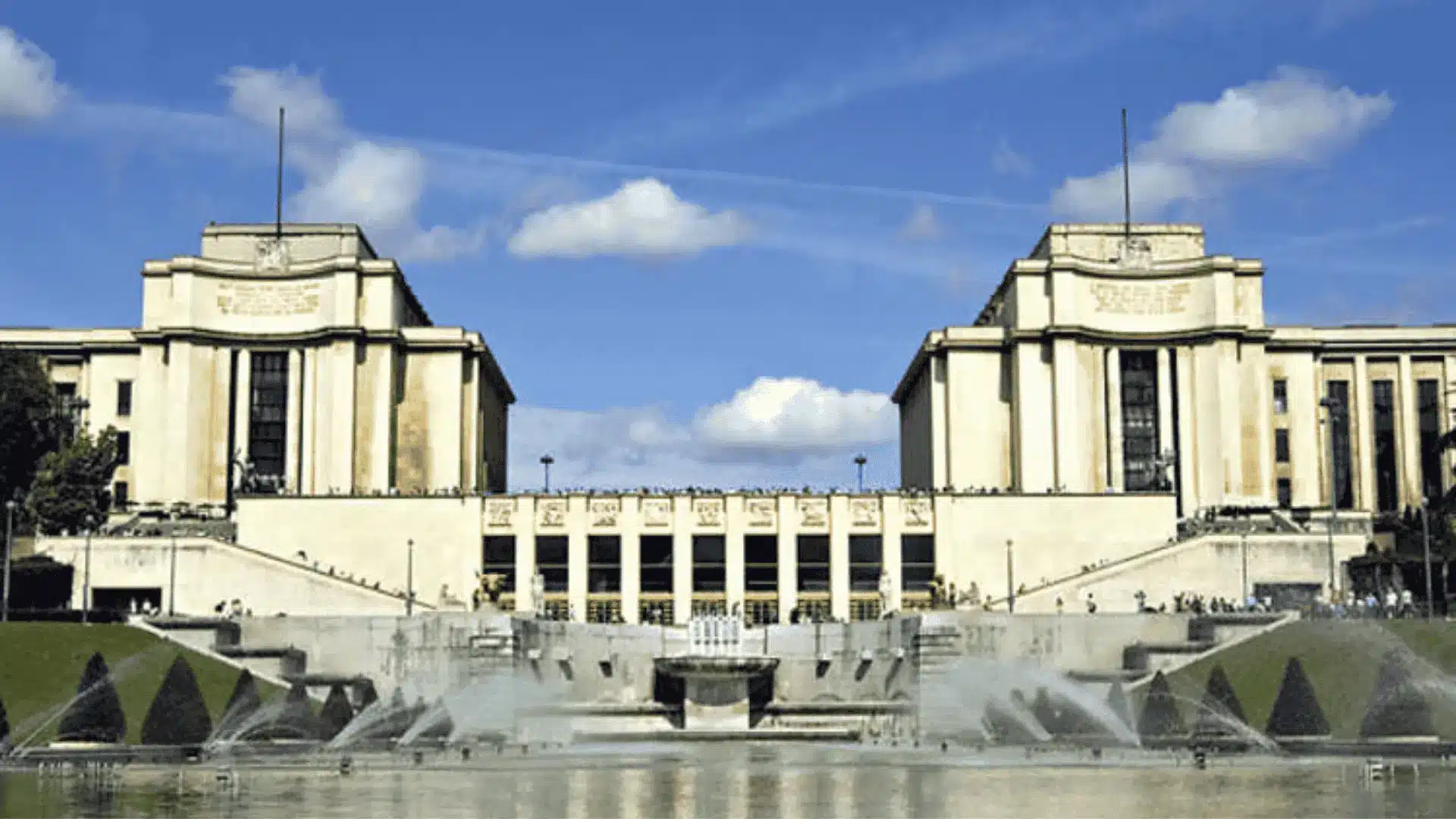
Art Deco brought bold geometry and a modern feel to European architecture. It reflected the energy of the 1920s and 1930s. The style appeared in cinemas, hotels, and office buildings across the continent.
- Key Features: Strong vertical lines, stepped shapes, geometric patterns on facades, rich materials like chrome and marble, and bold decorative details near the top of buildings.
- Famous Examples: Palais de Chaillot (Paris), and Various Art Deco cinemas in London and Brussels
- Identifying Tip: Look for a building with strong upward lines and repeating geometric shapes near the top. Art Deco always looks sharp and deliberate.
12. Bauhaus and Modernism (c. 1920 – 1970)
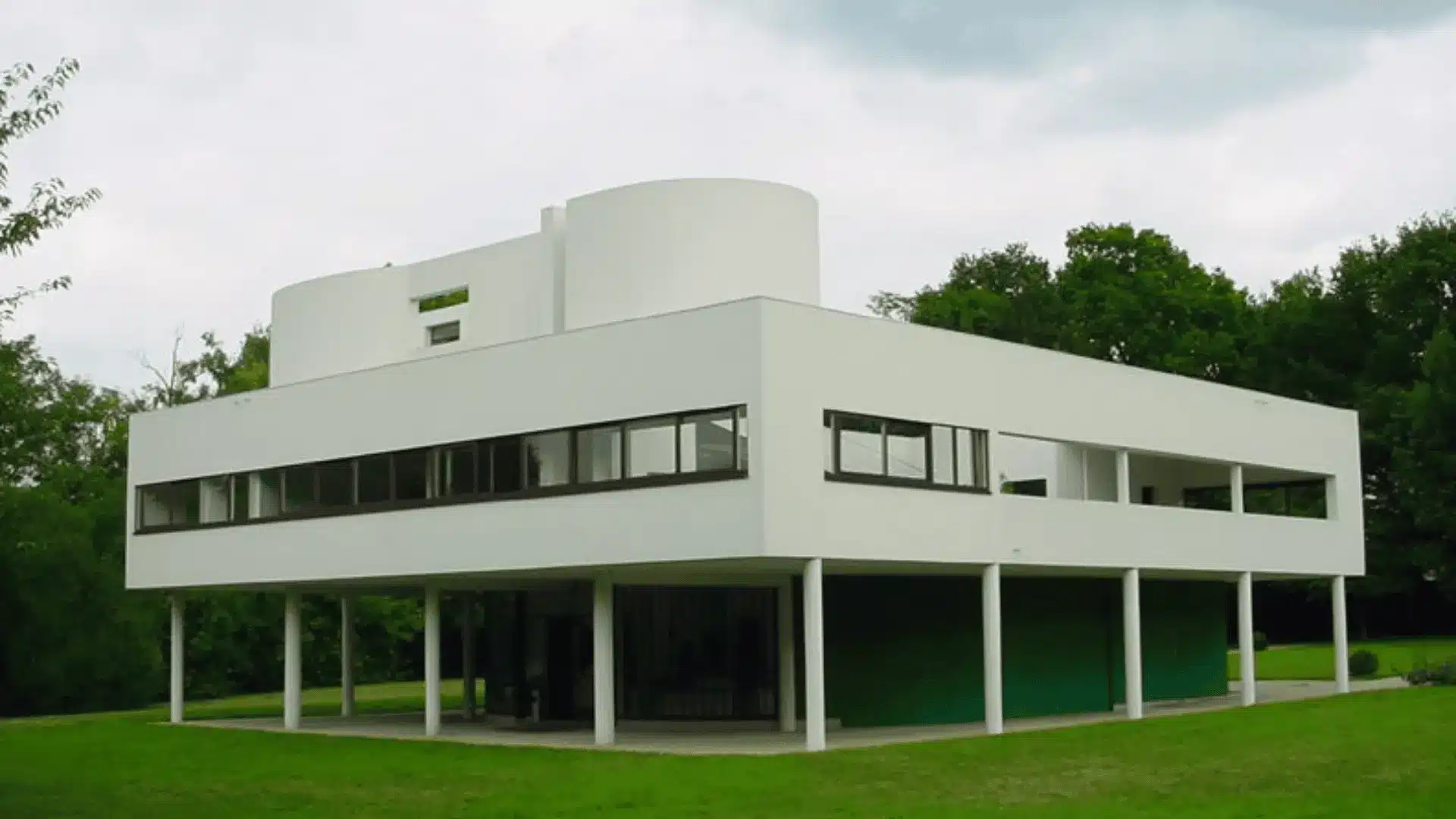
Modernist architects believed that a building should serve its purpose above all else. Decoration was removed completely. This was one of the biggest shifts in European architecture in the 20th century.
- Key Features: Flat roofs, large glass windows covering full walls, open floor plans, and steel, concrete, and glass as the main materials.
- Famous Examples: Villa Savoye (Le Corbusier, France), Bauhaus School (Dessau, Germany)
- Identifying Tip: If a building looks completely plain with no decoration and large glass panels, it is likely Modernist. Function comes first, and it shows.
13. Brutalism (c. 1950 – 1980)
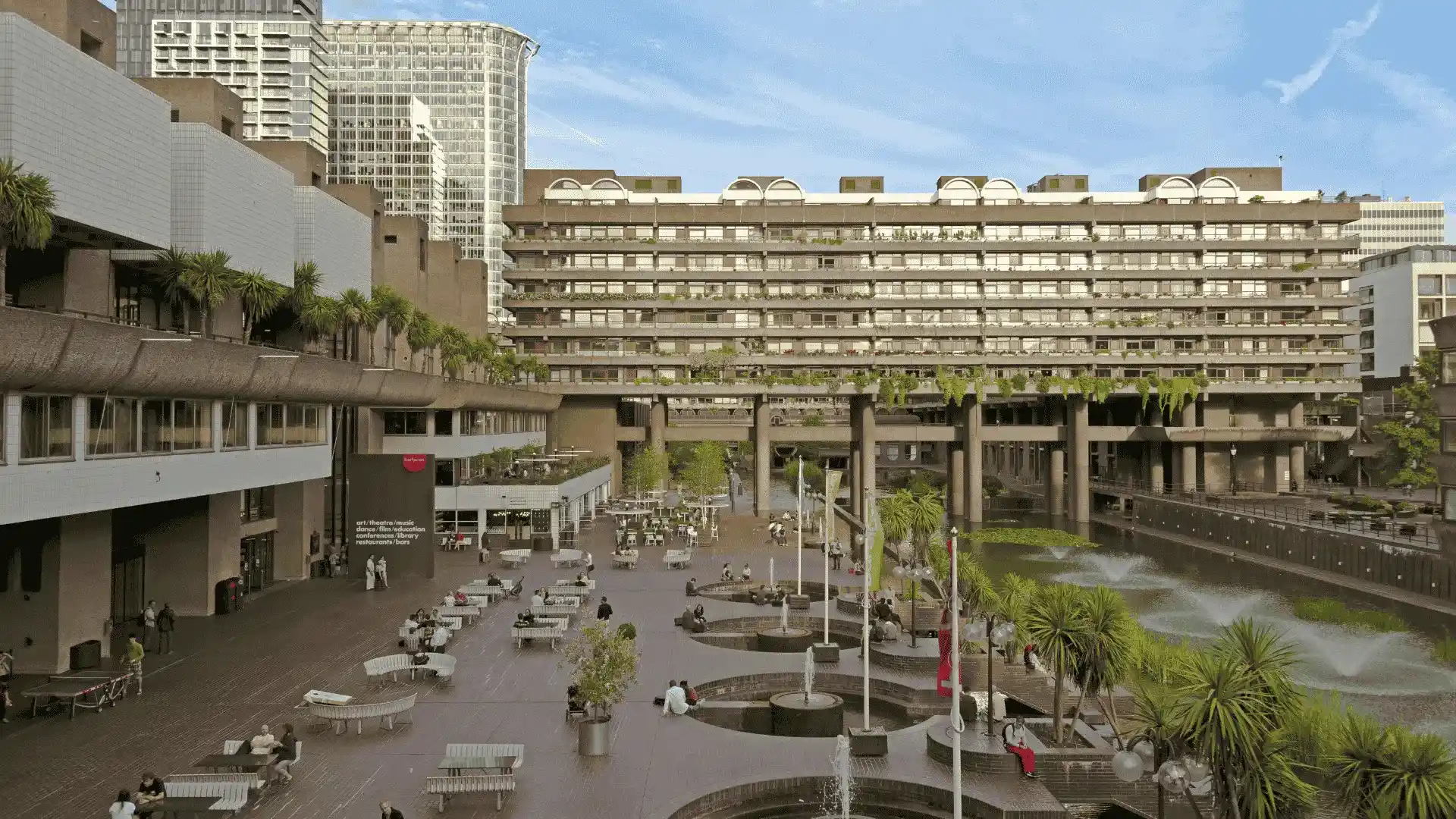
Brutalism is one of the most distinctive styles in European architecture. It used raw, exposed concrete in large, blocky forms. Many Brutalist buildings were public structures built after World War II.
- Key Features: Raw exposed concrete, large blocky geometric forms, small windows set deep into thick walls, and monumental scale on housing and civic buildings.
- Famous Examples: Barbican Centre (London), and Unité d’Habitation (Marseille)
- Identifying Tip: If the building is made of bare gray concrete and looks large and blocky, it is Brutalist. The heavier and more fortress-like it looks, the more likely it is to fit this style.
14. Postmodernism (c. 1960 – Present)

Postmodernism pushed back against the strict rules of Modernism. Architects started adding color, references to historical styles, and playful shapes back into their designs. There are no fixed rules, which makes this style one of the most varied in European architecture.
- Key Features: Mixed historical references, bold colors, unconventional shapes, decorative details with no structural purpose, and a deliberate contrast between old and new ideas.
- Famous Examples: Neue Staatsgalerie (Stuttgart), and Lloyd’s Building (London)
- Identifying Tip: If a building mixes styles from different periods, uses unexpected colors, or feels deliberately unusual, it is likely Postmodern.
European architecture reflects centuries of cultural growth, artistic innovation, and historical change across the continent. By understanding its major styles, you can more easily recognize iconic buildings and appreciate the stories they tell during your travels or studies.
Famous Architects Who Shaped European Architecture
Behind every great building is a person with a vision. These architects left a lasting mark on European architecture and the way we build today.
- Filippo Brunelleschi (1377-1446): He designed the Florence Cathedral dome, helping define the Renaissance style across European architecture.
- Michelangelo Buonarroti (1475-1564): He contributed to St. Peter’s Basilica in Rome, blending art and architecture in a powerful way.
- Christopher Wren (1632-1723): He rebuilt much of London after the Great Fire, including the iconic St. Paul’s Cathedral.
- Jules Hardouin-Mansart (1646-1708): He designed the Palace of Versailles, making it one of the grandest examples of Baroque architecture.
- Antoni Gaudí (1852-1926): He shaped Barcelona with organic, nature-inspired buildings like the still-unfinished Sagrada Família.
- Victor Horta (1861-1947): He brought Art Nouveau to life in Brussels through curved ironwork and flowing interior spaces.
- Walter Gropius (1883-1969): He founded the Bauhaus school in Germany, which became a foundation for modern European architecture.
- Le Corbusier (1887-1965): He pushed Modernism forward with bold concrete structures and a focus on function over decoration.
European Architecture by Country: What to Expect and Where
Every country in Europe has its own architectural story. This section breaks down what each country is known for and the key buildings worth looking out for.
| Country | Where | What To Expect |
|---|---|---|
| Italy | Rome, Florence, Venice, Naples | Ancient Roman ruins, Renaissance palazzos and domes, Baroque churches and piazzas |
| France | Paris, Loire Valley, Reims, Strasbourg | Gothic cathedrals, châteaux, grand boulevards, Beaux-Arts monuments |
| Spain | Andalusia (Granada, Seville, Córdoba), Barcelona, Toledo | Moorish heritage, Gothic cathedrals, Spanish Baroque, Catalan Modernisme (Art Nouveau) |
| United Kingdom | London, Bath, Oxford, Edinburgh | Gothic and Neo-Gothic landmarks, Georgian terraces, Victorian streets, modern and Brutalist icons |
| Germany | Berlin, Munich, Cologne, Dresden | Gothic cathedrals, rebuilt historic centers, Bauhaus and Modernism, post-war architecture |
| Belgium | Brussels, Antwerp, Bruges, Ghent | Art Nouveau and Art Deco in Brussels, medieval guildhalls, preserved canal-town cores |
| Austria | Vienna, Salzburg, Graz | Imperial Baroque, grand 19th-century avenues, Secession-era design in Vienna |
| Czech Republic | Prague, Český Krumlov, Kutná Hora | Gothic spires, Baroque churches, colorful historic squares, Art Nouveau pockets |
| Netherlands | Amsterdam, Rotterdam, Utrecht, Delft | Canal houses and gables, brick civic buildings, bold contemporary architecture in Rotterdam |
| Portugal | Lisbon, Porto, Sintra | Manueline details, azulejo-tiled façades, Baroque churches, and pastel historic streets |
| Greece | Athens, Delphi, Thessaloniki | Classical temples and columns, Byzantine churches, and neoclassical neighborhoods |
| Turkey | Istanbul, İznik, Bursa | Byzantine domes and mosaics, monumental imperial architecture, and layered historic districts |
How European Architecture Influenced the Rest of The World
European architecture did not stay in Europe. Through trade, colonization, and cultural exchange, its styles spread to nearly every corner of the world.
- Classical Architecture in the Americas: Greek and Roman column styles shaped government buildings and courthouses across the United States and Latin America.
- Gothic and Baroque Churches in Latin America: Spanish and Portuguese colonizers brought these styles to South and Central America during the 1500s.
- British Colonial Architecture in Asia and Africa: Britain carried Neoclassical and Victorian styles to India, Australia, South Africa, and other parts of the British Empire.
- French Influence in Southeast Asia: French colonial rule left behind Baroque and Neoclassical buildings in cities like Hanoi and Phnom Penh.
- Modernism Across the Globe: The Bauhaus movement and Le Corbusier spread European Modernism to North America, South America, and beyond.
- Art Deco in Major World Cities: Art Deco from Europe appeared in cities like New York, Mumbai, and Shanghai during the 1920s and 1930s.
Wrapping It Up
European architecture is more than old buildings and pretty facades. It is a record of how people lived, what they valued, and how their ideas changed over time.
From the order of Classical columns to the raw concrete of Brutalism, each style had a purpose. Each one was a response to what came before it.
Knowing these styles makes travel richer. It makes history more real. A cathedral or a city square becomes something you can read, not just look at.
The next time you pass a building with pointed arches or curved ironwork, take a second look. You might already know more than you think.
Which style of European architecture do you find most interesting? Drop it in the comments below.