


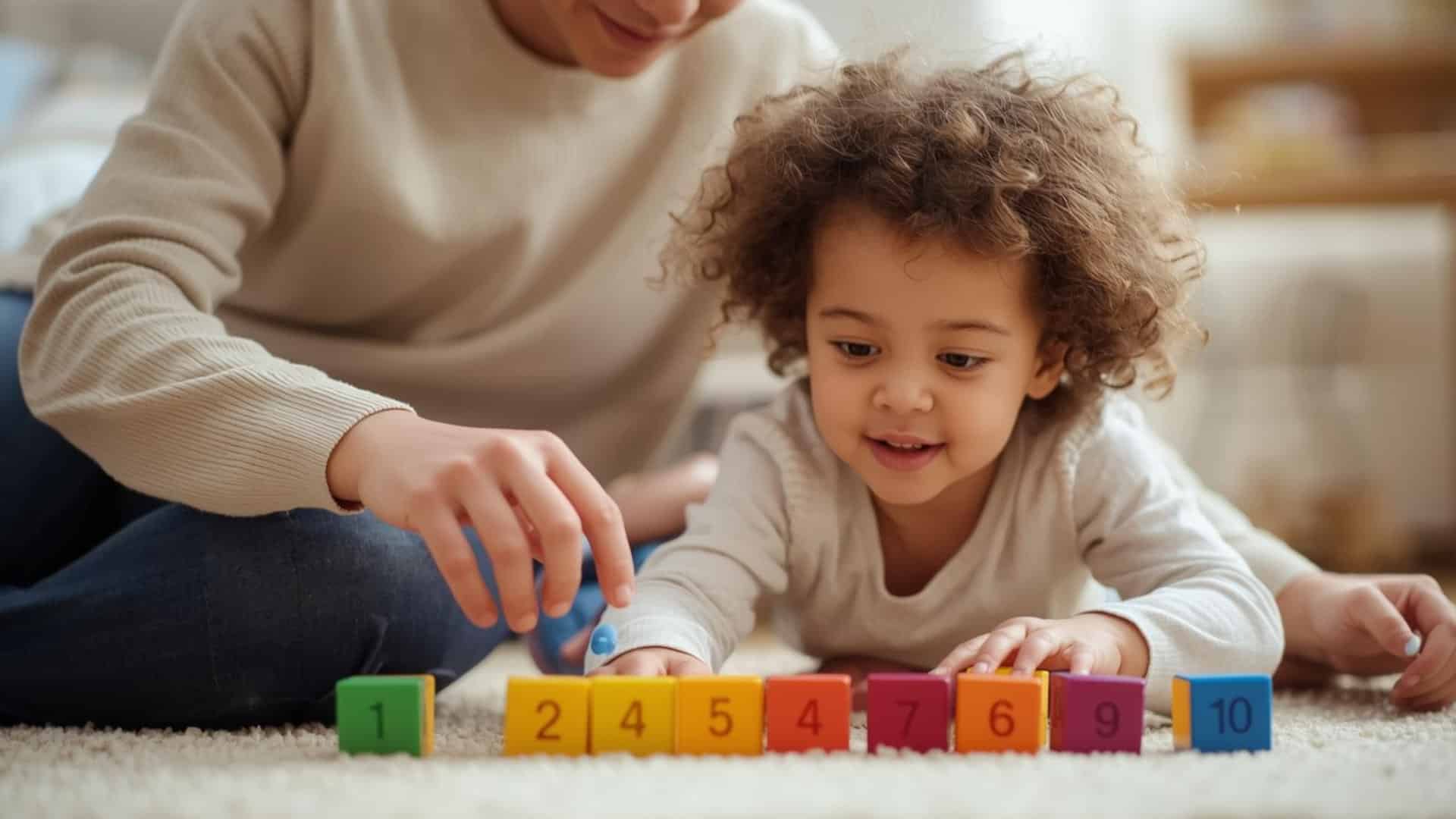
When a parent asks me, “When can kids count to 10?”, I can usually hear the real question underneath: “Is my child doing okay?”
Counting feels like a big milestone because it comes up everywhere, from preschool talk to counting songs on TV.
But counting to 10 is not one single skill that suddenly appears. It’s a set of steps that builds over time, and those steps don’t always appear in a neat order.
Most of the time, the question means one of two things: can my child say the numbers in order, or can my child count real objects one by one and arrive at the correct total?
Both matter, but they’re different. I’m going to break it down simply and share easy, everyday practices that help.
At what age do kids usually count to 10?
Most kids can count to 10 by around age 5. The CDC lists counting to 10 as a milestone most children can achieve by age 5, which provides a helpful benchmark for what’s typical.
That said, many kids begin counting earlier. Some preschoolers can count to 10, or at least recite it, around ages 3 to 4, especially when they hear counting in songs, play, and daily routines.
By ages 4 to 5, many children can count 10 or more objects with better accuracy, not just say the number list. It also helps to know that CDC milestones reflect what most children, about 75% or more, can do by that age.
To really understand whether a child is “counting,” we need to separate two connected skills: saying the number sequence and accurately counting objects one by one.
Rote Counting vs Real Counting Explained
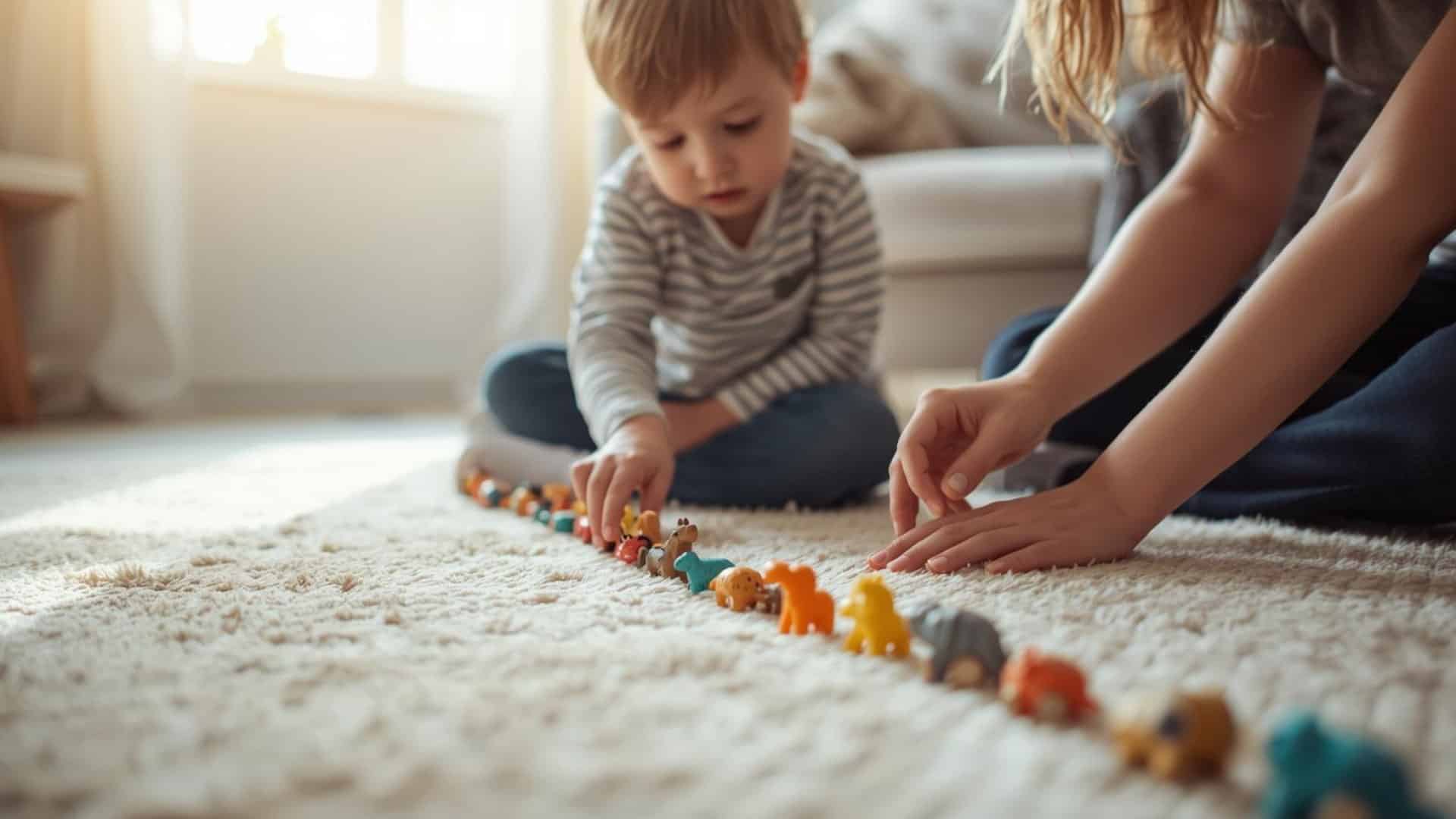
Counting to 10 can look impressive, but it does not always mean a child understands what the numbers represent. I like to think of it as two connected skills: saying the number sequence and using those numbers to accurately count real things.
Rote Counting: Saying The Number List
This is the “1, 2, 3…” chant. Kids often learn it by copying adults, singing along with songs, or hearing counting in shows. At this stage, they may skip numbers or mix up the order, and that’s still normal.
Understood points out that early math skills build over time, so children may recite numbers before they truly connect them to quantity.
Real Counting: Counting Objects Correctly
This is where counting starts to “click” in a practical way. A child counts objects one by one without skipping or counting the same item twice. They often point, touch, or move each item to stay on track.
Over time, they also begin to understand cardinality, meaning the last number said tells how many there are in total. One-to-one counting is a core early concept in early childhood math.
Typical Counting Milestones By Age
Here’s the timeline I use when I want a realistic “what’s common” view, without turning it into pressure.
| Age | What You Might See | What I Focus On Next |
|---|---|---|
| 1–2 | Interested in number words, may recite a few out of order | Count to 3 during routines |
| 2–3 | Copying, counting, starts joining in counting play | Count small sets (2–5 items) |
| 3–4 | More stable number order, starts counting objects by pointing | Practice 5–10 objects slowly |
| 4–5 | Often counts 10 or more objects | Ask How many? after counting |
| 5 | Most kids can count to 10 | Use counting in games and chores |
This aligns with the CDC 5-year milestone for counting to 10 and with the preschool expectations shared by the American Academy of Pediatrics for ages 4–5.
Signs Your Child Is Really Counting (Not Just Reciting)
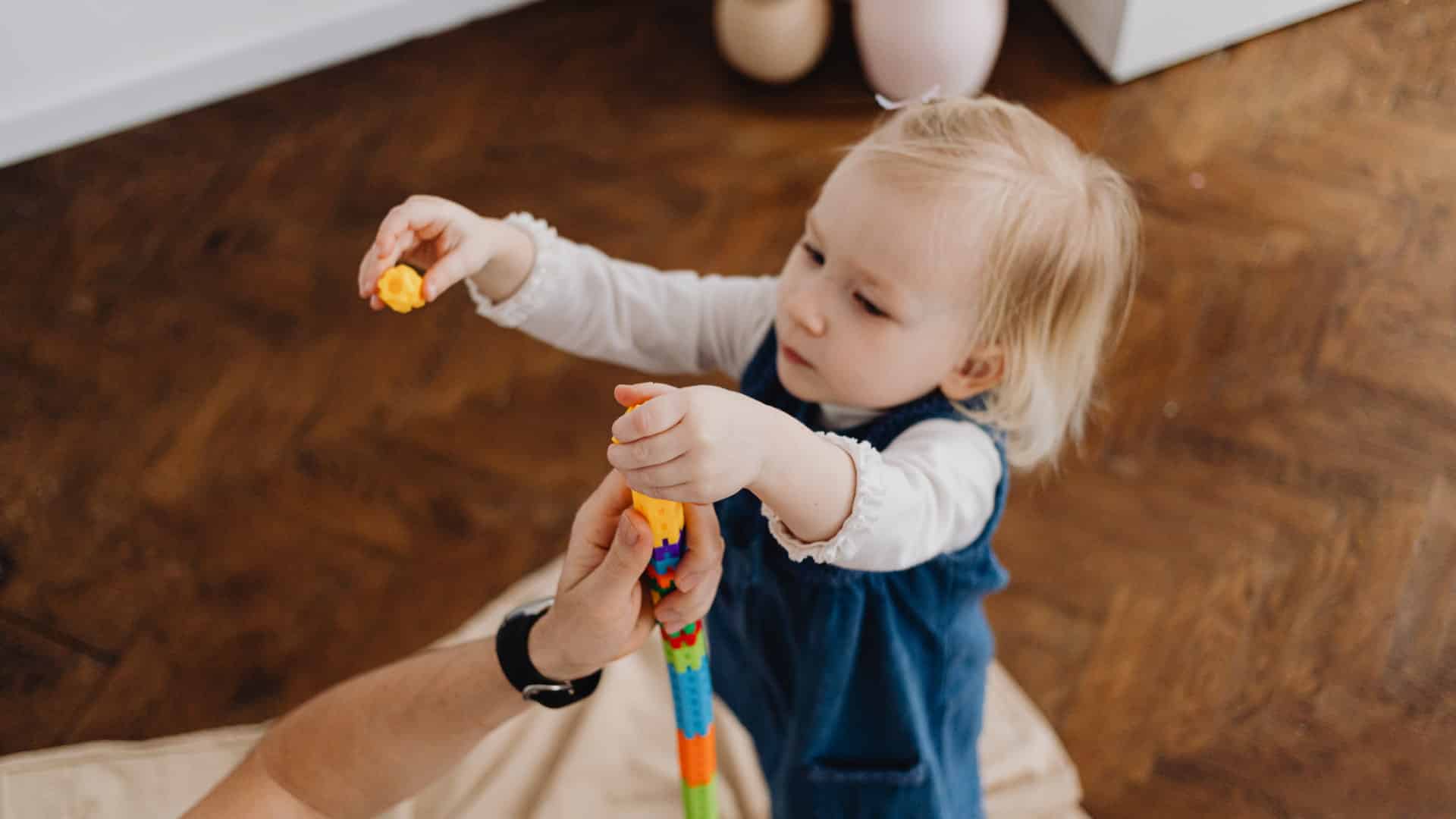
When I want to know if counting is real, I watch what my child does with objects, not just words.
- Count 10 real objects: Blocks, grapes, toy cars, or coins, instead of counting “in the air.”
- Touches or moves each item: Points, taps, or slides items while counting to avoid skipping or double-counting.
- Stays in order and stops at 10: Doesn’t jump around the number list and finishes at ten when asked.
- Answers: How many? After counting, they understand the last number means the total, even if they need a quick reminder.
If your child shows most of these signs, they’re counting on understanding, and accuracy will keep improving naturally.
Common Counting Struggles: Simple Fixes
These are the most common counting hiccups I see, plus the quick, practical fixes I use at home.
| Common Counting Struggle | What It Looks Like | The Fix I Use |
|---|---|---|
| Skipping numbers | Your child jumps over numbers (like missing 6 or 7) | I slow it down, model once clearly, then we try again together. |
| Double counting | They count the same object twice or lose their place | I have them move each counted item into a separate “done” pile. |
| Counting fast with no accuracy | They race through numbers, but the total is wrong | I switch to “touch-and-say,” so each object gets one number. |
| Knows the chant but not the quantity | They can recite 1–10 but can’t count objects correctly | I pause songs and count real things like snacks, toys, or steps daily. |
Most counting struggles are normal and short-term. With small tweaks like these, accuracy improves quickly without pressure.
Easy Daily Habits That Help Kids Count To 10
These quick daily habits make counting feel natural, build number confidence, and help kids practice without pressure or worksheets.
Count During Routines
This is one of the easiest ways to practice without making it feel like work. ZERO TO THREE suggests using routines like bedtime, bath time, stairs, and waiting time to count out loud and gradually increase the number range.
Ideas I like:
- Count steps going up or down
- Count the toys going into a bin
- Count seconds while waiting (start with 3, then stretch to 5, then 10)
Use Simple Math Talk
NAEYC explains that babies and toddlers build early math ideas through everyday experiences and the language adults use, like “more,” “empty,” and “full.”
Phrases I use a lot:
- Who has more?
- Let’s see how many.
- Do we need one more?
Games To Get Your Child Counting
This is the section I lean on most, because games create repetition without boredom. Games are my go-to because they help kids repeat counting without getting bored, and kids learn faster when it feels like play.
- Number Path Game: Draw 1–10 squares, roll a die, move a piece, and count each step.
- Predict And Check: Guess where you’ll land, then count moves to see if it’s right.
- Give Me 10: Child drops 10 blocks into a bowl, counting one by one.
- Jump The Numbers: Tape 1–10 on the floor, jump, and count out loud.
- Muffin Tin Count: One item per cup; count to prevent double-counting.
- Toy Hunt: Find 10 toys, line up, and recount from 1.
- Finger Count: Flash fingers, ask “How many?”, then mix it up.
Short daily play works best. A few minutes of these games can build real counting skills without stress or drilling.
When To Worry (And What I Do Next)
If you’re concerned about development, the CDC encourages parents to talk with their child’s doctor and ask about developmental screening.
I would bring it up if your child is close to 5 and still cannot count to 10 at all, if they struggle to count even small groups of objects like 3 to 5 most of the time, or if you notice a loss of skills they once had.
If your gut says something feels off, it’s okay to ask for support and clarity. You’re not overreacting by checking, and getting guidance early can make the next steps feel much easier.
Conclusion
When I think about counting to 10, I don’t treat it like a single pass-fail moment.
I look for steady steps over time: first learning the number list, then counting real objects one by one, and finally understanding “how many” when the counting is done.
Progress can look messy, and that’s normal. If you want the simplest plan, I’d keep it practical and light: count during routines like stairs, snack time, bath time, and cleanup.
Count real objects every day, even if it’s only five at first, then build up. And play one simple number path game a few times a week. With steady practice, ten starts to feel easy.
Frequently Asked Questions
Can A 3-Year-Old Count To 10?
Some can recite to 10, and some can count small groups of objects. Skills vary a lot at this age.
Is It Normal If My 4-Year-Old Can’t Count To 10?
It can be. Many 4-year-olds are still developing accurate object-counting skills. If you’re worried, bring it up at a checkup.
By What Age Do Most Kids Count To 10?
By age 5, the CDC lists “counts to 10” as a milestone most children can do.