

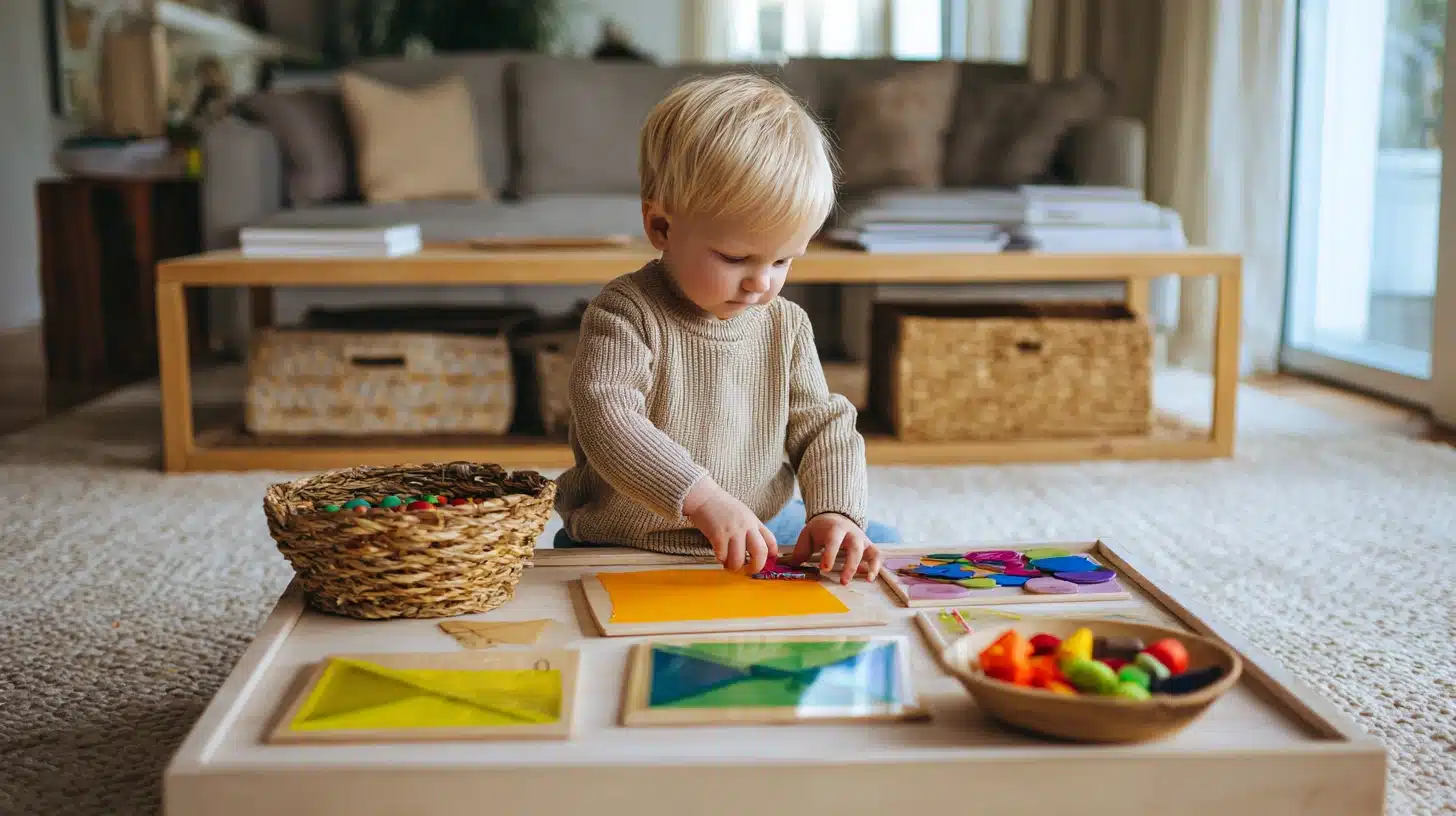
Toddlers learn best through simple play, not perfect setups. You do not need fancy toys, printable packets, or a craft-store run to help your child build real skills.
The most effective toddler learning activities happen in the middle of real life, at the kitchen table, on the living room floor, and in the few spare minutes before lunch.
When activities are quick, repeatable, and easy to reset, they actually get used. The ideas below start with fast wins you can do today, then move into skill-based activities based on what you want to build, like fine motor, early math, language, sensory play, and movement.
You will also find age guidance and simple fixes for the moments when things go sideways. Everything uses items you already have and takes 15 minutes or less.
What Makes a Good Learning Activity for Toddlers?
A good activity is safe, short, and easy to reset. It should focus on one clear skill, like fine motor control, early math, language, sensory play, or movement.
Early childhood development research shows toddlers build real skills through repetition. A small tweak, like a new color or a different tool, keeps it feeling fresh while strengthening the same learning.
A new color, a different tool, or fewer pieces can feel brand new to your toddler. Before you set anything up, run four quick checks: stay close the whole time, make sure every piece is too big to swallow, choose a mess level you can handle today, and check your child’s mood because a tired or hungry toddler will quit fast. These take seconds and save a lot of frustration.
Fine Motor Toddler Learning Activities
Fine motor skills grow through repeated hand and finger practice. Start with bare hands, then add tools like spoons or tongs as control improves. Always use bigger pieces and stay close.
1. Pom-Pom Transfer (Spoon or Tongs, Bowl to Bowl)
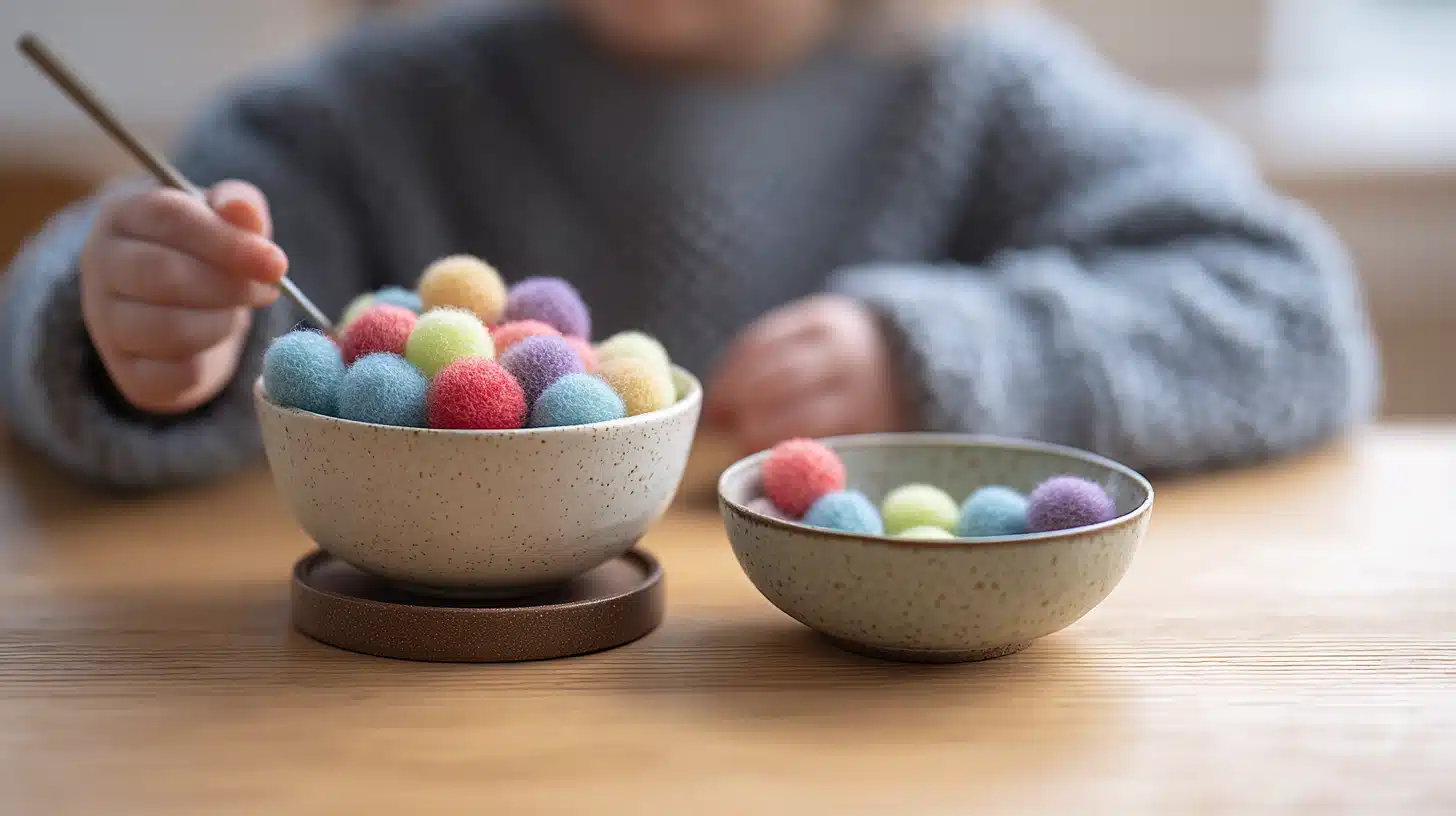
This simple transfer activity builds grip strength and hand control using items you already have at home. Toddlers stay focused as they move pom-poms from one bowl to another, one piece at a time.
- What You Need: Pom-poms, two bowls, a spoon, or tongs.
- How To Do It: Place pom-poms in one bowl. Ask your toddler to move them one by one into the empty bowl using a spoon or tongs.
- What They Learn: Hand control, grip strength, and focus.
- Make It Easier: Use hands instead of tools.
- Make It Harder: Sort by color into separate bowls.
Safety Note: Use large (jumbo) pom-poms for children under 3. Small items can be a choking hazard. Always supervise closely.
2. Sticker Line (Stickers Along a Taped Line)
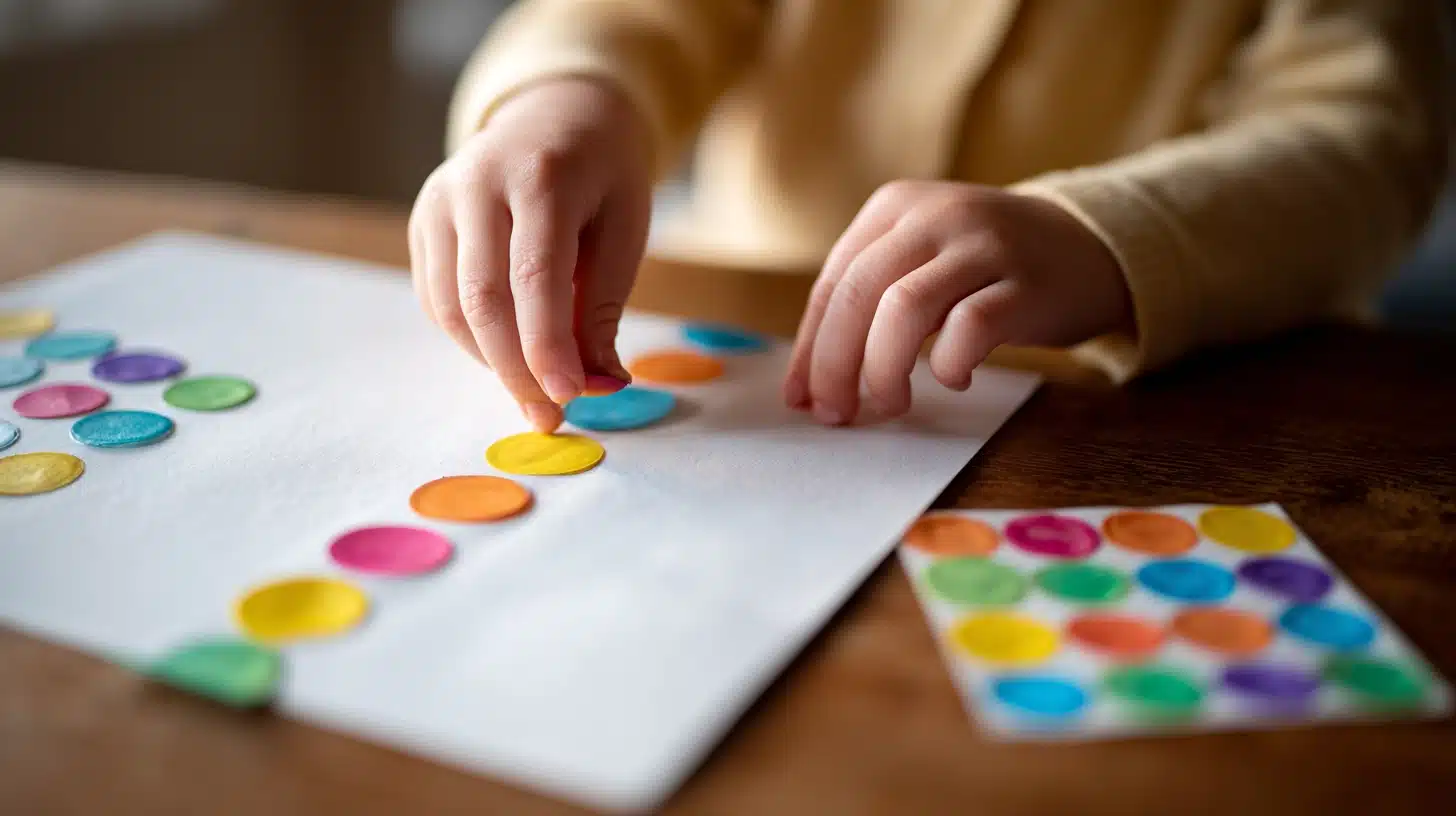
Peeling and placing stickers sounds simple, but it gives little fingers a real workout. This activity strengthens the pincer grip and teaches toddlers to follow a visual path with intention.
- What You Need: Stickers, masking tape, and paper.
- How To Do It: Tape a line on paper or a table. Ask your toddler to peel and place stickers along the line.
- What They Learn: Pincer grip, hand-eye coordination, and following a visual path.
- Make It Easier: Use larger stickers.
- Make It Harder: Curve or zigzag the tape line.
3. Clothespin Pinch (Pin Clothespins to a Box Edge)
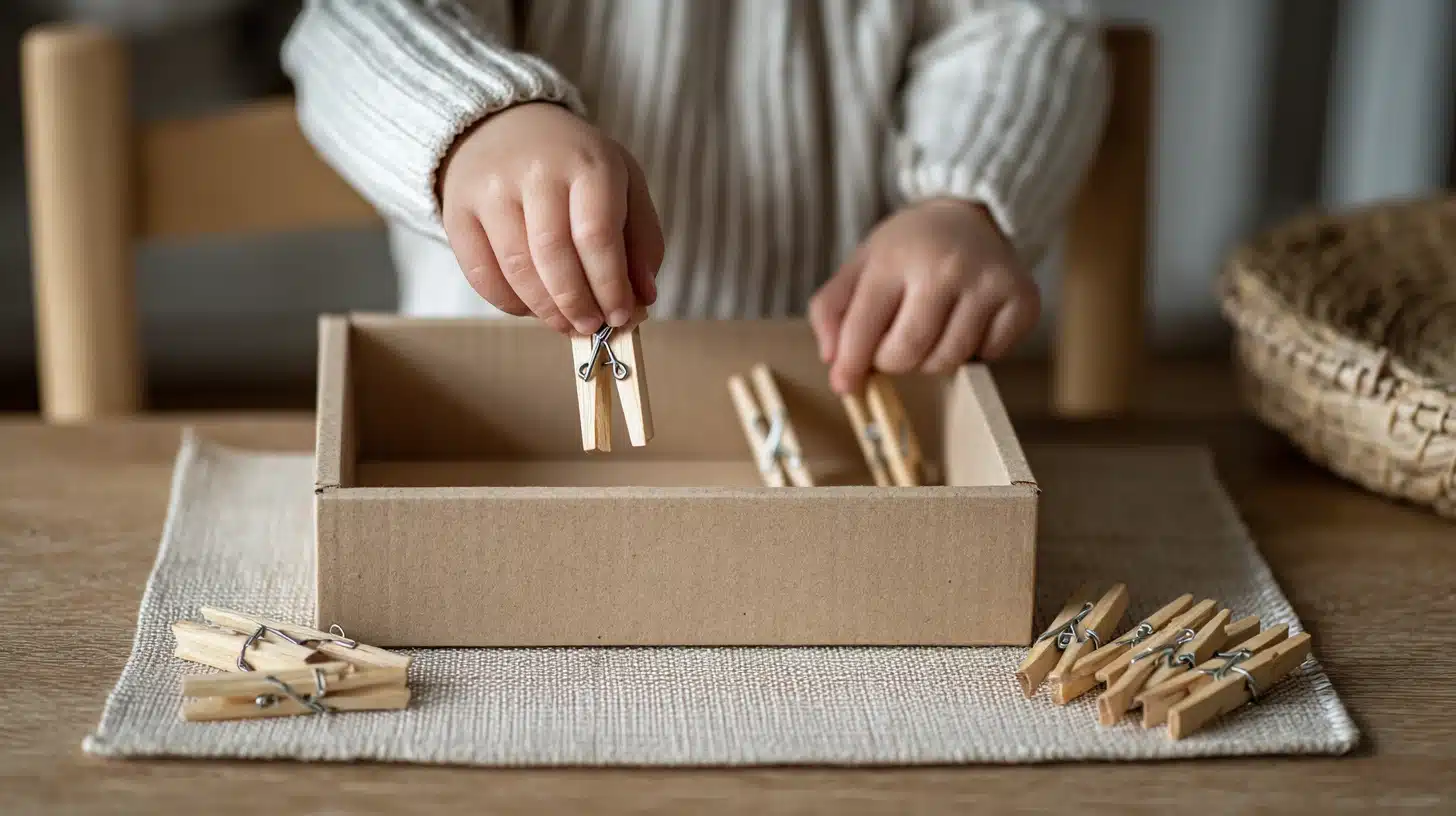
Clipping clothespins to a box edge works the small muscles in your toddler’s hands without any mess. It is one of the best fine motor activities because it requires real finger strength and control.
- What You Need: Wooden clothespins, a small cardboard box.
- How To Do It: Show your toddler how to squeeze and clip each clothespin along the edge of the box. Let them fill the whole edge.
- What They Learn: Pinching strength, finger coordination, and hand muscle development.
- Make It Easier: Hold the box steady while they clip.
- Make It Harder: Color-match clothespins to colored box sections.
4. Q-Tip Dot Painting (Dots on Letters or Shapes)
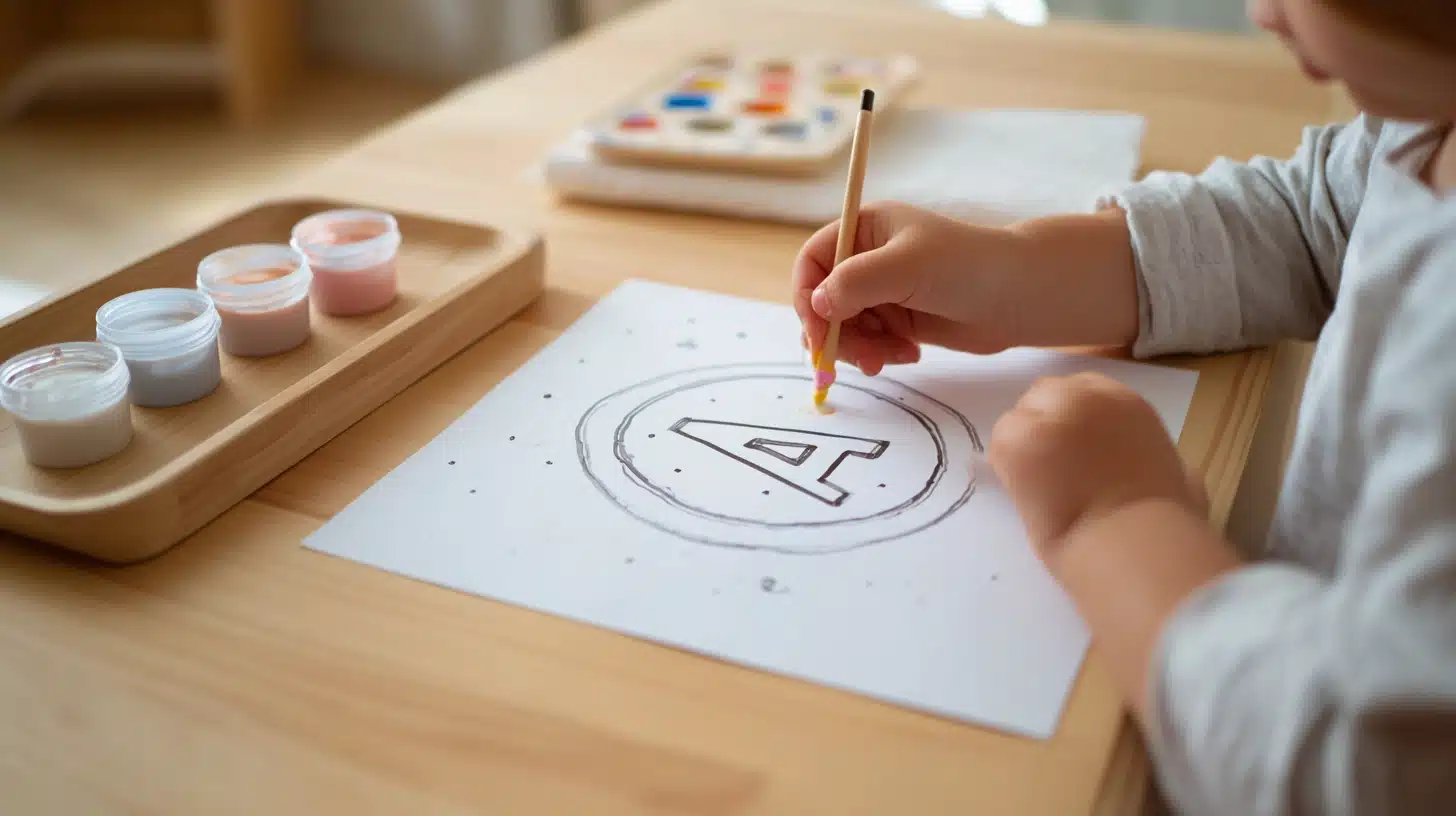
Dot painting with Q-tips gives toddlers a creative outlet while quietly building hand precision. Pressing dots inside letters or shapes introduces early letter recognition in a hands-on, low-pressure way.
- What You Need: Q-tips, washable paint, and printed letters or shapes on paper.
- How To Do It: Dip a Q-tip in paint and press dots inside or along the outline of each shape or letter.
- What They Learn: Controlled hand movement, early letter recognition, and focus.
- Make It Easier: Use larger shapes with thick outlines.
- Make It Harder: Fill in the shape entirely using only dots.
5. Threading and Lacing (Cereal or Pasta on String)
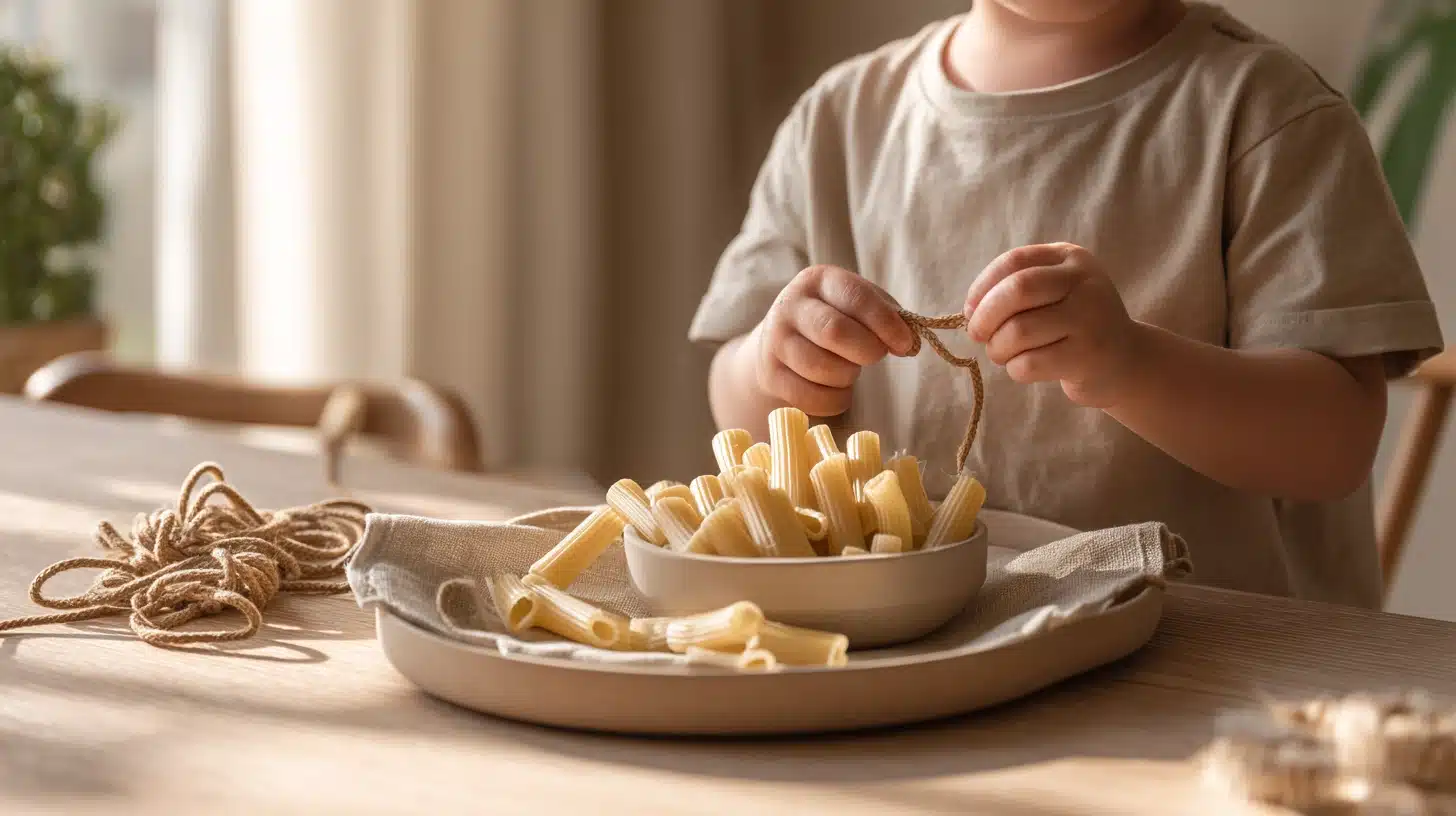
Threading pasta or cereal onto a string keeps toddlers busy while building real coordination skills. Each piece they add requires steady hands, patience, and careful aim between the hole and the string.
- What You Need: Dry pasta tubes or cereal with holes, a thick piece of string or shoelace.
- How To Do It: Tie a knot at one end of the string. Let your toddler thread pieces one at a time onto the string.
- What They Learn: Hand-eye coordination, patience, and early sequencing skills.
- Make It Easier: Use larger pasta and a stiffer lace.
- Make It Harder: Thread in a color pattern.
Safety Note: Use large pasta pieces and a short, thick lace. Small food items and long strings can pose choking or entanglement risks. Always supervise closely during this activity.
Fine motor activities may look simple, but they build the hand strength and control toddlers need for everyday skills like feeding, dressing, and eventually writing. Keep practice playful, short, and hands-on, and those little fingers will grow stronger every day.
Early Math Activities for Toddlers
Math at this age is mostly about noticing. Toddlers learn through real objects, not numbers on paper. Keep counting from one to five and focus on same, different, more, less, and simple patterns.
6. Color Sorting Cups (Blocks or Pom-Poms by Color)
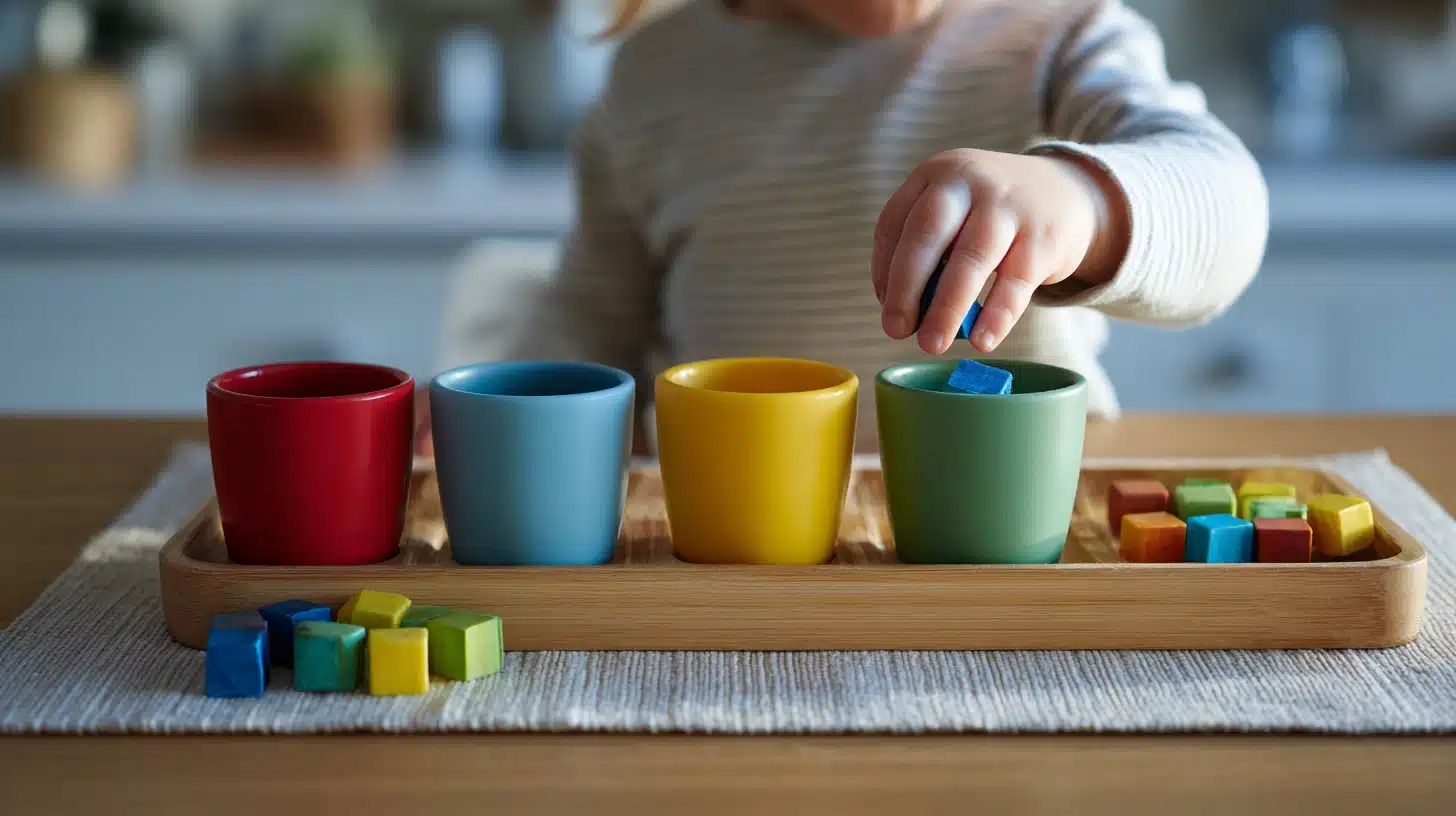
Sorting by color is one of the first math skills toddlers build naturally. This activity trains the brain to spot differences and group objects by a shared trait, an early form of classification thinking.
- What You Need: Colored cups or bowls, pom-poms or small blocks in matching colors.
- How To Do It: Set out one cup per color. Ask your toddler to drop each pom-pom or block into the cup that matches its color.
- What They Learn: Color recognition, sorting, and early classification skills.
- Make It Easier: Start with just two colors.
- Make It Harder: Add a third or fourth color to the mix.
7. Muffin Tin Counting (Drop 1–5 Items Into Numbered Cups)
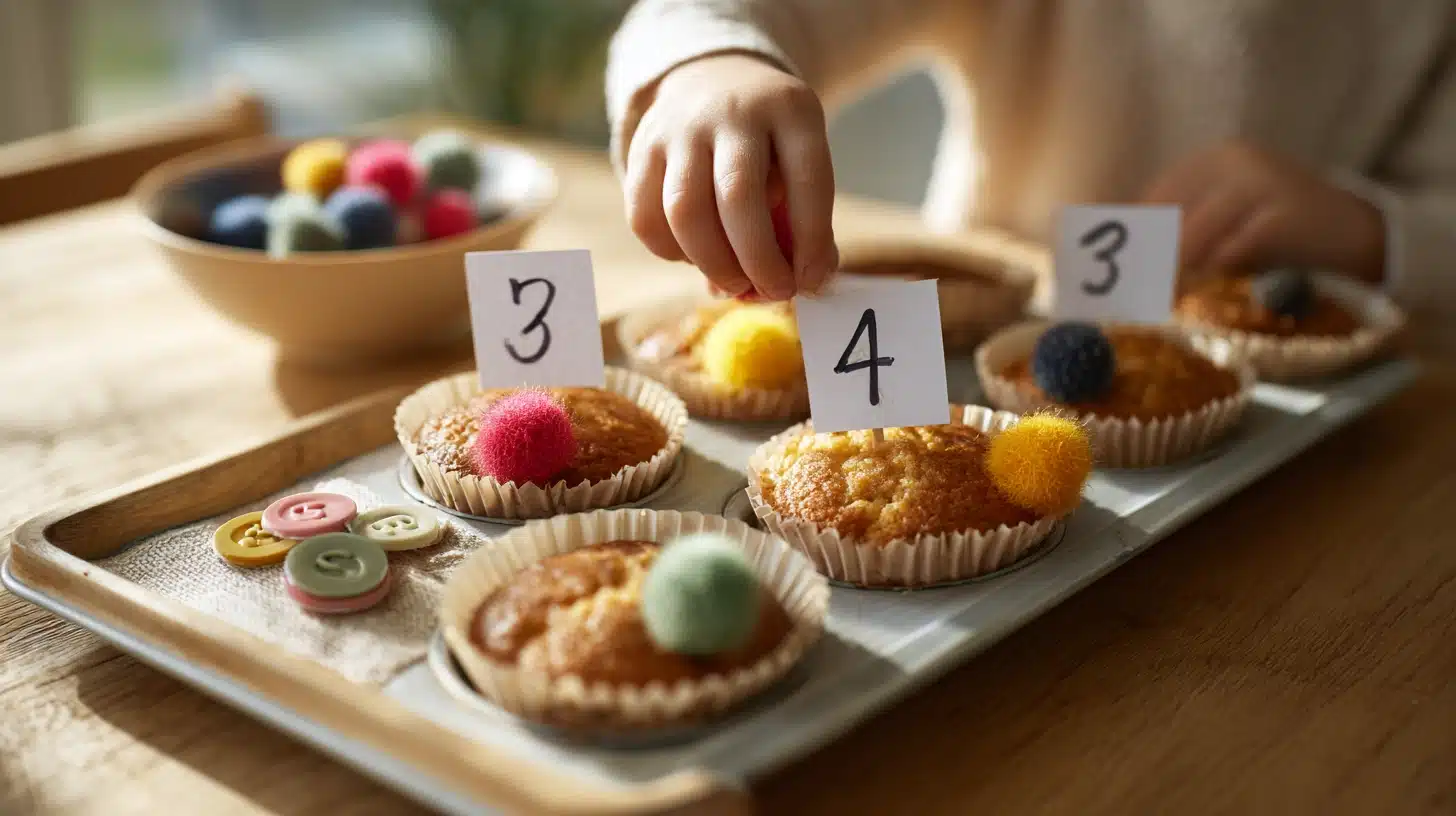
A muffin tin turns counting into a hands-on game. Toddlers place the right number of items into each cup, connecting a written number to a real quantity in a concrete, tangible way.
- What You Need: A muffin tin, small objects like buttons or pom-poms, and number labels from one to five.
- How To Do It: Write or tape a number on the inside of each cup. Ask your toddler to drop in the matching number of items.
- What They Learn: Number recognition, one-to-one counting, and quantity awareness.
- Make It Easier: Use numbers one to three only.
- Make It Harder: Ask your toddler to count out loud as they drop each piece.
Safety Note: Buttons and small counting items pose a choking risk. Use larger objects for toddlers under 3 and supervise at all times.
8. Big and Small Hunt (Group Objects by Size)
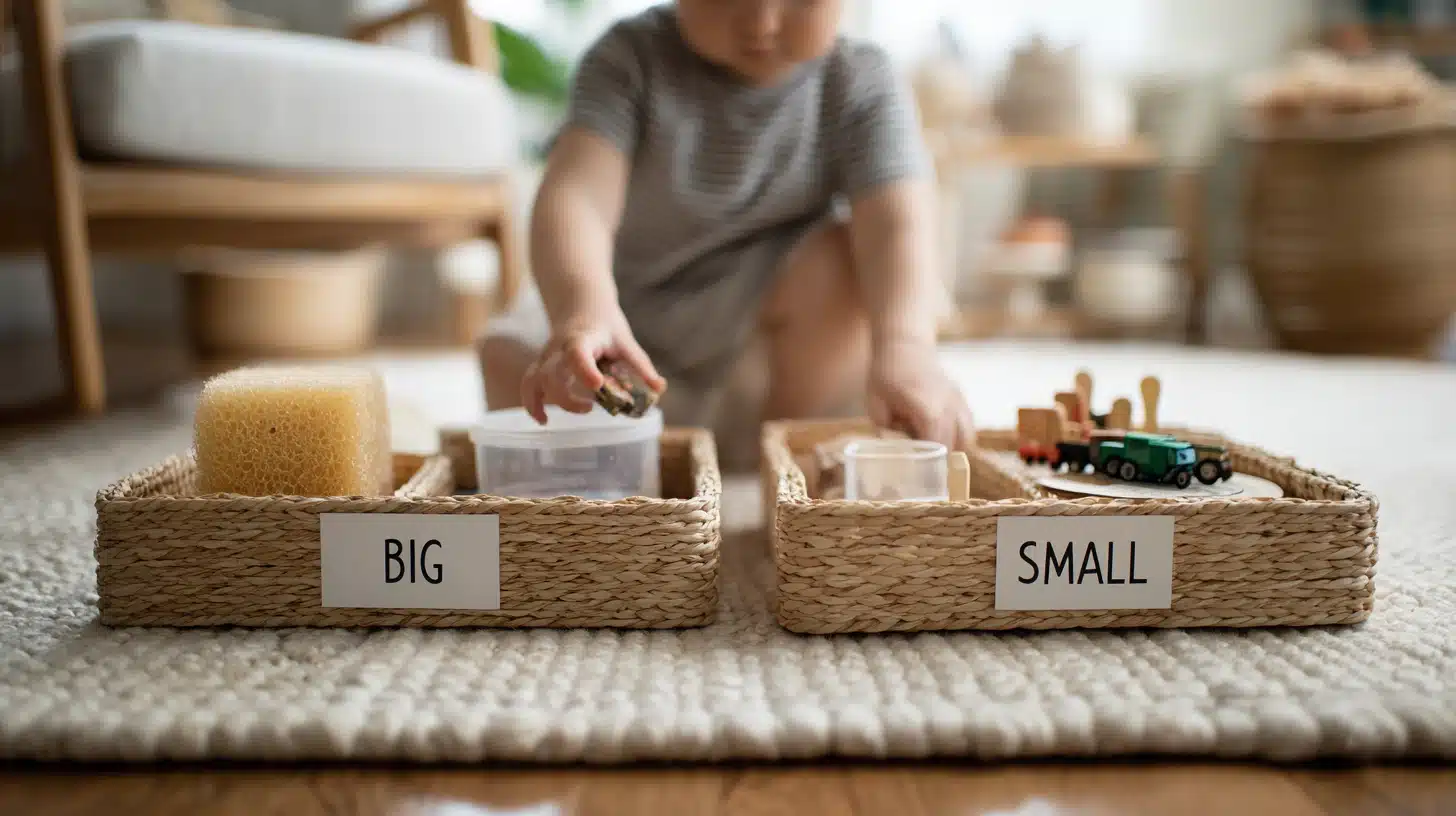
Size comparison is one of the earliest math concepts toddlers grasp. This hunt gets them moving around the house while training their eyes to notice differences between big and small in everyday objects.
- What You Need: A mix of household objects in different sizes, two trays or areas labeled big and small.
- How To Do It: Collect items from around the room. Ask your toddler to place each object in the big or small group.
- What They Learn: Size comparison, basic sorting, and early measurement thinking.
- Make It Easier: Use objects with a very obvious size difference.
- Make It Harder: Add a medium category between the big and small categories.
9. Tape Shape Match (Shapes on Floor, Match Toys to Shapes)
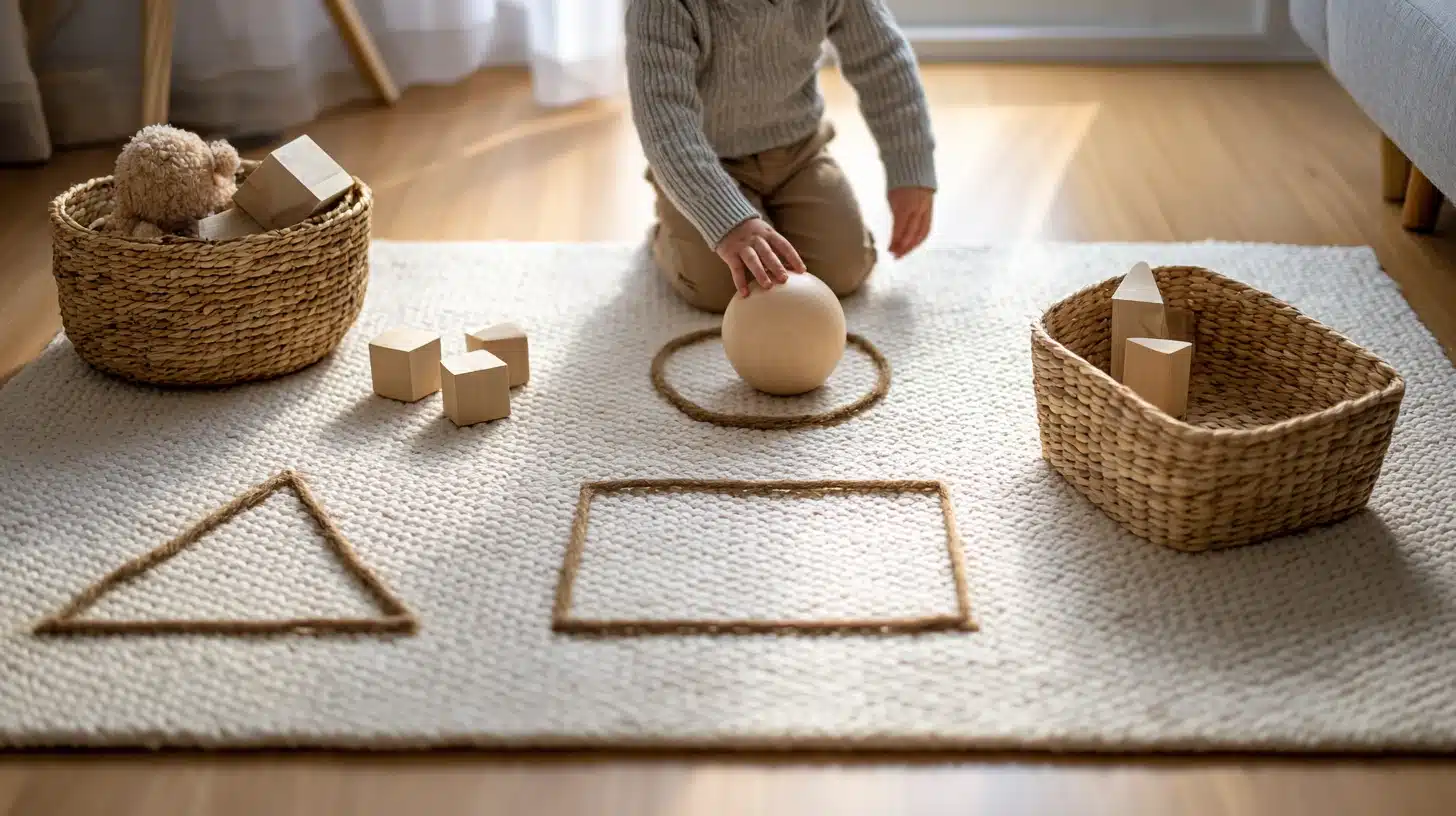
Taping shapes on the floor turns shape learning into a full-body activity. Toddlers pick up toys or objects and match them to the closest shape outline, connecting what they see to what they know.
- What You Need: Masking tape, open floor space, toys or household objects of various shapes.
- How To Do It: Tape or make basic shapes on the floor. Ask your toddler to find objects that match or fit inside each shape outline.
- What They Learn: Shape recognition, spatial thinking, and matching skills.
- Make It Easier: Start with circles and squares only.
- Make It Harder: Name each shape out loud before placing the object.
10. Simple Patterns (Red-Blue-Red-Blue with Socks or Blocks)
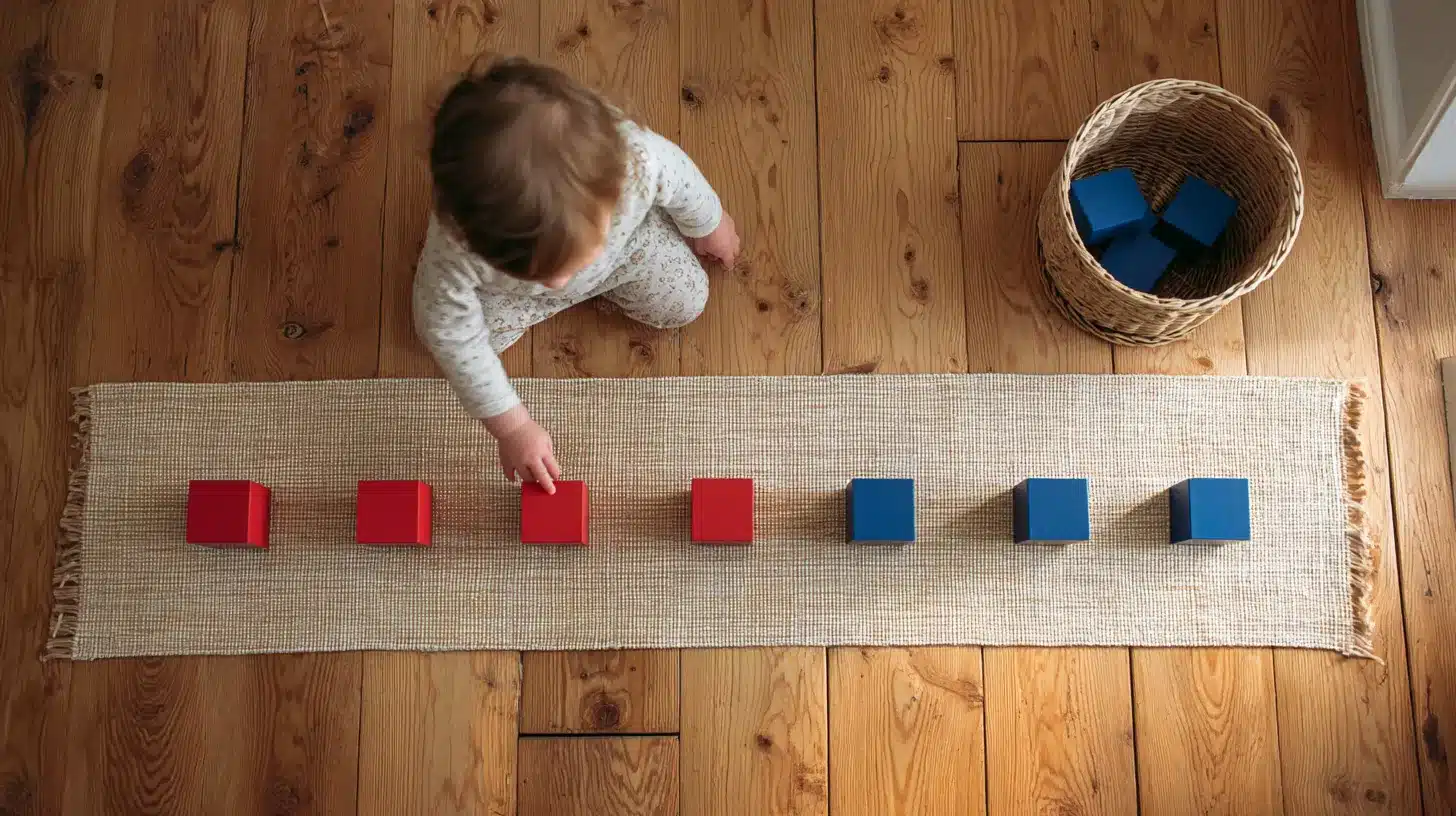
Patterns help toddlers predict what comes next, a key early math skill. Using colorful socks or blocks makes it visual and hands-on, so the concept clicks faster than with paper activities.
- What You Need: Colored blocks, socks, or any two sets of objects in two different colors.
- How To Do It: Lay out a simple red-blue-red-blue pattern. Ask your toddler to continue it by picking the next piece.
- What They Learn: Pattern recognition, sequencing, and predictive thinking.
- Make It Easier: Build the first four pieces and let them add just one more.
- Make It Harder: Introduce a three-part pattern, such as red, blue, and green.
Early math for toddlers is all about hands-on learning through real objects and everyday moments. Keep numbers small, make it playful, and focus on noticing patterns, sizes, and quantities rather than getting the “right” answer.
Language and Pre-Reading Activities
Language builds through talk and play, not flashcards. Use simple prompts daily, and always pause after asking a question. That waiting time gives toddlers space to find their words and respond with confidence.
11. Picture Scavenger Hunt (Find “Something Soft, Round, Red”)
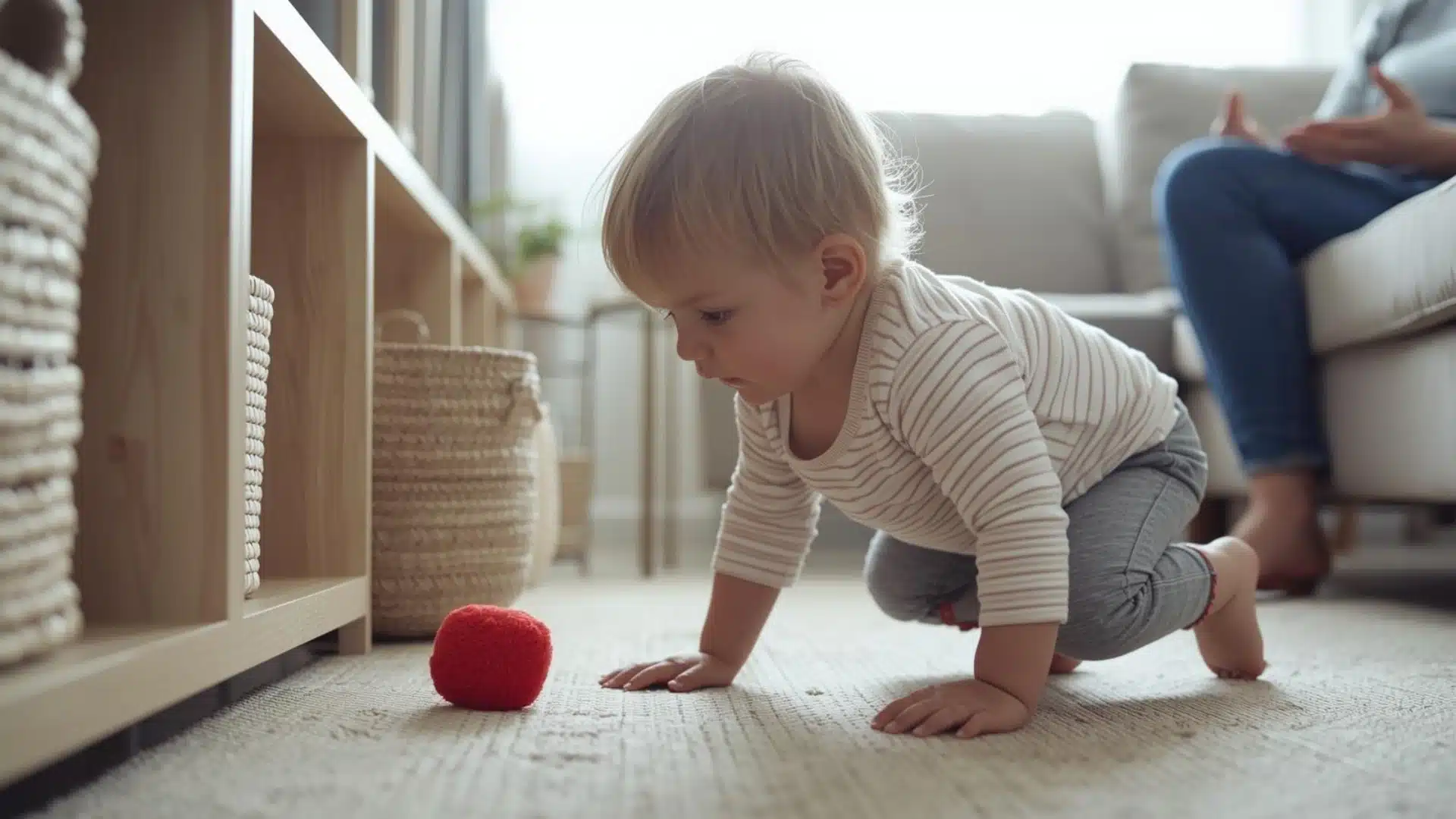
This hunt builds vocabulary by connecting words to real objects toddlers can touch and see. Descriptive clues like “soft,” “round,” or “red” prompt them to think beyond just naming things they already know.
- What You Need: Just your voice and the room around you.
- How To Do It: Give one descriptive clue at a time, such as “find something soft” or “bring me something round and red.” Wait for your toddler to search and return with an object.
- What They Learn: Descriptive vocabulary, listening skills, and word-to-object connection.
- Make It Easier: Use single-word clues, such as “find something blue.”
- Make It Harder: Combine two or three descriptors into one clue.
12. Story Basket (Pick 3 Objects, Make a Tiny Story)
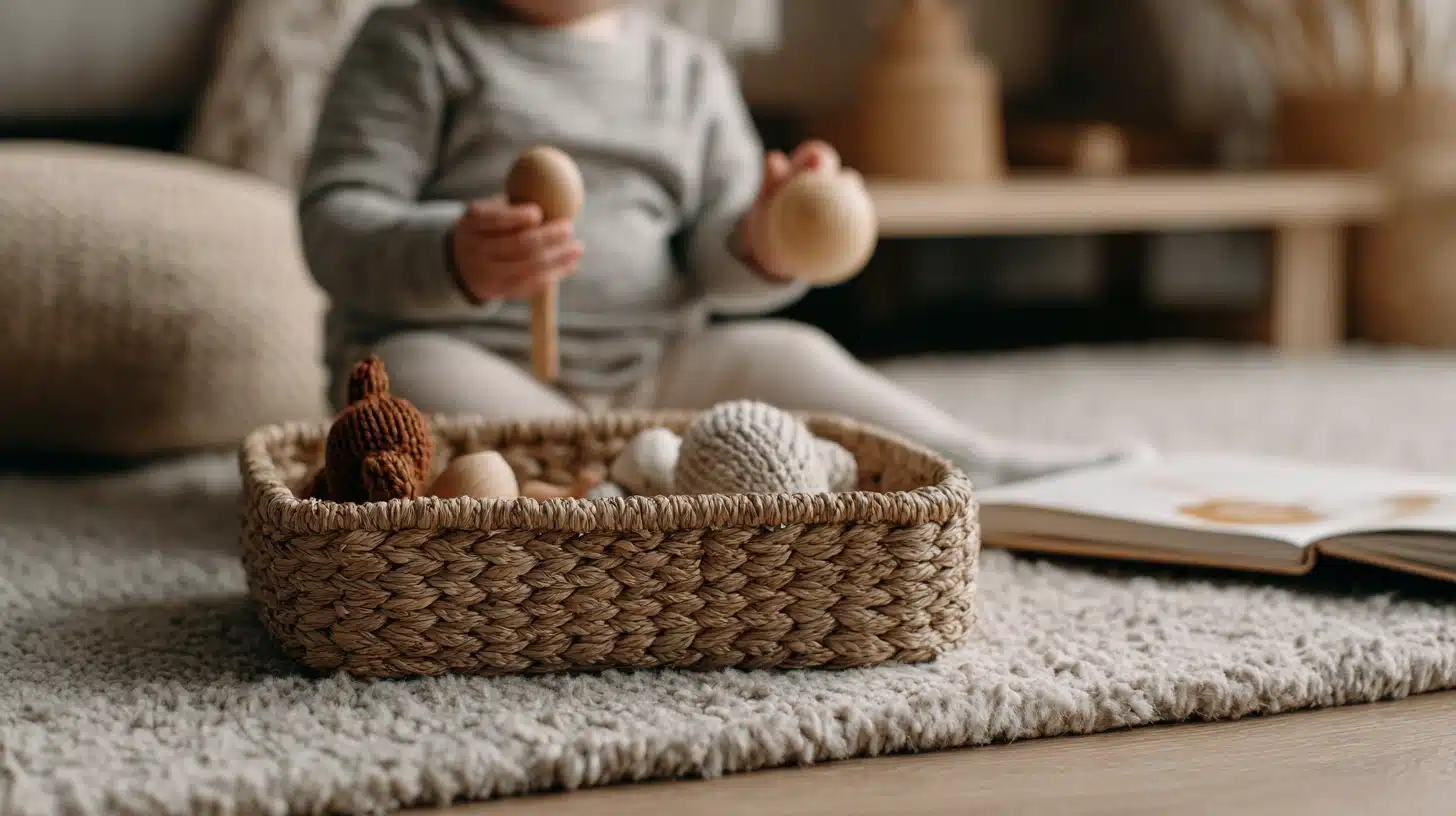
A story basket turns random household objects into a short creative activity. Choosing three items and building a tiny story around them fosters early narrative thinking and expands toddlers’ use of words.
- What You Need: A small basket, three random household objects like a spoon, a toy animal, and a sock.
- How To Do It: Let your toddler pick three objects from the basket. Use them together to tell a short, silly story. Then let your toddler try.
- What They Learn: Storytelling, sequencing, and expressive language skills.
- Make It Easier: You tell the story first while they hold each object.
- Make It Harder: Ask your toddler to start the story, and you finish it.
13. Sound Game (Shake Containers, Guess The Sound)
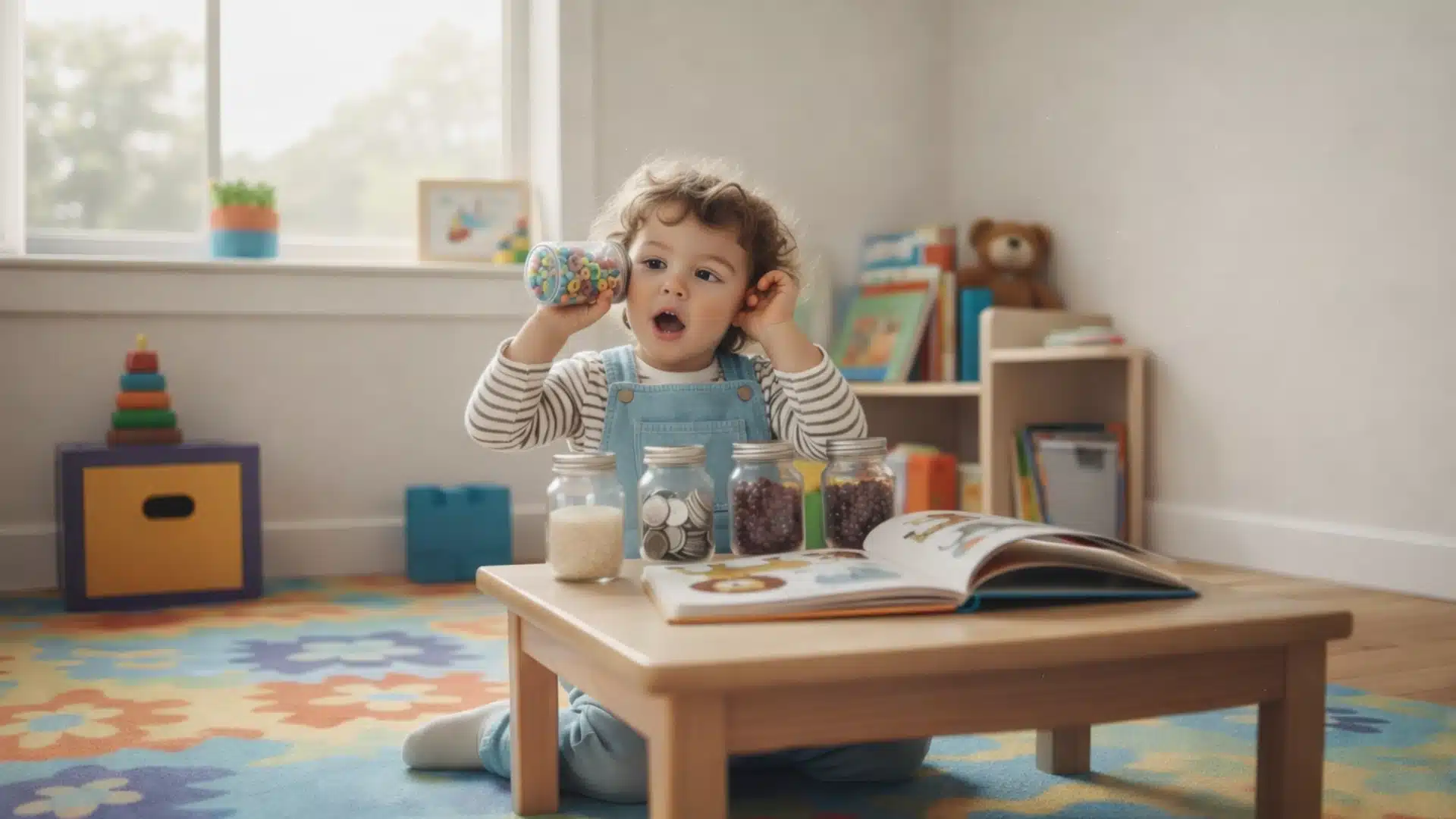
Listening carefully is a pre-reading skill that often gets overlooked. This sound game sharpens auditory focus and builds the kind of careful listening that later helps toddlers hear differences between letter sounds.
- What You Need: Small containers with lids, filled with rice, coins, buttons, or beans.
- How To Do It: Fill each container with a different item and seal it. Shake one at a time and ask your toddler to guess what is inside.
- What They Learn: Auditory discrimination, focus, and descriptive language like loud, soft, and rattly.
- Make It Easier: Show the fillings first before sealing the containers.
- Make It Harder: Make two matching pairs and ask your toddler to find the ones that sound the same.
Safety Note: Seal containers tightly and secure lids with strong tape to prevent opening. Avoid using coins for children under 3. Supervise closely and do not allow toddlers to open containers.
14. Rhyming Clap (Cat/Hat, Log/Frog)
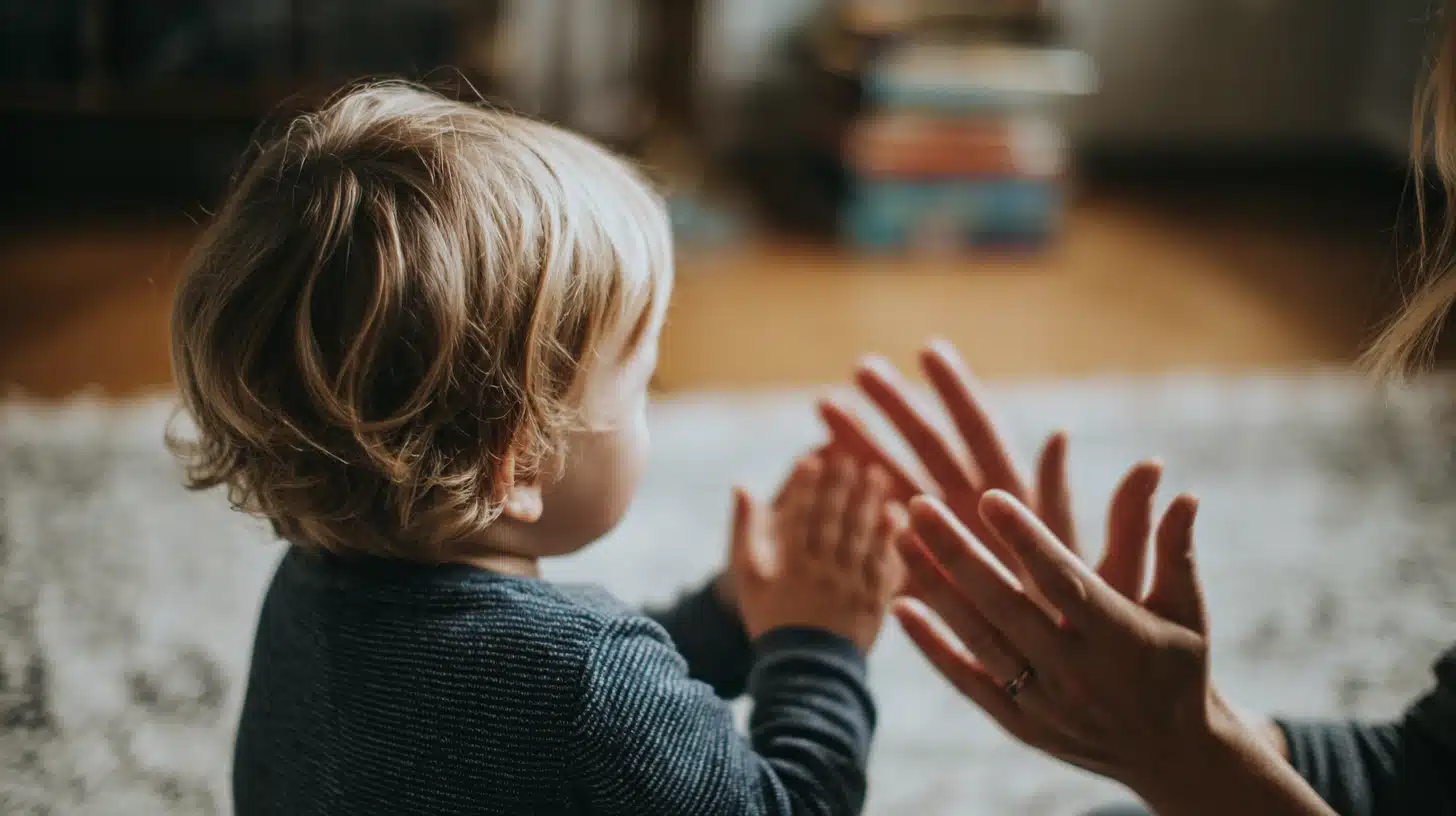
Rhyming is one of the strongest predictors of early reading success. Clapping along to rhyming word pairs makes the activity physical and fun, helping toddlers hear and feel the rhythm of similar sounds.
- What You Need: Just your voice and your hands.
- How To Do It: Say a rhyming pair like cat and hat or log and frog. Clap once for each word. Ask your toddler to repeat and clap along with you.
- What They Learn: Phonological awareness, rhythm, and sound pattern recognition.
- Make It Easier: Clap and say the words slowly, one at a time.
- Make It Harder: Say one word and ask your toddler to think of a word that rhymes with it.
15. Name The Parts (Body Parts, Animals, Vehicles During Play)
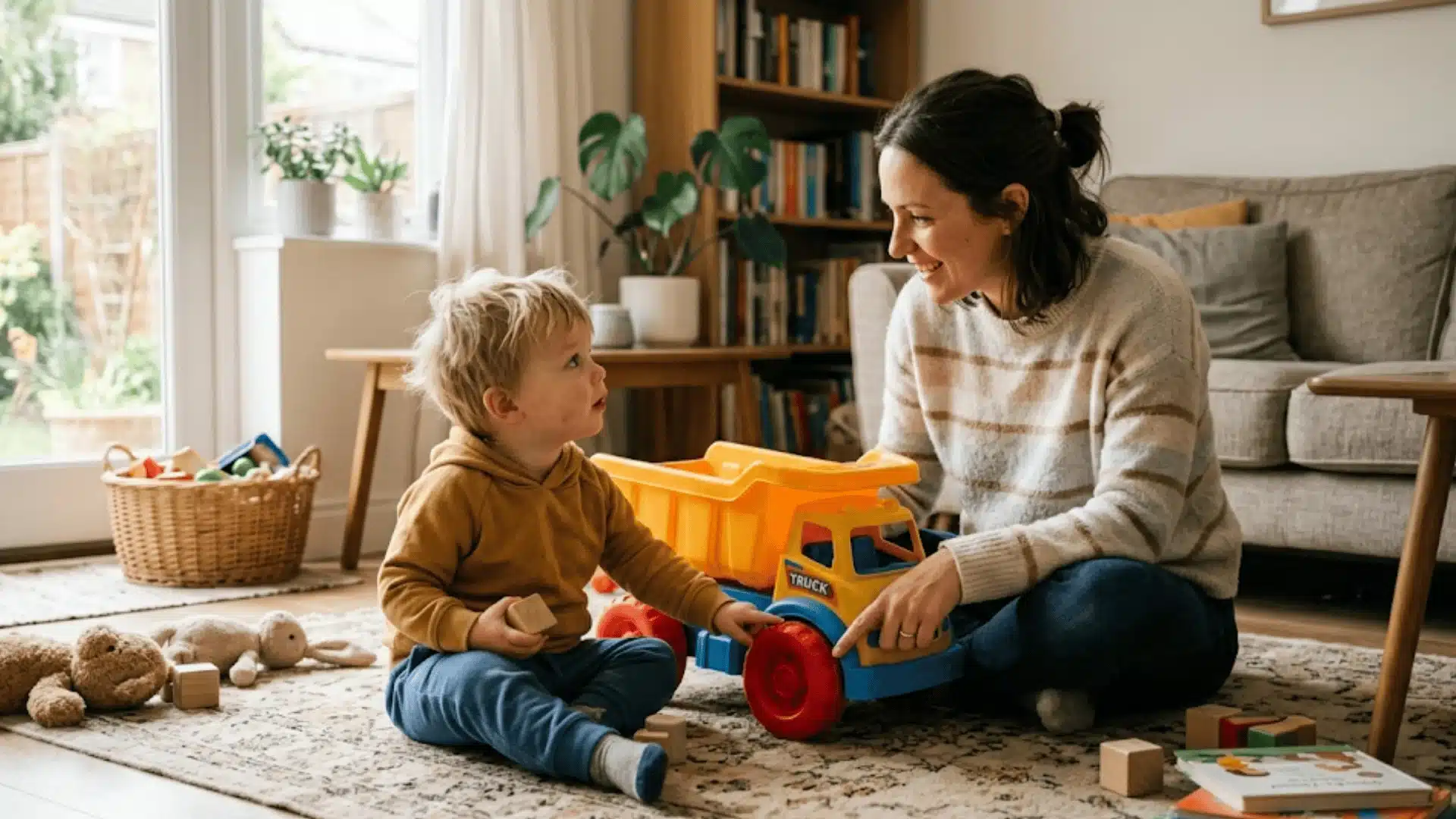
Naming parts during everyday play is one of the easiest ways to grow vocabulary fast. Toddlers absorb new words better when they hear them repeatedly in context rather than in a formal sit-down setting.
- What You Need: Toys, stuffed animals, or just your own body.
- How To Do It: During play, point to and name parts out loud. Say things like “the truck has wheels” or “the dog has a tail and four paws.” Pause and wait for your toddler to repeat or respond.
- What They Learn: Vocabulary building, body and object awareness, and verbal response skills.
- Make It Easier: Focus on one category at a time, such as body parts or animal parts.
- Make It Harder: Ask questions instead of naming, such as “Where are the wheels?” and wait for your toddler to point or answer.
Language and pre-reading skills grow best through everyday conversation, storytelling, and playful word games. Talk often, pause to let your toddler respond, and remember that connection and repetition matter more than perfection.
Sensory Play Activities
Sensory play does not have to mean a full cleanup. Use the tray-towel-bin rule: keep all materials on a tray, lay a towel underneath, and contain loose items inside a bin. For toddlers who mouth supplies, swap in taste-safe alternatives every time.
16. Rice Bin Scoop and Pour (Or Oats as a Softer Option)
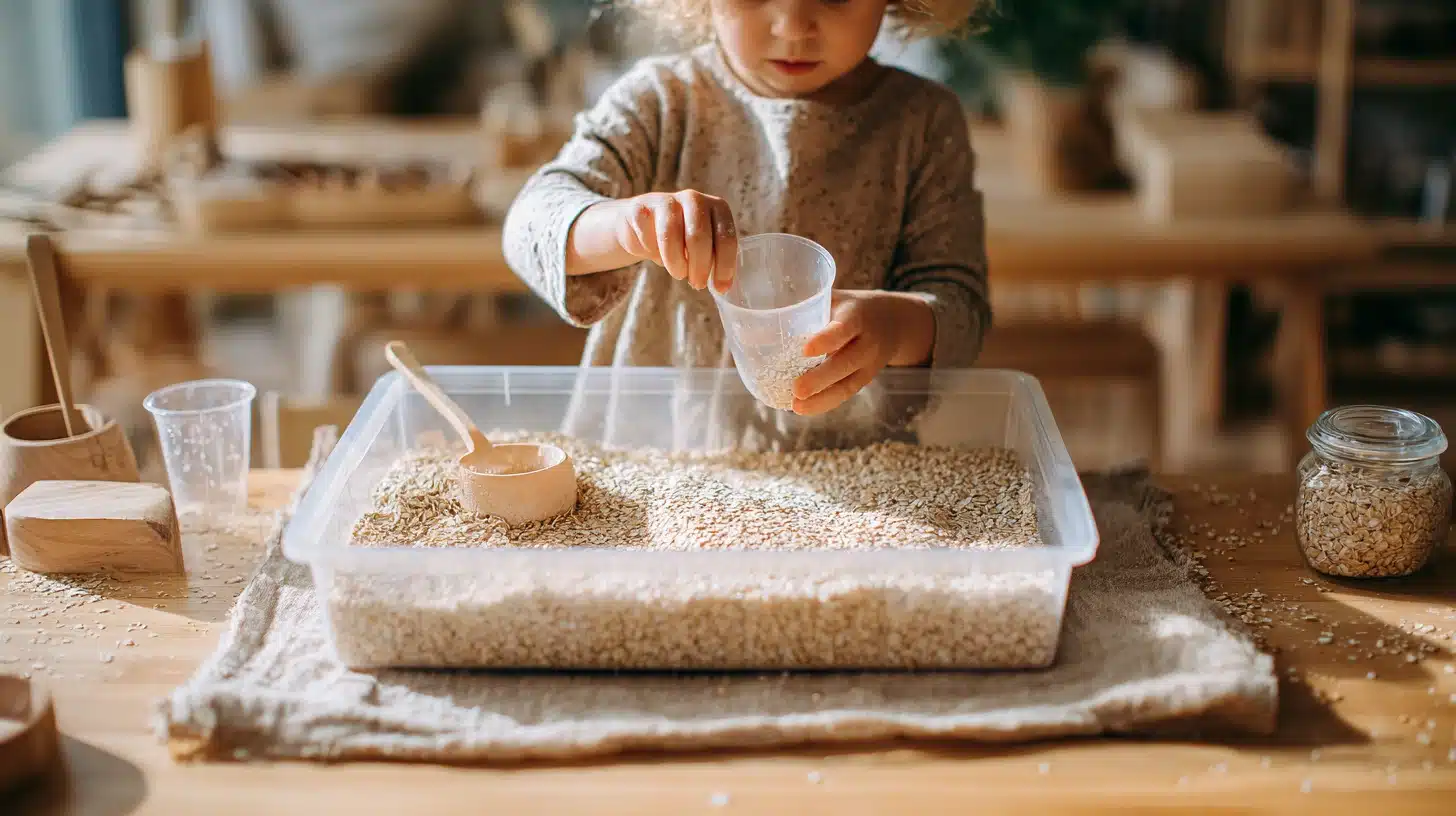
Scooping and pouring through a rice bin gives toddlers a full sensory input without any complicated setup. Oats work just as well and feel softer in small hands, making them a great swap for sensitive kids.
- What You Need: A shallow bin, dry rice or oats, small cups, spoons, and funnels.
- How To Do It: Fill the bin with rice or oats. Let your toddler scoop, pour, and transfer freely using the cups and spoons. Place a towel underneath to catch spills.
- What They Learn: Sensory processing, hand control, and early measurement concepts like full and empty.
- Make It Easier: Use a deep bin to keep materials from spilling over the sides.
- Make It Harder: Add measuring cups and ask your toddler to fill each one to the top.
Safety Note: Supervise closely, especially if your toddler still mouths objects. Consider taste-safe alternatives if needed. Keep materials contained on a tray and clean spills promptly to prevent slipping.
17. Water Transfer Station (Cups, Sponge, Ladle in a Tub)
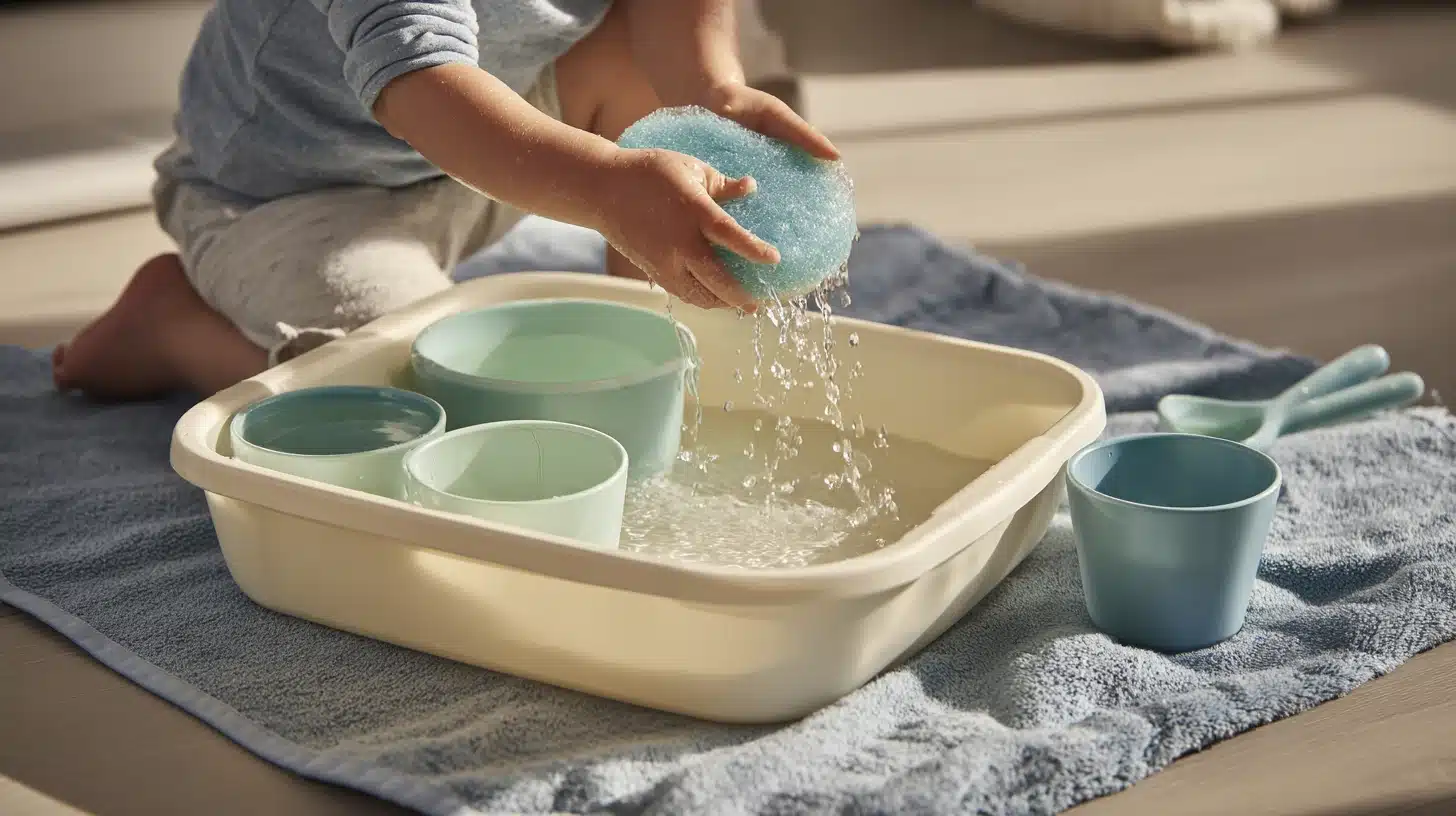
Water play teaches cause and effect in the most natural way possible. Moving water between containers using different tools builds hand strength, focus, and early scientific thinking at the same time.
- What You Need: A shallow tub or bin, two to three cups in different sizes, a sponge, and a small ladle.
- How To Do It: Fill one container with water. Set the others nearby empty. Let your toddler transfer water using the sponge, ladle, or cups however they choose.
- What They Learn: Cause and effect, hand coordination, and basic volume concepts like more and less.
- Make It Easier: Use only one tool at a time to keep things simple.
- Make It Harder: Ask your toddler to fill a cup to a specific line using only the sponge.
Safety Note: Use shallow water only and never leave your toddler unattended during water play. Wipe up spills immediately to prevent slips.
18. Taste-Safe Yogurt “Paint” (Optional Food Coloring)
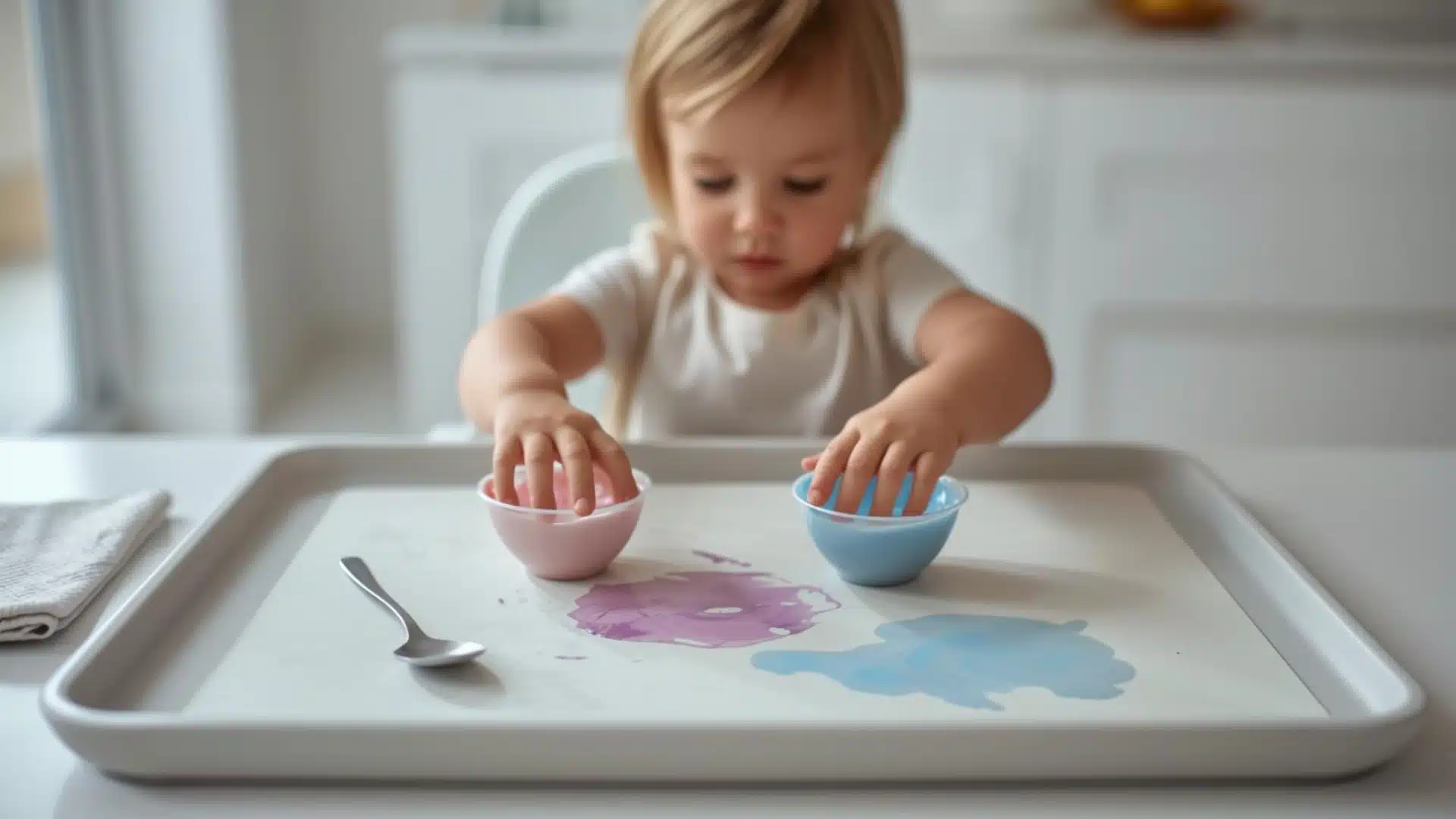
Yogurt paint gives toddlers who mouth everything a fully safe way to create. A few drops of food coloring turn plain yogurt into a bright, mess-friendly paint that works on paper, trays, or high chair surfaces.
- What You Need: Plain yogurt, food coloring, paper, or a clean tray.
- How To Do It: Divide yogurt into small cups and stir in one drop of food coloring per cup. Let your toddler paint freely using fingers or a brush.
- What They Learn: Sensory exploration, color mixing, and creative expression through touch.
- Make It Easier: Offer just one color to keep the focus on texture and feeling.
- Make It Harder: Set out two colors and let your toddler mix them to see what happens.
19. Ice Cube Rescue (Melt Toys Out With Warm Water)
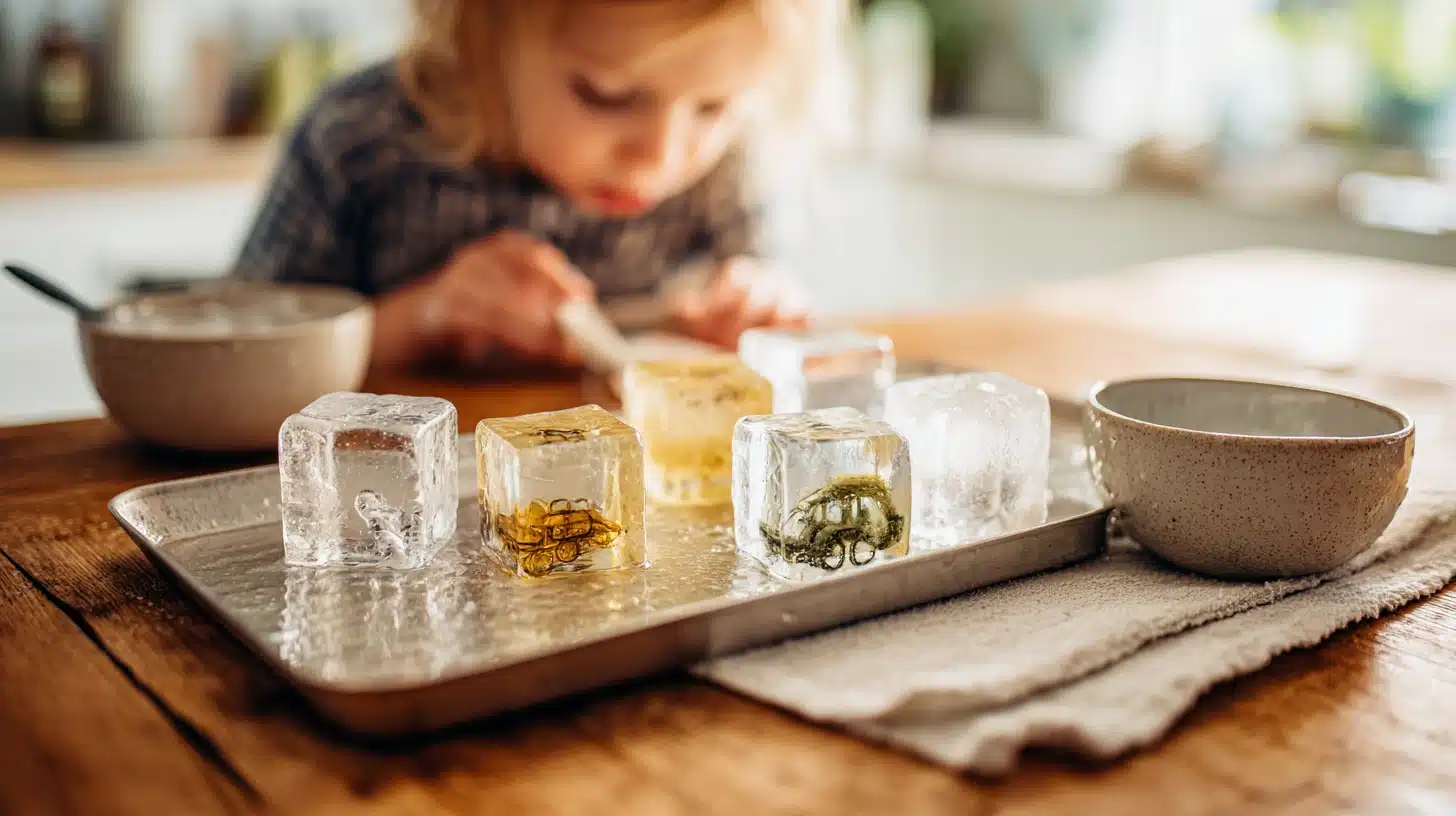
Freezing small toys inside ice cubes and letting toddlers melt them out builds patience and cause-and-effect thinking. The temperature contrast also adds a strong sensory layer, keeping toddlers engaged longer than most activities.
- What You Need: Small plastic toys, an ice cube tray, water, and a cup of warm water for melting the ice.
- How To Do It: Freeze one small toy inside each ice cube the night before. Set the cubes in a tray, and give your toddler a cup of warm water to pour over them until the cubes come loose.
- What They Learn: Cause and effect, temperature awareness, patience, and early science observation.
- Make It Easier: Use larger blocks of ice so the process moves a little faster.
- Make It Harder: Give your toddler a dropper instead of a cup to slow the melting process down.
Safety Note: Use larger toys inside the ice to reduce choking risk. Supervise closely and limit prolonged contact with very cold surfaces.
20. Texture Walk (Towel, Bubble Wrap, Cardboard, Rug Square)
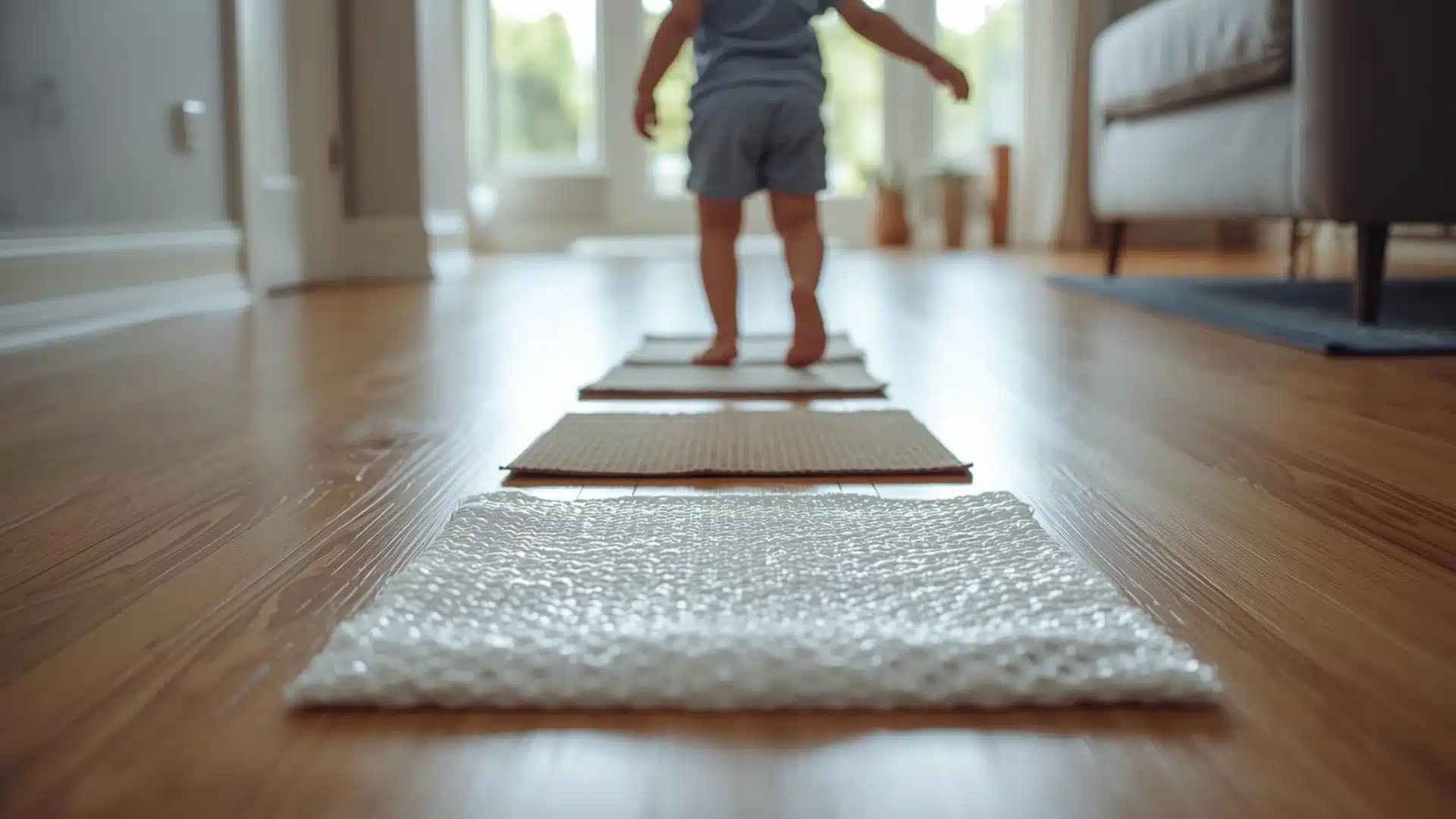
A texture walk turns the floor into a sensory activity with zero prep time. Walking barefoot across different surfaces builds body awareness and gives toddlers new vocabulary words to describe what they feel.
- What You Need: A towel, bubble wrap, a piece of cardboard, a rug square, and any other textured materials you have at home.
- How To Do It: Lay the materials in a line on the floor. Let your toddler walk across each one barefoot. Name each texture out loud as they step on it.
- What They Learn: Sensory awareness, texture vocabulary like bumpy, soft, rough, and flat, and body coordination.
- Make It Easier: Hold your toddler’s hand as they walk across each surface.
- Make It Harder: Ask your toddler to close their eyes and guess the texture before looking down.
Sensory play helps toddlers explore the world through touch, movement, sound, and texture while strengthening focus and coordination. Keep it simple, contained, and hands-on, and let curiosity lead the learning.
Creative Learning Activities
Creativity builds real skills like planning, trying again, and expressing ideas. Keep materials simple and mostly reusable. The goal is never a perfect result. The thinking and trying that happen along the way are where the learning lives.
21. Tape-Resist Art (Tape Lines, Color Over, Peel)
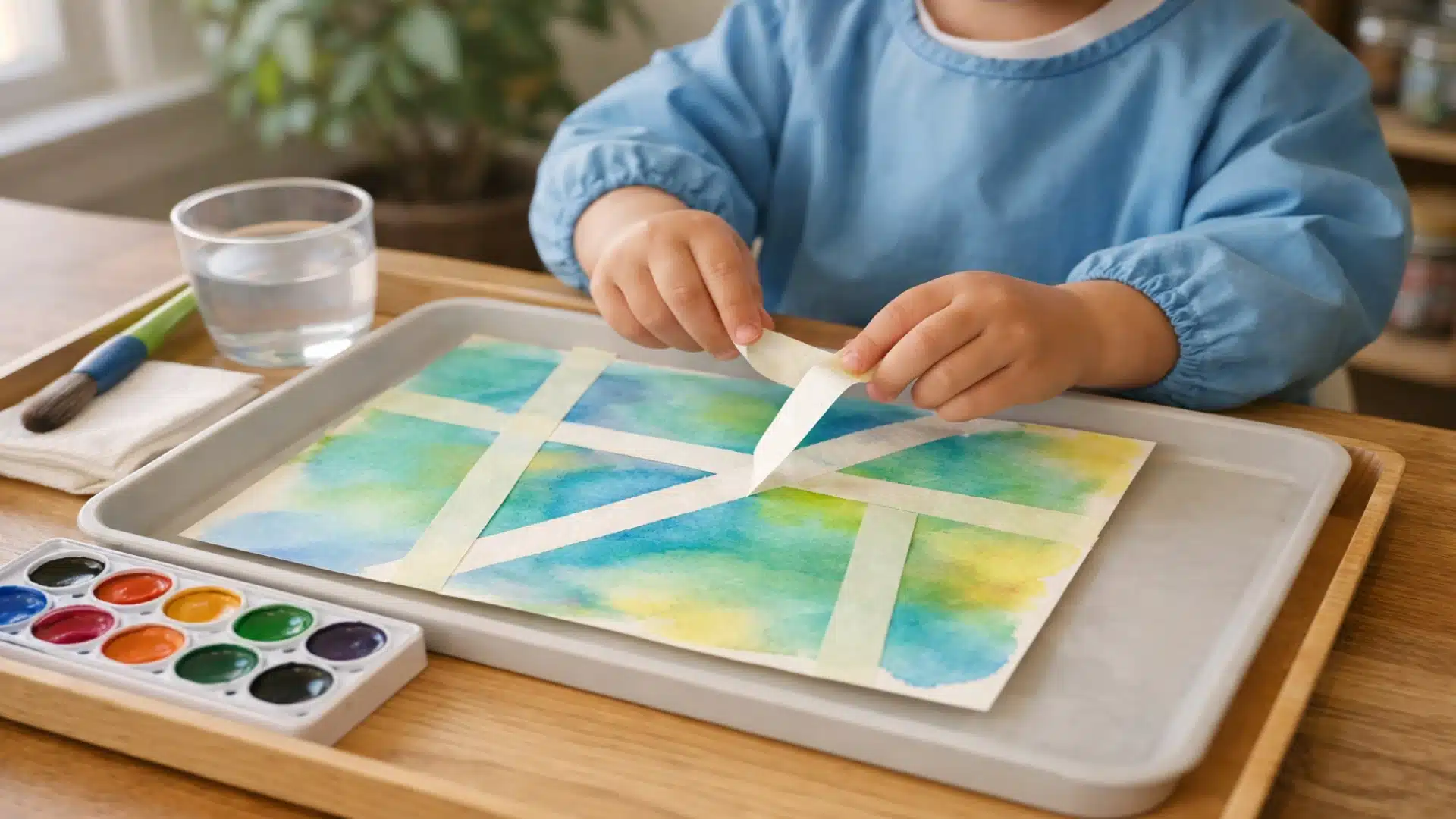
Tape-resist art feels like magic when toddlers peel back the tape and see clean lines appear. The process builds anticipation, color awareness, and the patience to work toward a result they cannot yet fully see.
- What You Need: Masking tape, paper, washable markers, or watercolor paint.
- How To Do It: Press tape strips across the paper in any pattern. Let your toddler color or paint over the whole page. Once dry, peel the tape back together to reveal the design underneath.
- What They Learn: Color recognition, cause and effect, and patience while working toward a result.
- Make It Easier: Pre-apply the tape so your toddler can focus only on coloring.
- Make It Harder: Let your toddler apply their own tape strips before painting.
22. Cardboard Box Prompts (Car Wash, Mailbox, Cave)
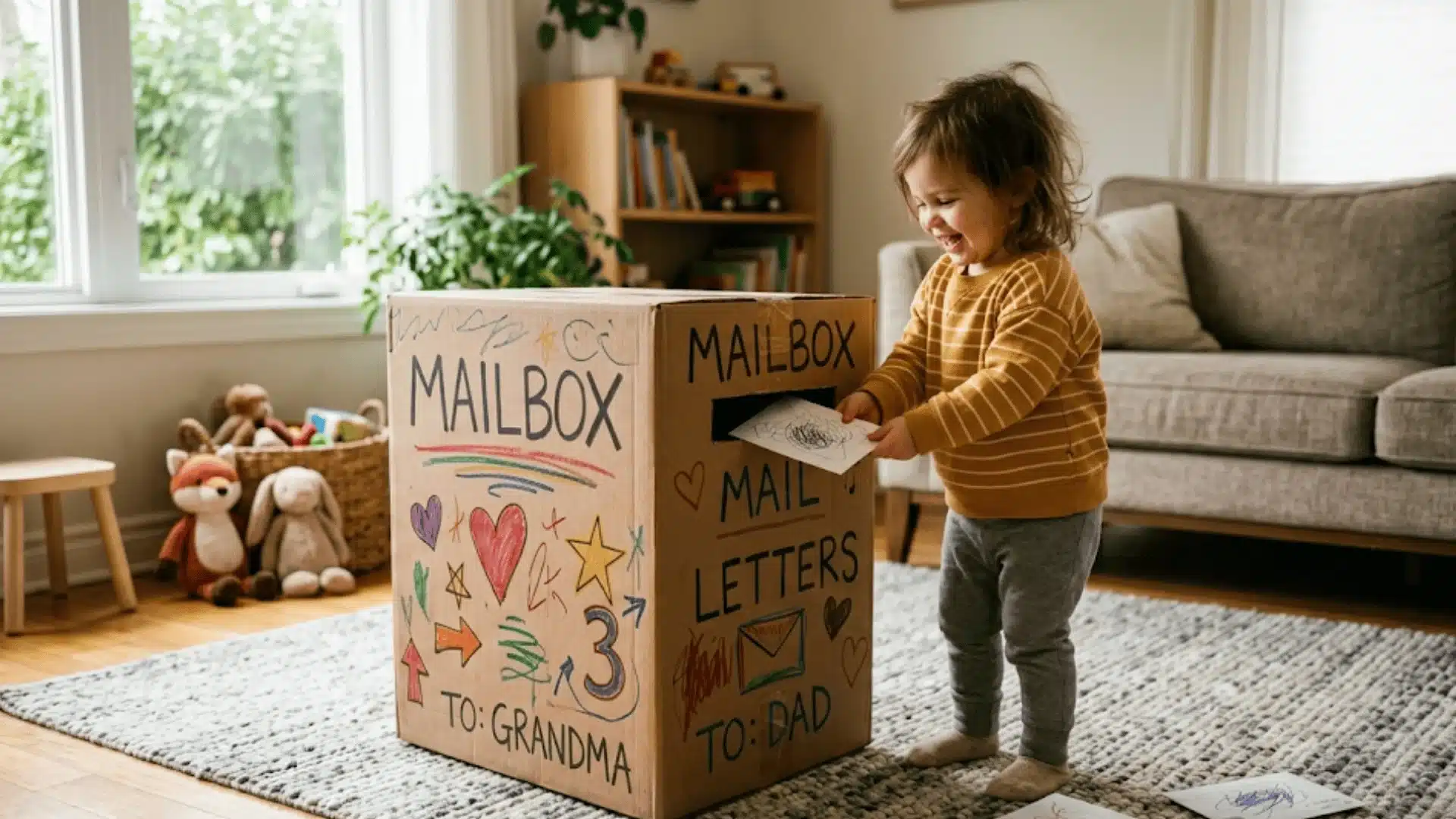
A plain cardboard box becomes whatever a toddler needs it to be with just a little prompting. Open-ended play like this builds imaginative thinking, storytelling, and early problem-solving in a completely child-led way.
- What You Need: A medium or large cardboard box, markers, and any small props you have on hand.
- How To Do It: Introduce a prompt such as“This is a car wash” or “This is a cave.” Let your toddler take the idea and run with it. Add props only if they ask for help.
- What They Learn: Imaginative thinking, storytelling, and creative problem-solving through open-ended play.
- Make It Easier: Act out the scenario alongside your toddler to get the play started.
- Make It Harder: Give a new prompt each day and let your toddler help transform the box.
23. Loose Parts Collage (Paper Scraps, Buttons, Glue)
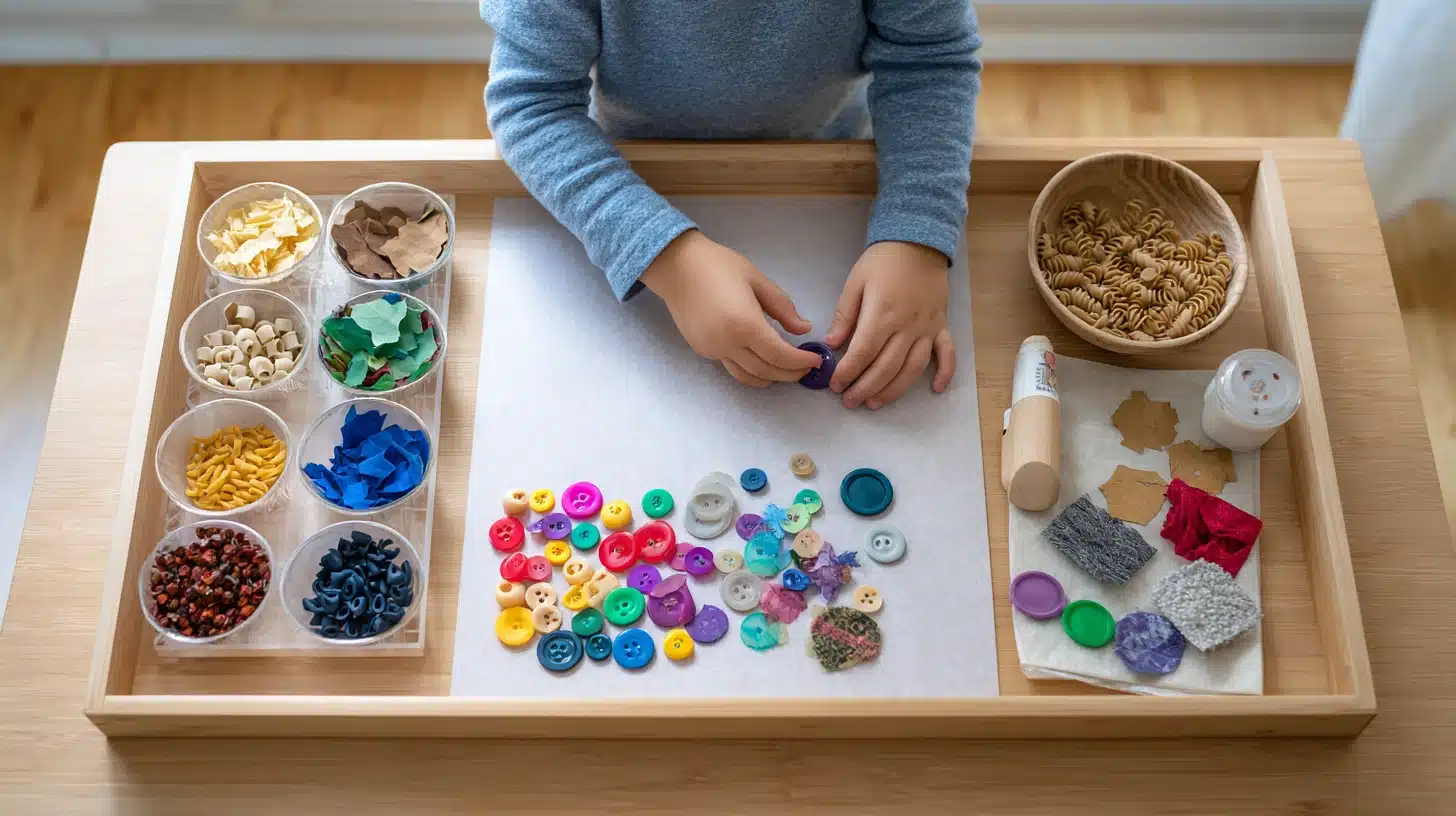
Collage work gives toddlers full control over what goes where, which builds decision-making and planning skills. Choosing, arranging, and gluing different materials also strengthens fine motor control in a low-pressure creative setting.
- What You Need: Paper scraps, buttons, fabric pieces, dried pasta, child-safe glue, and a base sheet of paper or cardboard.
- How To Do It: Set out a mix of loose materials in a tray. Give your toddler a base sheet and glue. Let them choose, place, and stick materials however they like.
- What They Learn: Decision-making, fine motor control, and creative planning through hands-on material exploration.
- Make It Easier: Limit the materials to three or four options to avoid overwhelm.
- Make It Harder: Give a loose theme, such as “make something that lives in the ocean,” and see what they come up with.
Safety Note: Avoid small collage materials for toddlers under 3. Use larger pieces and supervise during glue use to prevent mouthing.
24. Shadow Tracing (Sunlight And Paper)
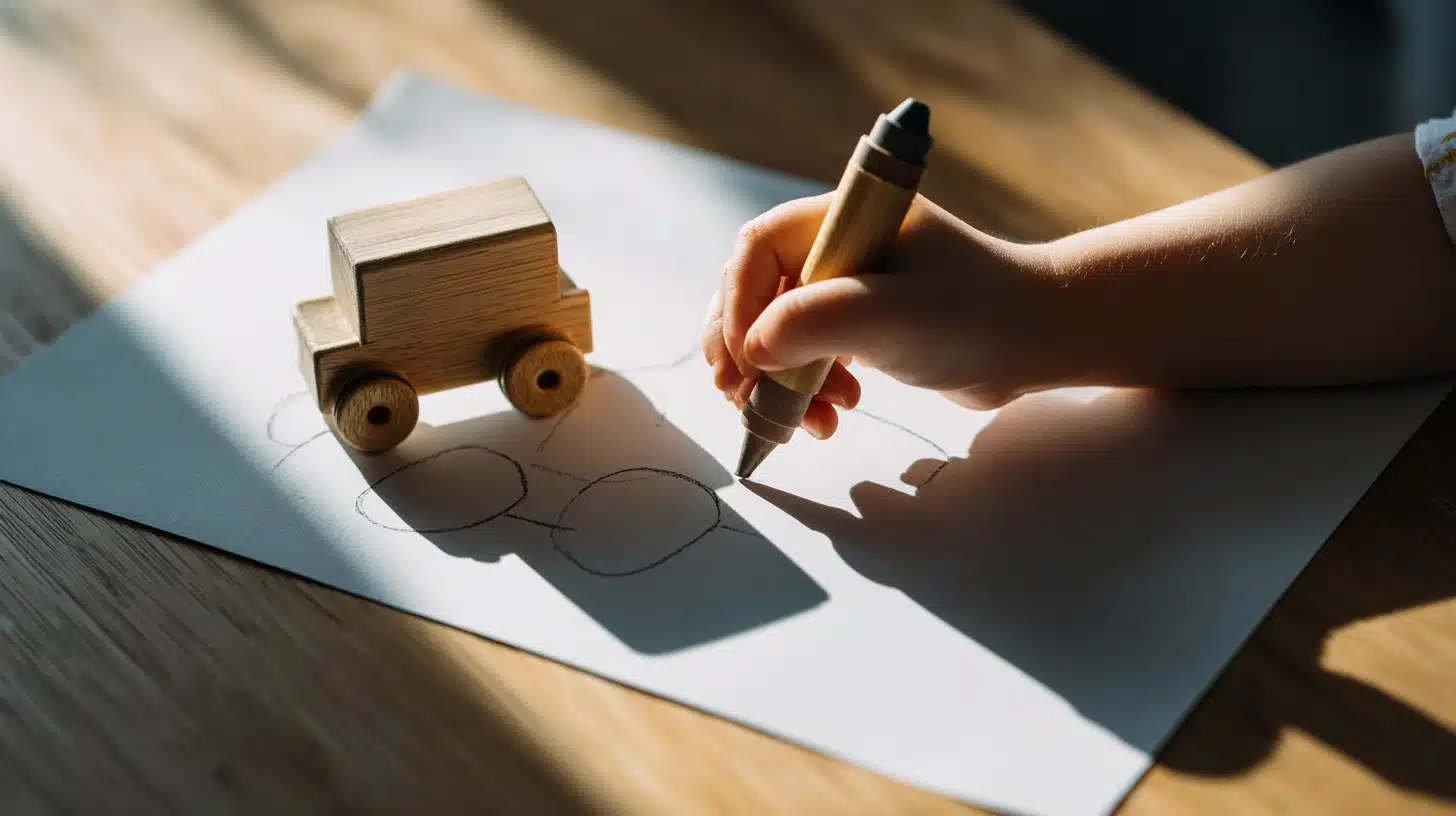
Shadow tracing connects science and art in one simple outdoor or windowsill activity. Toddlers observe how light creates shadows, then practice steady hand control by tracing the outline they see onto paper.
- What You Need: Paper, a pencil or crayon, sunlight, and a small object like a toy or leaf.
- How To Do It: Place an object on paper in direct sunlight. Point out the shadow it creates. Help your toddler trace along the shadow’s edge with a crayon or pencil.
- What They Learn: Observation skills, early science thinking about light, and hand control through tracing.
- Make It Easier: Use a large object with a clear, simple shadow outline.
- Make It Harder: Try tracing at different times of day and compare how the shadows change.
25. Pillow Jump Islands (Jump from Cushion to Cushion)
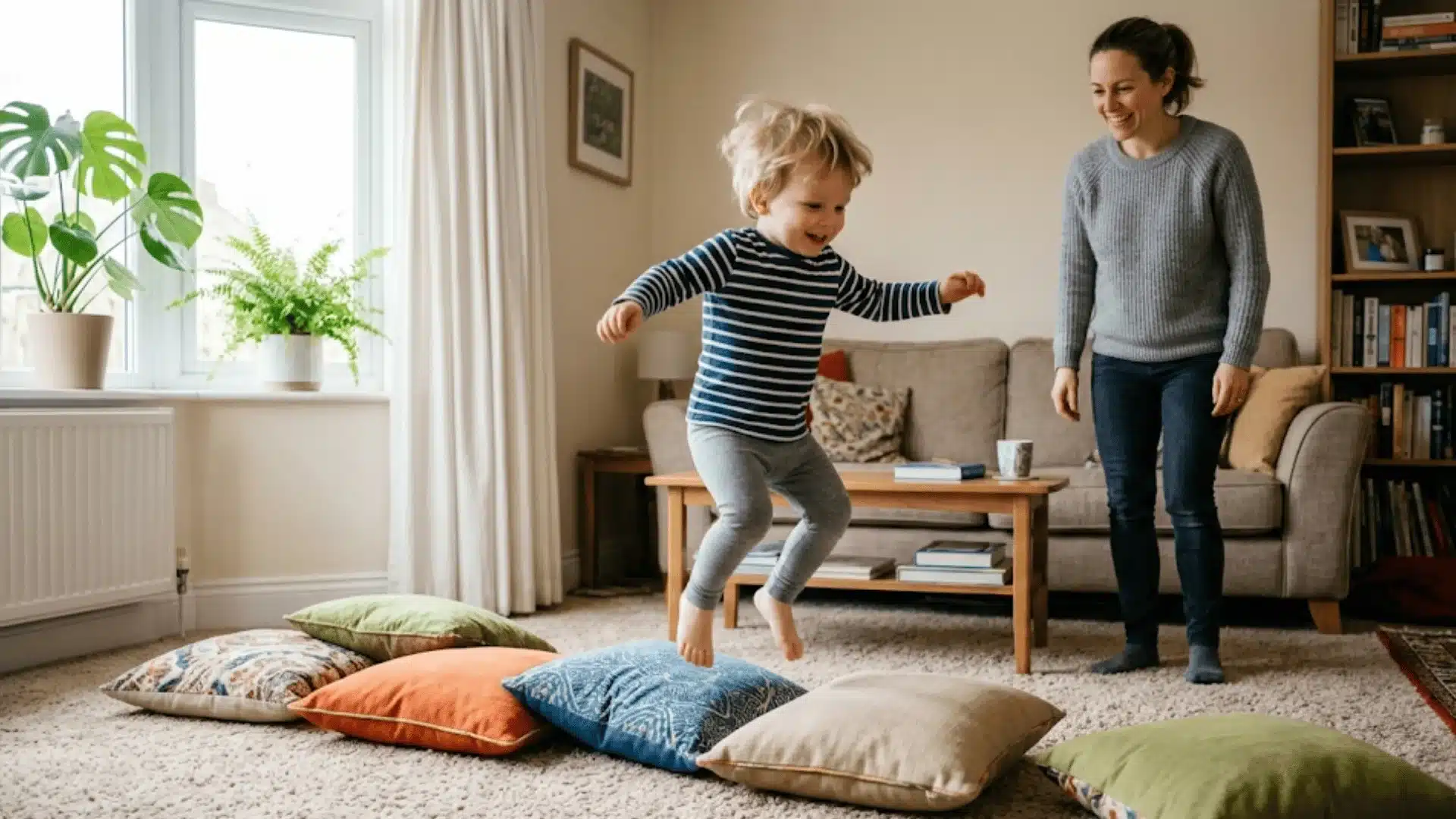
Turn cushions into “islands” and let your toddler jump or step between them. This builds balance, planning, and body control while burning energy fast.
- What You Need: 4–6 couch pillows or floor cushions.
- How To Do It: Spread the pillows out with small gaps between them. Say “jump to the next island” and change the spacing.
- What They Learn: Balance, spatial planning, and gross motor control.
- Make It Easier: Place pillows closer together and allow stepping.
- Make It Harder: Make bigger gaps or add “only jump to blue pillows” rules.
Safety Note: Set up on carpet or a non-slip surface. Keep pillow spacing small and stay nearby to prevent falls.
Creative learning gives toddlers space to imagine, experiment, and solve problems in their own way. Focus on the process rather than the final result, and let their ideas lead the experience.
Movement-Based Learning Activities
Movement is not a break from learning. It supports listening, self-control, and focus in short, active bursts. Toddlers process new information better when their bodies are involved, making these quick games among the most effective on this list.
26. Color Hop (Hop To Red, Blue, Yellow)
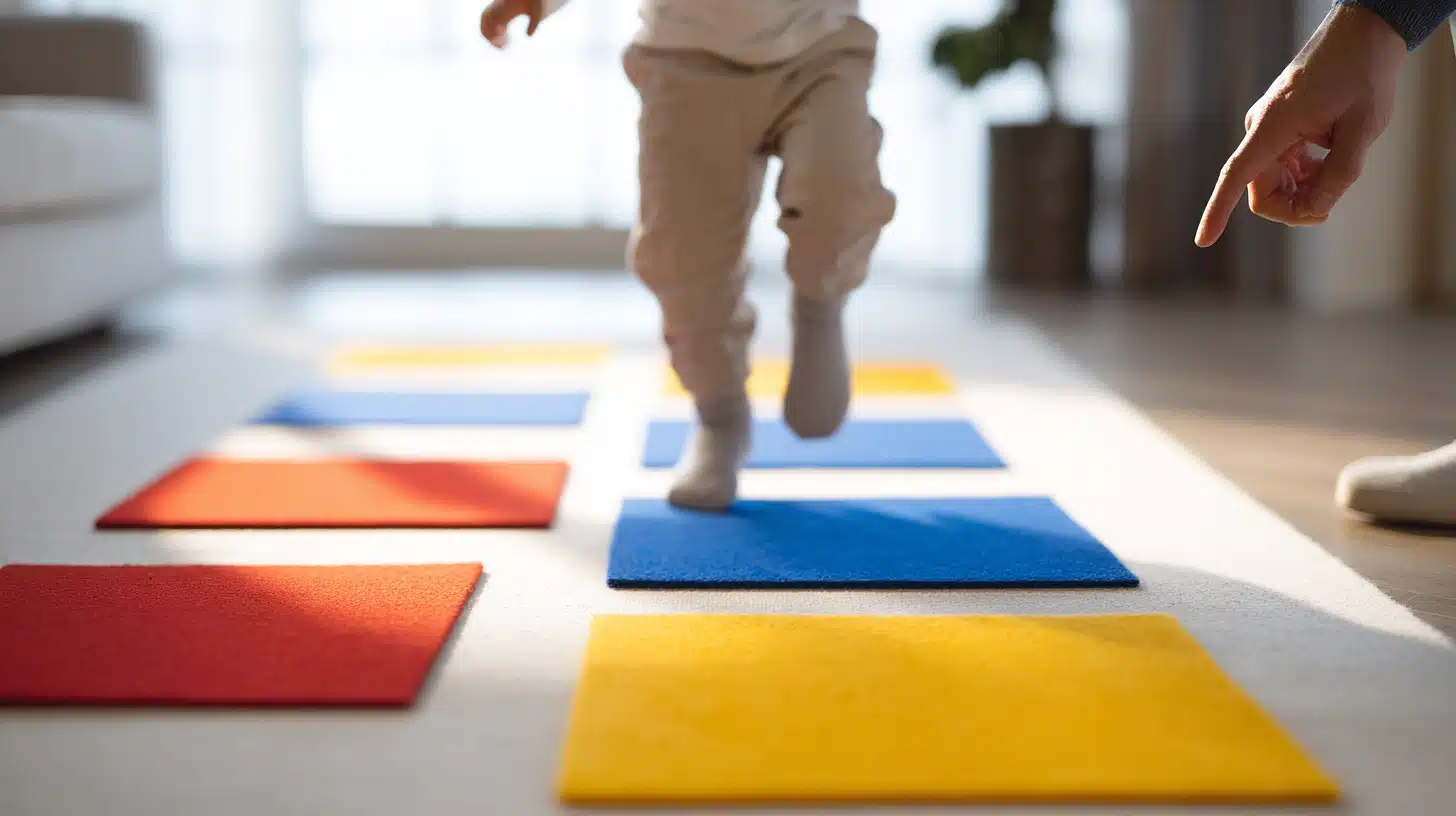
Color hopping gets toddlers moving while reinforcing color recognition at the same time. Calling out a color and watching them race to find it builds listening skills and quick thinking in a high-energy way.
- What You Need: Colored paper squares or taped colored shapes on the floor.
- How To Do It: Lay out colored squares across the floor. Call out a color and ask your toddler to hop to it as fast as they can. Switch colors quickly to keep the energy up.
- What They Learn: Color recognition, listening skills, and quick direction following.
- Make It Easier: Start with just two colors and add more as they get comfortable.
- Make It Harder: Call two colors in a row and ask them to hop to each one in order.
27. Laundry Basket Push and Pull (Heavy Work Helper)
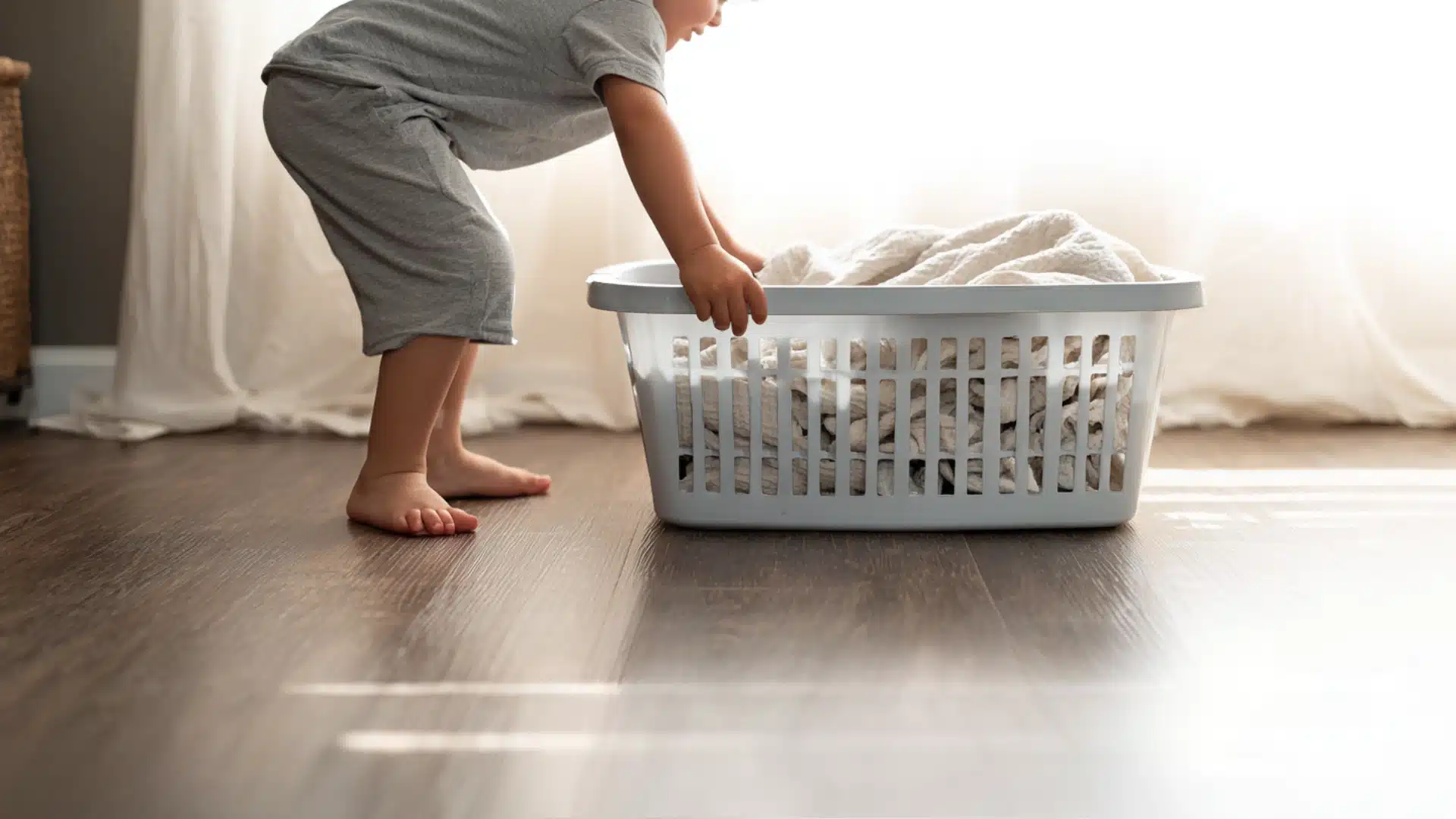
This simple “heavy work” game burns energy and builds whole-body coordination. Toddlers push or pull a laundry basket across the floor, then stop on cue, which also helps them practice listening and control.
- What You Need: An empty laundry basket (or one with a light blanket inside), open floor space.
- How To Do It: Ask your toddler to push the basket to a spot you name, then pull it back. Add fun cues like “stop,” “go,” and “slow.”
- What They Learn: Gross motor strength, coordination, body control, and following directions.
- Make It Easier: Keep the basket empty and keep distances short.
- Make It Harder: Add one soft item for weight or create a simple path to follow.
28. Cup Tower Knockdown (Stack and Gently Knock Over)
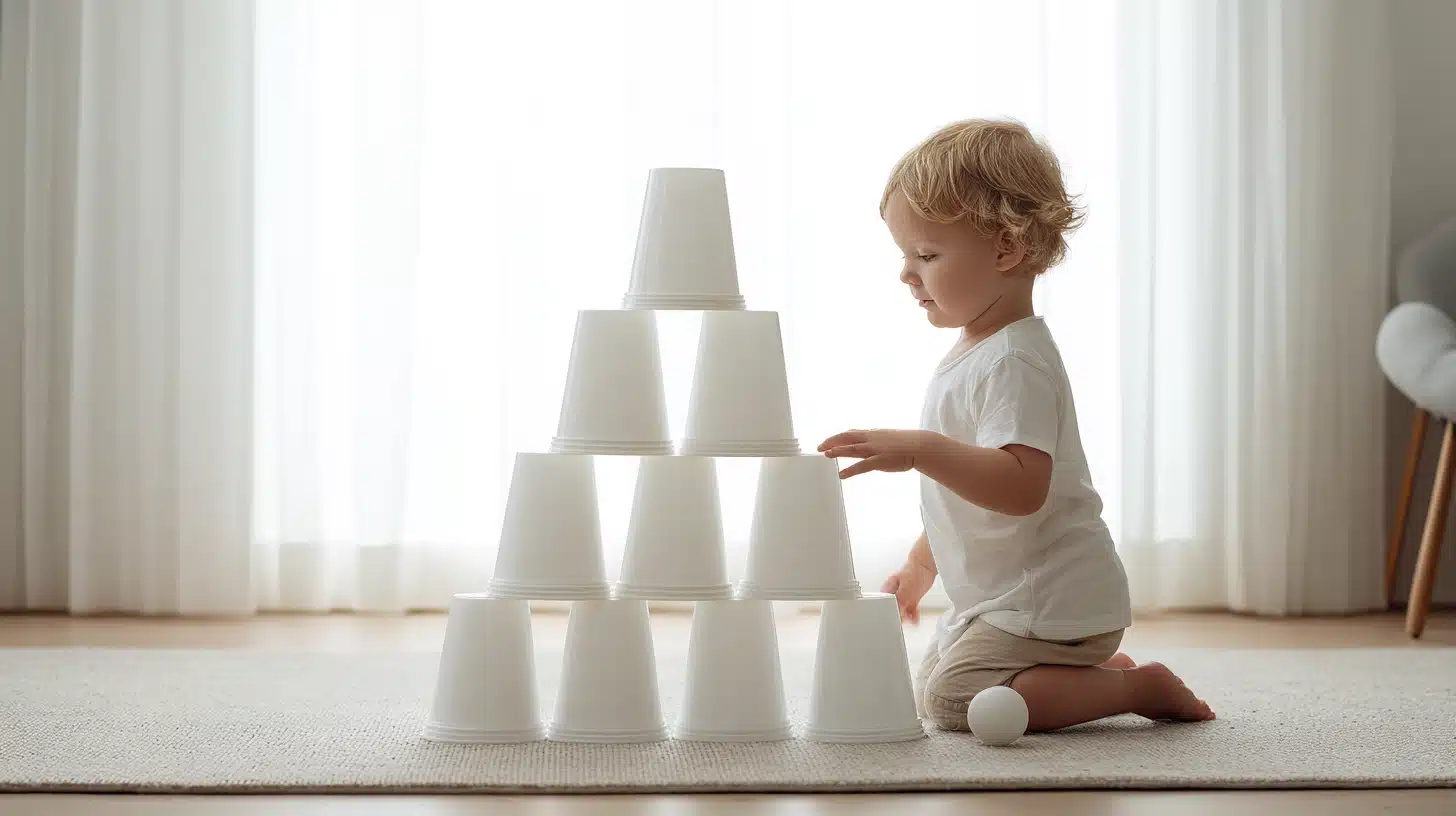
Cup towers are simple, fast, and surprisingly engaging for toddlers. Stacking builds focus and hand control, and knocking the tower down adds safe, satisfying cause-and-effect play. It is repeatable without much setup.
- What You Need: Plastic cups (or paper cups).
- How To Do It: Help your toddler stack a simple tower, then knock it down with a soft ball or gentle tap. Repeat.
- What They Learn: Hand control, sequencing, and turn-taking.
- Make It Easier: Start with 3 cups.
- Make It Harder: Build taller towers or sort cups by color as you stack.
29. Ball Roll Targets (Aim At Taped Circles)
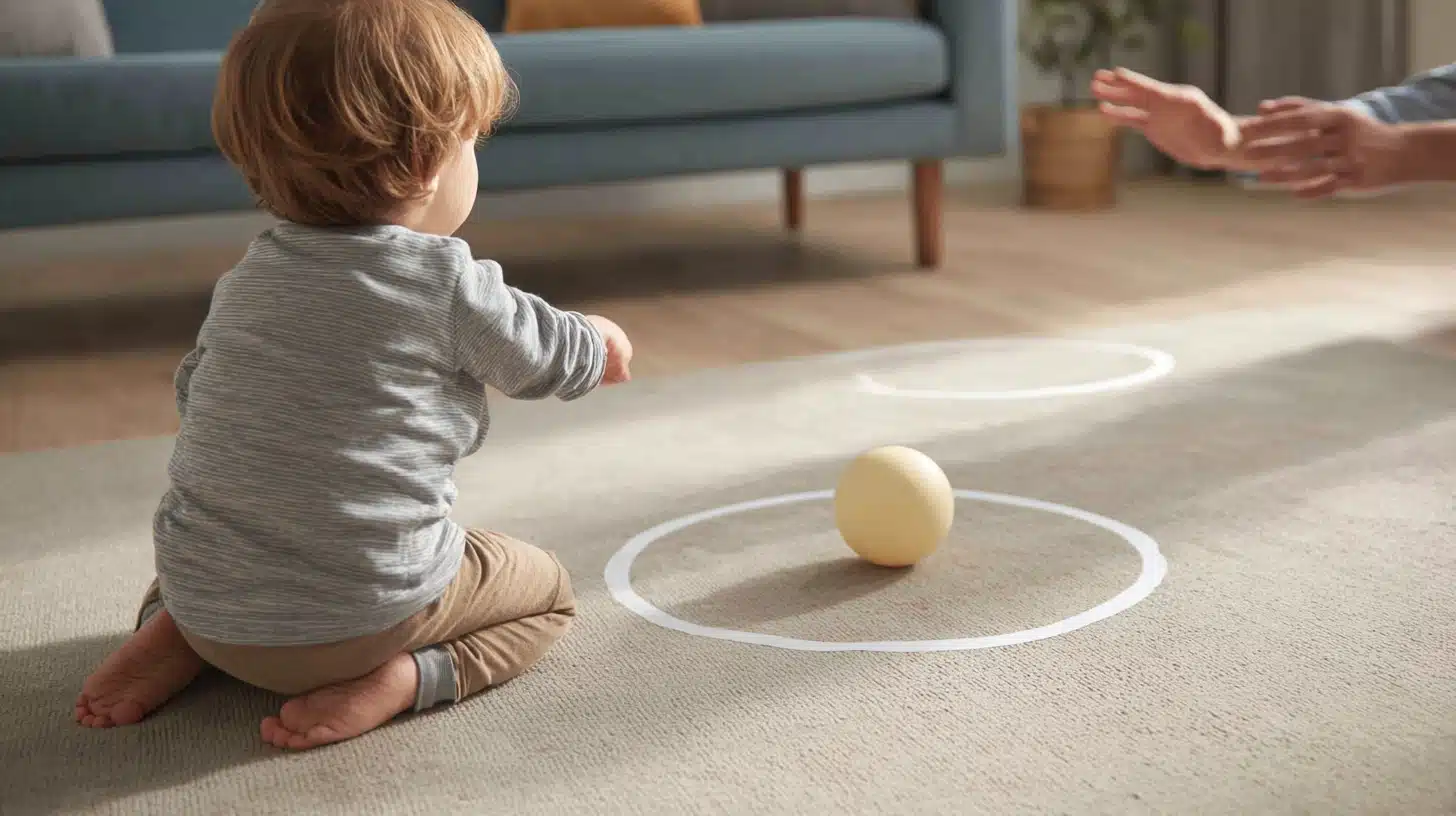
Rolling a ball toward a target builds aim, coordination, and the early ability to control how much force to use. Toddlers also practice taking turns and waiting, which supports self-regulation in a fun, game-like setting.
- What You Need: A soft ball, masking tape, and an open floor space.
- How To Do It: Tape two or three circles on the floor at different distances. Ask your toddler to sit and roll the ball toward each circle. Count how many times they hit the target.
- What They Learn: Coordination, force control, aim, and basic turn-taking skills.
- Make It Easier: Move the target circles closer and use a larger ball.
- Make It Harder: Assign different point values to each circle and keep a simple score together.
30. Freeze Dance Directions

Freeze dance teaches toddlers to start and stop on cue, which is a key self-regulation skill. Adding specific freeze poses, such as balancing on one foot, layers of body awareness, and listening comprehension at the same time.
- What You Need: Music and open floor space.
- How To Do It: Play music and let your toddler dance freely. When the music stops, call out a freeze pose, such as “freeze like a statue” or “freeze on one foot.” Hold the pose until the music starts again.
- What They Learn: Self-regulation, listening skills, balance, and direction following.
- Make It Easier: Keep the freeze pose simple, such as standing completely still with your arms out.
- Make It Harder: Call the pose before stopping the music so your toddler has to remember and prepare.
31. Sock Match and Roll (Find Pairs, Make “Sock Burritos”)
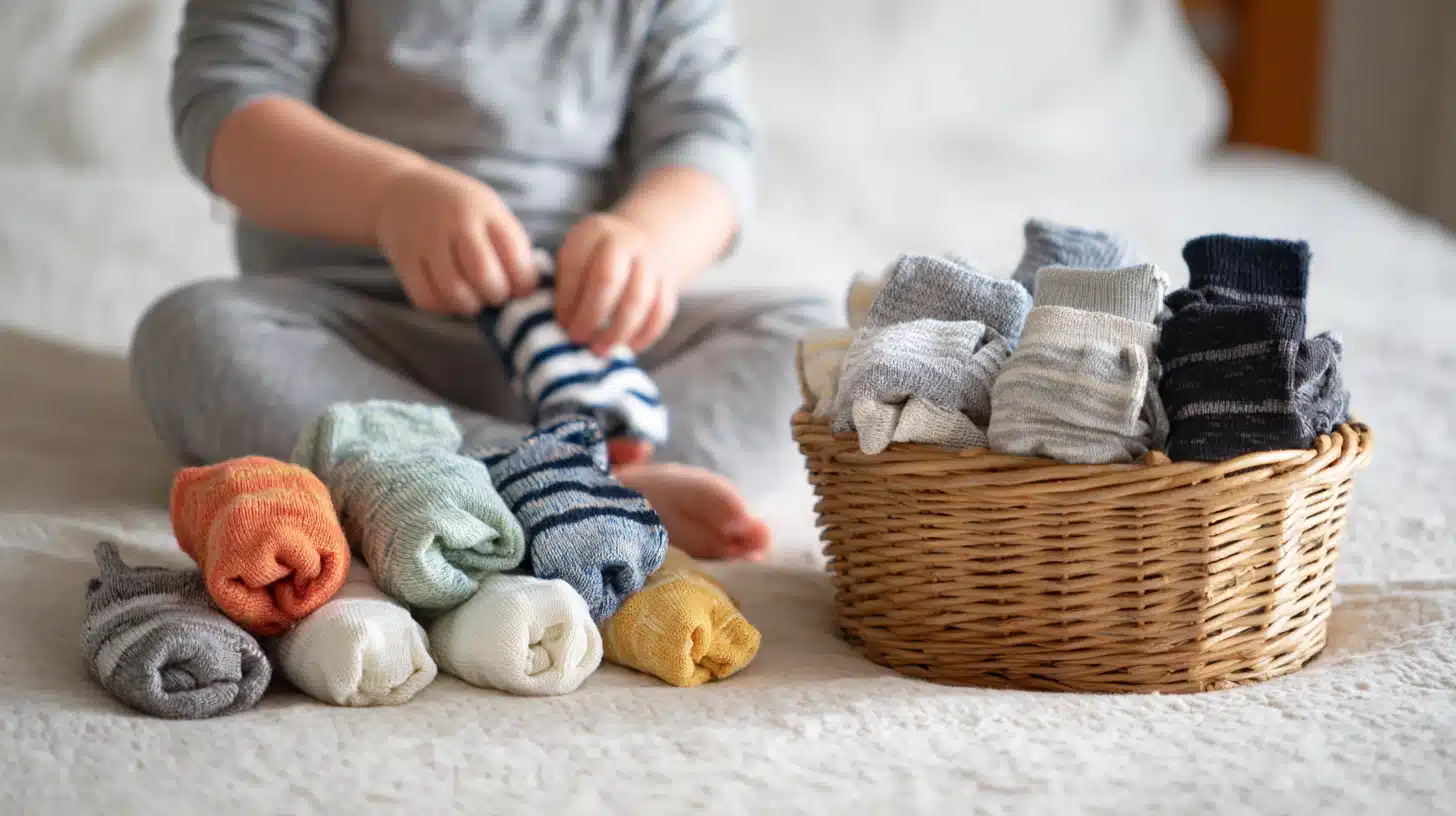
A laundry basket turns into an easy learning game. Toddlers hunt for matching socks, then roll each pair into a “sock burrito,” which builds focus, sorting, and hand strength.
- What You Need: A small pile of clean socks (mixed colors/patterns), a basket.
- How To Do It: Dump socks in a pile. Ask your toddler to find two that match, then roll them together into a tight bundle.
- What They Learn: Matching, visual discrimination, sorting, and fine motor strength.
- Make It Easier: Use just 3–4 pairs with obvious patterns.
- Make It Harder: Add more pairs or match by pattern (stripes, dots) rather than by color.
Movement-based learning helps toddlers build balance, coordination, and self-control while burning off energy in healthy ways. Short, playful bursts of activity keep their bodies engaged and their minds ready to learn.
Age-Based Suggestions
Every toddler grows at their own pace, so use these age bands as a helpful starting point, not a strict checklist. If an activity feels too hard, simplify it. If it feels easy, add one small challenge.
| Age Band | What To Focus On | Best Activity Types |
|---|---|---|
| 12–18 Months | Big, easy-to-grip items; lots of repetition; safety first (avoid small pieces) | Simple posting and dropping, basic sorting, sensory bins, and short movement games |
| 18–24 Months | Matching skills, simple two-step directions, and early counting with real objects | Matching games, “pick up and put in” tasks, counting 1–3, and short pretend play |
| 2–3 Years | Patterns, counting more objects, and longer attention for pretend play | Simple patterns, counting 1–5, longer pretend play stories, beginner scissor snips with help |
Safety and Tips for Parents
These toddler learning activities are simple, but safety is what makes them actually doable. Keep a few quick rules in mind so play stays fun, calm, and age-appropriate from start to finish.
- Stay Close the Whole Time: Toddlers move fast and explore with their mouths. Stay within arm’s reach, especially with water, small tools, or loose pieces, so you can redirect quickly.
- Choose Pieces Too Big to Swallow: Avoid anything that could fit in your toddler’s mouth. Bigger items reduce choking risk and are easier to manage. When in doubt, size up.
- Plan the Mess Level Before You Start: Pick activities based on your energy that day. Use a tray, towel, or mat to catch spills and make cleanup quick.
- Keep Tools Toddler-Safe: Choose washable supplies, blunt tongs, and safe scissors only with help. If something feels too sharp or tricky, switch to the other hand.
- Watch Mood and Stop Early: If your toddler is tired or hungry, keep it short. End before frustration builds; finishing calmly matters more than a long session.
Wrapping It Up
The best toddler learning activities aren’t the fanciest. They’re the ones you actually do, repeat, and enjoy together. Pick one idea from this list today, then try it again tomorrow with one small change and repeat it for a week before switching to something new.
That simple habit builds more skill than a packed schedule ever could. Toddlers learn through repetition, not constant variety. When they know what to expect, they can focus, practice, and improve each time.
Nothing here requires a store run. These activities use what you already have, take 15 minutes or less, and can grow with your child as they get older.
If this helped, save it for a low-energy day and share it with a parent friend. Then try one activity and come back to tell me how it went in the comments.