



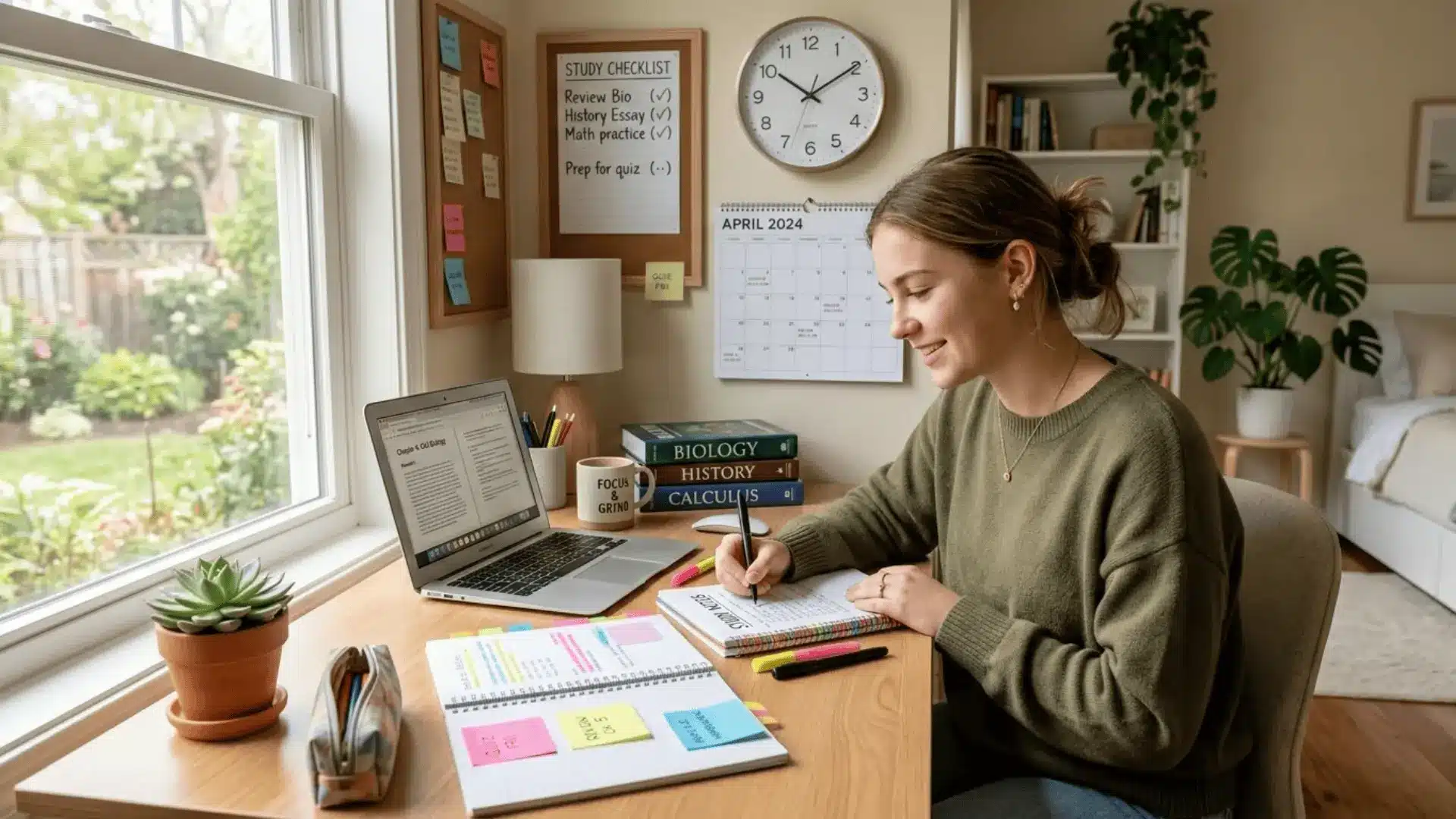
Nobody hands you good grades. You earn them. And no, you don’t need to be the smartest person in the room to figure out how to get good grades in school.
What you need are the right habits, a little consistency, and a plan that actually works. Plenty of students put in long hours of studying but still walk out of exams feeling unsure.
The reason usually isn’t a lack of effort. Most of the time, it’s the approach that’s off.
I’ve put together everything you need here, from fixing common study mistakes to building simple routines that stick. If you’re ready to stop guessing and start seeing real results, keep reading.
How Habits Affect Getting Better Grades?
How habits affect getting better grades is simple to understand. Doing well in school is not only about being smart. It is about the routines and choices you make every day.
Students who want to learn how to get better grades usually study at the same time each day, take notes carefully, and review lessons regularly. Participating in class and asking questions when confused also helps a lot.
Managing time well prevents last-minute cramming and reduces stress.
Even small habits, like keeping your study area organized or breaking tasks into steps, can make a big difference. Over time, these consistent actions add up and lead to higher grades.
Proven Tips on How to Get Good Grades in School

Good grades often come from simple habits done every day. Many students think they need to study for long hours, but small actions done the right way can make a big difference.
1. Set Clear Academic Goals for Each Subject
Setting clear goals helps students stay focused and motivated. Instead of saying you want better grades, set a specific target for each subject. For example, aim to improve your math score by ten percent or complete all homework on time for a month.
SMART goals work well because they are specific, measurable, and realistic. Track your progress each week to see what is working and where you need to improve.
2. Create a Study Schedule You Can Actually Follow
A simple study schedule helps students manage their time better. Plan short study sessions during the week instead of waiting until the night before a test. Time blocking can help you focus on one subject at a time.
Many students also find it helpful to use planners or digital calendars to track assignments and study hours. A steady routine makes studying feel less stressful and keeps work from piling up.
3. Do Your Homework Consistently
Homework plays an important role in learning because it gives students a chance to practice what they learned in class. Completing homework regularly helps reinforce new ideas and skills. It can also show which topics are still confusing.
When students finish assignments on time, they stay prepared for quizzes and tests. Even short homework tasks can strengthen understanding and build better study habits over time.
4. Participate Actively in Class
Active participation can make lessons easier to understand. When students ask questions, share ideas, or join discussions, they stay more engaged with the topic.
Speaking up in class also helps teachers know which areas students find difficult.
Paying attention and taking part in activities can improve memory and understanding. Students who stay involved during lessons often find that studying later becomes much easier.
5. Take Organized and Effective Notes
Good notes help students remember important ideas from each lesson. Instead of writing every word the teacher says, focus on key points and main concepts. Clear headings, bullet points, and short summaries make notes easier to review later.
Many students like using simple systems such as the Cornell method. Organized notes save time during revision and help students prepare better for quizzes and exams.
6. Study Smarter Using Active Learning Techniques
Studying smarter means using methods that help your brain remember information better. Active learning techniques are very helpful for this.
Active recall means testing yourself rather than just reading notes over and over.
Practice testing with quizzes or sample questions improves memory. Teaching a concept to a friend or family member also helps, because explaining ideas in your own words makes them easier to understand and remember.
7. Review Your Notes Regularly (Don’t Wait for Exams)
Regular review helps students remember lessons for longer. Instead of waiting until exams, look at your notes for a few minutes after class or later in the evening.
Weekly revision can also help you stay familiar with the topic. A method called spaced repetition works well because it spreads learning over several days. This process strengthens memory and reduces stress before tests.
8. Remove Distractions While Studying
Distractions can make studying slow and less effective. Phones, social media, and background noise often break concentration. Turning off phone notifications during study time can help you stay focused.
Many students also find it helpful to study in a quiet place such as a library or a calm room at home. A clean and organized desk can also improve focus and help students finish work faster.
9. Practice Good Time Management
Time management helps students complete tasks without feeling rushed. One helpful method is breaking large assignments into smaller steps. This makes the work easier to handle and less stressful.
Planning study time in advance can also prevent problems later. Students who manage their time well are less likely to rush before exams. Avoiding last-minute cramming allows more time to understand the material properly.
10. Study With Classmates or Join a Study Group
Studying with classmates can make learning more interesting and helpful. A small study group allows students to talk about difficult topics and share ideas.
When someone explains a concept, others may understand it better.
Students can also quiz each other with practice questions. This type of group study can improve memory and confidence. It also helps students stay motivated and keep up with their lessons.
11. Ask Teachers or Tutors for Help When Needed
Asking for help is a smart step when a topic feels confusing. Many students wait too long to clear their doubts, which makes learning harder later.
Try to ask questions as soon as something is not clear in class. Teachers can explain the idea again in a simple way. You can also use office hours or tutoring support at school. Getting help early makes lessons easier to understand.
12. Stay Organized With Your Assignments and Notes
A good organization helps students keep track of their school work. When notes and assignments are stored in the right place, it becomes easier to review them later.
Many students use folders, notebooks, or digital apps to organize their materials.
Planners can also help track homework and upcoming tests. Writing down deadlines helps students finish tasks on time and reduces the chance of forgetting important work.
13. Test Yourself Before the Actual Exam
Testing yourself before an exam is a helpful way to check your understanding. Practice papers and sample questions help students identify which topics need more attention. Self-quizzing also helps the brain remember information better.
When students try to recall answers without looking at notes, their memory becomes stronger. Regular practice testing also builds confidence and helps students feel more prepared on exam day.
A Simple Study Routine for Students Who Want Better Grades

Having a daily study routine can make learning easier and help students achieve better grades. Following a simple plan each day builds consistency and makes studying less stressful.
1. Morning: Review Yesterday’s Notes
Start your day by going over the notes from the previous class. This helps refresh your memory and makes it easier to understand new lessons. Spend 10–15 minutes reading key points and highlighting anything you find tricky.
Reviewing daily prevents forgetting important information and makes it easier to follow along in class. Small daily reviews add up to big improvements in understanding.
2. Afternoon: Homework First
After school, focus on completing your homework before doing other activities. Finishing assignments on time prevents them from piling up and helps you stay prepared for tests.
Break tasks into smaller steps if they feel overwhelming. Doing homework consistently also reinforces what you learned in class and builds habits that improve focus, understanding, and overall performance.
3. Evening: Study Session and Quick Revision
In the evening, set aside time for a dedicated study session. Go over new lessons, practice problems, or review notes briefly. Quick revision helps strengthen your memory and makes it easier to recall information later.
Spending even 20–30 minutes reviewing in the evening can make a big difference over time. Consistent evening study sessions help students get better grades without feeling stressed.
Mistakes That Stop Students From Getting Better Grades
Many students work hard every day but still do not get the grades they hope for. Often, the problem is not a lack of effort. Instead, it comes from a few habits that quietly hold them back.
- Cramming Before Exams: Your brain needs time to absorb information, and last-minute studying doesn’t allow for that.
- Studying with Distractions: Phone alerts and background noise break your focus more than you realize.
- Poor Time Management: Waiting until the last minute leaves little time for review and increases stress.
- Ignoring Weak Subjects: Avoiding difficult subjects only makes them harder to catch up on later.
- Not Asking for Help: Staying quiet when confused allows small knowledge gaps to grow into bigger ones.
Fortunately, all of these mistakes can be fixed with small changes. Once you know what is holding you back, consistent improvements over time can make a big difference in your grades and confidence.
That’s a Wrap
Getting good grades in school isn’t about being perfect. It’s about being consistent. The students who see real improvement aren’t always the most naturally gifted.
They’re the ones who show up every day, stay organized, and keep going even when things get tough. Knowing how to get good grades in school really comes down to building the right habits and sticking with them long enough to see results.
I hope the tips shared here give you a solid place to start. Pick one or two, apply them this week, and build from there. Progress takes time, but it does come.
What’s one study habit that works for you? Drop it in the comments below!