



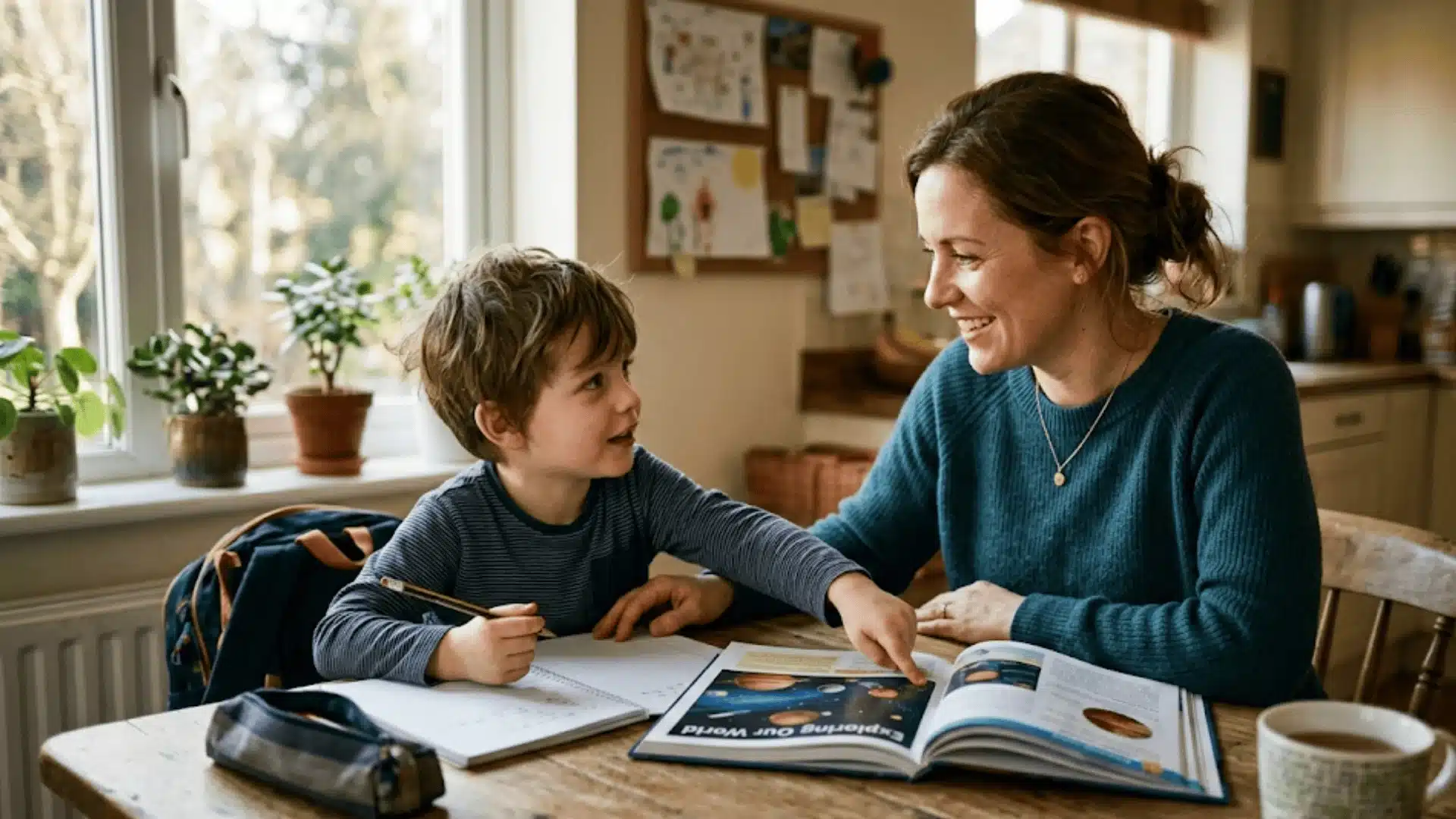
Do you ever notice how kids go quiet just when you wish they’d speak up? Learning how to encourage kids to ask questions might be simpler than you think, but it’s also more powerful than most people realize.
Questions are how children make sense of the world. They build confidence, spark curiosity, and deepen understanding.
And the best part? You don’t need a fancy degree or a perfect plan to make it happen. You just need the right approach. But here’s the thing: most parents and teachers are missing the key ingredients that change everything.
Why Do Kids Stop Asking Questions?
Think back to when your child was three or four. Questions were nonstop, right? Why is the sky blue? Why do dogs bark? Why, why, why? But somewhere along the way, that curiosity fades. And it doesn’t happen by accident.
Kids stop asking questions when they feel judged, rushed, or dismissed. Sometimes a simple “not now” sends a bigger message than you intended. Other times, it’s the classroom environment where wrong answers feel embarrassing, and silence feels safer.
You might not even realize you’re sending these signals. But children pick up on them fast. The good news? Once you spot the problem, you’re already halfway to fixing it.
Benefits of Encouraging Kids to Ask Questions
When you encourage kids to ask questions, you’re doing more than just answering them. You’re helping shape the way they think, learn, and grow. And the benefits go further than you might expect.
- Builds critical thinking: Kids learn to analyze situations rather than just accept things at face value. They start questioning the “how” and “why” behind everything, and that skill sticks with them for life.
- Boosts confidence: When children feel heard, they become more comfortable speaking up in any setting. Over time, that small habit of asking questions turns into a great sense of self-assurance.
- Strengthens communication skills: Asking questions teaches kids how to express their thoughts clearly and effectively. It also helps them become better listeners, because good questions come from paying attention.
- Deepens curiosity: One good question leads to another, and that’s where real learning begins. Curious kids don’t just memorize facts. They explore, experiment, and discover things on their own terms.
- Improves problem-solving: Kids who ask questions are better equipped to find solutions on their own. Instead of freezing up when things get hard, they learn to break problems down and tackle them step by step.
So yes, every question your child asks is actually a win. It means their mind is active, engaged, and hungry to learn more. And when you consistently create space for those questions, you’re not just teaching them, you’re building their future.
How to Encourage Kids to Ask Questions at Home
Home is where curiosity either grows or quietly disappears. And the truth is, you have more influence over that than you think. Here are some simple but powerful ways to make questioning a natural part of your everyday life.
1. Model Curiosity Out Loud
Kids learn by watching you. So when you’re curious about something, say it out loud. Ask questions like “I wonder why that happens?” or “How do you think that works?” When your child sees you embracing curiosity, they’ll feel safe doing the same.
It’s one of the easiest habits to build and one of the most effective. You don’t have to have all the answers either. Sometimes saying “I don’t know, let’s figure it out together” is the most powerful thing you can do.
2. Never Dismiss a Question
When your child asks something, resist the urge to say “not now” or “that’s a silly question.” Even a quick “That’s a great question, let’s find out together” goes a long way. Dismissing questions teaches kids to stay silent.
But validating them teaches kids that their thoughts genuinely matter. Make it a rule in your home that no question is too small or too strange to deserve a real response. That kind of environment builds trust and keeps curiosity alive.
3. Use Question-Starter Prompts During Reading
Reading time is a golden opportunity. Pause mid-story and ask things like “What do you think happens next?” or “Why do you think the character did that?” These prompts naturally encourage kids to ask questions back.
And over time, they’ll start doing it without any nudging from you. You can even keep a small list of go-to prompts on your bookmark. That way, you’re always ready to turn a quiet reading session into an engaging two-way conversation.
4. Play Question-Based Games
Turn questioning into something fun. Games like “20 Questions” or “Would You Rather” make kids think and ask naturally. You can even make up your own.
The goal is simple: get them comfortable forming questions in a low-pressure setting where there are no wrong answers. The more they practice asking questions through play, the more natural it becomes in real life.
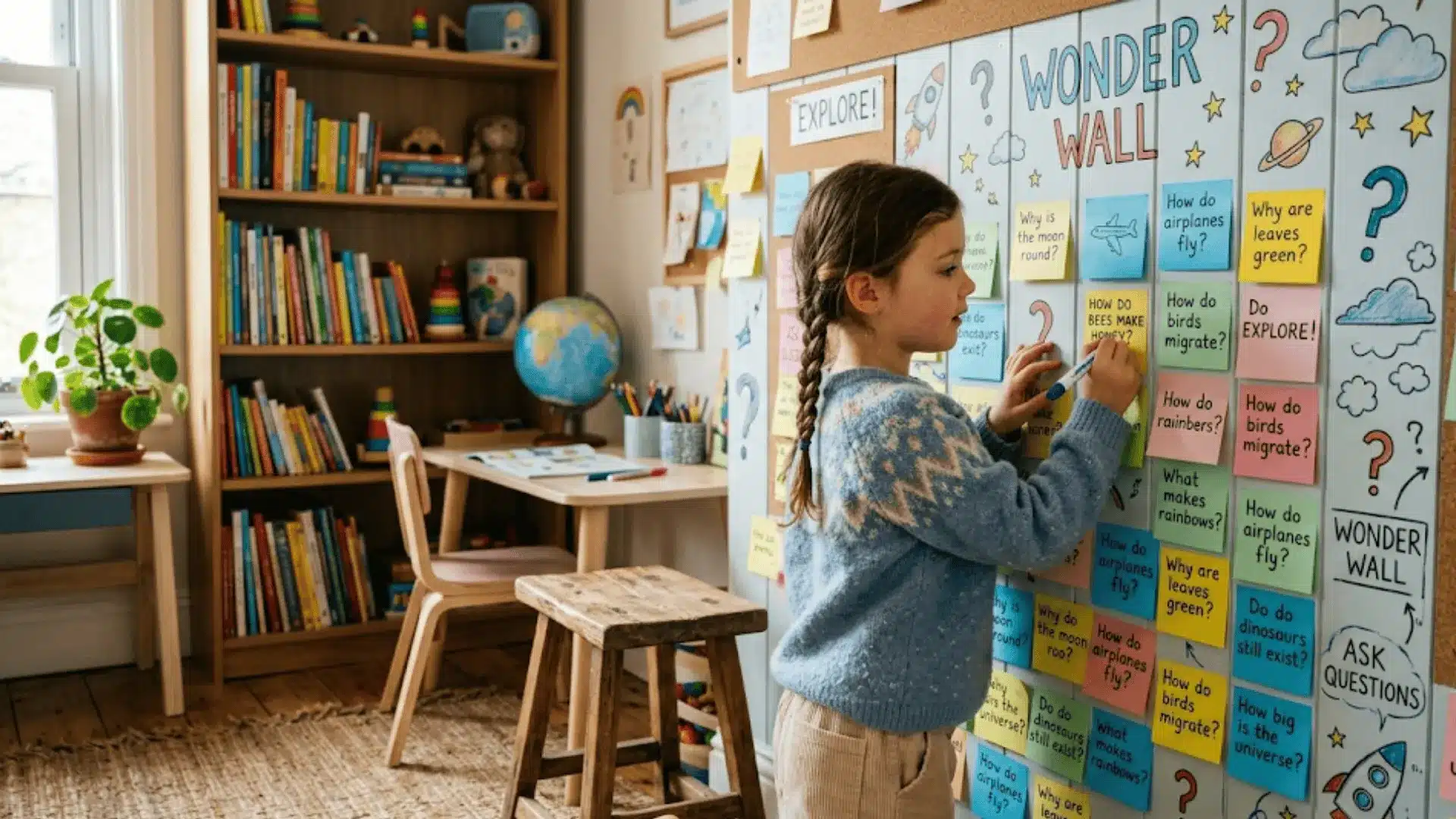
5. Create a “Wonder Wall” at Home
Set up a small board or wall space where your child can pin or write questions they’re curious about. It could be anything from “Why is the moon round?” to “How are chips made?” Revisit it together regularly.
It shows kids that questions deserve attention and are always worth exploring. You can even add your own questions to the wall. When your child sees that curiosity isn’t just for kids, they’ll take the whole thing a lot more seriously.
6. Ask Open-Ended vs. Closed Questions Strategically
Not all questions are created equal. Closed questions like “Did you have fun?” get one-word answers. But open-ended ones like “What was the best part of your day?” spark real conversation.
Use both strategically, and your child will start mirroring that habit naturally in how they ask questions, too. Pay attention to how often you’re asking closed questions without realizing it.
7. Use Probing Follow-Up Questions
When your child gives an answer, don’t just move on. Ask “What made you think that?” or “Can you tell me more?” Probing follow-up questions prompt kids to think more deeply and express themselves better.
It also shows them that their first answer is just the beginning, not the end of the conversation. Try to make this a consistent habit rather than an occasional thing. The more your child experiences this kind of back-and-forth, the more naturally they’ll start applying the same curiosity to everything around them.
Home doesn’t need to look like a classroom for learning to happen. Small, consistent moments add up faster than you’d expect. When you make questioning a normal part of daily life, your child won’t just ask more questions they’ll grow into a confident, curious thinker who isn’t afraid to speak their mind.
How to Encourage Students to Ask Questions in the Classroom
The classroom is one of the most powerful places to build a child’s questioning habit, but only if the environment supports it. As a teacher, you set the tone for everything. Here are practical strategies to help your students feel confident enough to ask and think out loud.
8. Build a Safe, Question-Positive Classroom Culture
Before any strategy works, students need to feel safe. If they’re afraid of being judged or laughed at, they’ll stay quiet every single time. So start by setting clear expectations, no mockery, no dismissing, no eye-rolling.
Celebrate every question openly. When students see that curiosity is respected in your classroom, they’ll gradually let their guard down and start speaking up.
9. Use Thought-Provoking Prompts to Spark Wonder
Sometimes students don’t ask questions because they don’t know where to start. A well-placed prompt can change that instantly.
Try opening lessons with statements like “What if everything we know about this is wrong?” or “What would you want to know about this topic?” These prompts lower the barrier to entry and get students thinking before the lesson even begins.
10. Try the Question Formulation Technique (QFT)
The QFT is a structured method where students generate their own questions around a single prompt or image without any teacher interference. They then categorize, refine, and prioritize those questions themselves.
It’s simple but incredibly effective. And because students own the process, they stay far more engaged. Try it once, and you’ll likely make it a regular part of your classroom routine.
11. Give Students Enough Wait Time
This one is easy to overlook but makes a huge difference. After asking a question, most teachers wait only a second or two before jumping in. But students need more time to think. Try waiting five to ten seconds in silence.
It feels uncomfortable at first, but that pause gives every student, not just the fastest thinkers, a real chance to formulate and ask a meaningful question.
12. Use Bloom’s Taxonomy to Diversify Questions
Not all questions challenge students equally. Bloom’s Taxonomy helps you move beyond basic recall and push students toward higher-order thinking.
Mix in questions that ask students to analyze, evaluate, and create, not just remember. When you consistently model this range of questioning, students naturally begin to mirror it. Over time, the depth and quality of their own questions will noticeably improve.
13. Incorporate Question Writing Sessions
Set aside dedicated time where students do nothing but write questions about a topic. No answers required, just questions. This removes the pressure of being right and shifts the focus entirely to thinking.
Even reluctant students tend to open up during these sessions. And reviewing those written questions together as a class gives you valuable insight into where curiosity is high and where understanding is low.
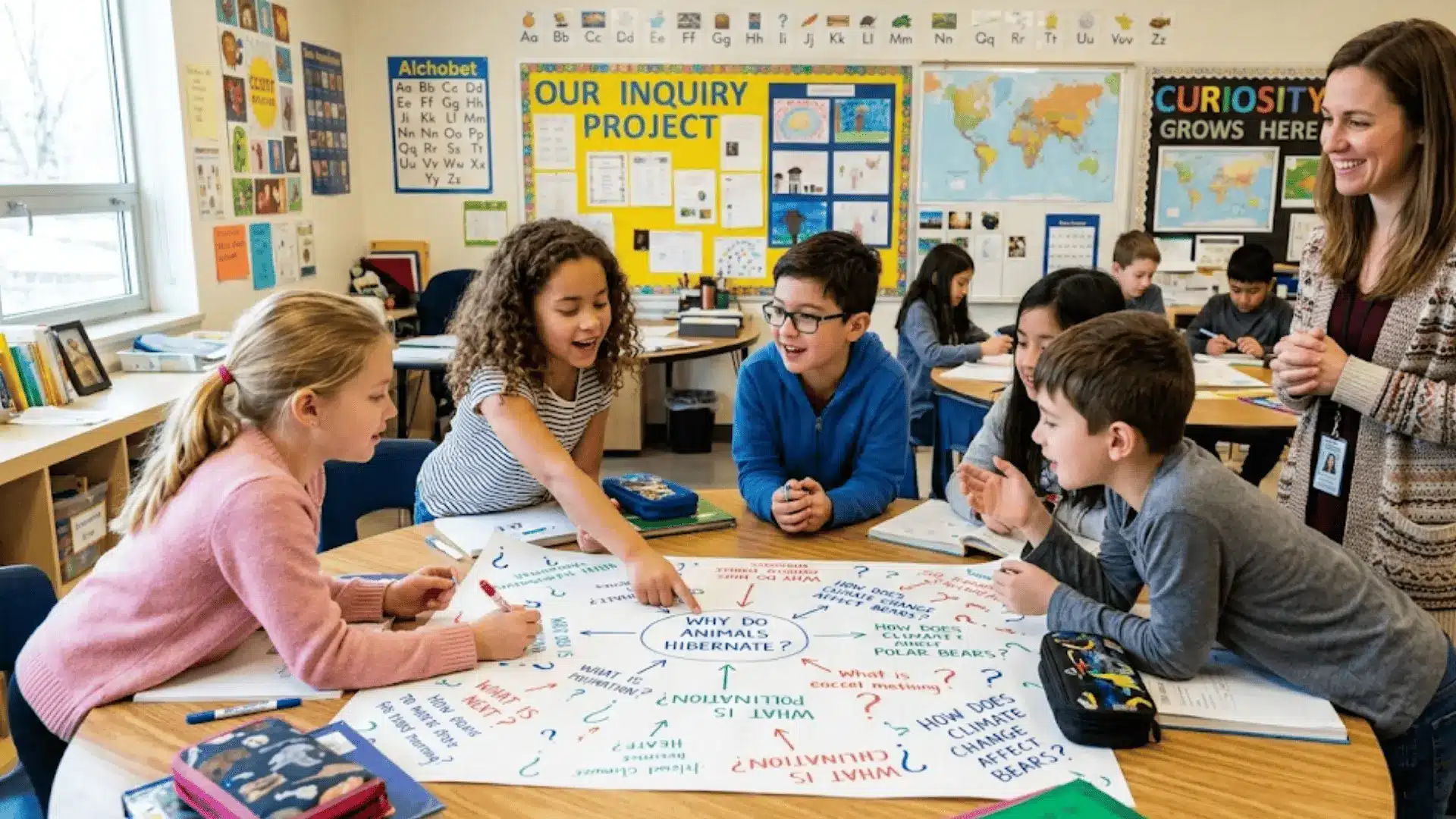
14. Make Questions a Group Activity
When questioning feels like a solo act, it’s intimidating. But in a group, it’s much easier. Try activities like “Question Storms,” where small groups compete to come up with the most questions about a topic in a set time.
It takes the spotlight off individual students and puts the energy into collaboration. And because it’s a team effort, even quieter students feel comfortable contributing.
15. Connect Questions to Student-Driven Goals
Students ask more questions when they actually care about the answers. So help them connect questioning to their own interests and goals.
Ask things like “What do you personally want to find out about this?” or “How does this relate to something you care about?” When learning feels relevant to their lives, curiosity comes naturally, and the questions that follow are far more meaningful and motivated.
A questioning classroom doesn’t happen overnight, but it also doesn’t require a complete overhaul of how you teach. When you consistently show your students that their questions are valued, you’re not just improving participation you’re building thinkers who will carry that habit with them long after they leave your classroom.
Age-Specific Tips for Encouraging Questions
Not every approach works for every age group, and that’s completely okay. What sparks curiosity in a five-year-old looks very different from what works for a twelve-year-old.
| Age Group | What Works Best | Quick Tip |
|---|---|---|
| Toddlers (2–4) | Simple “why” and “what” conversations | Ask “What’s that?” and let them lead |
| Early Childhood (5–7) | Storytelling and imaginative play | Pause stories and ask, “What happens next?” |
|
Middle Childhood (8–10) |
Hands-on experiments and exploration | Let them question the process, not just the result |
| Preteens (11–13) | Debate, discussion, and real-world topics | Connect questions to things they genuinely care about |
Every age brings its own kind of curiosity. And when you meet kids where they are, questioning becomes natural instead of forced. So don’t overthink it, just stay tuned in to what excites them right now.
Common Mistakes That Discourage Kids from Asking Questions
Sometimes the biggest barrier to a child’s curiosity isn’t the environment, it’s the small, everyday habits you might not even notice. And the tricky part is that most of these mistakes come from a good place.
- Interrupting or rushing their thought process: When you cut kids off mid-question, you send the message that their thinking isn’t worth waiting for. Slow down and let them finish.
- Answering too quickly: Jumping straight to the answer removes the joy of discovery. Give them a chance to think it through first.
- Showing frustration with repetitive questions: Kids repeat questions because they’re still processing. Reacting with irritation shuts down curiosity faster than anything else.
- Only praising correct answers: When kids feel that only right answers matter, they stop taking the risk of asking altogether.
- Overloading them with information: Giving too much at once overwhelms kids and leaves no room for their own questions to surface naturally.
These mistakes are easy to make but also easy to fix once you’re aware of them. A little patience and self-awareness go a long way. And honestly, catching yourself in these moments is already a sign that you’re doing something right.
The Bottom Line
Raising a curious kid isn’t about having all the right answers, and deep down, you already know that. It’s about creating the kind of space where questions feel welcome, safe, and worth asking.
That’s something every parent and teacher can do. When you commit to learning how to encourage kids to ask questions, you’re giving children something that no textbook ever could: the confidence to think for themselves.
Small shifts in how you respond, listen, and engage can completely change a child’s relationship with curiosity. And those changes? They last a lifetime.
So start today. Pick one strategy, try it, and see what happens. You don’t need to overhaul everything at once. Just take that first step because the child in front of you is already full of questions. They’re just waiting for you to make it safe to ask.