


Ever walk into your home and trip over shoes, bags, or wet jackets? It happens to all of us.
That’s where a mud room can quietly save the day. If you’ve been wondering what a mud room is, and why so many people swear by it, the answer is simple: it keeps the mess near the door and the rest of the home calmer.
A good mud room doesn’t have to be big. It doesn’t have to be expensive, either.
Even a small corner can work as a drop zone for coats, backpacks, and muddy shoes. With the right setup, mornings feel smoother, and cleaning takes less effort.
I’ve helped homeowners build practical spaces for real life, not showroom photos. A mud room is one of the easiest ways to make your home feel more organized the moment you walk in.
What Is a Mud Room?
If you’ve ever wondered what the meaning of mudroom is, think of it as your home’s “pause button” between outdoors and indoors.
A mudroom, also called a mud hall, back entry, or transition room, is a practical transition space, usually near the front door, back door, or garage entry, designed to keep dirt, water, and clutter from spreading into the rest of the house.
In other words, when someone asks what a mud room is, the simplest answer is: it’s a dedicated drop zone for the mess of everyday life.
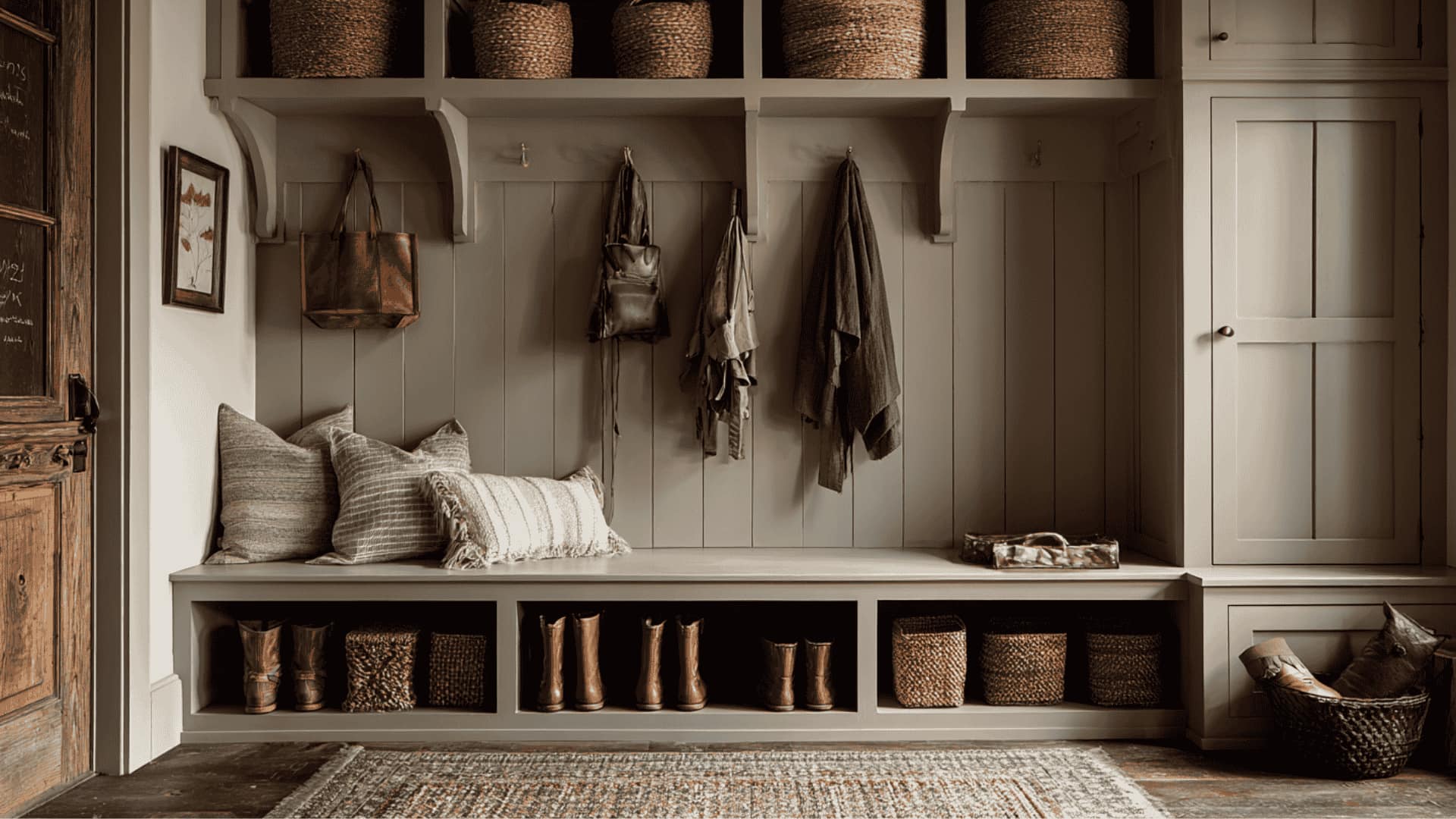
Most mudrooms are built around a smooth routine: step in, take off shoes, hang up coats, and store essentials. That’s why you’ll often find a bench for sitting, hooks for jackets and backpacks, cubbies or cabinets for storage, and a shoe area like a rack or boot tray.
Even if you don’t have a separate room, a small corner can serve as a mudroom and make your whole home feel cleaner and calmer.
Mud Room vs. Entryway: What’s the Difference?
Both terms sound similar, but they serve completely different roles in your home. Understanding the difference helps you design a space that actually works for your daily routine.
| Entryway | Mud Room | |
|---|---|---|
| Primary Purpose | Decorative welcome space | Functional transition zone |
| Storage | Minimal or none | Hooks, cubbies, shoe racks, cabinets |
| Flooring | Style-focused (hardwood, tiles) | Durable, easy-to-clean (vinyl, stone) |
| Furniture | Console table, mirror, decorative pieces | Bench, boot tray, coat hooks |
| Mess Control | Not designed for dirt or clutter | Built specifically to trap mud, water, and gear |
| Location | Front of the home, guest-facing | Near the back door, garage, or side entry |
| Best For | Making a great first impression | Daily organization and mess control |
Now that you know exactly what sets a mudroom apart, it’s time to look at why it’s worth adding to your home, and the real everyday benefits it brings.
Advantages of a Mud Room
A mudroom is more than an extra space; it’s a daily-life upgrade. If you’ve been wondering what a mud room is and why people love them, it’s because they keep mess contained, routines smoother, and your home noticeably more organized.
- Keeps your home cleaner: Mud, water, and dust stay near the entrance instead of spreading to carpets, sofas, and floors, especially helpful during rainy or snowy seasons.
- Cuts entryway clutter instantly: Shoes, coats, bags, and umbrellas get a designated home, so your hallway and living room don’t turn into a storage zone.
- Makes mornings faster: When essentials live in one place, you waste less time searching for keys, school bags, or jackets; your “out-the-door” routine becomes smoother.
- Adds smart storage (even in small homes): Hooks, cubbies, baskets, and tall cabinets use vertical space efficiently, giving you more organization without needing more square footage.
- Great for families and pet owners: It creates a simple system for backpacks, sports gear, leashes, towels, and wipes, so cleanup becomes a habit, not a headache.
- Protects floors and furniture: Containing wet shoes and heavy gear near the door reduces scuffs, stains, and wear, meaning less deep cleaning and fewer “oops” moments.
Now that you know why a mudroom is so useful, let’s move into layout inspiration: smart, functional designs you can copy for any space, from full mudrooms to small entryways and garage walk-ins.
Built-In & Custom Mudroom Layouts
If you want a mudroom that stays organized long-term, built-ins are the way to go. These layouts look polished, maximize storage, and create dedicated “homes” for everyday items.
1. Built-In Bench + Cubbies “Locker Style.”
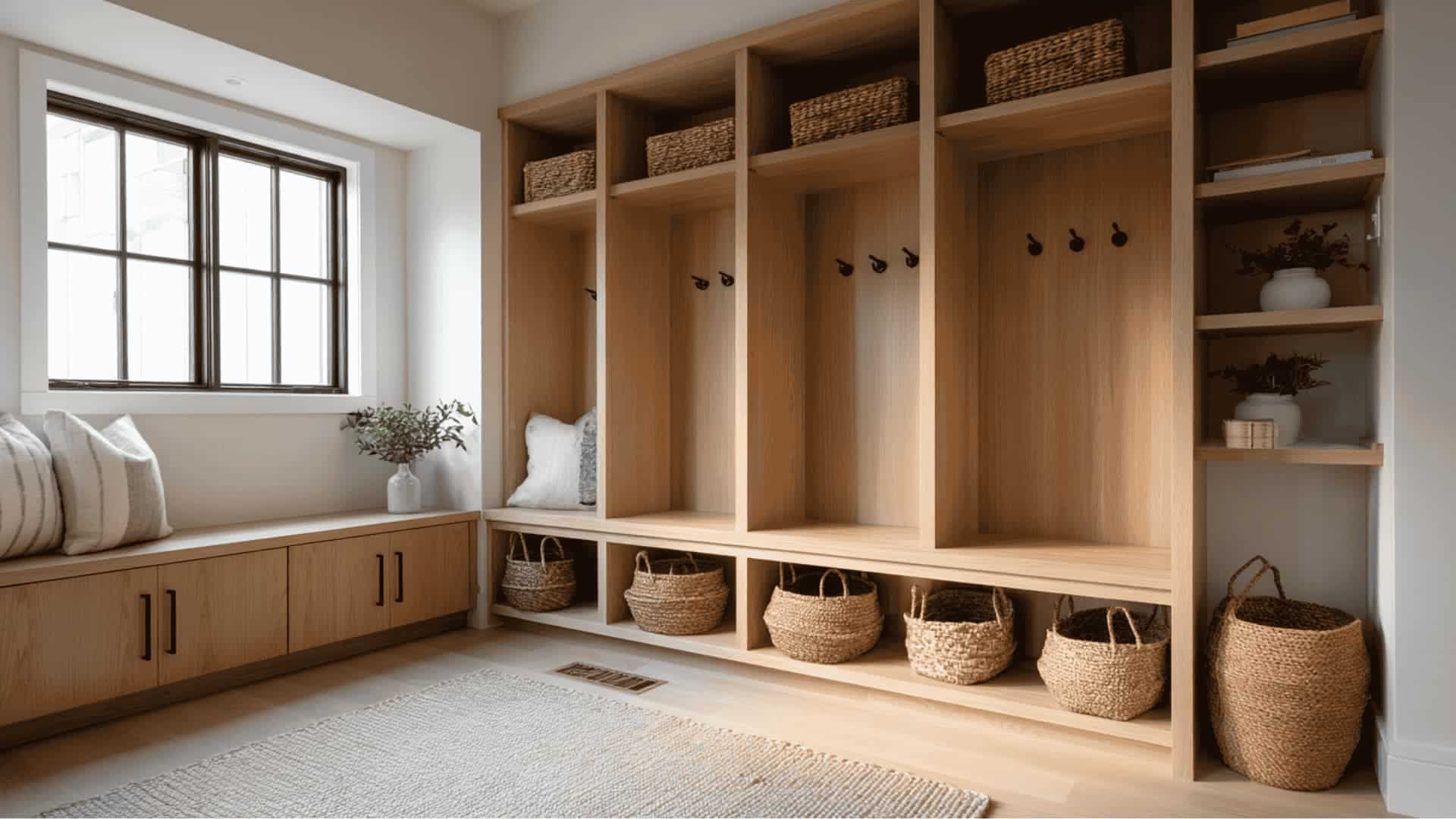
This family-favorite layout combines a built-in bench with cubbies above and/or below, giving each person their own landing spot. It keeps coats, shoes, and backpacks from spreading across the house.
Add baskets inside cubbies for smaller items, and the whole setup instantly looks cleaner and more intentional, even on busy mornings.
Pro tip: Add name labels to stop “shoe pile drift.”
2. Mudroom With Shoe Drawers
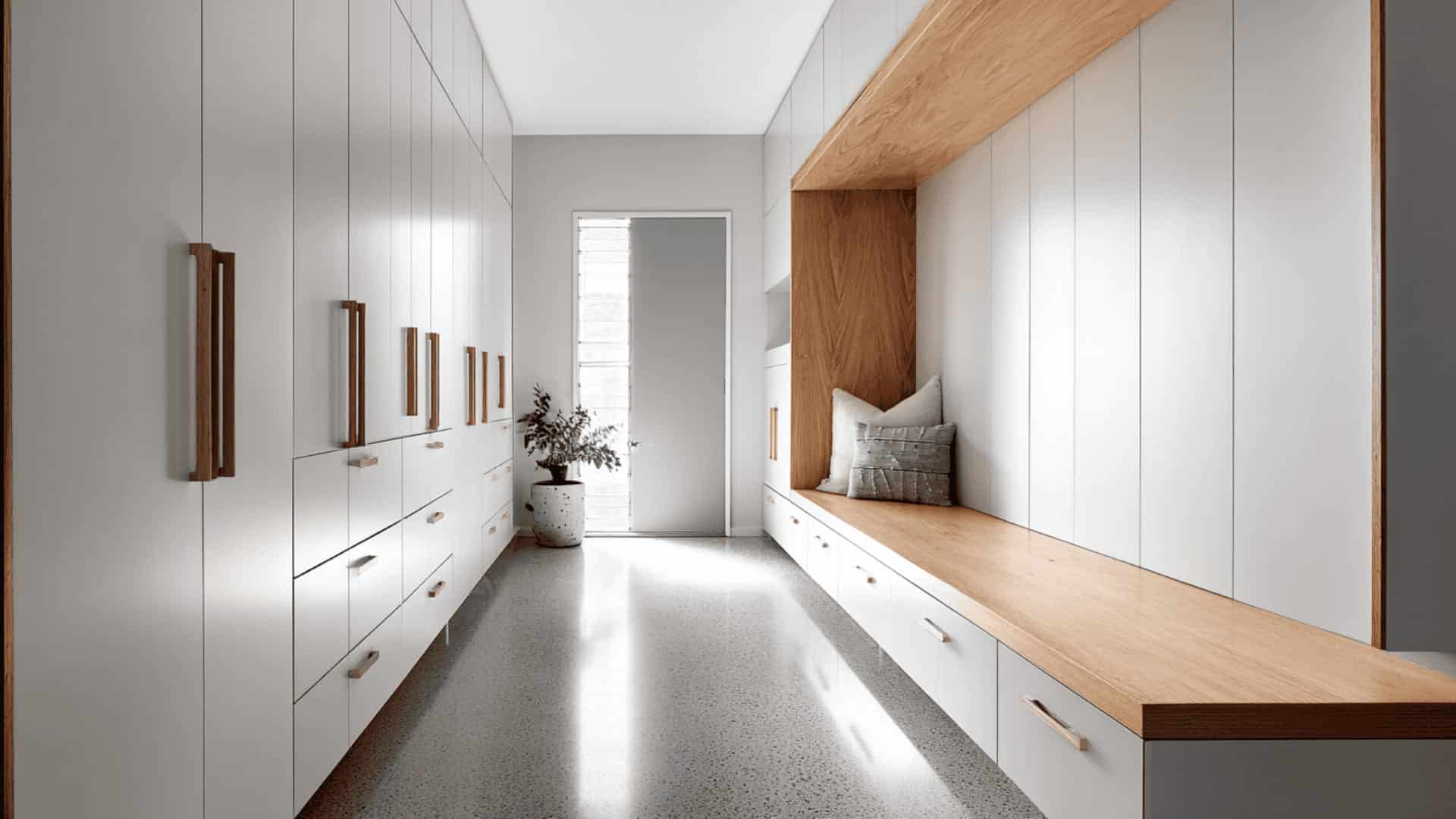
Shoe drawers are perfect for a tidy, minimalist mudroom that doesn’t show the mess. Pull-out drawers keep footwear organized, protect shoes from dust, and keep the floor visually clear.
Pair them with a small bench and a few hooks above to create a complete, high-function drop zone that still looks sleek.
Pro tip: Measure your biggest shoes first.
3. Closed Cabinet Mudroom
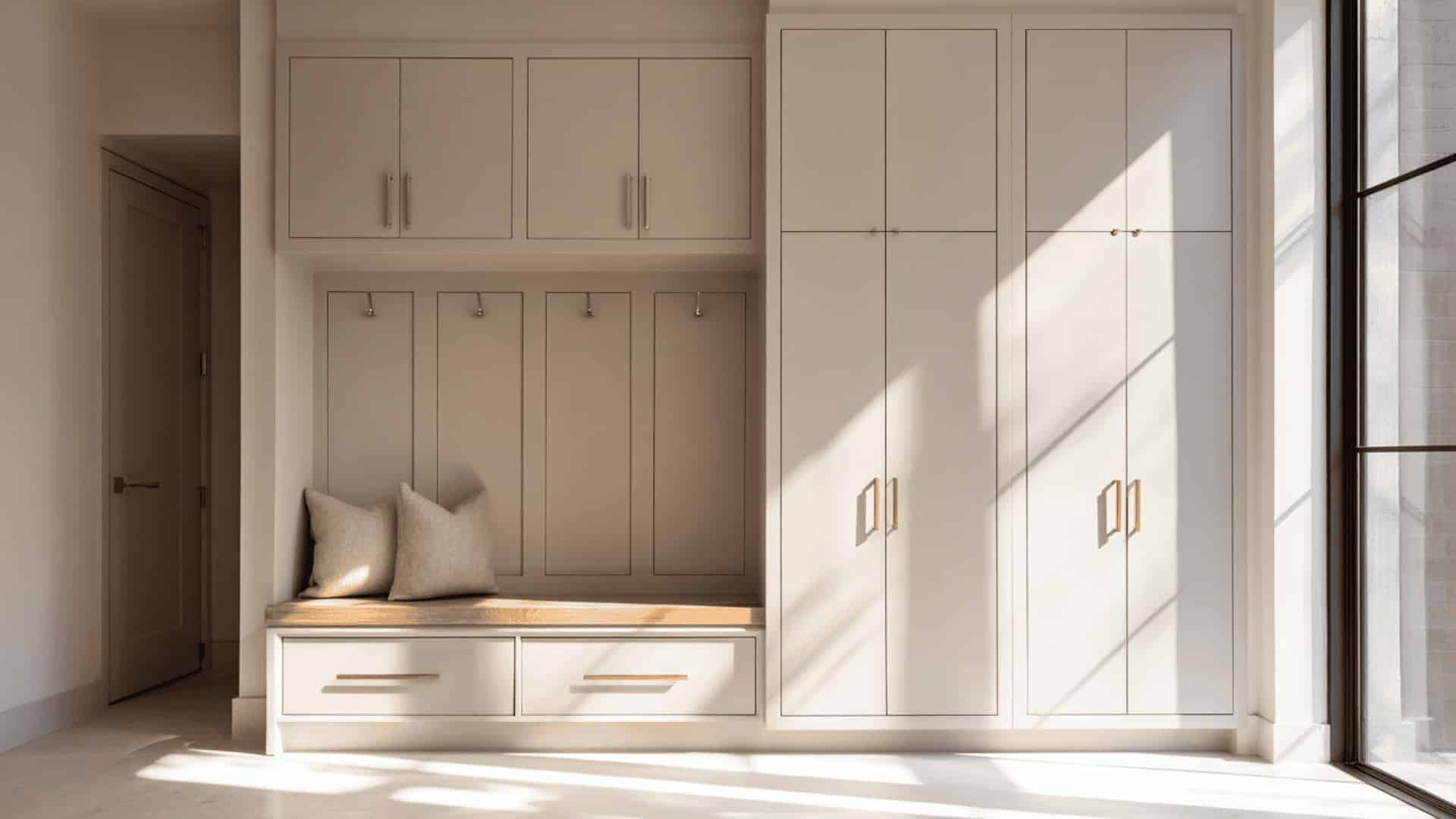
If your entry opens into your living space, closed cabinets help the mudroom feel calm instead of cluttered. Everything, such as shoes, bags, and extra jackets, can disappear behind doors, so the area always looks neat.
Add one open shelf or a short hook rail for daily essentials, and keep the rest hidden for a clean finish.
Pro tip: Mix one open shelf for daily-use items.
4. Mudroom With Pantry-Style Tall Storage
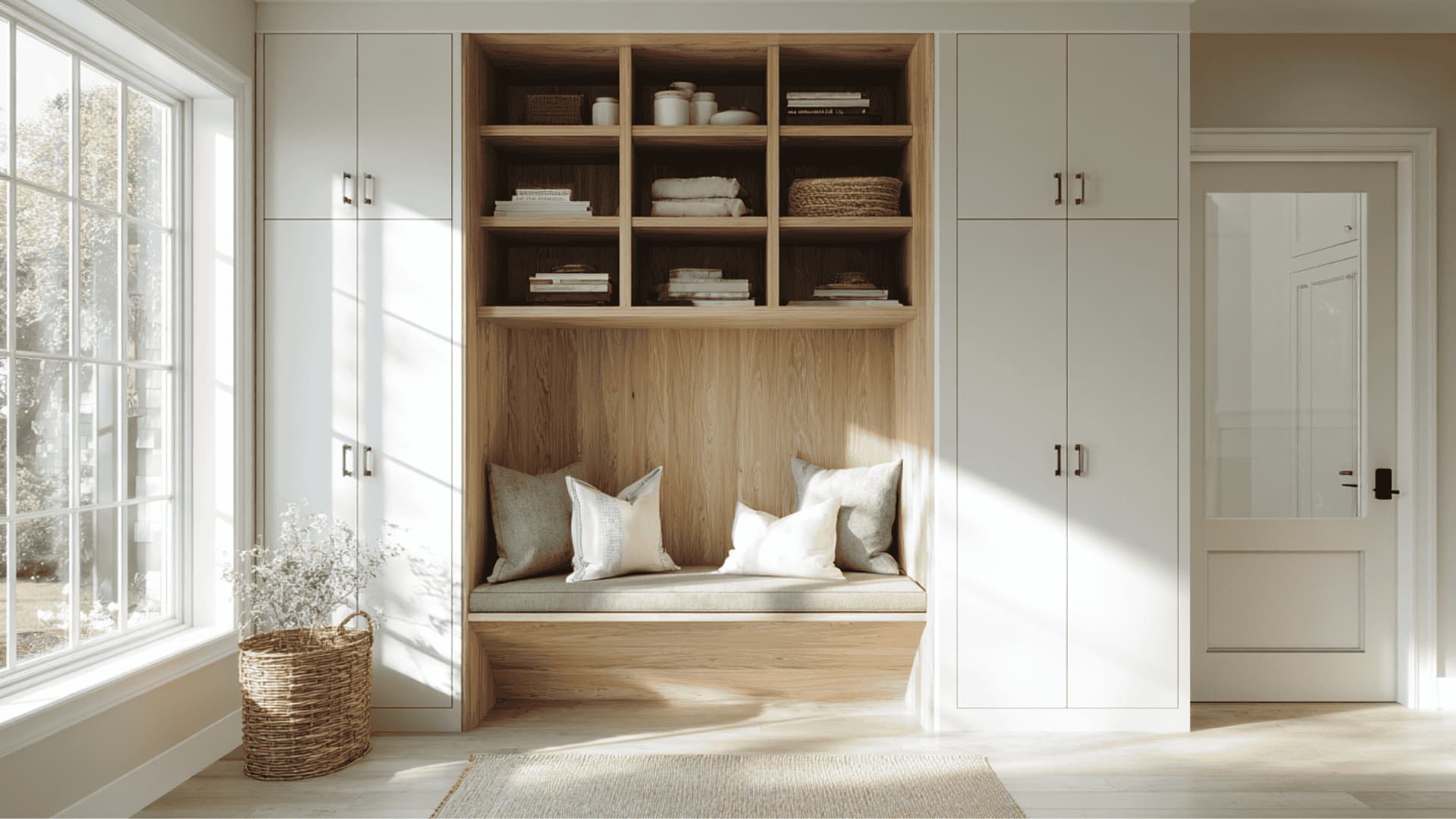
Tall pantry-style cabinets work well for mudrooms because they store bulky, awkward items that don’t fit in cubbies, such as sports gear, helmets, cleaning supplies, reusable bags, or seasonal accessories.
This layout keeps your floors open and your essentials contained. Combine tall storage with a bench and hooks to balance function and convenience.
Pro tip: Use adjustable shelves for seasonal swaps.
5. Two-Door “Airlock” Mudroom
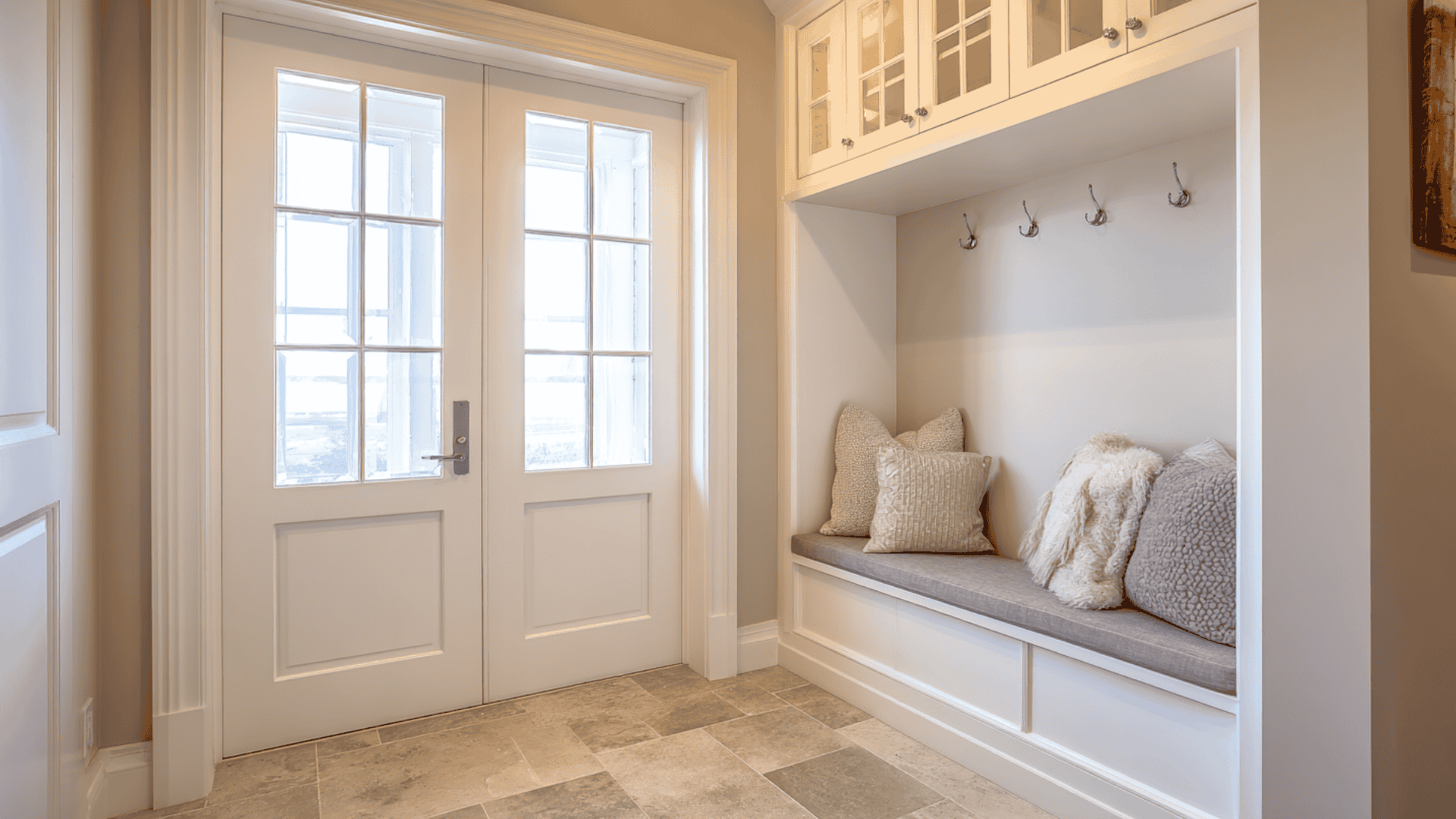
The “airlock” mudroom sits between an exterior/garage door and the main interior door, creating a true buffer zone. It traps dirt, drafts, and noise before they reach the rest of the home.
Add hooks, a bench, and a boot tray inside, and you’ll notice your house stays cleaner, especially in rainy or snowy seasons.
Pro tip: Add a door sweep to block drafts and debris.
Small Space Mudroom Layouts
No dedicated room? No problem. These mudroom layouts are designed for tight spaces; hallways, corners, and small entryways, using vertical storage and compact furniture that still feels stylish.
6. Narrow Hallway Mudroom
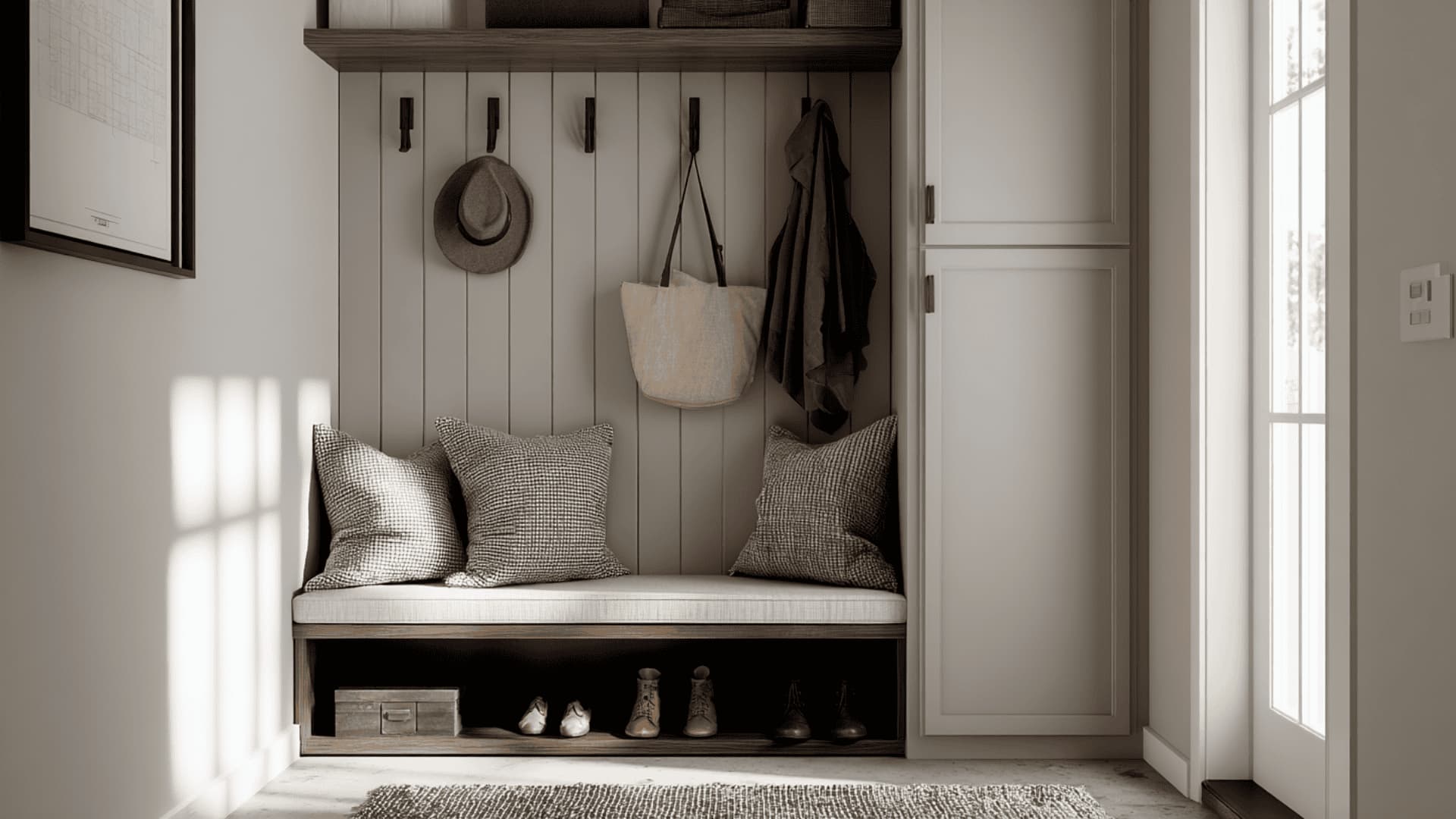
For a narrow hallway, the best layout is vertical: hooks on the wall, a slim bench, and a tall cabinet or shelves. It keeps coats and bags off the floor while leaving enough walkway space.
Add a wall-mounted shoe rack or a boot tray underneath to prevent that classic hallway shoe pile from taking over.
Pro tip: Use a wall-mounted shoe rack to save floor space.
7. Corner Bench Nook Mudroom
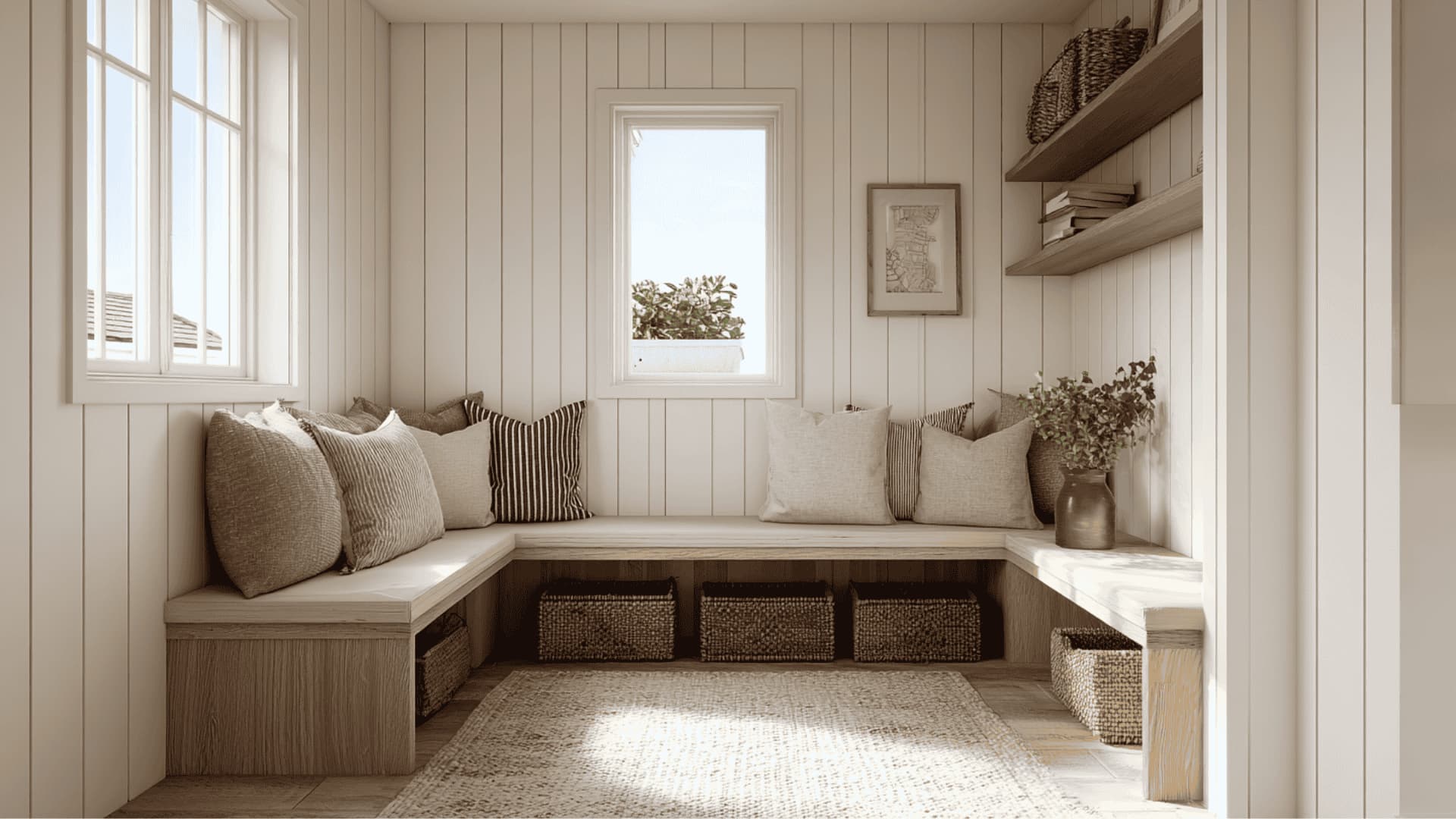
A corner nook mudroom layout turns unused space into a functional drop zone. Add a compact bench, hooks above for coats and bags, and baskets underneath for shoes and small accessories.
It’s an easy way to create a mudroom feel without needing an entire wall. Bonus: it can look cozy and intentional with a cushion and a small rug.
Pro tip: Add under-bench baskets for gloves and caps.
8. Floating Bench Mudroom
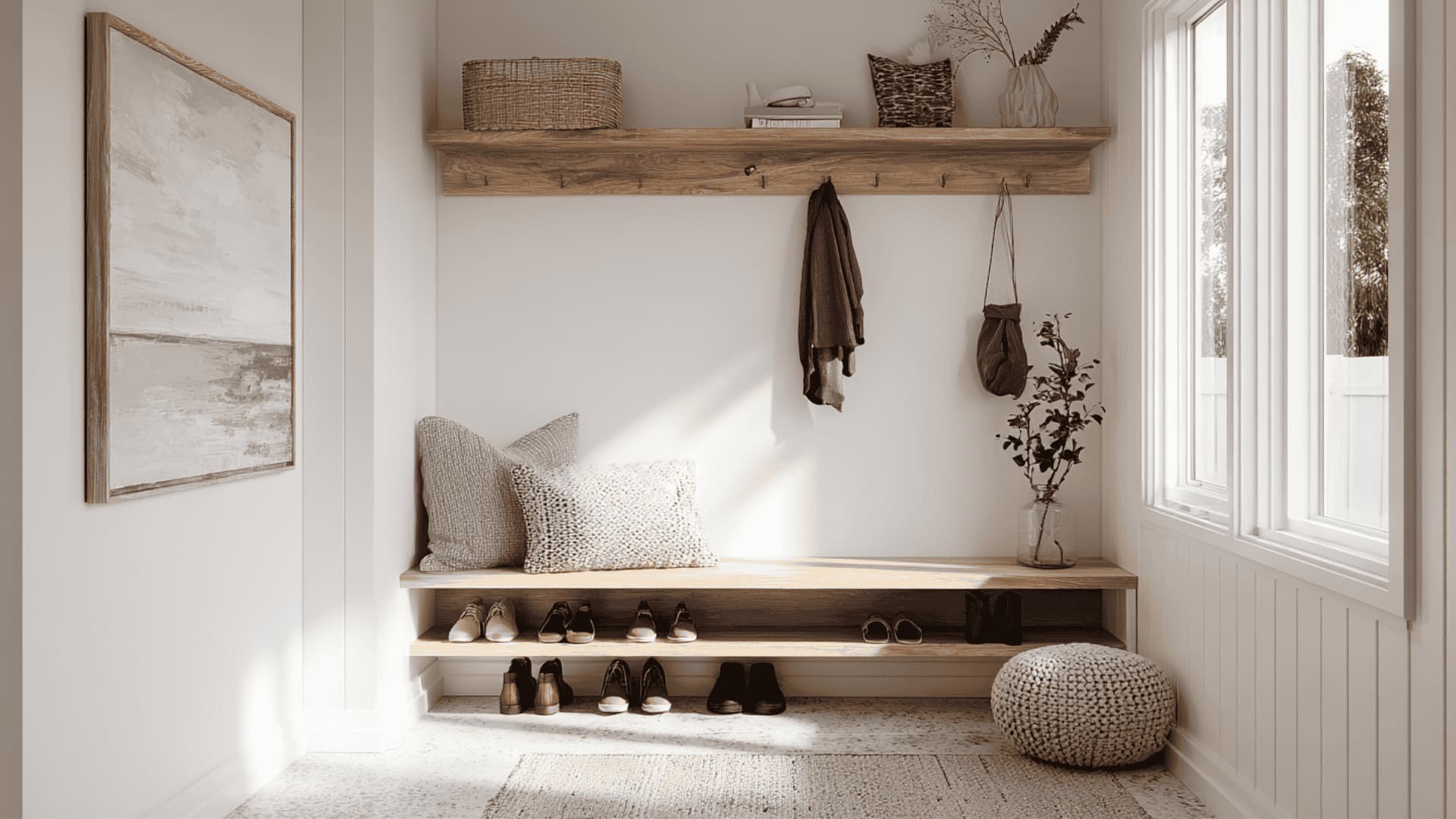
A floating bench is a smart layout trick when space is tight because it keeps the floor visible and makes the entry feel bigger. Mount the bench to the wall, add hooks above, and place a shoe rack or baskets below.
It’s clean, modern, and easier to sweep under, perfect for high-traffic entryways that need quick cleanup.
Pro tip: Add a shoe rack beneath.
9. Open Hooks + Basket Wall
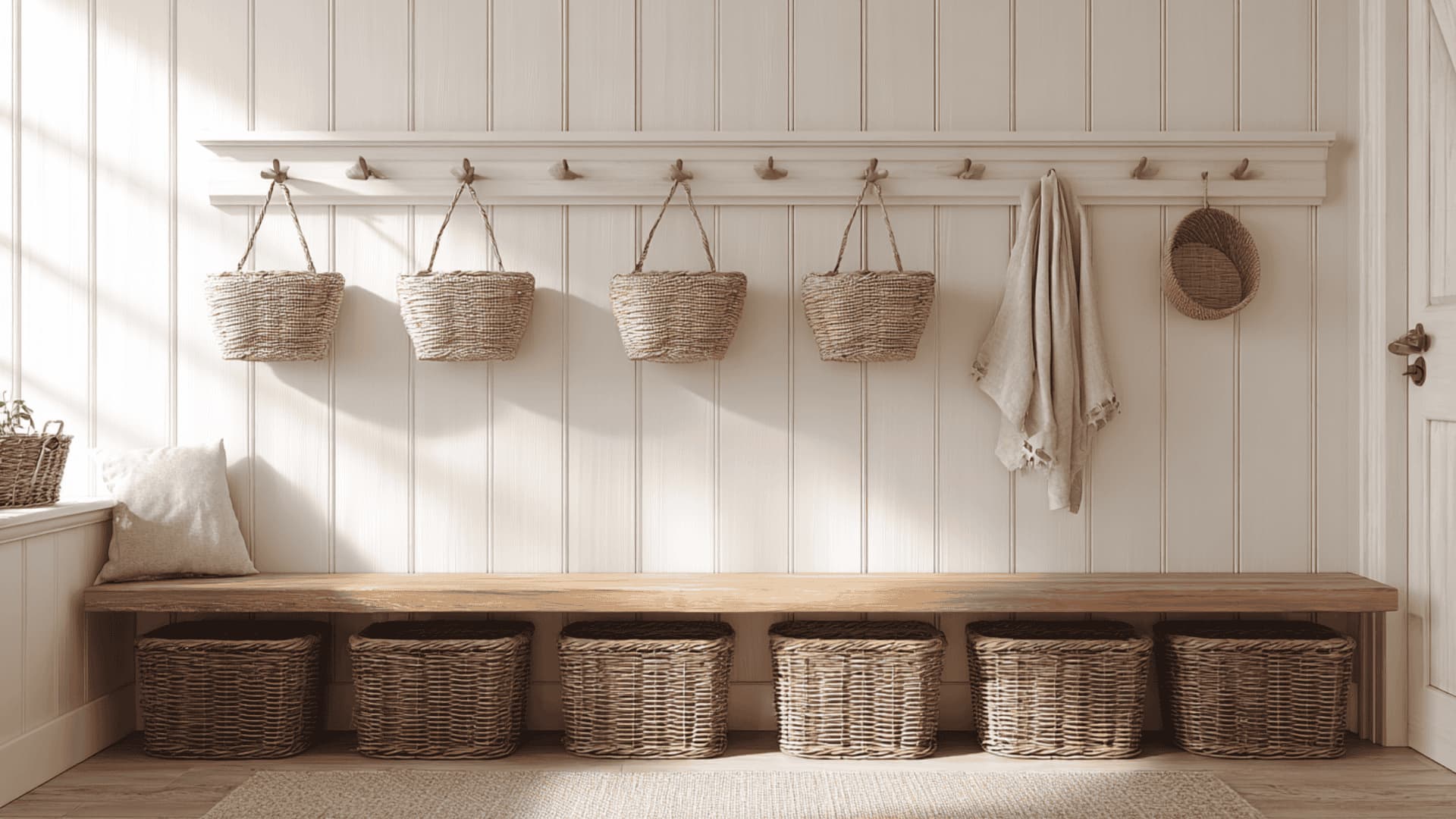
This layout is simple, affordable, and surprisingly effective, ideal for renters or quick upgrades. Install a row of hooks and pair it with baskets or bins on shelves to catch daily clutter like hats, gloves, and dog gear.
Add a slim bench underneath for shoes, and you’ve created a practical mudroom zone without custom cabinetry.
Pro tip: Use matching baskets to reduce visual clutter.
Multi-Functional Mudroom Layouts
Want your mudroom to do more than hold shoes? These layouts combine storage with real-life routines; laundry, schedules, and pet cleanup, so the space works harder and saves time daily.
10. Laundry with Mudroom Combo
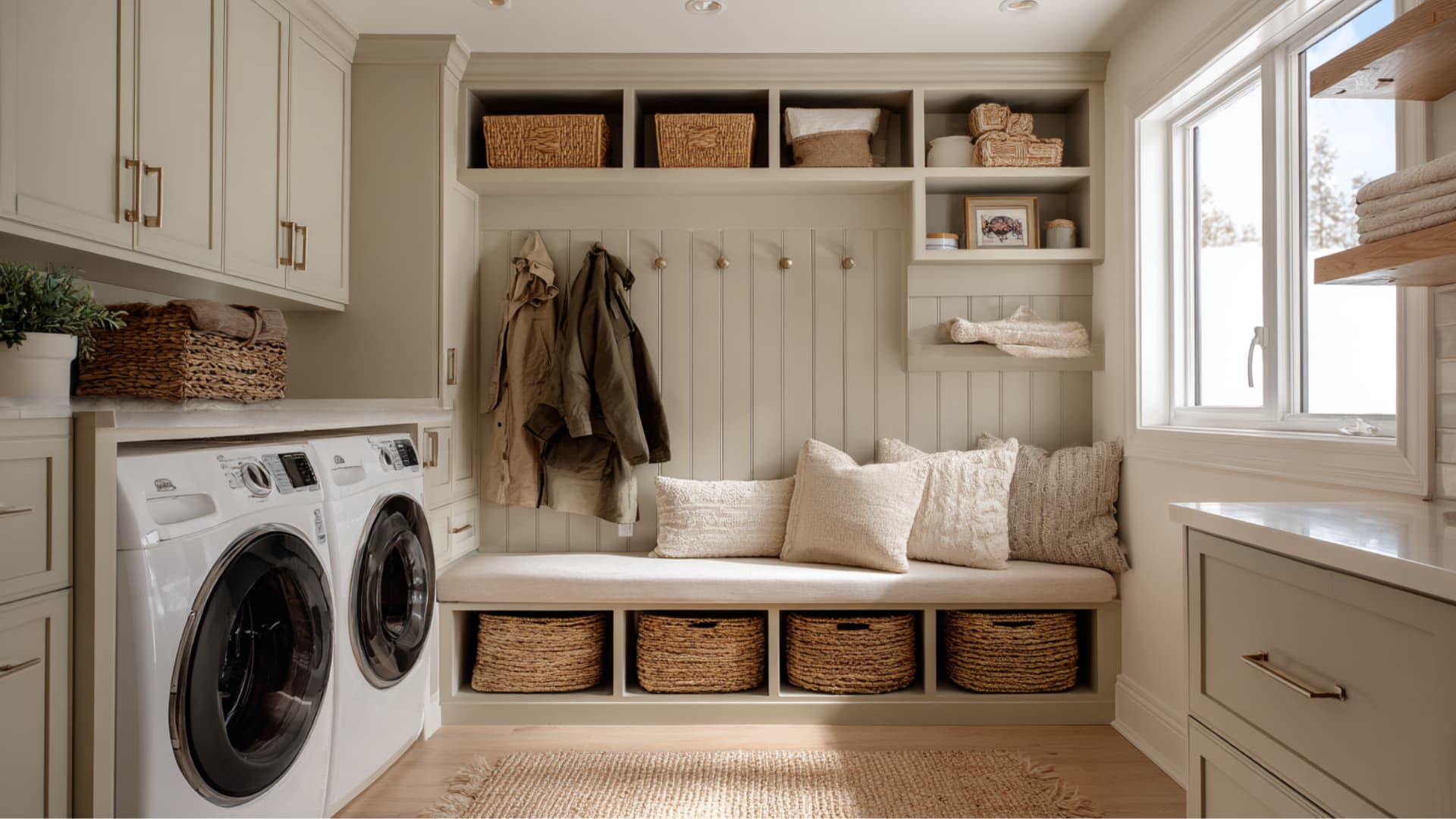
A laundry + mudroom combo creates an efficient cleanup station: drop muddy clothes, rinse towels, and manage daily entry clutter in one place. Add cabinets for supplies, hooks for coats, and a bench for shoes to keep it functional.
This layout shines for families, rainy climates, and anyone who wants fewer messes when traveling deeper into the home.
Pro tip: Add a hanging rail for air-drying rain gear.
11. Family Command Center Mudroom
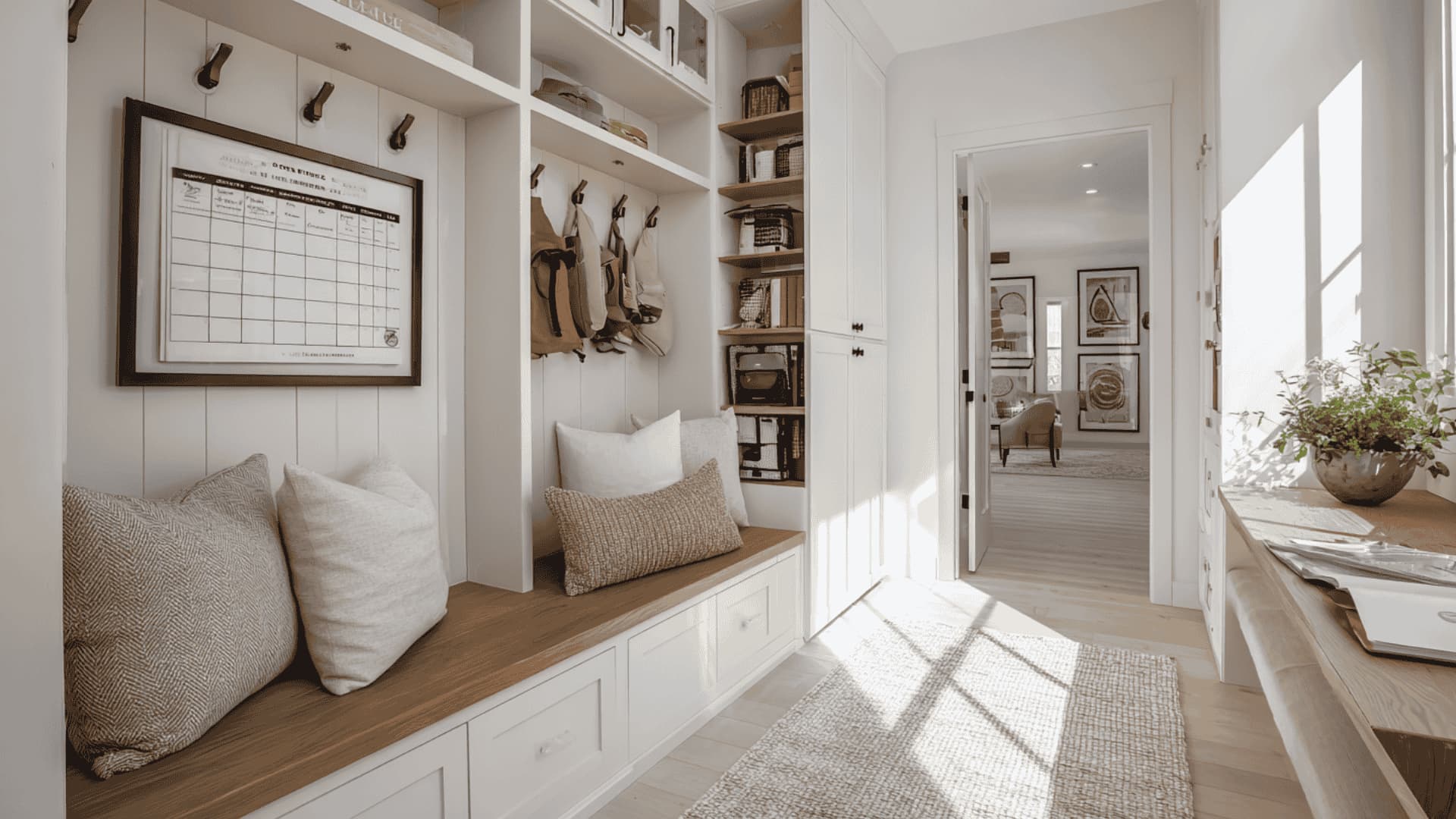
This layout turns your mudroom into a daily organization hub. Add a calendar or whiteboard, a mail sorter, and a charging area so everyone knows what’s happening and where essentials live.
It’s perfect for busy families because it reduces “where is my…” moments right at the door. Keep it neat with a drawer to hide cords and mail overflow.
Pro tip: Put the charger inside a drawer to hide the cables.
12. Pet-Friendly Mudroom
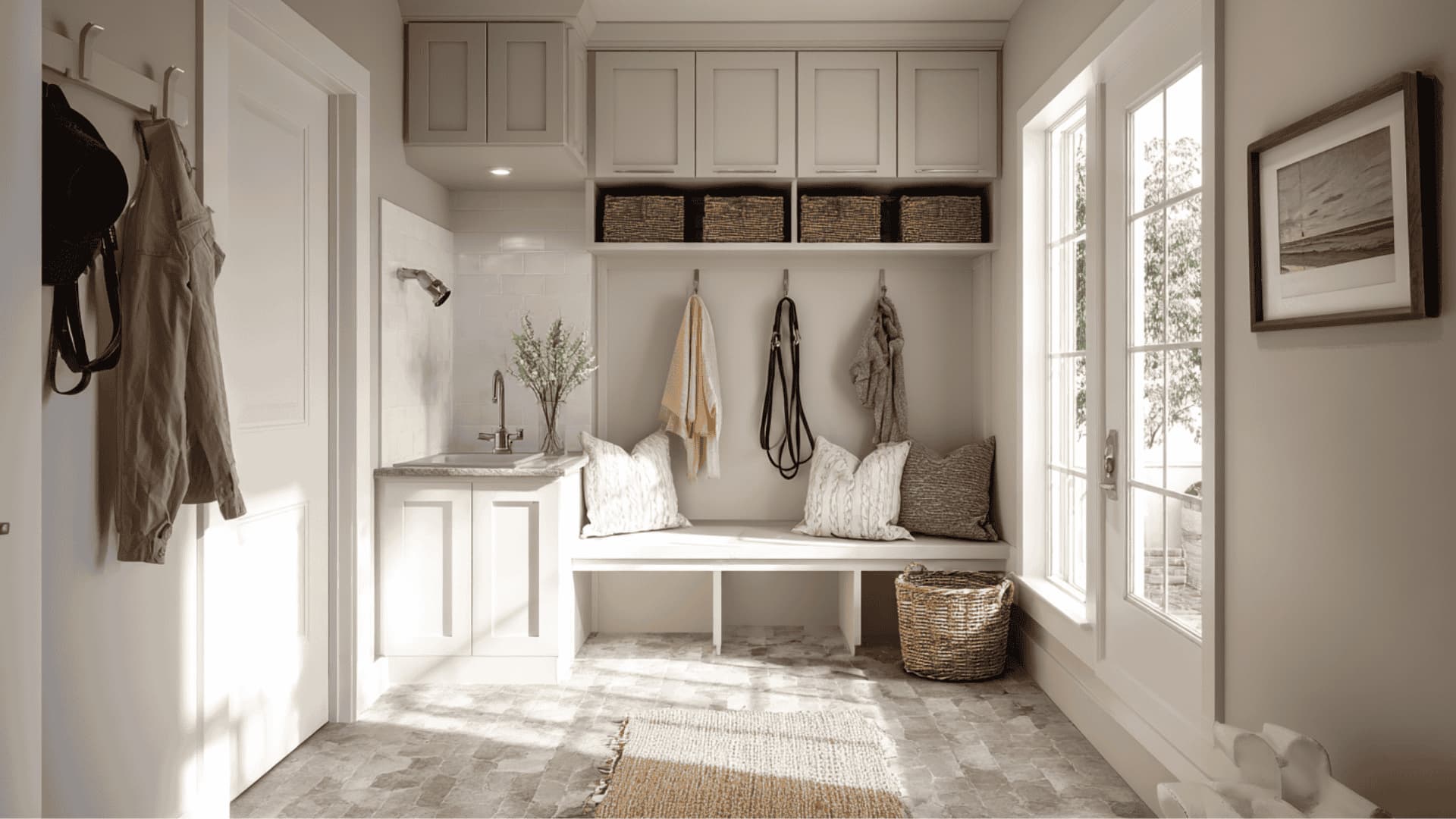
A pet-friendly mudroom layout keeps muddy paws and pet gear from taking over the house. Add hooks for leashes, storage for towels and wipes, and, if you can, a small wash station or utility sink.
It makes post-walk cleanup fast and contained. Use closed bins for treats and bags so everything stays tidy and doesn’t look like “pet clutter.”
Pro tip: Keep a sealed bin for treats and bags.
Heavy-Duty & High-Traffic Mudroom Layouts
If your entry handles mud, rain, sports gear, and nonstop foot traffic, your mudroom layout needs to be tough. These ideas prioritize durable materials, easy cleanup, and family-friendly function.
13. Garage-Entry Mudroom With Heavy-Duty Flooring
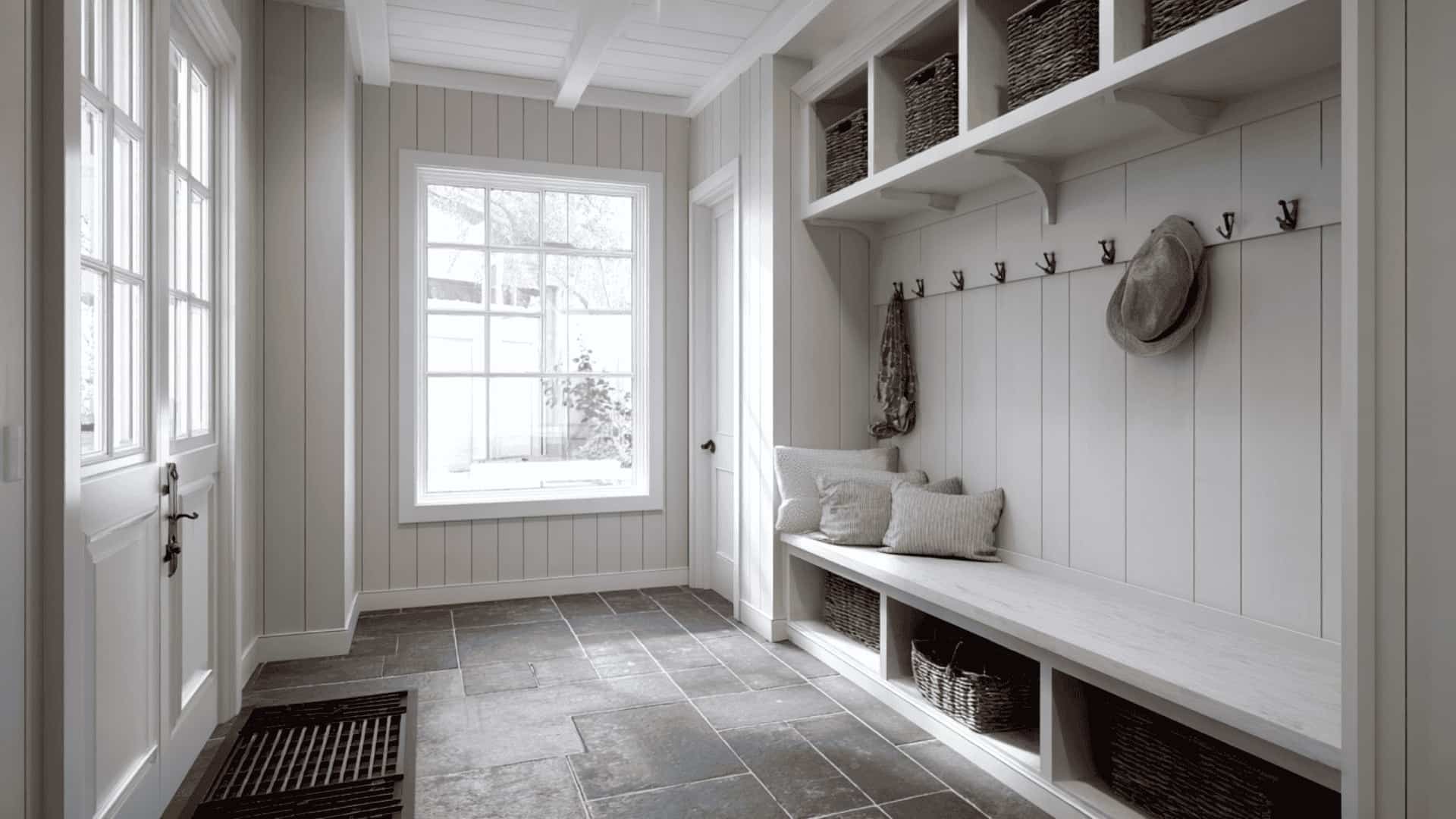
This layout is designed for the messiest entrance of all: the garage. Use durable, easy-to-clean flooring, a large boot tray, and storage that can handle daily wear and tear.
Add hooks for jackets and gear, a bench for shoe changes, and a closed cabinet for overflow. It’s practical, hardworking, and keeps the “garage mess” from entering your living areas.
Pro tip: Use a large boot tray to trap water and grit.
14. Mudroom With Statement Tile
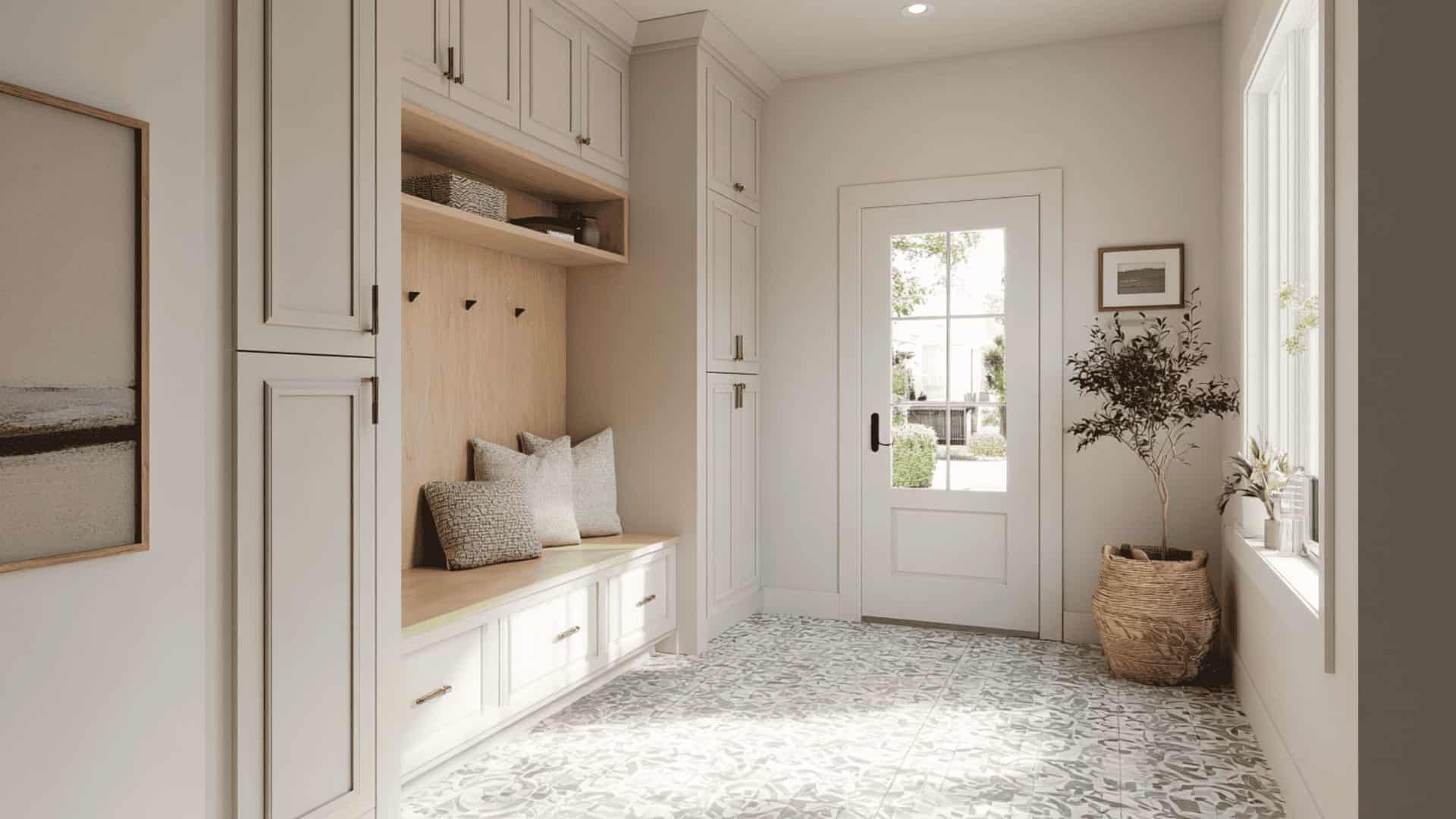
If you want style without sacrificing practicality, let the flooring do the work. Statement tile (or any easy-clean surface) gives your mudroom personality while standing up to wet shoes and frequent mopping.
Pair it with a simple bench-and-hook layout to keep the focus on function. Choose materials you won’t panic about when someone walks in with muddy boots.
Pro tip: Keep grout low-maintenance (or go larger tile).
15. Kid-Height Mudroom
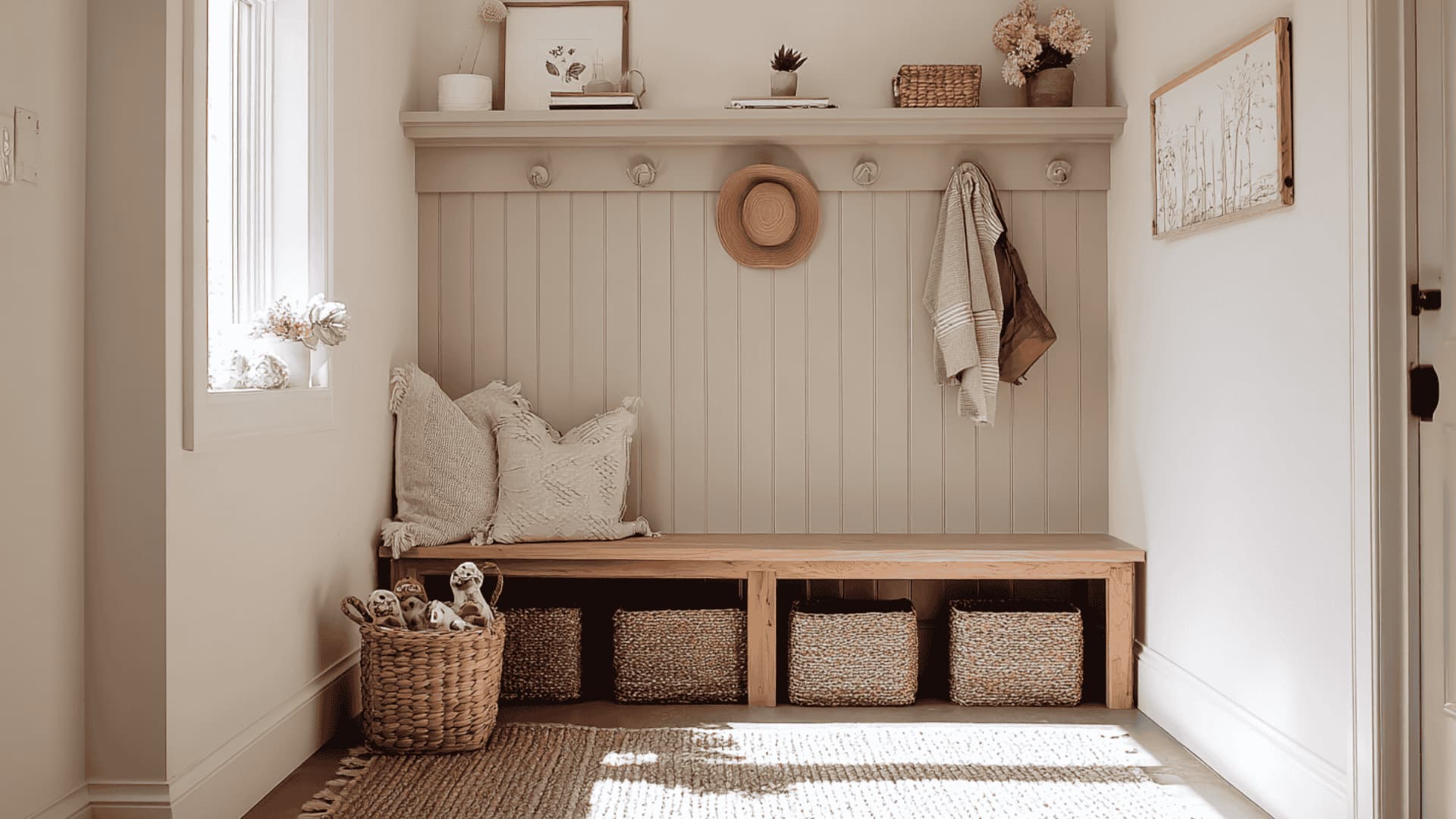
A kid-height mudroom layout makes daily routines smoother because children can actually use it. Install hooks at lower heights, use open bins or cubbies for backpacks, and keep a dedicated shoe tray that’s easy to reach.
This setup reduces clutter and encourages independence; kids learn to hang, store, and grab their things without constant reminders.
Pro tip: “One hook + one bin per kid” rule.
Mistakes to Avoid When Designing a Mud Room
A mudroom can completely transform your daily routine, but only if it’s designed thoughtfully. Without proper planning, this space can quickly become another clutter zone.
Before you finalize your layout, here are the most common mudroom mistakes to avoid.
- Not planning enough storage: Underestimating how many shoes, coats, and bags your household has leads to overflow and clutter within weeks. Always plan slightly more storage than you think you need.
- Ignoring shoe management: Without a dedicated boot tray, rack, or drawers, shoes will scatter across the floor, defeating the purpose of a mudroom.
- Choosing hard-to-clean materials: Delicate flooring or high-maintenance finishes don’t work in a high-traffic, mud-prone area. Durability should come before aesthetics.
- Skipping designated zones: If everything shares one surface, items pile up. Separate areas for shoes, outerwear, and daily essentials keep the space functional.
- Installing hooks at the wrong height: Hooks placed too high for kids (or too low for adults) reduce usability and create frustration.
- Forgetting lighting and ventilation: A dark, poorly ventilated mudroom can feel cramped and develop odors from damp shoes and coats.
- No “one person, one spot” system: Without assigned hooks or cubbies, clutter spreads quickly, and accountability disappears.
Avoiding these common mistakes ensures your mudroom stays organized, functional, and easy to maintain, so it actually simplifies your life instead of becoming just another messy corner of the house.
How to Properly Utilize a Mud Room
Once your mudroom is designed well and you’ve avoided the common mistakes, the real magic happens in how you use it every day. The key to properly using a mudroom is to create a simple routine and stick to it.
When you walk in, make it a habit to pause: take off your shoes, hang up your coat, and place your keys or bag in their assigned spot. That small daily reset keeps clutter from creeping into the rest of your home.
It also helps to assign everyone their own space, whether it’s a hook, cubby, or basket.
When each person knows exactly where their things belong, the system practically runs itself. Rotate seasonal items so the space doesn’t feel overcrowded, and do a quick weekly tidy-up to keep it functional.
A mudroom works best when it’s not just beautifully designed, but consistently used with intention.
Wrap Up
A mudroom may seem like a small addition, but it can make a big difference in how your home functions every single day.
From understanding what a mud room is to learning smart layouts, avoiding common mistakes, and using it intentionally, the goal is simple: create a space that keeps mess contained and routines stress-free.
The right setup doesn’t have to be expensive or elaborate; it just needs to work for your lifestyle.
Over the years, I’ve seen how even a small, well-planned drop zone can completely change the feel of a home. When your entry works, everything else flows better.
So take a look at your own space, what small change could make coming home feel calmer and more organized?
Frequently Asked Questions
What’s a Mud Room, and Do I Really Need One?
A mud room is a transition space near your entry that keeps dirt, shoes, and clutter contained, making your home cleaner and mornings less chaotic.
Can I Create a Mud Room in a Small Space?
Yes! Even a narrow hallway corner with hooks, a slim bench, and a boot tray can function as an effective mud room without major renovations.
What are the Must-Have Elements of a Mud Room?
A functional mud room needs at a minimum a bench for sitting, hooks for coats, and a dedicated shoe area, such as a rack or boot tray.