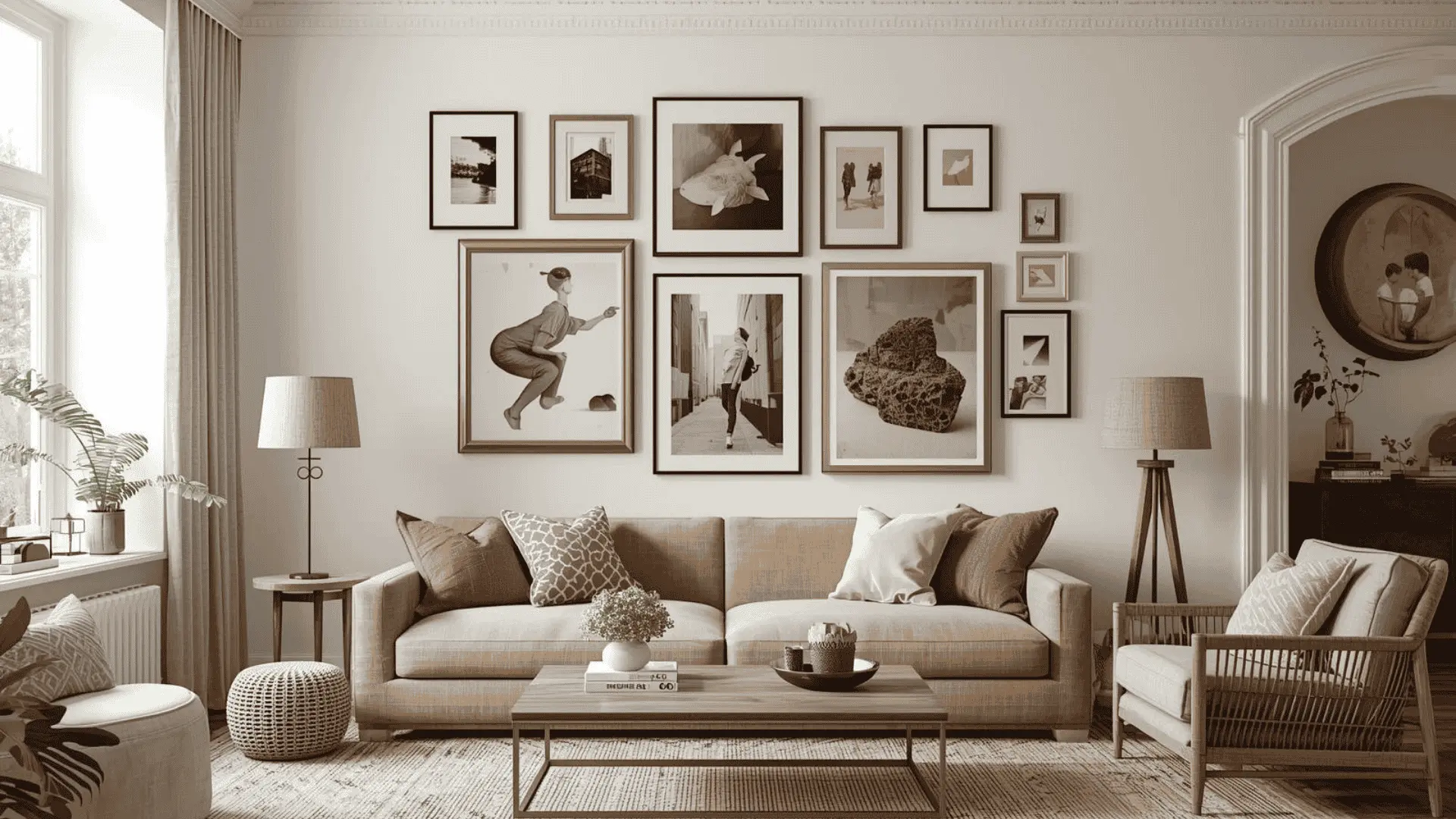


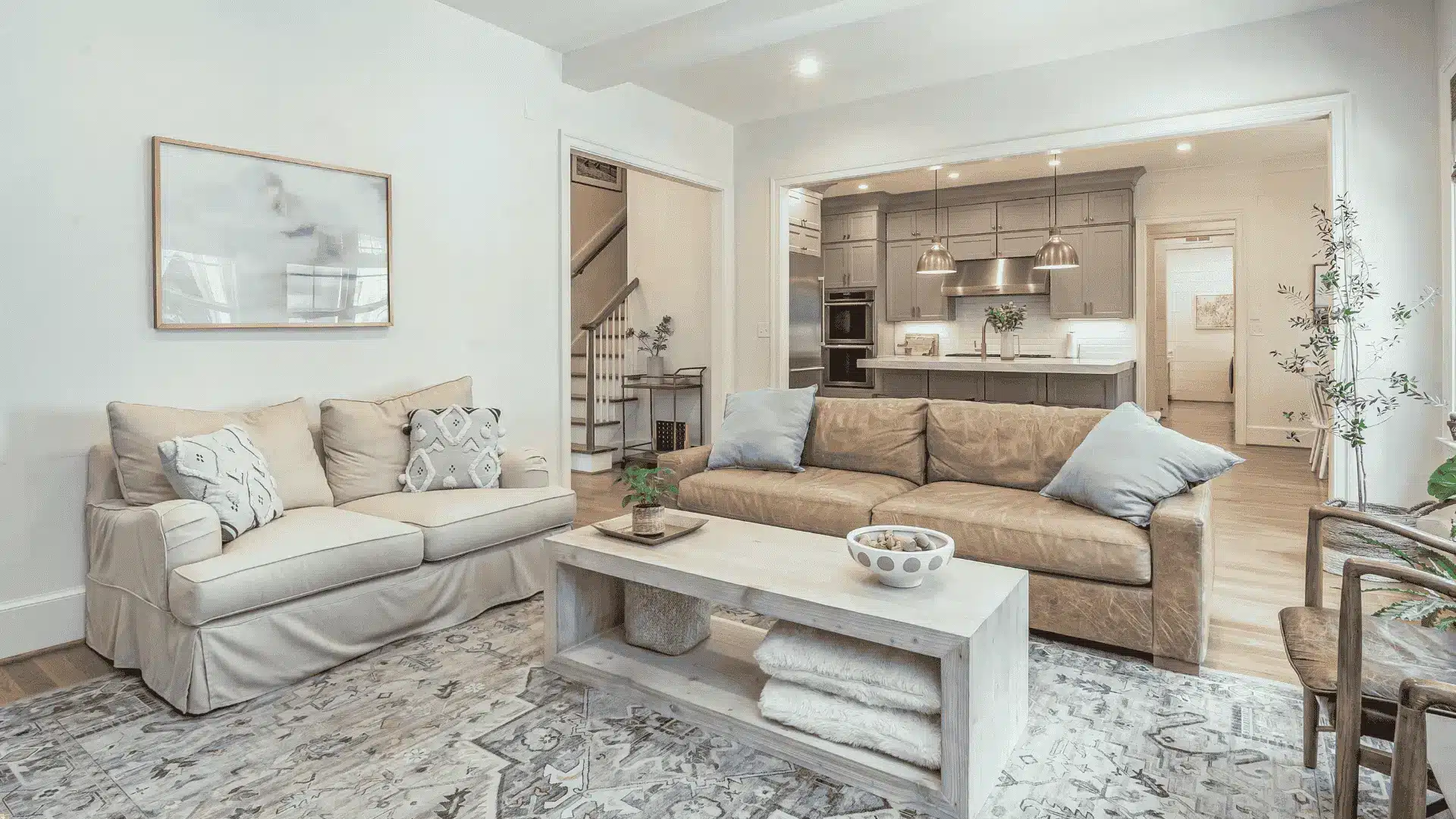
Knowing how to arrange living room furniture is the quiet skill that separates a house from a home. You walk into a room and feel it immediately that invisible pull toward comfort, that sense that everything belongs exactly where it stands.
Start by anchoring your space with a focal point. Place your sofa facing it, then build outward. Keep pathways clear so movement feels natural, never forced.
Balance heavy pieces with lighter ones. Let conversation flow by grouping seats close enough to connect, far enough to breathe. Every choice you make shapes how a room feels.
The right arrangement doesn’t just fill a space, it holds a secret.
Things to Consider Before Arranging Your Living Room
Before you move a single piece of furniture, take a step back. A little planning goes a long way, and it saves your back too.
- Room Size and Shape: Know what you’re working with. A narrow room needs a very different approach than a wide, open one. Measure your space before anything else; it changes everything.
- Natural Light Sources: Notice where your windows are. You don’t want a sofa blocking your best light. And if a spot feels dark and cramped, no arrangement will fix that.
- Focal Point: Every room has one a fireplace, a TV, a window. Find yours and build around it. It gives your layout a clear starting point.
- Traffic Flow: People need to move freely. Keep pathways clear and accessible. A beautiful room that’s hard to walk through will always feel frustrating.
- Your Lifestyle Needs: Got kids? Love hosting? Work from home? Arrange for how you actually live, not how you wish you did. Your furniture should work for you, not the other way around.
Long, Narrow Living Room Layout Ideas
A long, narrow living room can feel like a hallway. The right furniture layout breaks up that shape, making the space feel balanced and easy to use.
1. The Two-Zone Rug Split
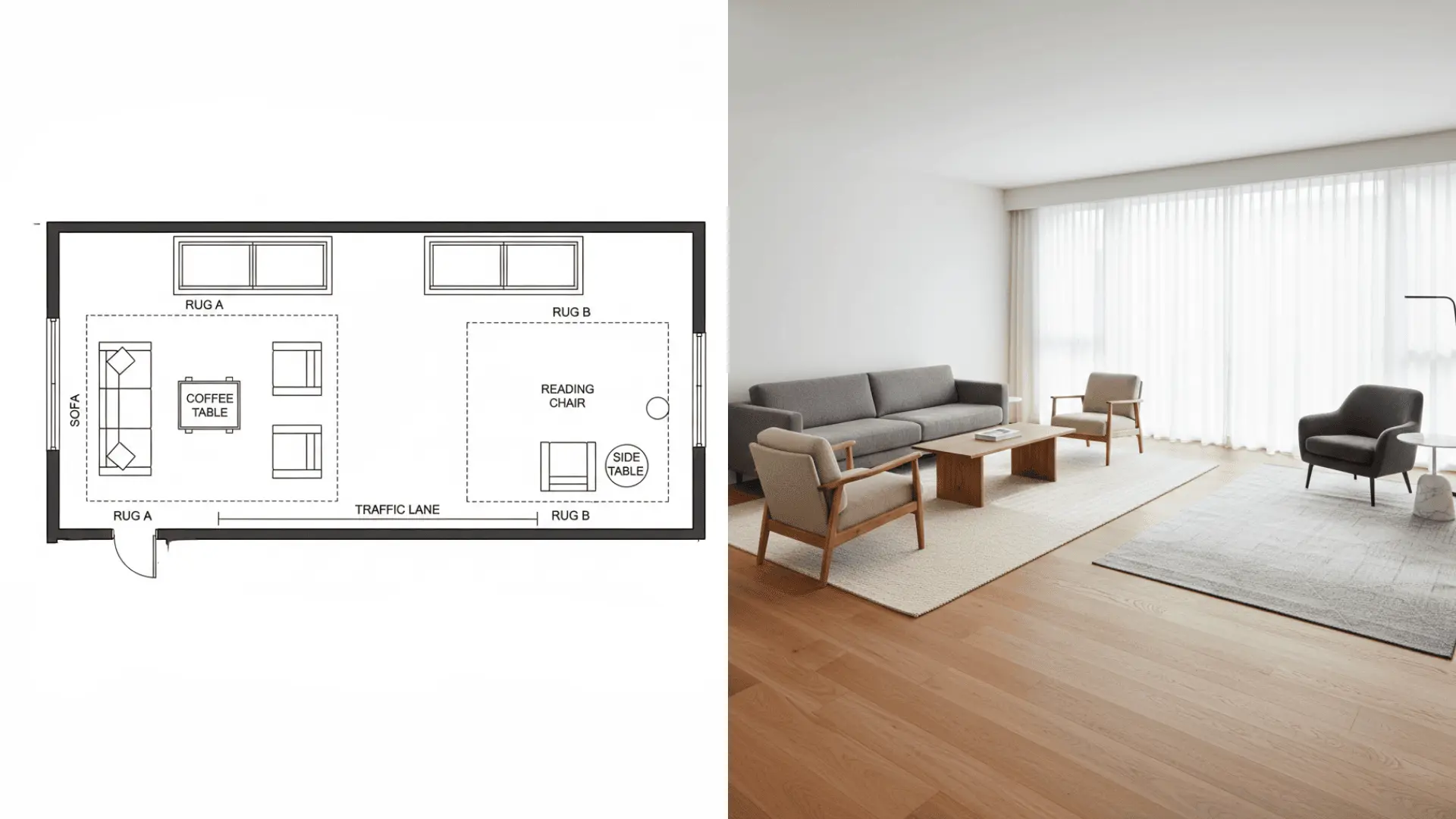
Use two rugs to create two separate areas in the room. Place a seating group on one rug near one end. Set a reading chair or small table on the second rug closer to the other end.
This breaks the tunnel effect. Each zone feels like its own space, even in a tight, narrow room.
2. The Crosswise Facing Sofas
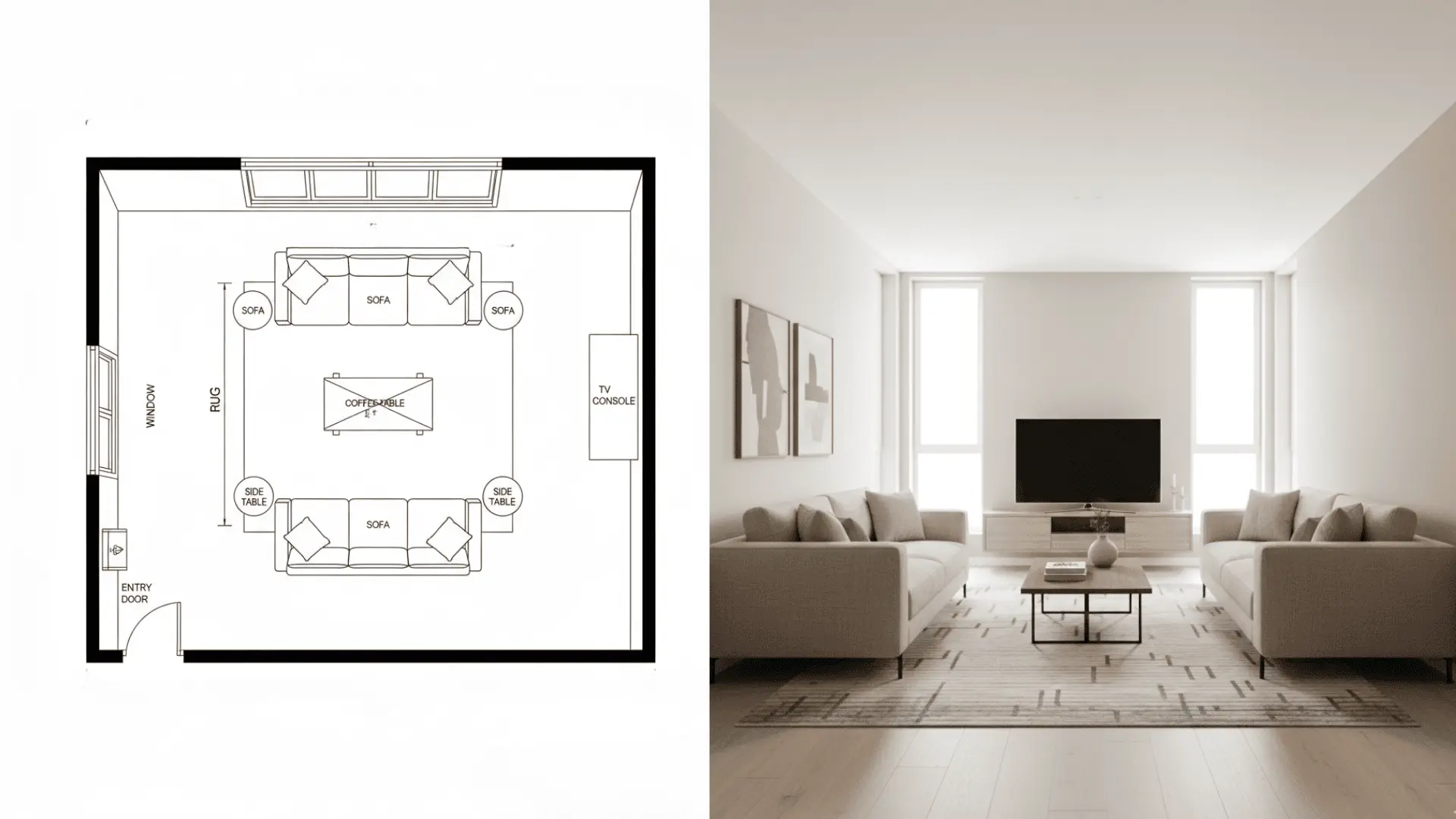
Place two sofas facing each other across the width of the room, not along the length. This pulls the focus away from the room’s length.
A coffee table in the middle ties the setup together. This layout works well for conversation and stops the room from feeling stretched and narrow.
3. The L-Shaped Sectional Corner Anchor
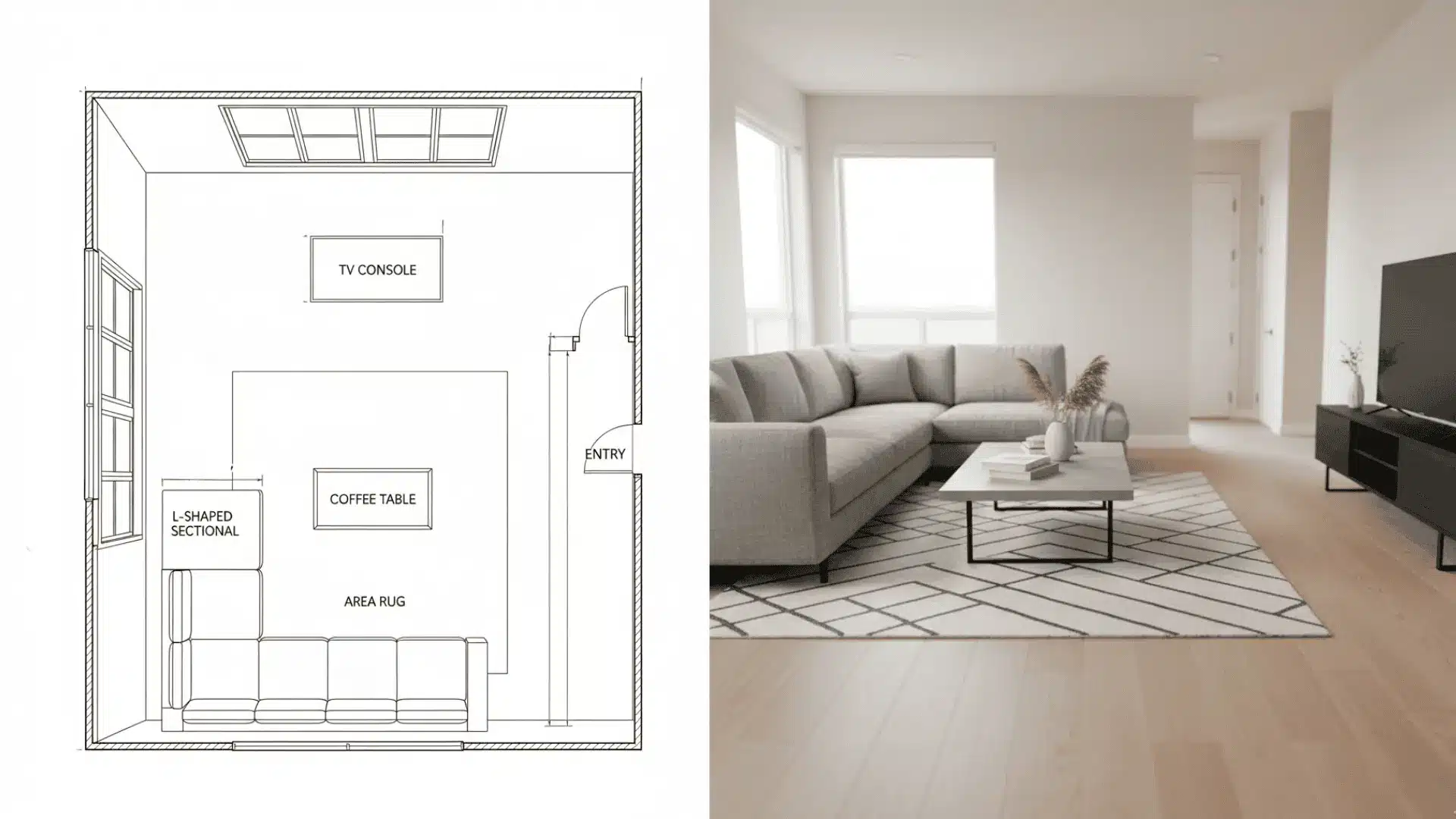
Push an L-shaped sectional into one corner of the room. This keeps one side open for movement and fills dead space in the corner without blocking foot traffic.
Place a rug beneath the seating area to ground it. This layout works especially well in rooms where usable wall space along one side is limited.
4. The One-Side Lean with Open Traffic Lane
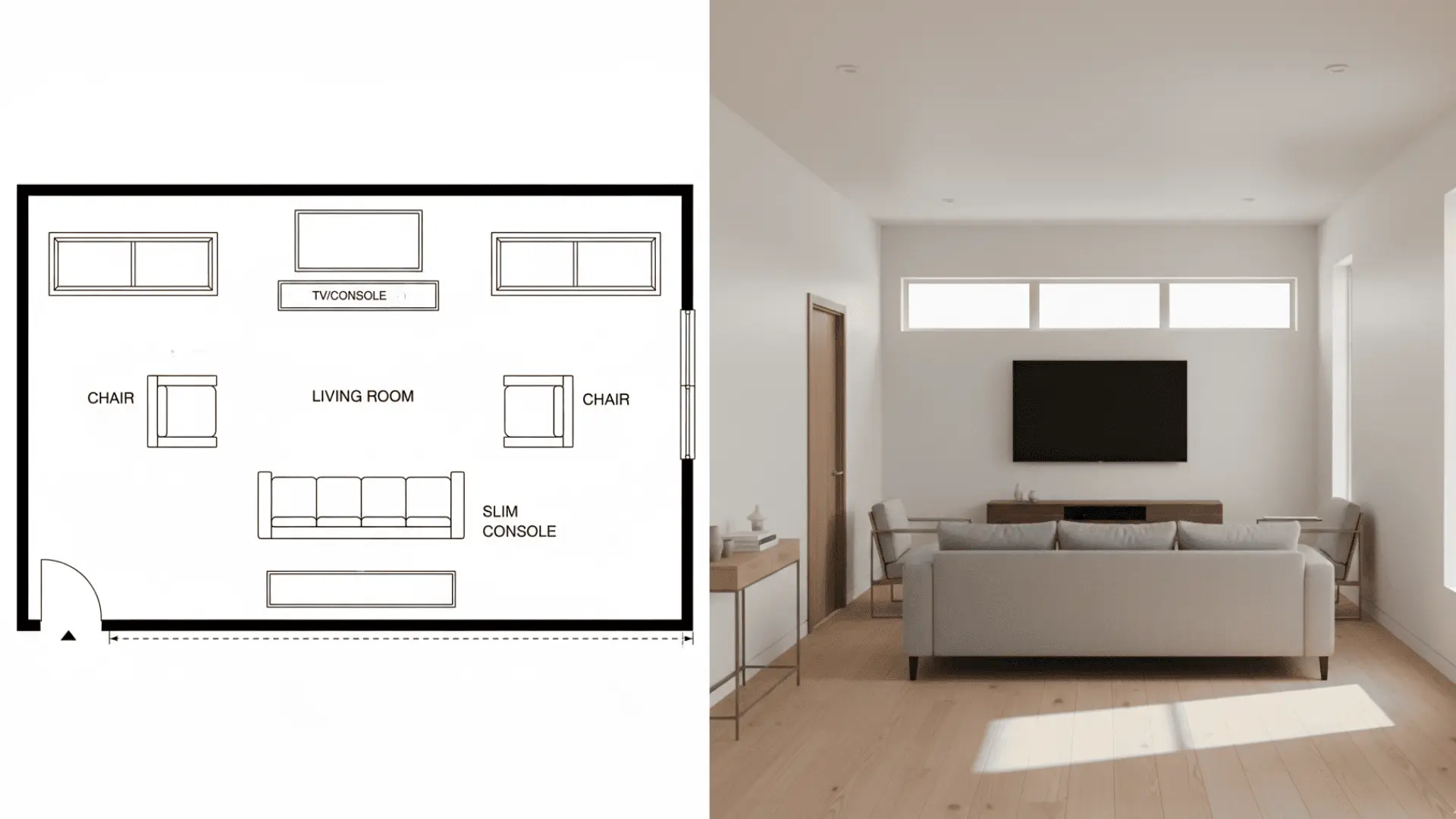
Line most of your furniture along one long wall. Keep the opposite side clear, or use only a slim console or low bookshelf there.
This creates a clear walking lane and makes the room feel less crowded. It is a simple approach that works well in very narrow spaces.
5. The Angled Furniture Arrangement
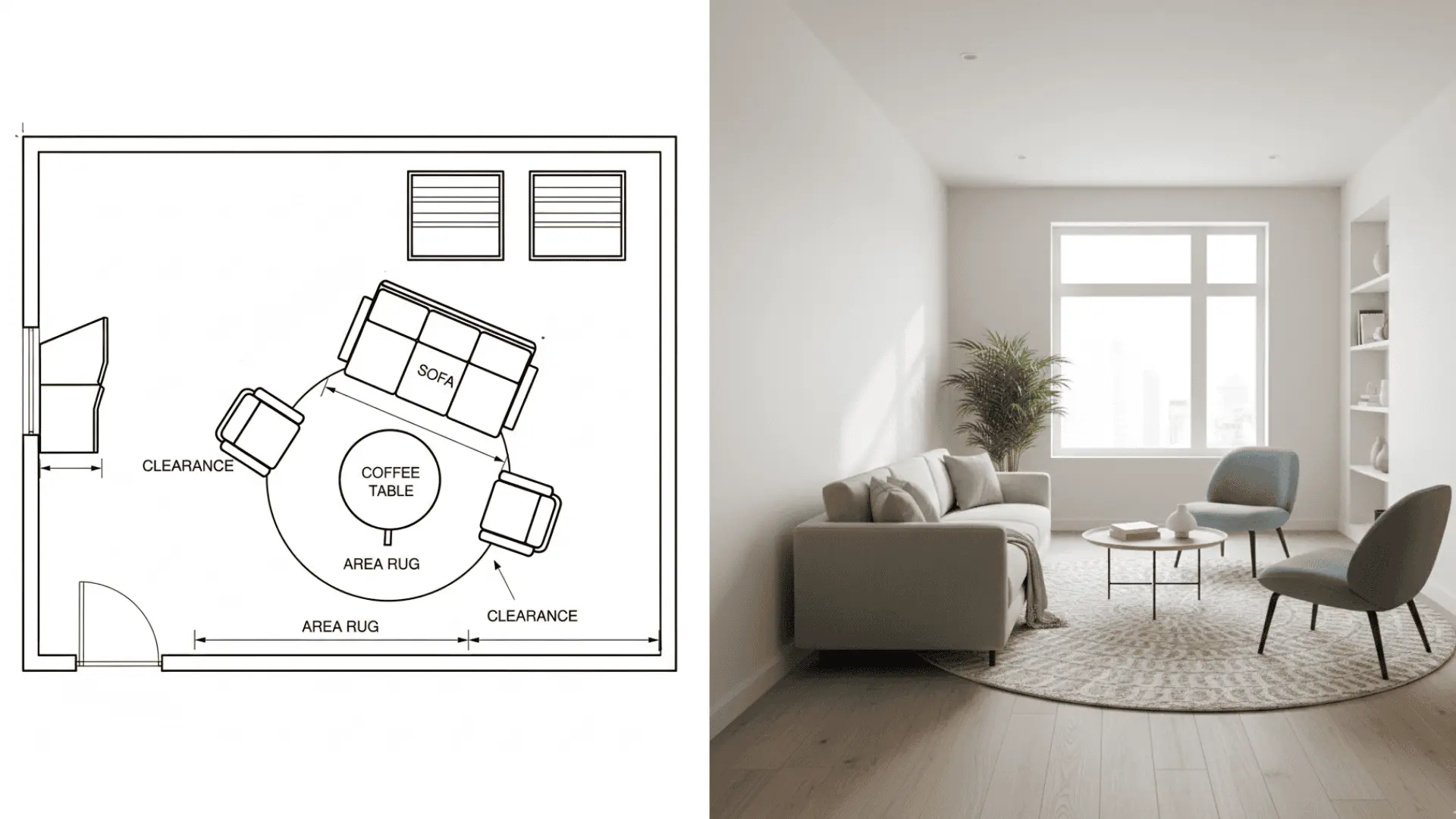
Try placing your sofa or chairs at a slight angle instead of flat against the wall. Angled pieces soften the long lines of a narrow room.
They also create small pockets of space that feel more casual and relaxed. Place a round rug underneath to support and complete the angled look.
6. The Short-End Cap
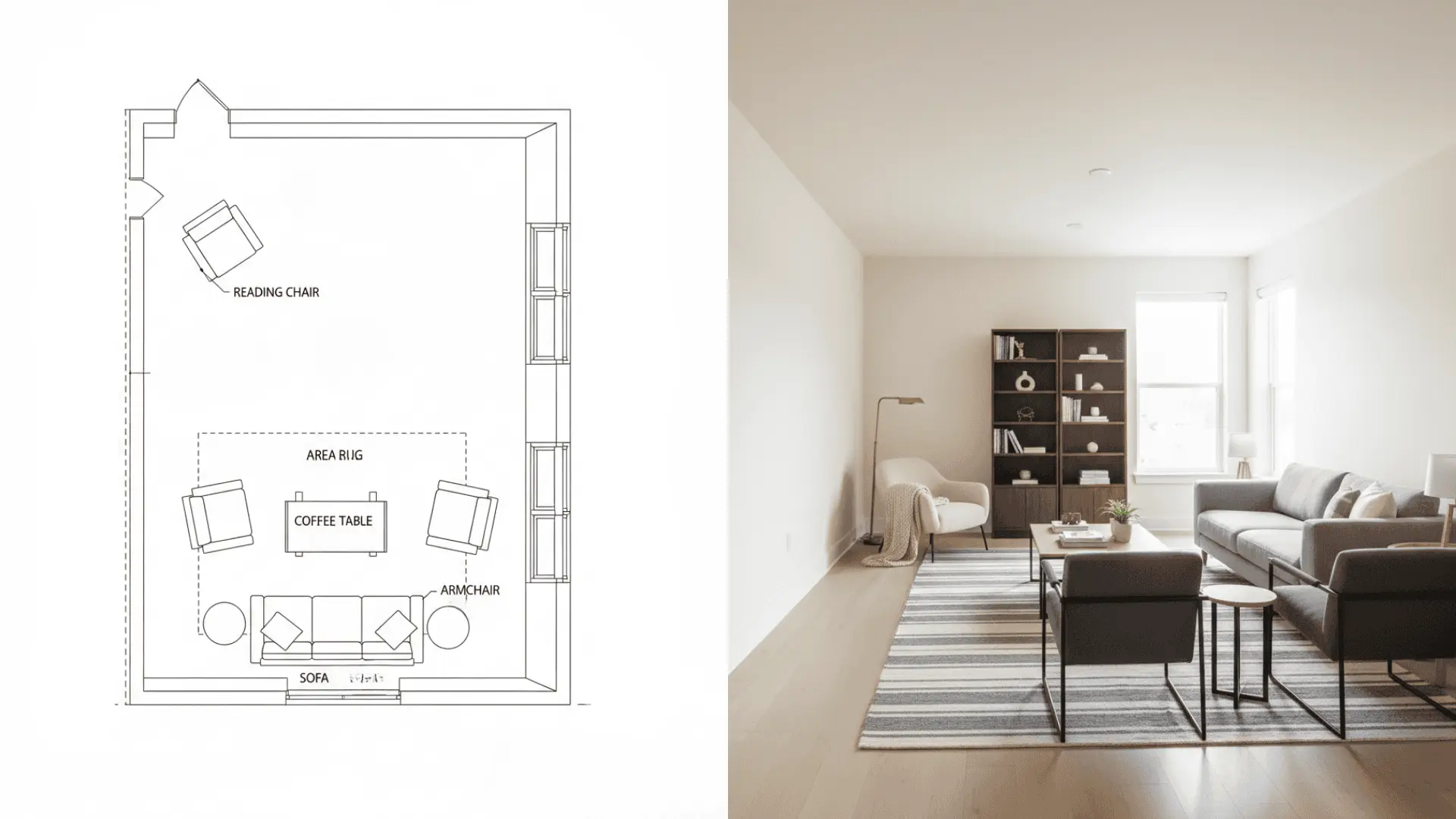
Arrange your main seating at one short end of the room, facing inward. This turns that end into a defined sitting area.
The rest of the room can serve a different purpose, like a reading or work spot. It gives the room a clear starting point and keeps the layout feeling organized.
A long, narrow living room can feel like a hallway without the right setup. With smart zoning, scaled furniture, and clear traffic paths, you can transform it into a comfortable and well-balanced space.
Small or Square Living Room Layout Ideas
A small or square living room needs a layout that feels open rather than cramped. The right setup keeps the space functional, comfortable, and easy to move through.
7. The Central Floating Square
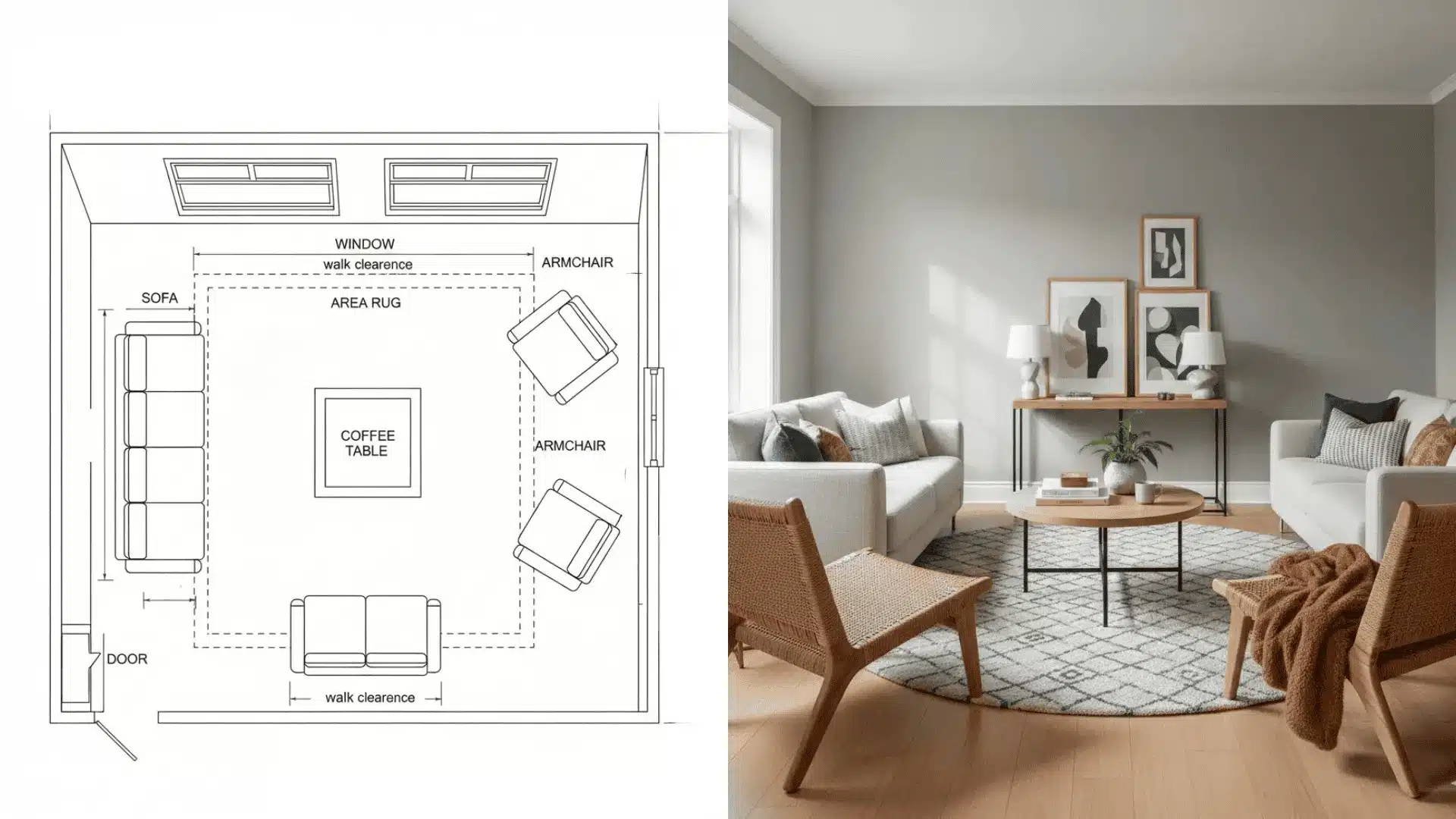
Pull your furniture away from the walls and arrange it in a square shape around a central coffee table. This creates a defined seating area in the middle of the room.
It also makes the space feel more intentional. Leave a few inches between the furniture and the walls. That small gap actually makes the room feel larger.
8. The Two-Chair + Sofa Triangle
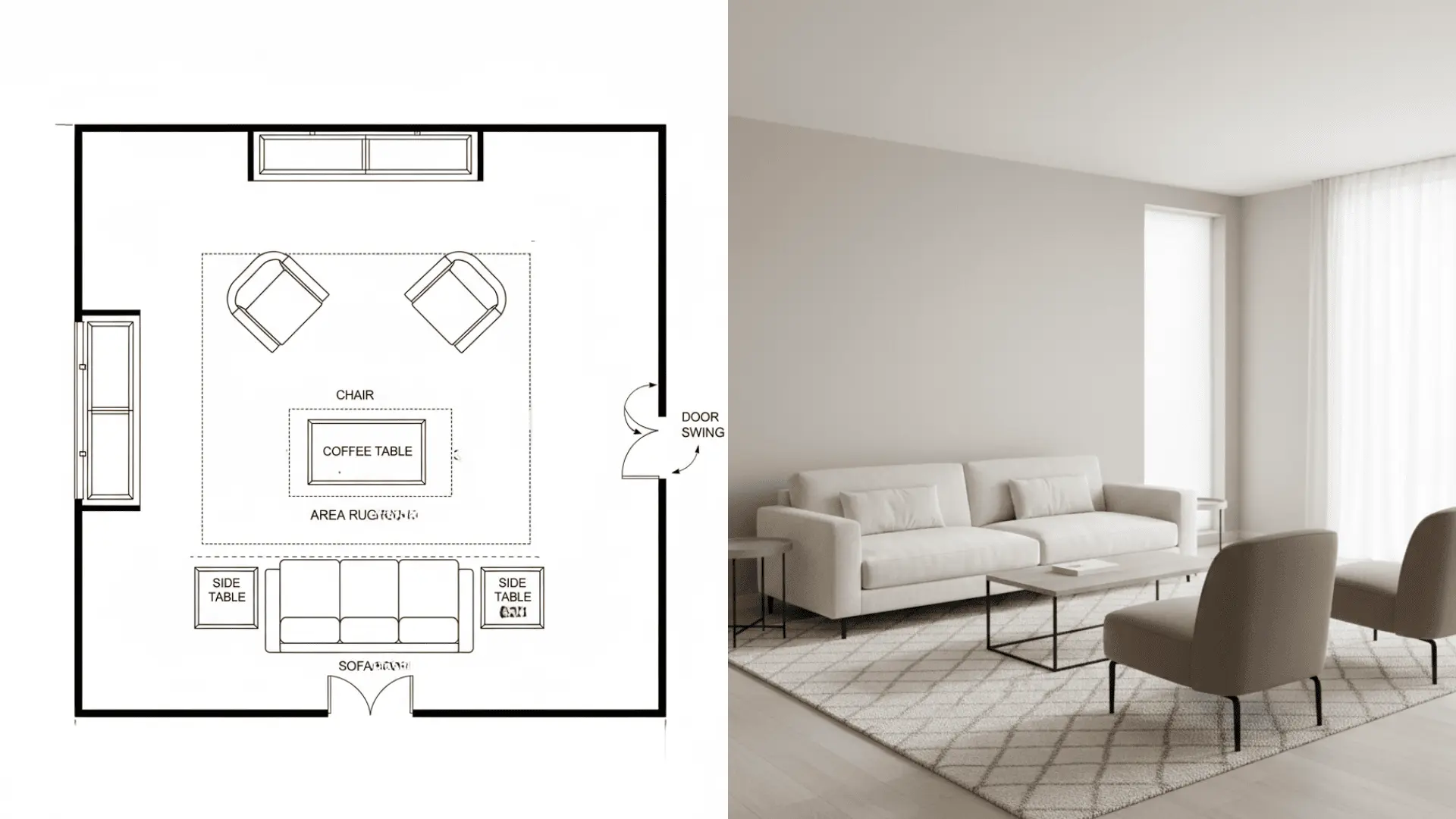
Place a sofa on one side and two chairs across from it at slight angles, forming a triangle shape.
This setup fits well in square rooms because it fills corners without crowding the space.
It also works well for conversation. Every seat faces inward, so no one is left out of the group.
9. The Corner Sofa + Open Center
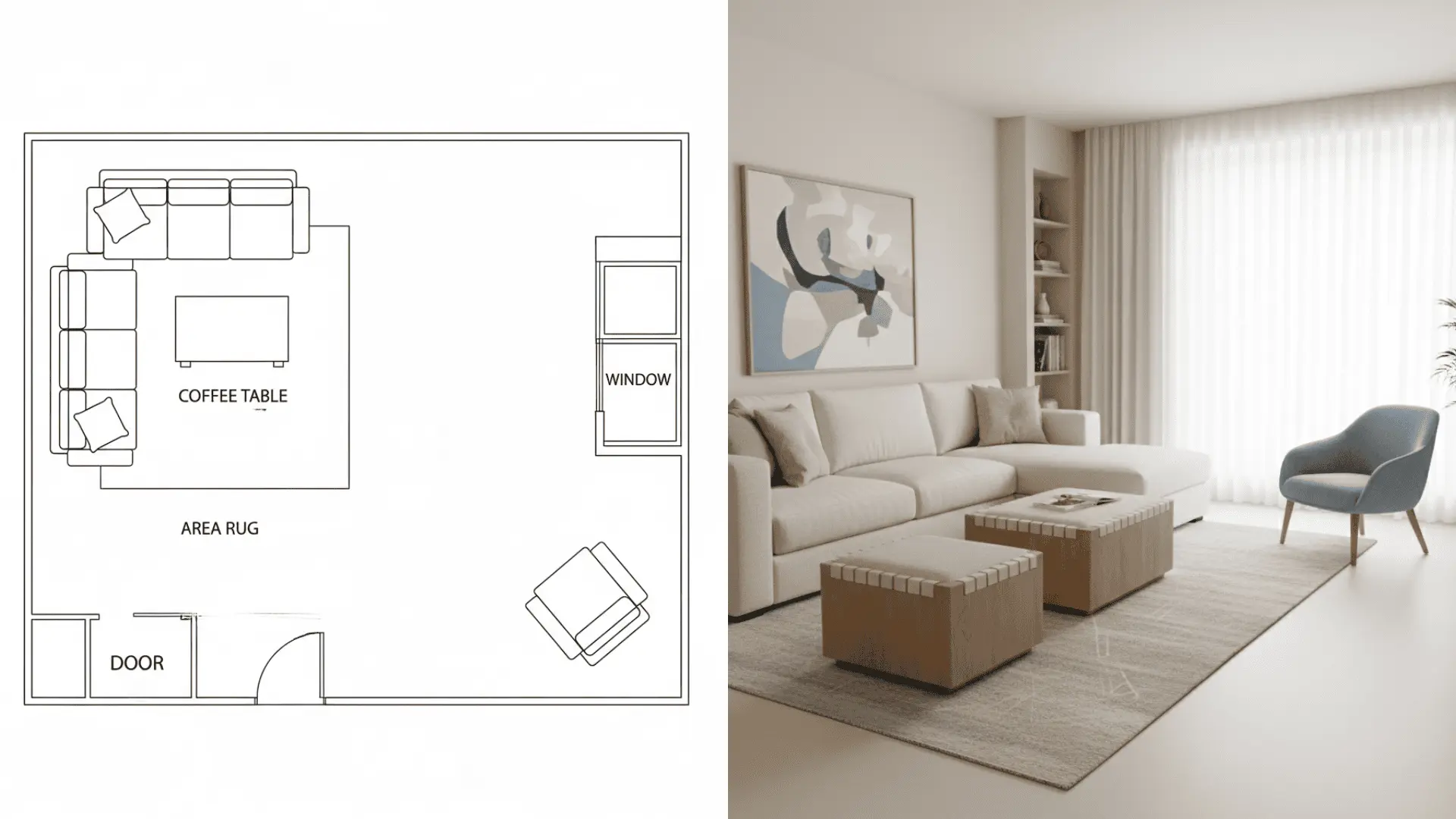
Tuck a sofa into one corner and keep the center of the room clear. This frees up floor space and makes the room easier to move through.
Use a small coffee table or ottoman in front of the sofa. Keeping it low and compact helps the room feel open and less closed in.
10. The Multifunctional Zones
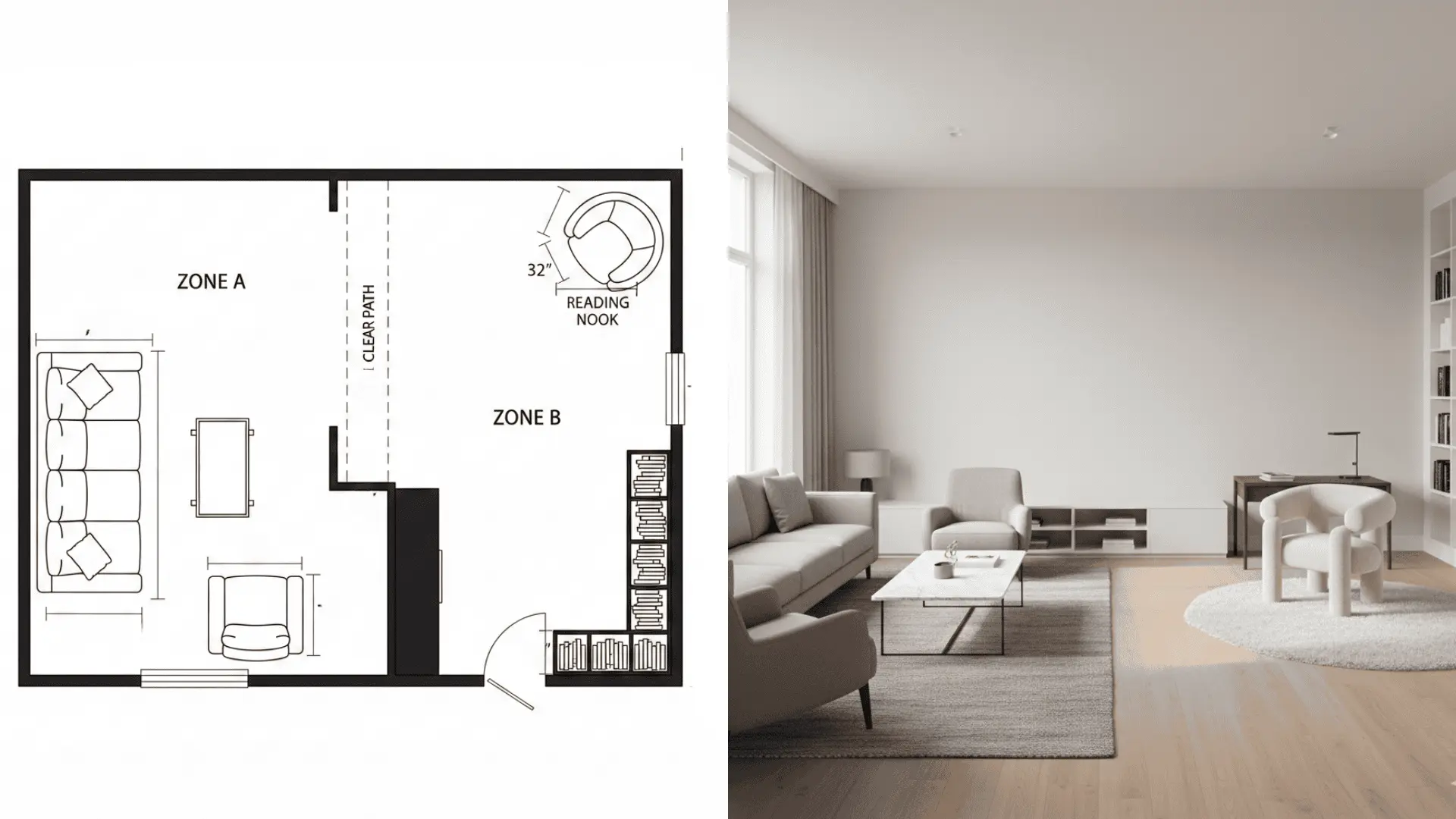
Divide the square room into two small zones, each with a clear purpose. One side can hold your main seating. The other side can work as a reading nook or small work area.
Use a low shelf or a rug change to mark the boundary. You get two useful spaces without adding more furniture.
11. The Symmetrical Mirror
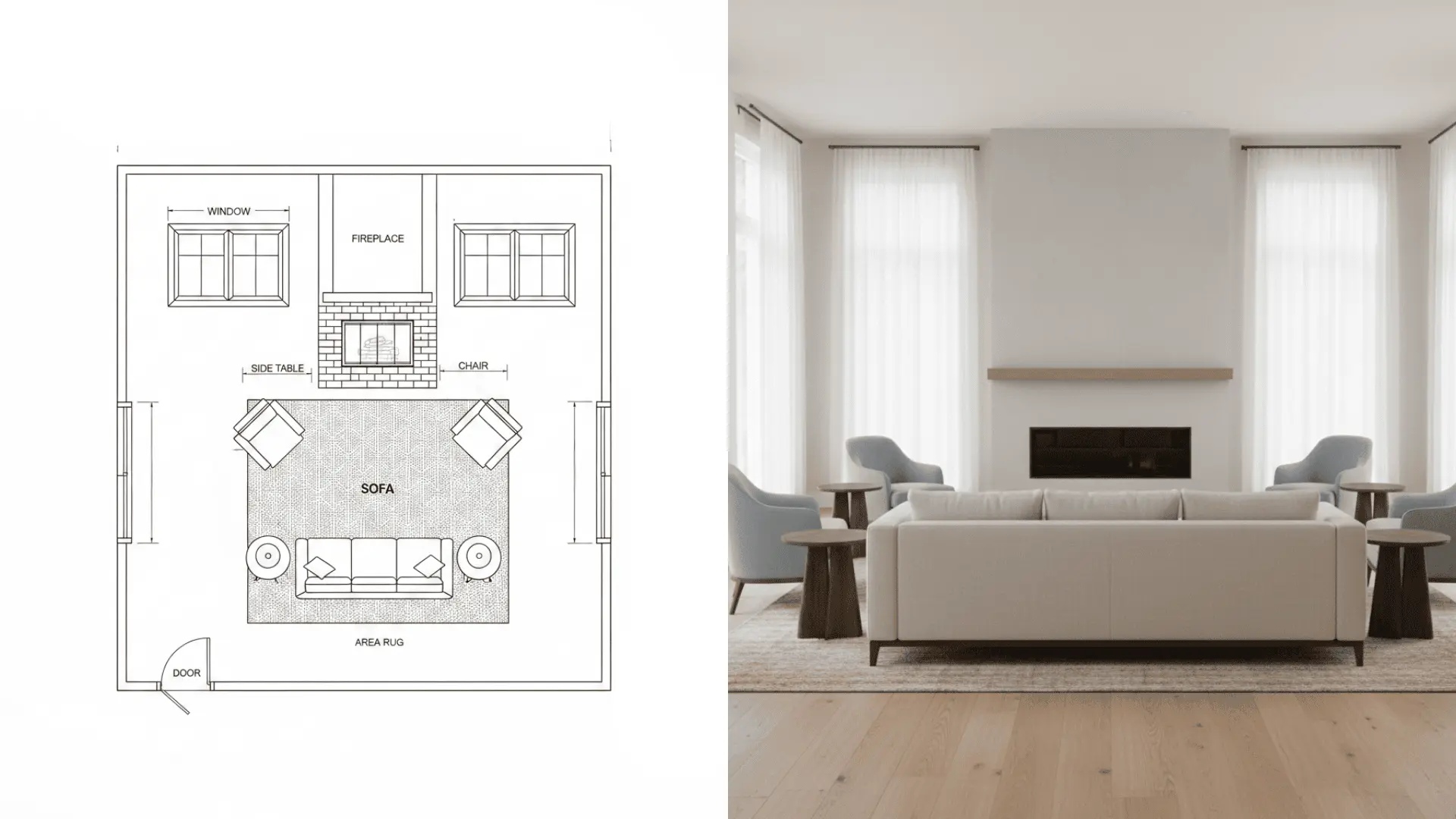
Place matching furniture on both sides of a central point, like a fireplace or TV stand. Equal pieces on each side create visual balance. This makes a square room feel calm and well-organized.
Keep the sizes consistent. A sofa on one side pairs well with two chairs of similar height on the other side.
12. The Leggy Furniture + Mirrors
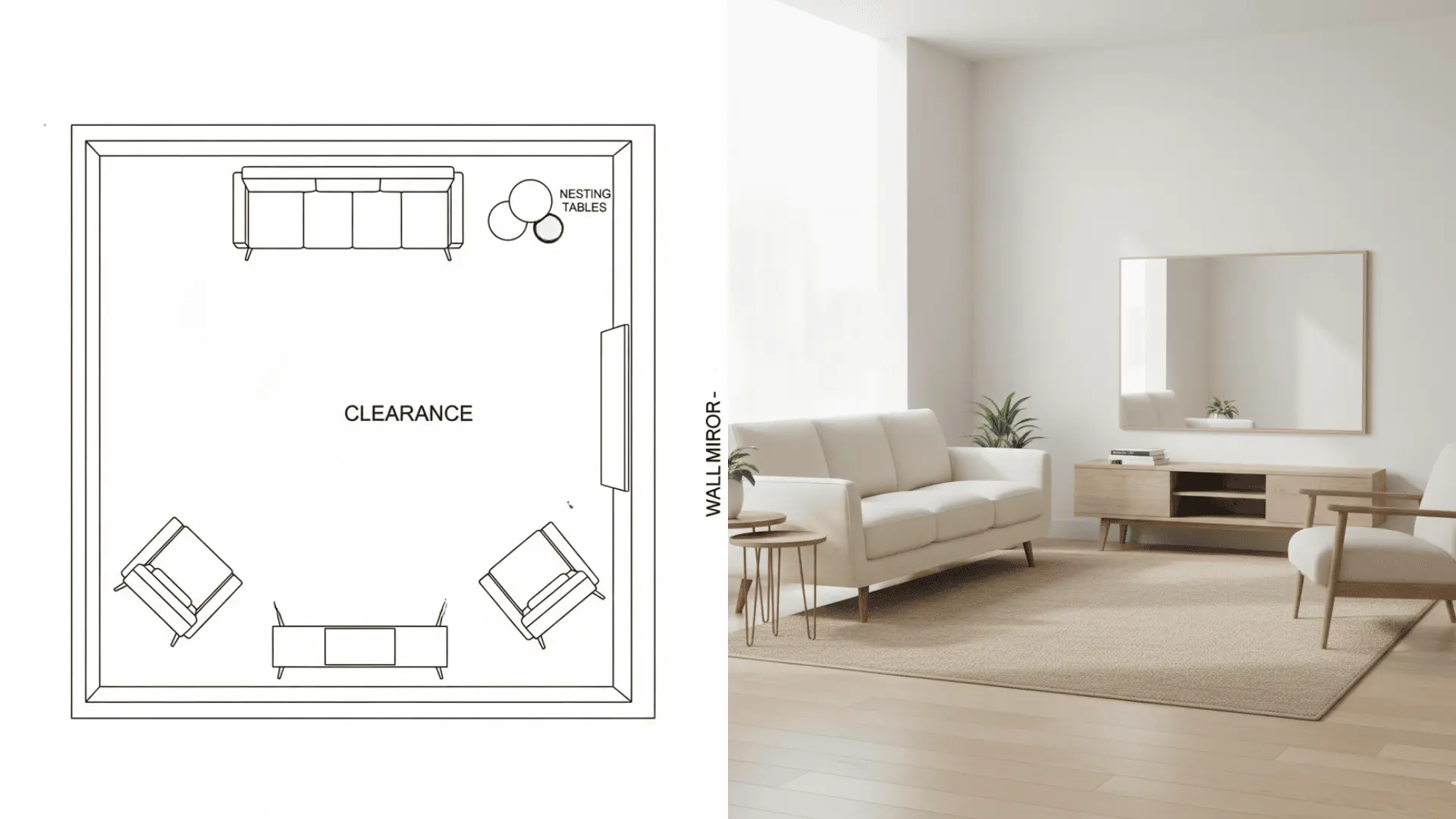
Choose furniture with visible legs instead of pieces that sit flat on the floor. Legs let light pass beneath, making the room feel less heavy and more open.
Add a large mirror on one wall to reflect light and add depth. Together, these two changes can make a small room feel noticeably bigger.
Small or square living rooms can feel crowded or boxy without a clear plan. The right layout creates a cozy conversation area while keeping the space open, balanced, and easy to move through.
Awkward Living Room Spaces Layout Ideas
Some living rooms come with odd angles, too many doors, or layouts that just do not cooperate. These fixes help you work with what you have.
13. The Off-Center Fireplace Fix
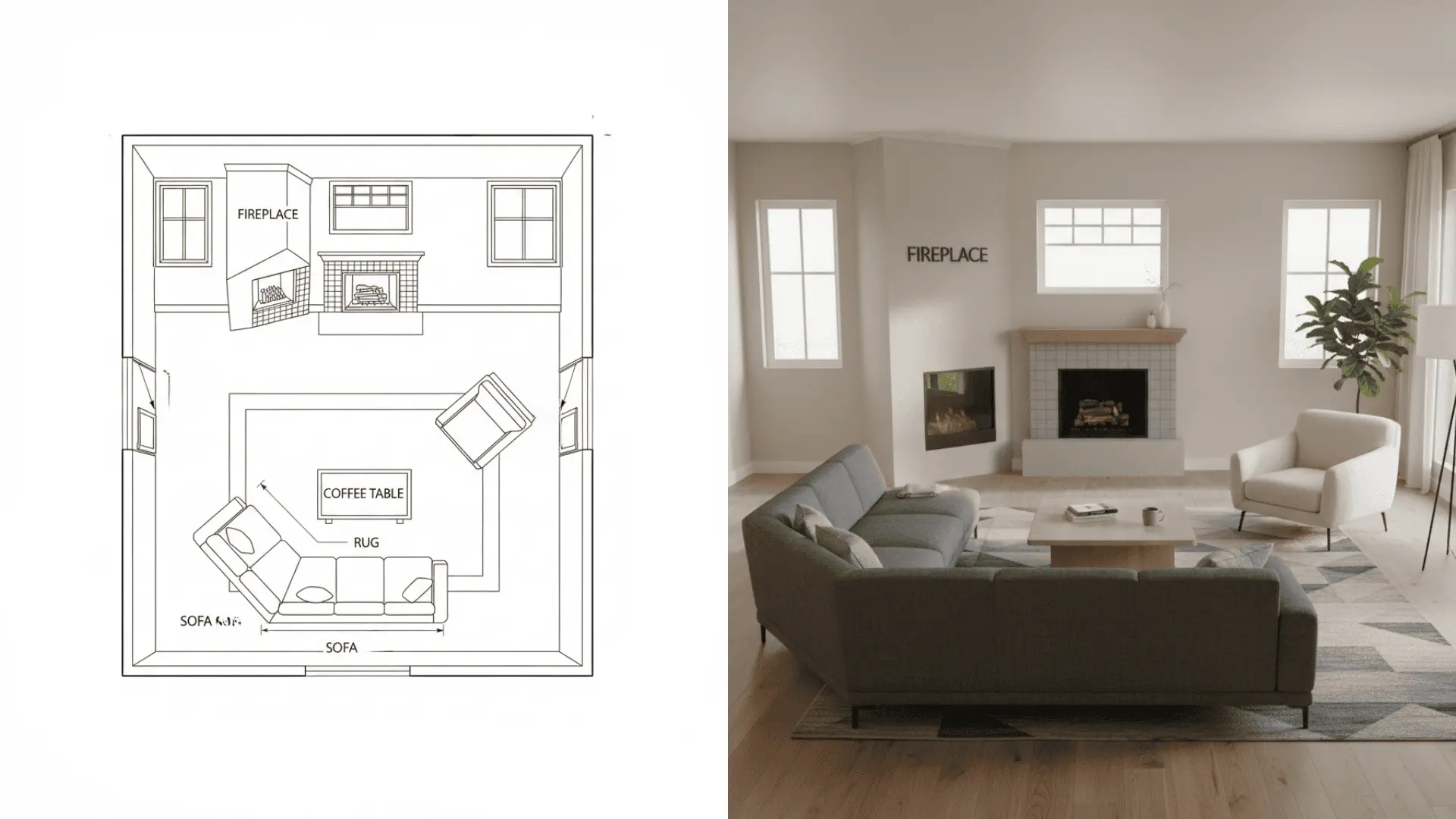
When a fireplace sits off to one side, it can throw off the whole room. Instead of fighting it, build your seating around it anyway.
Angle your sofa slightly toward the fireplace and balance the other side with a chair or floor lamp.
This makes the fireplace feel intentional, not out of place.
14. The Too-Many-Doorways
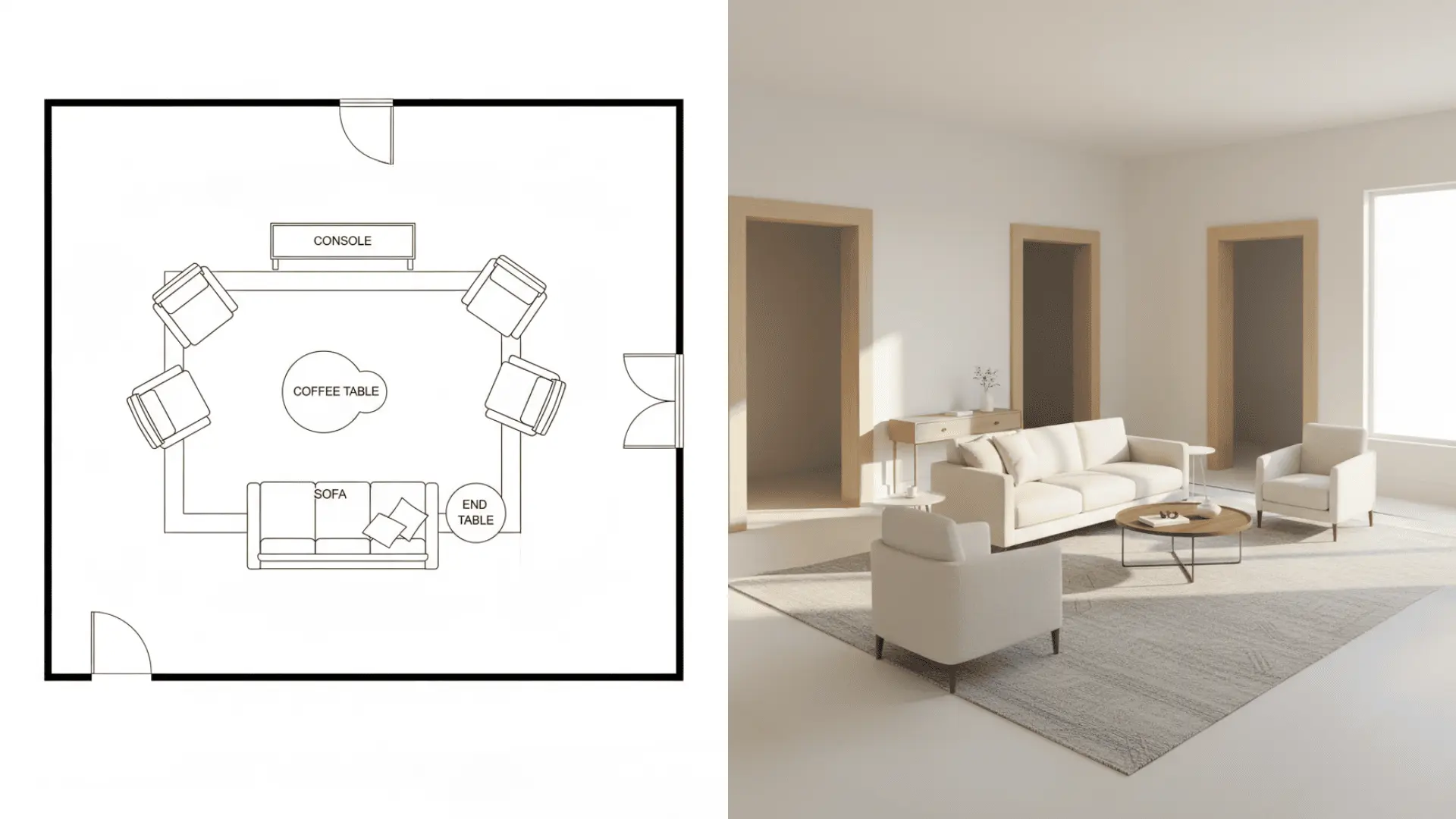
Rooms with multiple doorways leave very little usable wall space. Float your furniture toward the center of the room instead of pushing it against the walls.
Use a large rug to anchor the seating group. Keep pathways between doorways clear. This keeps traffic moving without making the room feel like an empty pass-through.
15. The Open-Plan Living/Dining Divide
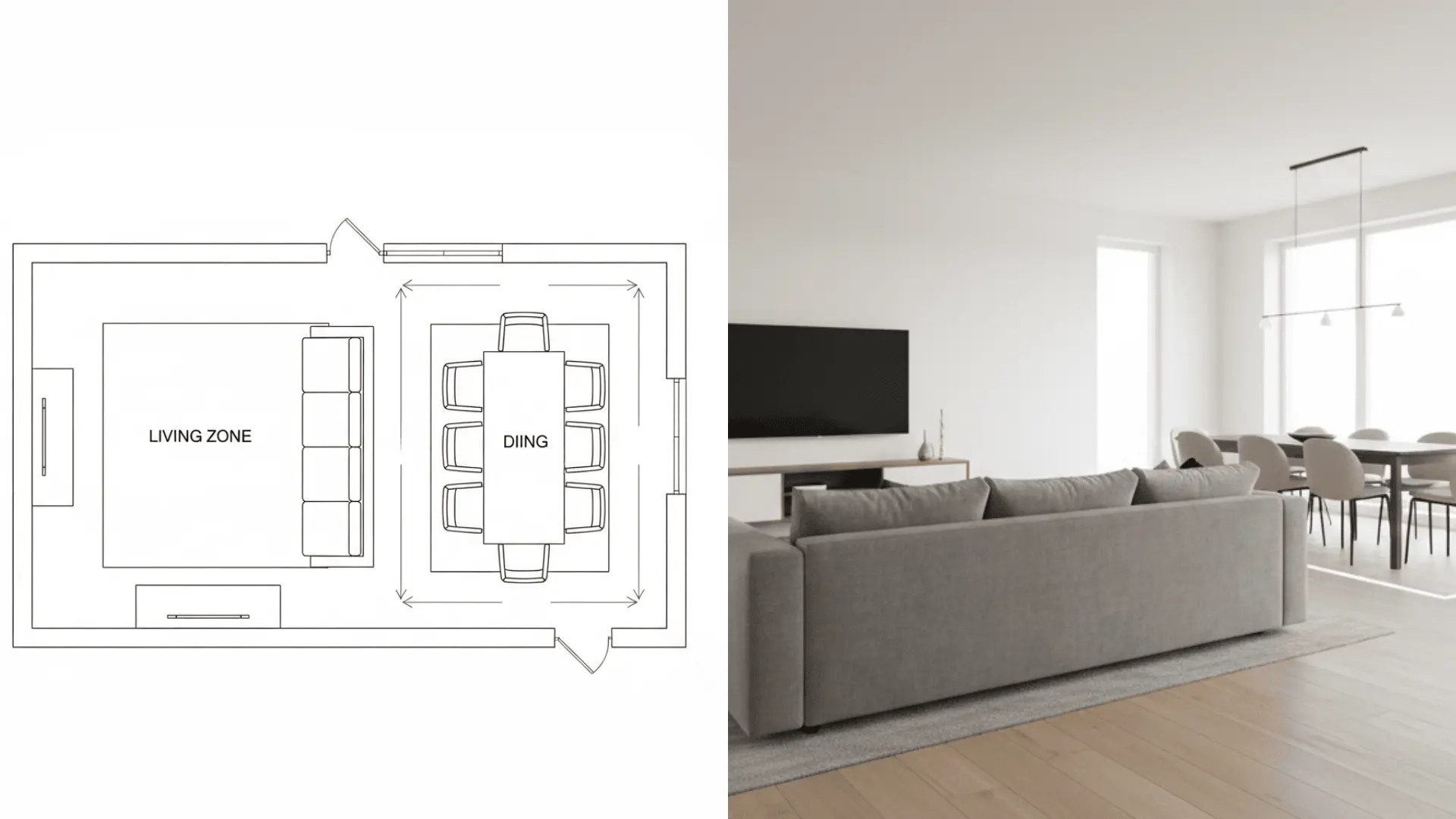
In an open-plan space, the living and dining areas can blur together. Use a sofa as a soft divider between the two zones. Position it with its back facing the dining area.
A rug under the seating group also helps mark the boundary. Each area gets its own identity without adding walls or barriers.
16. The L-Shaped or Irregular Room
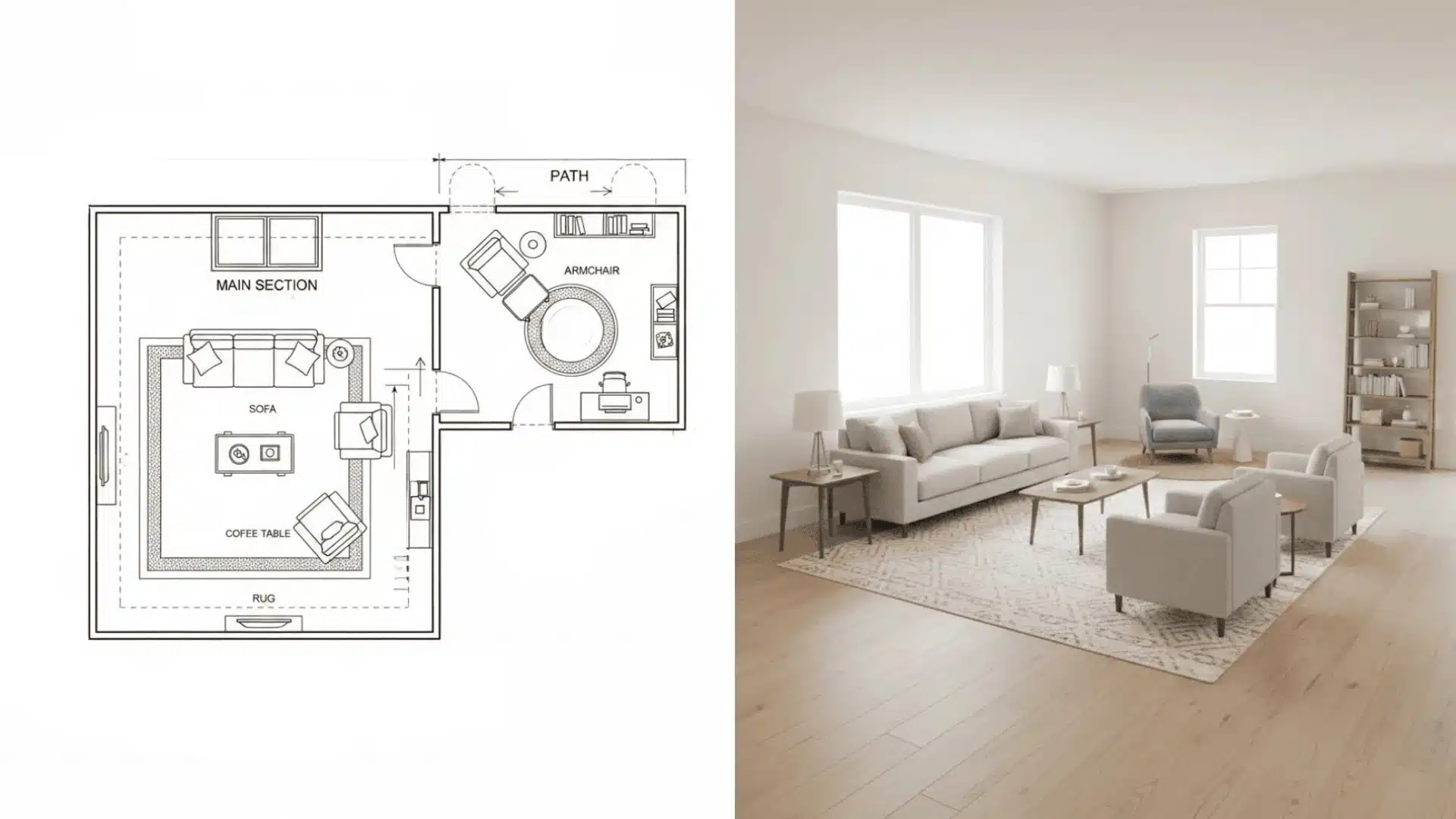
An L-shaped room has two sections that need to work together. Place your main seating in the larger section. Use the smaller section for a reading chair, desk, or side table.
A rug in each zone helps define the spaces. Keeping furniture low in both areas prevents the room from feeling choppy or divided.
17. The Room-as-Thoroughfare
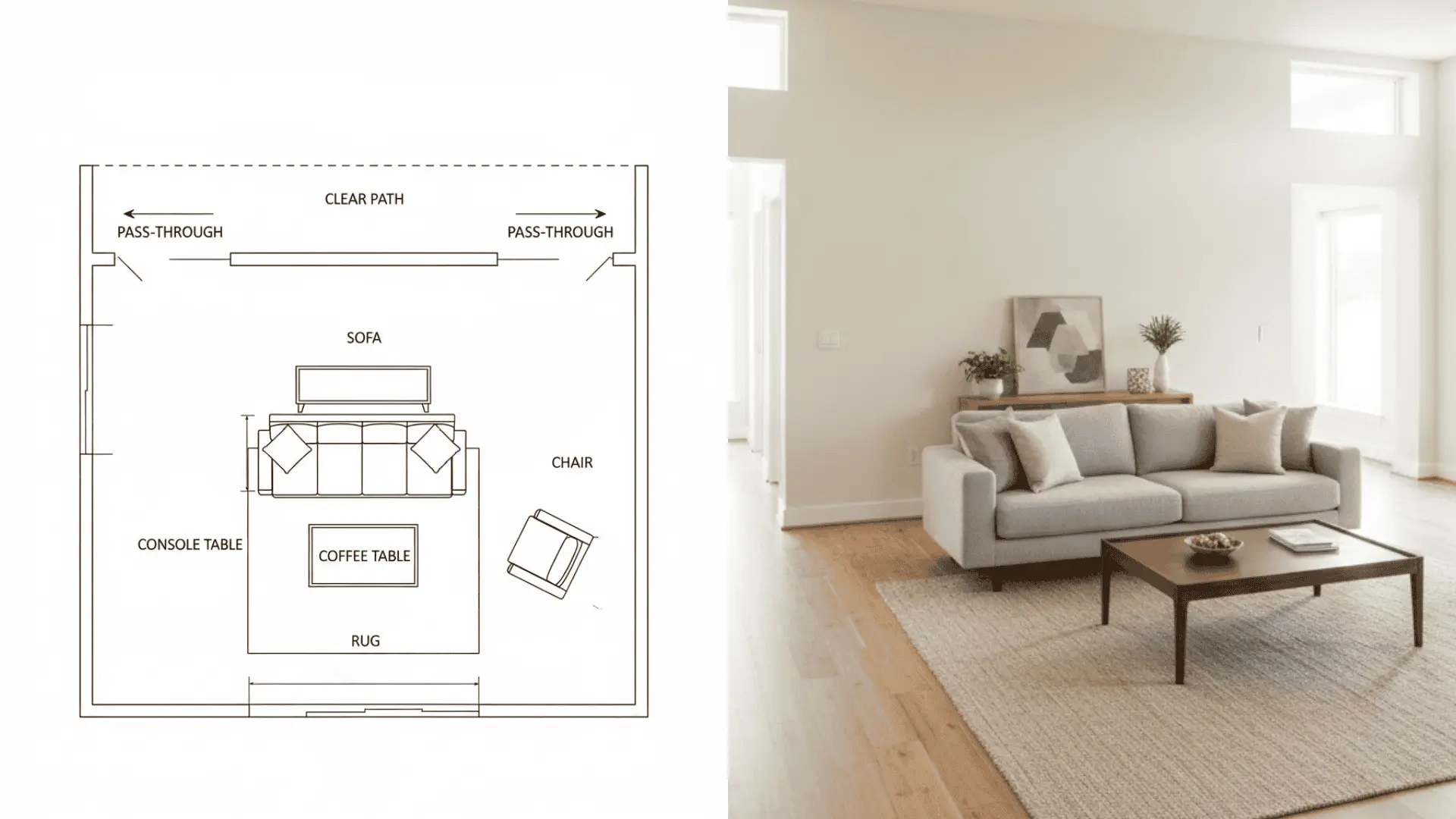
Some living rooms sit between two other rooms, so people constantly walk through. Keep a clear path along one side of the room at all times.
Arrange seating on the other side, away from the main walking route. This protects the seating area from foot traffic and makes the room feel more settled and purposeful.
Awkward living room spaces don’t have to feel limiting; the right layout can turn challenges into design advantages. With smart zoning and thoughtful furniture placement, even the trickiest rooms can feel balanced, functional, and inviting.
The Golden Rules of Furniture Arrangement
There are no rigid rules in design, but some just work. Follow these, and your living room will feel pulled together, even if you’re starting from scratch.
- Start with the Focal Point: Build your layout around one strong anchor, a fireplace, TV, or window. Everything else follows its lead.
- Float Your Furniture: Pull pieces away from the walls. It feels counterintuitive, but it creates a cozier, more intentional space.
- Create Conversation Zones: Arrange seating so people can actually talk. If someone has to shout across the room, something’s off.
- Balance Visual Weight: Mix heavy and light pieces. A bulky sofa needs breathing room; pair it with a slim coffee table.
- Keep Traffic Flow Open: Leave at least 18 inches between furniture. People need to move without squeezing through gaps.
- Use a Rug to Ground the Space: A rug ties everything together. Make sure your front furniture legs sit on it.
- Scale Matters More Than You Think: Oversized furniture in a small room feels suffocating. Choose pieces that actually fit your space.
Best Furniture Choices for Tricky Living Rooms
The right furniture can make a tricky living room work much better. Choosing smart shapes, sizes, and styles helps any awkward space feel more open and functional.
| Situation | Best Furniture Picks | Why It Works |
|---|---|---|
| Long, narrow room | Armless chairs, loveseats, slim console tables | Keeps the room visually light and avoids blocking the main path |
| Small square room | Apartment-sized sofas, nesting tables, ottomans | Flexible pieces prevent crowding and add function without bulk |
| Off-center focal point | Swivel chairs (flexible positioning) | Let’s you face the TV, fireplace, or conversation area without locking the layout |
| Heavy traffic room | L-shaped sectional (contains seating zone) | Defines a seating area and keeps traffic routed around it |
| Low ceilings | Low-profile sofas, leggy furniture, slim coffee tables | Opens sightlines and makes the room feel less top-heavy |
Tricks that Make Any Living Room Feel Bigger
A small living room doesn’t have to feel small. With a few smart moves, you can make even the tightest space feel open, airy, and surprisingly roomy.
- Use Light Colors on Walls: Light shades reflect more light and visually push walls outward. It’s one of the easiest changes you can make.
- Choose Furniture With Exposed Legs: Pieces that show floor underneath them create a sense of openness. Solid bases make a room feel heavier than it is.
- Hang Curtains High: Mount them close to the ceiling, not the window frame. It draws the eye upward and makes the room feel taller instantly.
- Embrace Mirrors: A well-placed mirror doubles your light and adds depth. It’s simple but incredibly effective.
- Declutter Ruthlessly: Too much stuff shrinks a space fast. Keep surfaces clear and let your furniture breathe.
Wrapping It Up
Learning how to arrange living room furniture does not have to be complicated. Start with measurements. Work around the room’s fixed points.
Then choose a layout that fits how the space is actually used. Small rooms, narrow rooms, and awkward layouts all have solutions.
The key is to stop fighting the space and start working with it. Good furniture placement can change how a room feels every single day.
It affects how comfortable people feel, how easy it is to move around, and how the room looks overall. Found a layout idea worth trying?
Bookmark this page and come back to it when the next rearranging project begins. Got a tricky layout that is not covered here? Drop it in the comments below.