


Middle school is one of the most formative phases in a student’s life, full of change, self-discovery, and opinions waiting to be expressed.
Yet many students struggle to find the right words when faced with a blank page. That is exactly where journal prompts for middle school students make a real difference.
A well-chosen prompt removes the pressure of starting from scratch and gives students a clear direction to follow.
It also builds a consistent writing habit that strengthens vocabulary, critical thinking, and emotional awareness over time.
This brings together prompts across different categories: creative writing, self-reflection, school life, future goals, and fun ideas, so both students and teachers always have something worth writing about.
Best Journal Prompts for Middle School Students

Finding the right prompt can turn a reluctant writer into someone who actually looks forward to opening their notebook.
Journal prompts for middle school students work best when they cover a wide range from imagination-driven stories to honest personal reflection.
The categories below are structured to meet students where they are, regardless of their writing level or mood on any given day.
Each category targets a different aspect of student life, ensuring that every entry feels purposeful. Some prompts push creative thinking, while others encourage students to slow down and reflect on what they genuinely feel.
Together, they give teachers and students a well-rounded writing toolkit to draw on throughout the school year.
Creative Writing Prompts

Creative prompts give students the freedom to build worlds, characters, and stories entirely from their own imagination. They lower the stakes of writing because there are no wrong answers, only possibilities.
- You wake up one morning able to hear the thoughts of every animal around you. What happens next?
- Write a story where the last page of your favorite book is completely blank. What do you think the author forgot to say?
- A new student arrives at your school claiming to be from 200 years in the future. Write your first conversation with them.
- Your bedroom mirror starts showing a reflection that doesn’t copy your movements. Describe what you see.
- Write a short story told entirely from the point of view of a pencil that has been used for every exam in your school.
- You find a map inside an old library book with a location marked in your town. Where does it lead?
- A letter arrives addressed to you, but it is dated ten years in the future. What does it say?
- Write a story about a town where no one is allowed to tell the truth on Sundays.
- You are the last person on Earth who remembers what music sounds like. How do you keep it alive?
- A scientist invents a machine that lets people swap one memory with another person. Would you use it?
- Write a conversation between the sun and the moon after they accidentally switch places for a day.
- You notice a door at the back of your school that was never there before. What is behind it?
- A stray cat follows you home and turns out to understand everything you say. Write about your first week together.
- Write a story set entirely in one hour, the most important hour of your character’s life.
- You are a street artist whose paintings come to life at midnight. What happens when one refuses to go back?
- Describe a world where every person is born with a single word written on their wrist. What does yours say?
- Write a story from the point of view of a forgotten toy at the back of a closet.
- A storm rolls through your town, and when it clears, everyone has swapped voices with someone else. What happens?
- You receive an invitation to a school that only accepts students who can keep a secret. Do you go?
- Write about the day the library books started writing themselves.
These prompts work well as classroom warm-ups or independent writing sessions where students need a spark to get started.
Emotional and Self-Reflection Prompts
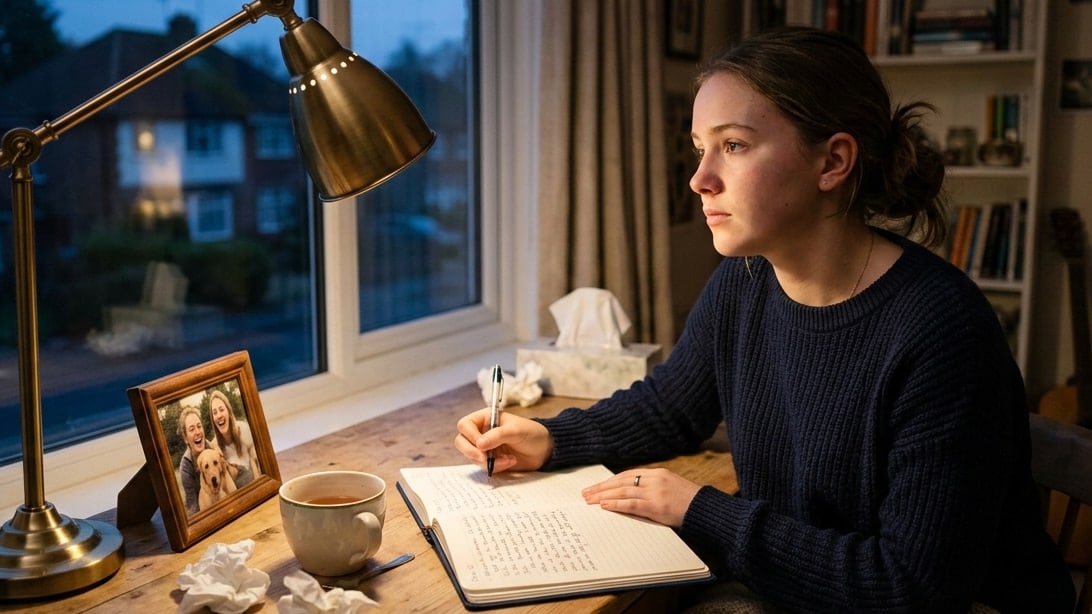
These prompts help students put language to feelings they may not yet know how to express out loud.
21. Describe a moment when you felt genuinely proud of yourself. What led up to it, and how did it feel afterward?
22. What is something you wish more people understood about you?
23. Write about a time you changed your mind about something important. What caused the shift?
24. If you could go back and handle one situation differently, what would it be and what would you do instead?
25. What does a hard day usually look like for you, and what helps you get through it?
26. Describe a person in your life who makes you feel completely comfortable being yourself.
27. What is an emotion you find difficult to talk about and why?
28. Write about a time you felt truly understood by someone. What made that moment stand out?
29. Describe a moment when you surprised yourself with how you handled something.
30. What does feeling confident look like for you, and when do you feel it most?
31. Write about something you used to believe that you no longer do. What changed your thinking?
32. What is one thing you are still figuring out about yourself?
33. Describe a time when you had to be brave even though you did not feel ready.
34. What does it mean to you to be a good person? Has your answer changed over time?
35. Write about a time you felt left out. How did you process it and move forward?
36. What is something you have never told anyone but wish you could?
37. Describe a moment when you felt completely at peace. What were you doing?
38. Write about a version of yourself you are still working toward.
39. What is the most important lesson a difficult experience has taught you so far?
40. Describe the feeling of accomplishing something you once thought was beyond your ability.
Regular reflective writing builds emotional vocabulary and gives students a private space to process their experiences honestly and without judgment.
School Life and Friendship Prompts

Rooted in the day-to-day reality of middle school, these prompts give students a chance to reflect on the relationships, routines, and moments.
41. What is one thing you wish your teachers knew about how you learn best?
42. Write about a time a friend surprised you in a good or unexpected way.
43. Describe your ideal school day from the moment you wake up to the moment you get home.
44. What is the most useful thing you have learned in school so far, inside or outside the classroom?
45. Write about a group project that went really well or really badly. What made the difference?
46. Describe the qualities that make someone a truly good friend.
47. Write about a time you stood up for someone, or someone stood up for you.
48. What is one school rule you would change, and what would you replace it with?
49. Describe a teacher who made a real difference in how you think or learn.
50. Write about a moment in school when you felt genuinely proud of your work.
51. What is the hardest part of making new friends, and how do you handle it?
52. Describe a disagreement you had with a friend and how it was resolved.
53. What does a supportive classroom feel like to you?
54. Write about a subject you once disliked that you have started to appreciate more.
55. If you could redesign your school from scratch, what would it look like?
When students write about the people and places they know best, their entries tend to be more honest, more specific, and more worth reading back.
Prompts About Personal Values and Identity
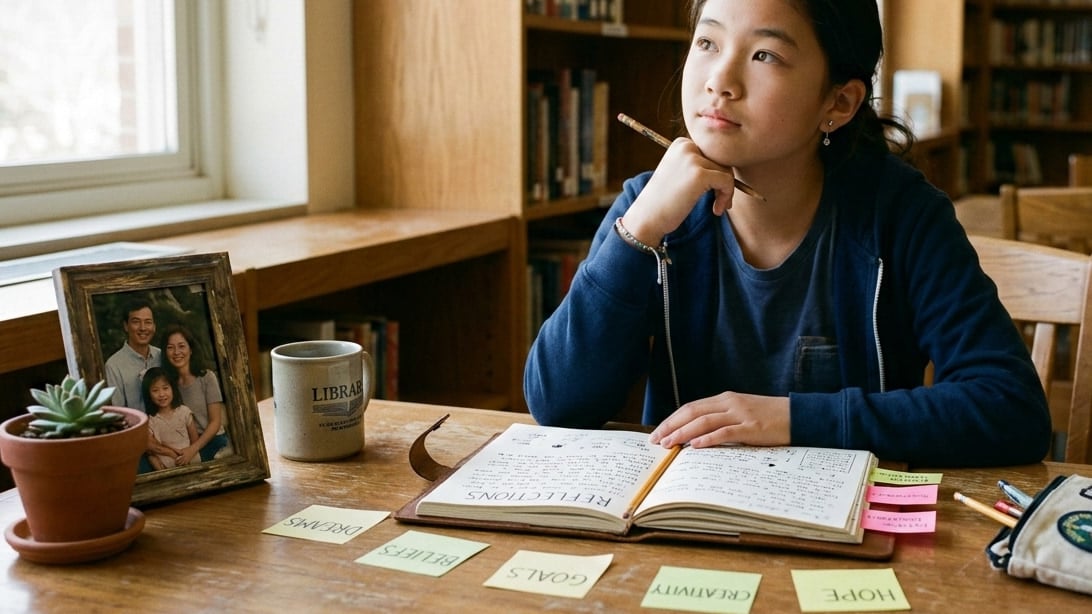
These prompts encourage students to think carefully about what they believe, what matters most to them, and how their background and experiences have shaped their perspective.
56. What are three values you would never compromise on, and where did they come from?
57. Write about a tradition in your family or culture that means something to you.
58. If you could change one thing about the world right now, what would it be and why?
59. Describe a moment when you acted in line with your values even when it was difficult.
60. What does fairness mean to you, and how do you practice it in daily life?
61. Write about a belief you hold that not everyone around you agrees with.
62. What kind of leader do you think you are or could become?
63. Describe something about your identity that you feel is often misunderstood.
64. Write about a person, real or historical, whose values you deeply respect and why.
65. What does it mean to live an honest life, and how close are you to that right now?
66. Describe a time your values were tested. How did you respond?
67. What is one thing about your culture or background you want to carry with you forever?
68. Write about how your identity has shifted since you started middle school.
69. What does belonging mean to you, and where do you feel it most?
70. If you could write a personal motto to live by, what would it say?
Identity-focused prompts remind students that their background and beliefs are worth putting into words. Writing about who they are helps them own their story with clarity and confidence.
Goal-Setting Prompts for the School Year

Using journaling for goal-setting works especially well at the start of a semester or after receiving report cards. These prompts help students translate vague intentions into specific commitments.
71. What is one academic goal you want to achieve this semester, and what steps will you take to get there?
72. Write about a subject you find difficult. What would it mean to you to improve in it?
73. What does success look like to you at the end of this school year?
74. Name one habit that has been holding you back, and write about what changing it would look like.
75. Describe the version of yourself you want to be by the end of the school year.
76. What is one skill you want to develop before you start high school?
77. Write about a long-term goal and break it down into three smaller steps.
78. What does discipline mean to you, and how do you practice it?
79. Describe a goal you gave up on in the past. Would you approach it differently today?
80. Write about someone whose work ethic you admire and what you can learn from them.
81. What is one area of your life, academic or personal, where you want to grow the most?
82. Describe what your study habits look like now and what you want them to look like in six months.
83. Write about a time putting in extra effort paid off in a way you did not expect.
84. What does it mean to you to finish what you start?
85. If you could give your future self one piece of advice about staying focused, what would it be?
Goal-setting prompts are most effective when students revisit them at the end of the semester. Seeing how their thinking has shifted is one of the most rewarding parts of keeping a journal.
Would You Rather Writing Prompts

“Would You Rather” style prompts are excellent for building opinion-writing skills because they force students to take a position and defend it.
86. Would you rather have the ability to speak every language in the world or play every musical instrument perfectly? Explain your choice.
87. Would you rather always know the truth or always make people feel better? Why?
88. Would you rather read minds for one day or be invisible for one week? What would you do with that ability?
89. Would you rather live in a world without the internet or without public transport? How would your life change?
90. Would you rather have a photographic memory or the ability to learn any skill in 24 hours?
91. Would you rather spend a year in space or a year living underwater? Describe a typical day.
92. Would you rather always have to speak in rhymes or always have to sing everything you say?
93. Would you rather give up social media for a year or give up watching any videos or films?
94. Would you rather have the power to pause time or rewind it by one hour once a day?
95. Would you rather only eat your favorite food for every meal or never eat it again?
96. Would you rather be the funniest person in every room or the most knowledgeable?
97. Would you rather have a robot do all your homework or all your chores?
98. Would you rather live in a big city with no nature or in a forest with no technology?
99. Would you rather always be ten minutes early or always be exactly on time?
100. Would you rather swap lives with your best friend for a week or with your favorite fictional character?
Opinion-based prompts teach students that their perspectives have value and deserve to be defended.
Story Starter Prompts

First-line prompts give students a narrative beginning and the complete freedom to take the story wherever they choose.
101. “The morning everything changed started like any other Tuesday…”
102. “I had never planned to keep the secret, but once I knew, there was no going back…”
103. “The note had no name on it, but I knew exactly who it was from…”
104. “Everyone in town had heard the story, but I was the only one who knew it was true…”
105. “The last thing I expected to find in my locker was a key to a door that did not exist yet…”
106. “She said she would be back by noon. That was three years ago…”
107. “The rules were simple: never open the red door, never go out after dark, and never ask about the missing years…”
108. “I had been practicing that speech for weeks, but nothing prepared me for who was sitting in the front row…”
109. “The photograph in the attic showed people I had never met, except one of them was me…”
110. “It started as a dare, but by the time the sun went down, it had become something none of us could explain…”
111. “The new kid never ate lunch, never spoke in class, and always left exactly three minutes before the bell…”
112. “I only agreed to swap schedules with her for one day. I did not expect her life to be that different from mine…”
113. “The city had been silent for six days when the music finally started again…”
114. “My grandmother told me never to plant anything in the corner of the garden. This spring, I finally understood why…”
115. “The map had been in my family for generations, but no one had ever been brave enough to follow it…”
Story starters are a low-pressure way to build narrative-writing confidence, one line at a time. Students who struggle with open prompts often find that a strong first line is all they need.
Nature and the World Around You

Writing about the natural world encourages students to slow down, observe carefully, and describe what they notice with precision and feeling.
116. Describe your favorite type of weather and how it makes you feel.
117. Write about a place in nature where you feel most like yourself.
118. If you could spend one full day outdoors anywhere in the world, where would it be and what would you do?
119. Describe a sunrise or sunset you remember clearly. What made it stand out?
120. Write about an animal you are drawn to and what you think life looks like from its perspective.
121. What season best matches your personality and why?
122. Describe the most beautiful natural thing you have ever seen in person.
123. Write about a time you felt very small compared to the world around you. How did it feel?
124. If you could protect one natural place in the world from being changed, what would it be?
125. Write about a sound in nature that you find calming or comforting.
126. Describe what a perfect outdoor afternoon looks like for you.
127. Write about a time you noticed something in nature that most people would walk past without seeing.
128. If you could live anywhere in the natural world, forest, coast, mountains, or desert, where would you choose?
129. Write about how the changing of seasons affects your mood or energy levels.
130. Describe the world as you think it looked 500 years ago from where you are sitting right now.
Nature prompts train students to observe the world with greater care and translate those observations into descriptive, thoughtful writing.
Family and Home Life Prompts

Home is where many of a student’s most significant memories are formed. These prompts give students space to reflect on family relationships, household routines, and meaningful moments at home.
131. Describe a family member who has had the biggest influence on how you see the world.
132. Write about a memory from home that you want to hold onto for a long time.
133. What is one tradition your family has that you hope to carry forward one day?
134. Describe a meal that means something to you and the memory attached to it.
135. Write about a conversation with a family member that changed how you thought about something.
136. What is the most valuable piece of advice a parent or guardian has ever given you?
137. Describe what home feels like to you, not the physical place, but the feeling itself.
138. Write about a moment when a family member surprised you with their strength or kindness.
139. What is something you wish you could tell a family member but have not found the words for yet?
140. Describe your home through the senses: what you hear, smell, and feel when you walk in.
141. Write about a family story that gets told over and over. Why do you think it keeps being repeated?
142. What role do you play in your family, and how does that shape your behavior at home versus at school?
143. Describe a time your family faced a challenge together. What did it teach you about each other?
144. Write about a family member you wish you knew better and what you would want to ask them.
145. What does the word “home” mean to you beyond the physical space where you live?
Family-based prompts tend to bring out writing that surprises even the students themselves, because the material already means something before the pen hits the page.
Gratitude and Positivity Prompts

Gratitude writing has a measurable effect on mood and outlook. These prompts help students shift their attention toward what is going well in their lives, not to ignore difficulties.
146. Write about three things that went well this week and why they matter to you.
147. Describe someone in your life you do not thank enough. What would you want to say to them?
148. What is something ordinary in your daily life that you would genuinely miss if it were gone? 149. Write about a skill or ability you have that you sometimes take for granted.
150. Describe a moment this month that made you laugh or smile without warning.
151. What is one thing about your school, neighborhood, or community that you appreciate?
152. Write a thank-you letter to a version of yourself from one year ago for getting through something difficult.
153. Describe a small, quiet moment from the past week that felt good, even if no one else noticed it.
154. What is something about your life right now that your younger self would have been excited about?
155. Write about a person whose presence in your life you are grateful for and why they matter to you.
Students who make gratitude writing a regular practice often find it easier to stay steady during difficult stretches of the school year.
Conclusion
Great writing habits are built one entry at a time, and the journal prompts for middle school students shared here make that first step much easier.
With these categories to choose from, there is always a prompt that fits the mood, the lesson plan, or the moment.
Students who journal regularly develop stronger opinions, better sentence structure, and a clearer sense of who they are, skills that carry well beyond the classroom.
Teachers can rotate prompts weekly to keep things fresh, while students can revisit favorites whenever they need a creative outlet.
Start with just one prompt today, write without overthinking, and let the habit grow naturally. Consistent practice, not perfection, is what builds a confident writer over time.