

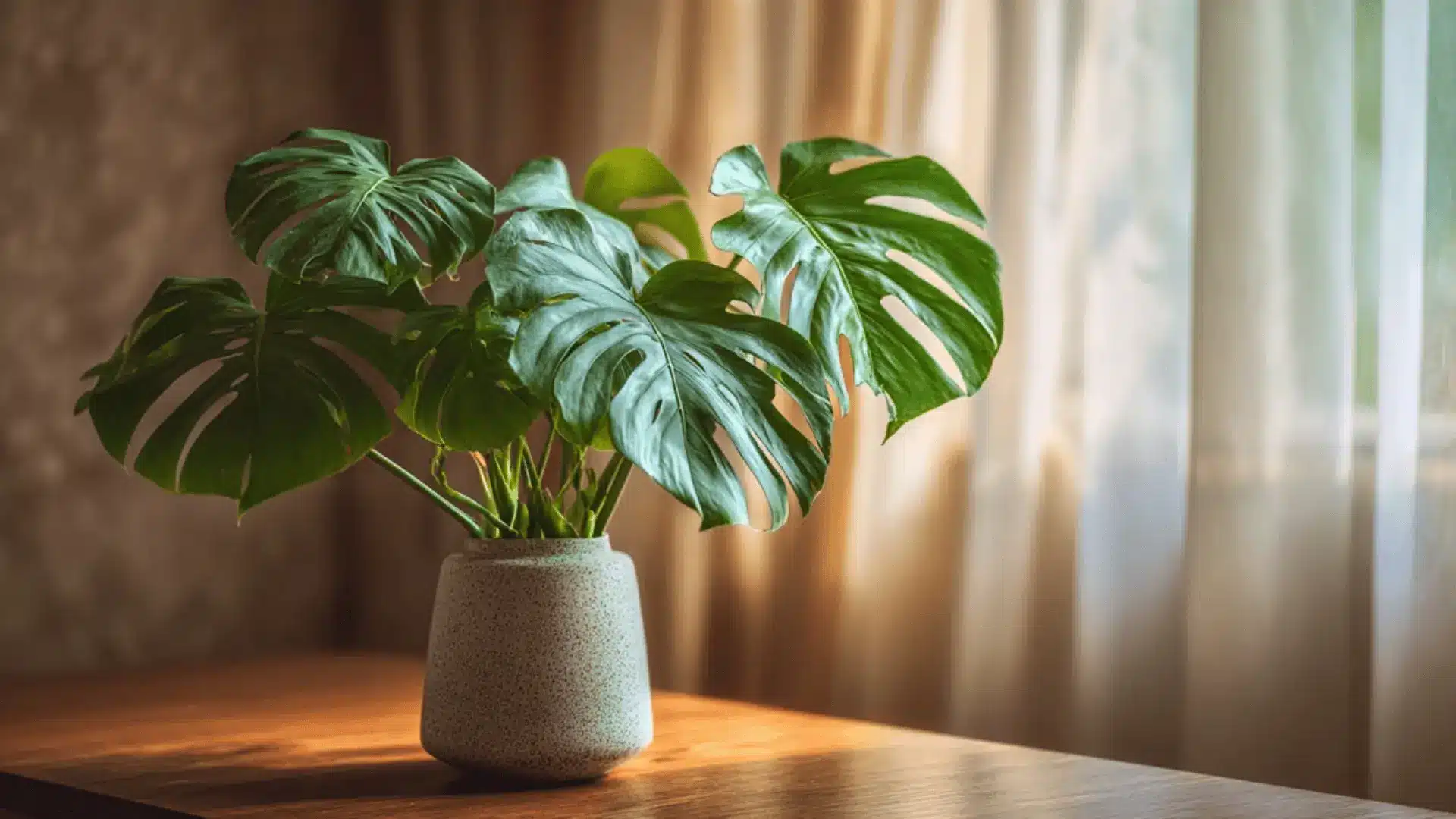
Soft light, slow growth, and those bold green leaves always bring a sense of calm into my space. Caring for these beautiful Monstera doesn’t have to feel confusing or stressful.
Following my Monstera care guide, I focus on simple habits that support healthy growth without overthinking.
Easy routines for watering, light placement, and daily maintenance create a strong foundation, while gentle care helps the leaves stay full, glossy, and lively.
When common issues pop up, practical tips make solving them feel easy instead of overwhelming. Small, steady habits over time keep my Monstera thriving, while plant care stays peaceful, balanced, and genuinely enjoyable.
What Is Monstera?
Monstera is a tropical plant known for its large, bold green leaves and natural holes, called fenestrations, that give it a playful, stylish look.
Native to warm rainforests, it grows naturally under tree canopies, which explains its love for soft light and cozy indoor spaces. The most loved types are Monstera Deliciosa, famous for its large split leaves, and Monstera Adansonii, known for its smaller, hole-filled patterns.
These plants make wonderful indoor companions because they’re hardy, forgiving, and easy to connect with through simple care routines.
Fun fact: those famous leaf holes actually help the plant withstand heavy rain and strong winds in the wild.
Monstera Care Guide: How To Take Care Of Your Plant
With a few steady habits and gentle routines, caring for my Monstera feels simple and calming. These steps help build a healthy rhythm that supports strong growth, shiny leaves, and a happy plant.
Each step fits naturally into daily life and keeps care stress-free.
1. Light: Give It the Right Glow
Bright, indirect light helps Monstera leaves grow large, healthy, and full of life. Soft sunlight near an east- or north-facing window works beautifully, and sheer curtains can protect the leaves from harsh rays.
Too much direct sun can burn the leaves, while low light may cause long, thin stems and smaller leaves. I rotate the plant every few weeks, which keeps growth even and balanced.
2. Water: When And How Often
Watering is easier when I follow the soil’s lead. When the top 2–3 inches feel dry, it’s time to water. During warmer months, this usually means about once a week, depending on light and airflow. In cooler seasons, less water is needed.
Always let any excess water drain fully from the pot, as standing water can harm roots. A loose schedule works, but checking the soil first keeps watering safe and simple.
3. Soil & Potting Mix: What’s Best
Healthy roots need air as much as water, so I make sure my Monstera has a well-draining mix of soil, perlite, and bark to keep the roots breathing and prevent soggy conditions. I avoid heavy garden soil since it holds too much moisture and can cause root problems.
Choosing a pot with drainage holes makes a big difference, letting excess water escape easily. Using good soil and proper drainage helps me give my Monstera a strong base for steady growth and long-term health.
4. Humidity & Temperature Needs
Monsteras feel happiest in warm, gentle air with a little extra moisture. A temperature range between 18–27°C helps leaves grow strong and flexible.
Dry air can slow growth and cause leaf tips to brown, so light misting or a pebble tray can boost moisture around the plant. Stable warmth and soft humidity create a calm environment that supports healthy leaves and steady growth.
5. Support, Pruning & Growth
As my Monstera grows, I like to give it a moss pole or stake for support, helping it climb upright and strong. I also do light pruning to keep its shape neat and encourage new leaves to form.
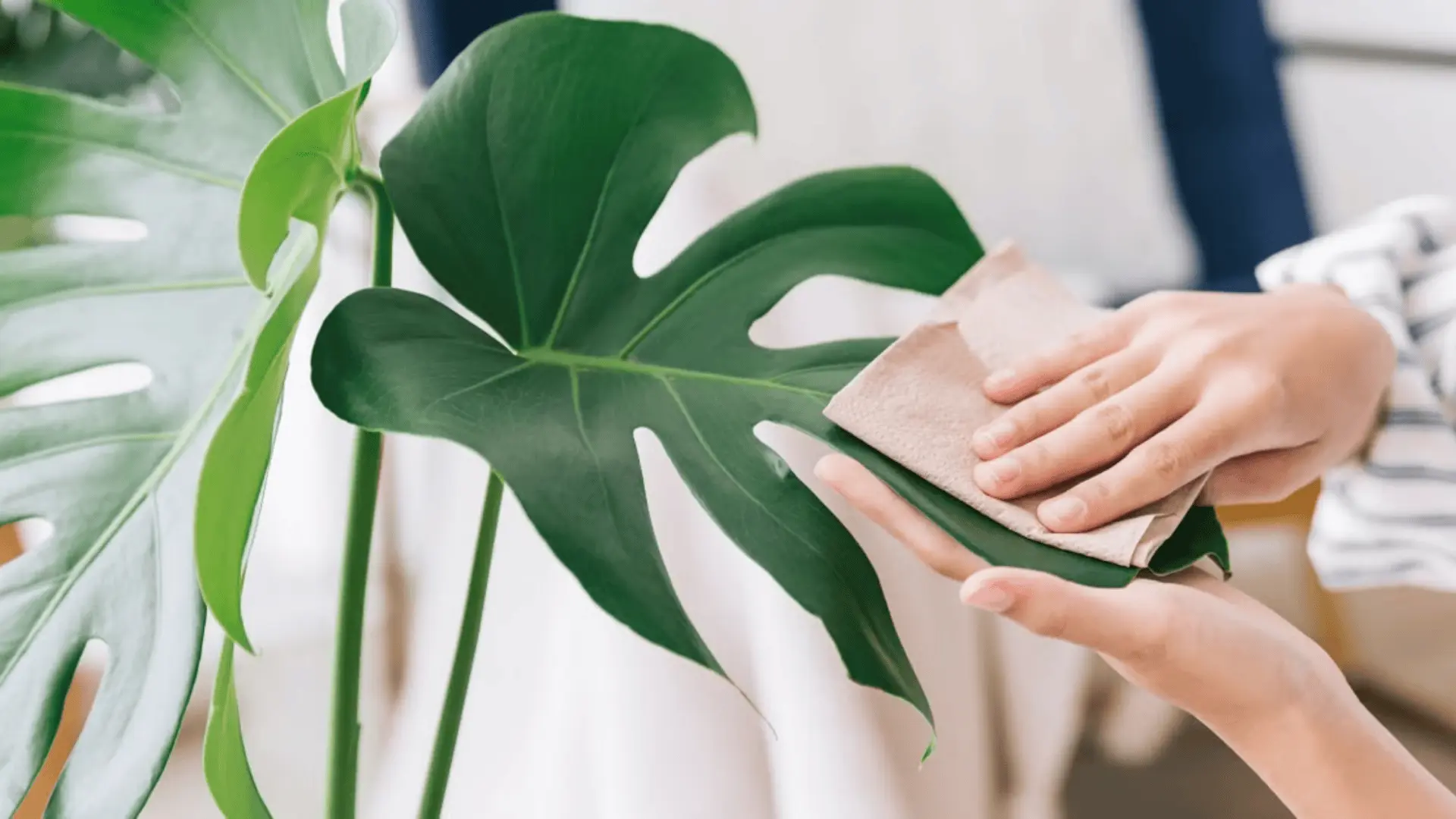
Dusting the leaves regularly is another small habit I follow; it helps them absorb more light and stay glossy. These little routines keep my Monstera looking fresh while supporting healthy, natural growth over time
Fertilizing: Feed The Leaves
Fertilizing helped my Monstera grow stronger, fuller, and healthier leaves when done gently and at the right time.
During spring and summer, when growth is active, a balanced liquid fertilizer every few weeks supports steady leaf development and brighter color. In cooler months, feeding can slow down or pause, since the plant naturally rests and grows less.
Light feeding works best; too much fertilizer can stress the roots and slow healthy growth. A soft, steady routine keeps the plant nourished, helping leaves stay large, glossy, and full of life without any extra stress.
Common Problems & Solutions
Plant issues happen, even with the best care. Small changes can make a big difference, and most problems are easy to fix with simple care.
| Problem | Cause | Solution |
|---|---|---|
| Yellow leaves | Too much water | Let the soil dry before watering again |
| Brown, crispy tips | Low humidity or light stress | Add moisture and adjust the light gently |
| Leggy stems | Not enough light | Move closer to bright, indirect light |
| Slow growth | Low light or low nutrients | Reposition the plant and feed lightly when needed |
Most plant problems are just small care signals, not big failures. With gentle attention and simple adjustments, Monsteras bounce back beautifully and keep growing strong and healthy.
Quick Tips For Happy Monstera
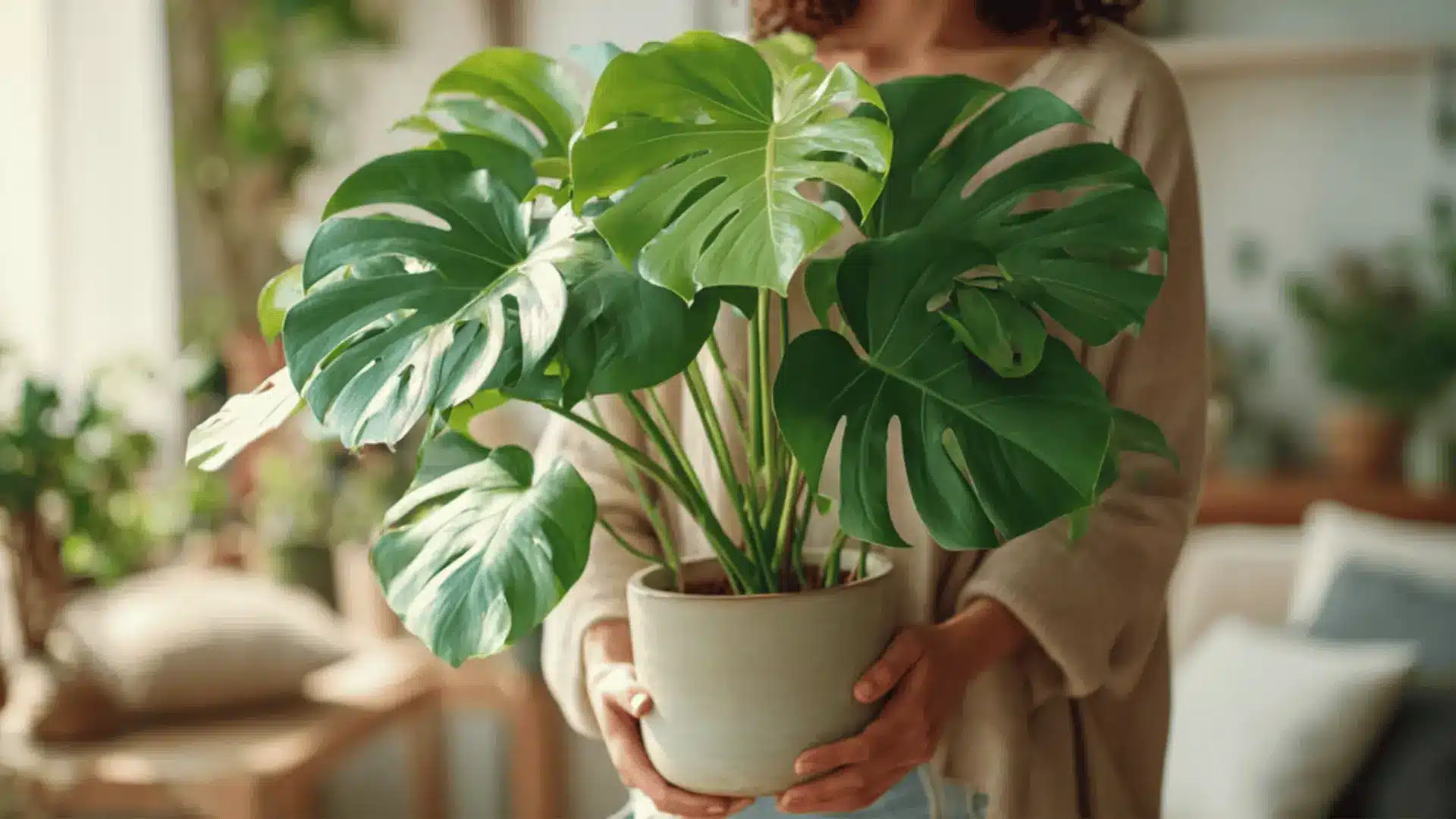
Sometimes plant care works best when it stays simple. Here are my quick tips to make daily care easy to remember and gentle to follow, even on busy days.
- Check Soil Moisture: Water only when the top 2-3 inches of soil are dry to avoid overwatering.
- Light Placement: Provide bright, filtered light and avoid direct sun to protect leaves.
- Maintain Humidity: Keep air moderately humid to encourage bigger, shinier leaves.
- Rotate Plant: Turn your Monstera every few weeks for even growth on all sides.
- Repot When Needed: Repot every 1-2 years to refresh soil and give roots more space.
Small habits create big results. With steady care and simple routines, Monstera stay strong, balanced, and full of beautiful, healthy leaves.
Wrap-Up
Caring for my Monstera feels peaceful rather than stressful. These plants are naturally forgiving, and they grow well even when care isn’t perfect.
With a calm routine and a little patience, strong roots, glossy leaves, and steady growth come naturally. Following a simple Monstera care guide makes daily plant care easier, more relaxed, and genuinely enjoyable.
Small habits, gentle attention, and consistent care go a long way in keeping my Monstera healthy and happy.
Every plant has its own story, and each growing journey looks a little different.
I love hearing how others care for their Monstera, so feel free to share tips, wins, or questions in the comments, learning together makes it even more fun.
Frequently Asked Questions
Do Monsteras Need Humidity to Grow Well?
Yes, humidity helps a lot. Moist air supports bigger leaves, smoother growth, and healthier leaf edges.
Why Do Monstera Leaves Have Holes?
Those natural holes help the plant withstand rain and wind in the wild and also allow more light to pass through the leaves.
Can A Monstera Live in Low Light?
It can survive, but growth will be slow. Bright, indirect light keeps leaves bigger, stronger, and healthier.