



Your toddler throwing up with no fever can leave you feeling confused and on edge. One moment, everything seems fine.
Next, you’re reaching for a towel and wondering what went wrong. No fever means no obvious culprit, and that’s exactly what makes it so unsettling.
Something is happening inside that little body, but it isn’t always showing its face. It could be something simple. It could be something that needs a closer look.
The truth is, the cause isn’t always what you’d expect. Before you dismiss it or spiral into worry, there are a few things you need to know. The answer might surprise you.
Why Do Toddlers Vomit without A Fever?
A toddler throwing up with no fever is more common than you might expect. Vomiting is your child’s body’s way of reacting to something it doesn’t like.
And that “something” doesn’t always come with a fever. It could be a food that didn’t sit right. It could be motion, a virus, reflux, or even mucus buildup from a cold.
Toddlers also have smaller, more sensitive stomachs than older kids. That makes them more likely to vomit in response to things that wouldn’t bother an adult at all. When you can’t find an obvious cause, that’s what can make it feel like unexplained vomiting in a child.
What Causes a Toddler to Throw UpWith No Fever?
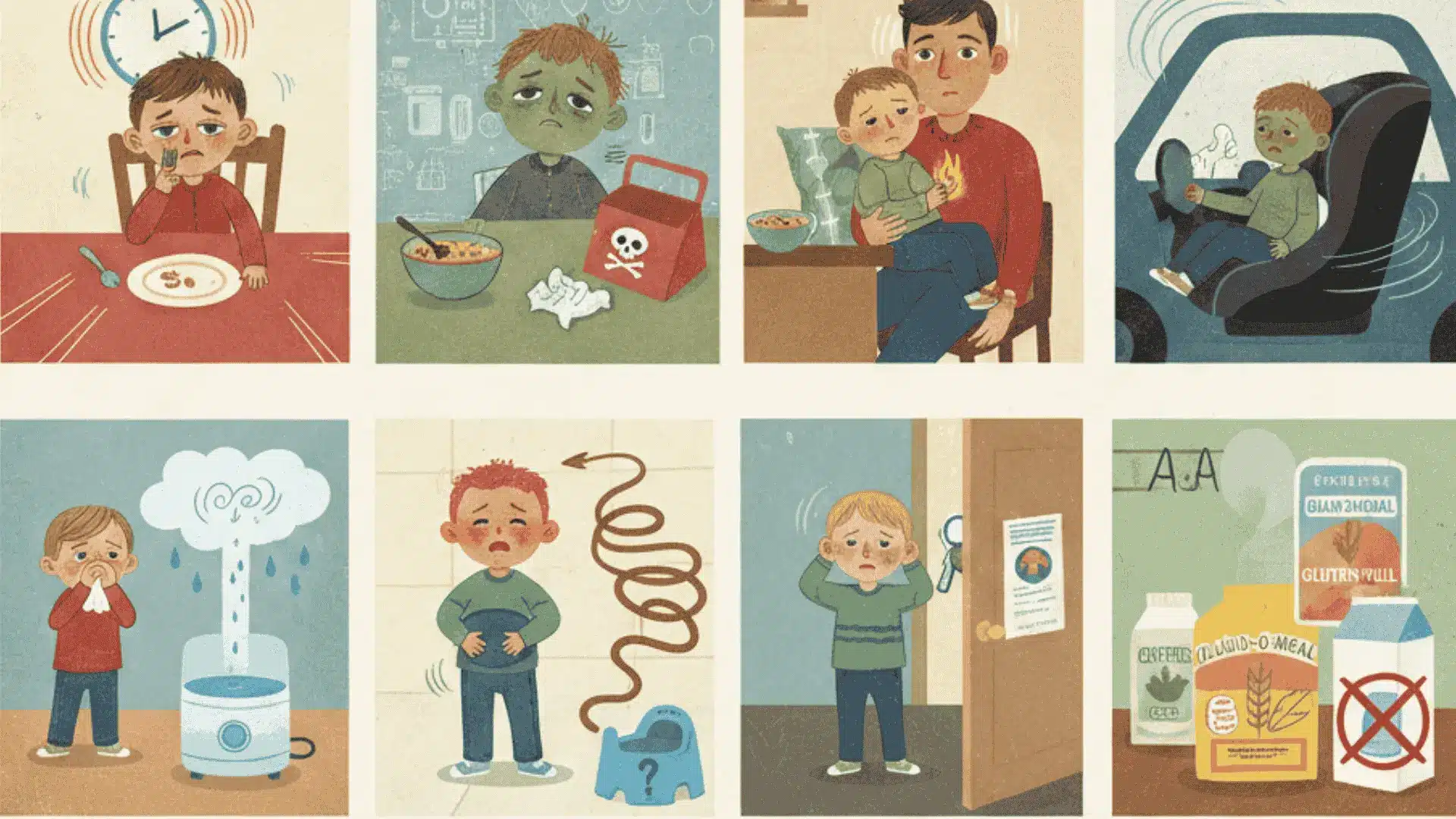
When your toddler is vomiting but has no fever, it can feel confusing. Here are the most common reasons it happens and what each one means for your child.
1. Food Upset or Eating Too Fast
Toddlers often eat quickly and don’t stop when they’re full. This can upset the stomach and lead to vomiting shortly after a meal.
If it happens often, try offering smaller portions. Slowing down mealtime can also make a big difference in how their little stomach handles food.
2. Food Poisoning
Food poisoning happens when a child eats something contaminated with bacteria or a virus. Vomiting usually starts within hours of eating the problem food.
You may also notice diarrhea, stomach cramps, or a loss of appetite. Most cases clear up on their own within 24 to 48 hours with rest and fluids.
3. Reflux or GERD
Some toddlers have acid reflux, where stomach acid moves back up into the throat. This can cause vomiting, gagging, or spitting up, often without any fever.
GERD is the more persistent form of reflux. If your child vomits frequently after meals and seems uncomfortable, it’s worth mentioning to their doctor.
4. Motion Sickness
Car rides, swings, or other movement can trigger vomiting in some toddlers. Their inner ear and brain are still developing, which makes them more sensitive to motion.
If your child tends to vomit during or after travel, motion sickness is likely the cause. Keeping them seated facing forward can sometimes help.
5. Postnasal Drip from a Cold or Allergies
When a toddler has a stuffy nose, mucus can drip down the back of their throat. This often leads to nausea and vomiting, especially in the morning or after coughing.
There may be no fever at all. A runny nose, cough, or congestion alongside the vomiting is usually a clear sign of this cause.
6. Constipation
It may surprise you, but constipation is a real cause of vomiting in toddlers. When stool backs up in the intestines, it can create pressure that triggers nausea and vomiting.
Signs to watch for include hard stools, straining, a swollen belly, or going several days without a bowel movement.
7. Ear Infection or UTI without Obvious Fever
Ear infections and urinary tract infections don’t always come with a fever, especially early on.
Both can cause stomach upset and vomiting in young children.
With an ear infection, your child may tug at their ear or seem off-balance. A UTI might present as fussiness, pain during urination, or urine that smells unusual.
8. Food Allergy or Intolerance
A reaction to a specific food can cause vomiting without any fever. Common triggers include dairy, eggs, wheat, and nuts. Unlike food poisoning, this tends to happen consistently after eating the same food.
If I notice a pattern, vomiting every time my child eats a certain food, that’s worth tracking and discussing with a doctor.
9. Swallowed Object or Accidental Ingestion
Toddlers explore the world with their mouths, which means small objects or harmful substances can be swallowed. This can cause sudden vomiting, gagging, or drooling.
If you suspect your child swallowed something, contact your pediatrician or poison control right away. Do not wait to see if it passes on its own.
10. Appendicitis
Appendicitis is less common in toddlers, but it does happen. It can start with vomiting, loss of appetite, and belly pain, sometimes without a fever in the early stages.
The pain often settles in the lower right side of the abdomen. If your child seems to be in significant pain, seek medical care promptly.
11. Intussusception
Intussusception is a condition where one part of the intestine slides into another, causing a blockage. It most often affects children under three.
Symptoms include sudden, severe belly pain, vomiting, and sometimes bloody or jelly-like stool. This is a medical emergency. If you notice these signs, go to the emergency room immediately.
12. Cyclic Vomiting Syndrome
Cyclic vomiting syndrome, or CVS, causes repeated episodes of intense vomiting that come and go in a pattern. Each episode can last hours or even days, then stop completely.
There is usually no fever and no clear cause. CVS can be difficult to diagnose, but a pediatrician can help rule out other conditions and develop a plan.
13. Viral Gastroenteritis (Stomach Bug)
A stomach bug is one of the most common reasons a toddler throws up with no fever. Viruses like norovirus can cause vomiting without raising body temperature, especially in the early hours.
My child may also have diarrhea, low energy, or no appetite. Most cases clear up within a day or two with rest and small sips of fluid.
14. Head Injury or Concussion
Vomiting after a fall or bump to the head is a warning sign that should not be ignored. A concussion can cause nausea and vomiting even without a fever or visible injury.
If my toddler hit their head and then started vomiting, I would call the doctor right away. Other signs to watch for include unusual drowsiness, unsteady walking, or confusion.
15. Stress, Anxiety, or Emotional Upset
Toddlers feel big emotions, and their bodies often react physically. Nervousness, a big change at home, or an upsetting experience can trigger nausea and vomiting in young children.
There will be no fever and no physical illness to explain it. If vomiting seems tied to specific situations or events, emotional stress may be the cause worth looking into.
16. Medication Side Effects
Some common medications can upset a toddler’s stomach and cause vomiting. Antibiotics, ibuprofen, and iron supplements are frequent triggers. This is more likely to happen when the medication is taken on an empty stomach.
If vomiting started shortly after a new medication, that connection is worth mentioning to the prescribing doctor before stopping the medicine on my own.
Vomiting without a fever can be unsettling, but in many cases, the cause is mild and short-lived. Paying attention to patterns, hydration, and warning signs can help you decide when simple home care is enough and when it’s time to call your pediatrician.
How to Tell if It Is a Stomach Bug Even without Fever
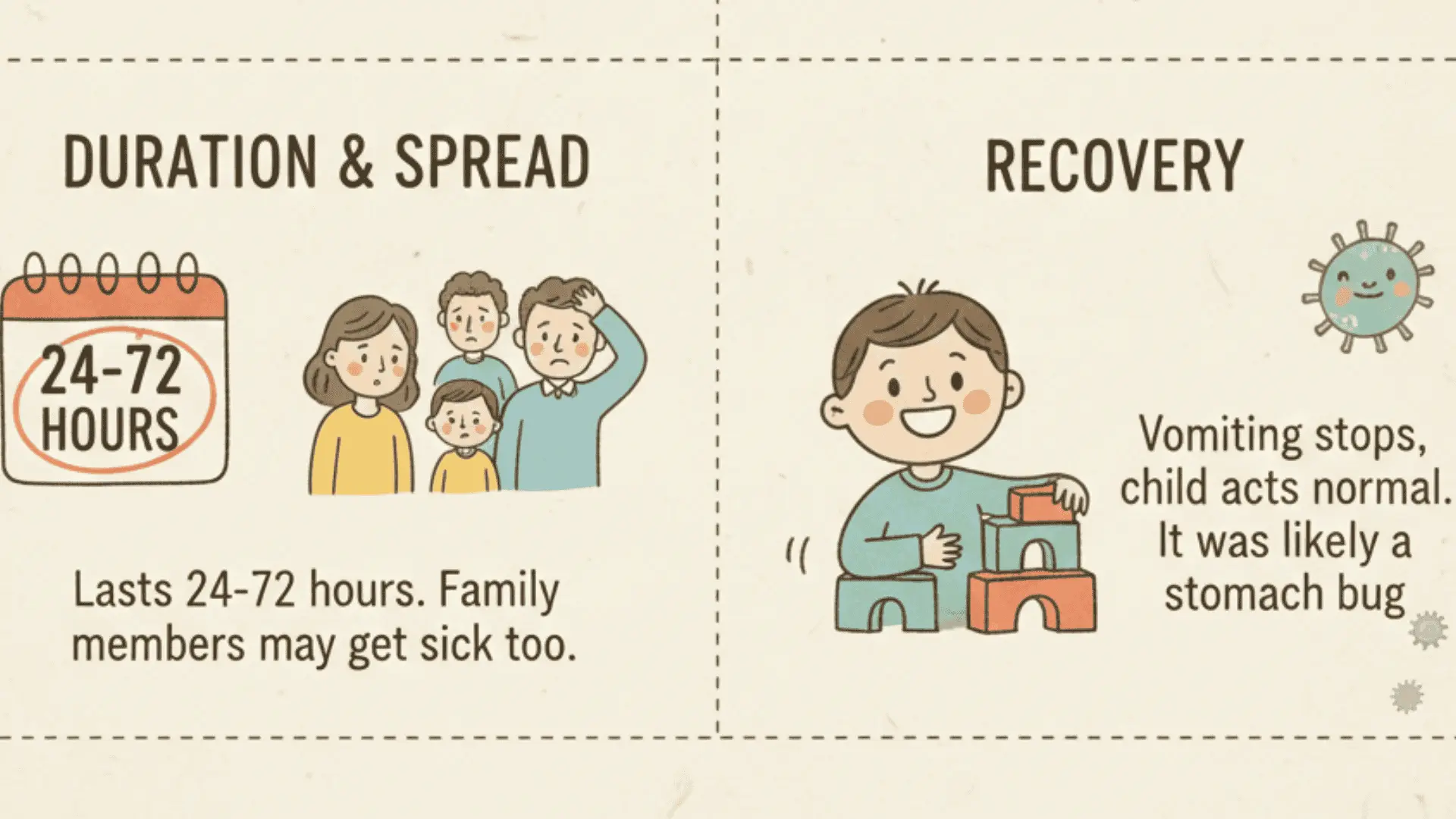
A stomach bug does not always come with a fever, which can make it harder for you to recognize. You might notice the vomiting starts suddenly. Your child may also have diarrhea, a low appetite, or seem more tired than usual.
Most stomach bugs run their course within 24 to 72 hours. If other kids or family members start getting sick around the same time, that’s another strong clue. Stomach bugs spread quickly among people who share the same space.
If the vomiting stops on its own and your child begins acting more like their usual self, a stomach bug was likely the cause.
What to Do When Your Toddler Is Throwing Up
When your toddler is throwing up with no fever, staying calm and taking the right steps at home can make a real difference in how they recover.
- Wait before offering fluids: Give their stomach a short break of 15 to 20 minutes after vomiting before you offer anything to drink.
- Start with small sips of oral rehydration solution (ORS): ORS replaces lost fluids and salts better than water or juice, and it’s usually gentler on an upset stomach.
- Avoid juice, milk, and soda: These can make nausea worse and may be harder for an irritated stomach to handle right now.
- Offer bland foods when hunger returns: Start with plain crackers, toast, or rice—simple, gentle foods that are easier to keep down.
- Track the pattern: Note how often vomiting happens, what your child ate, and any other symptoms you notice. This info can really help your pediatrician.
- Skip anti-nausea medicine without advice: Don’t give medication for vomiting unless your child’s doctor has specifically recommended it.
How Long Does Vomiting without Fever Usually Last?
How long it lasts depends on what’s causing it. A stomach bug usually runs its course in 24 to 72 hours. Food poisoning often clears up within a day. Motion sickness typically stops once the movement stops.
If the cause is something like reflux or a food intolerance, vomiting can keep coming back until you address the root issue. When vomiting is unexplained, it helps to track how long each episode lasts and how often it recurs.
Vomiting that lasts longer than three days, gets worse over time, or keeps returning in a regular pattern is worth a call to your pediatrician.
Signs of Dehydration in Toddlers
When a toddler is throwing up with no fever, dehydration is one of the biggest concerns. Knowing what to look for helps me act before it gets serious.
- Dry Mouth and Lips: If the child’s mouth feels dry or their lips look cracked, they may not be getting enough fluids.
- No Tears when Crying: A dehydrated toddler may cry without producing tears, which is an easy sign to spot.
- Less Urination than Usual: Fewer wet diapers or trips to the bathroom over several hours is a clear sign of fluid loss.
- Sunken Eyes: Eyes that look slightly hollow or sunken can indicate that dehydration has already set in and needs attention.
- Unusual Drowsiness or Low Energy: If the child is harder to wake or far less active than usual, dehydration may be the cause.
- Dark Yellow Urine: Urine that is darker than usual indicates the body is holding onto fluids and needs more hydration soon.
When Should You Call the Doctor or Go to the ER
Most cases of a toddler throwing up with no fever are not emergencies. But some signs tell if it is time to stop waiting and get professional help right away.
Call Your Doctor If:
- Vomiting lasts more than 24 hours
- The toddler is not keeping any fluids down
- There are signs of mild dehydration
- Vomiting keeps coming back over several days
- A new medication was recently started
- Vomiting happens repeatedly after the same food
Go to the ER Immediately If:
- There is blood or dark green bile in the vomit
- Vomiting happened after a fall or head injury
- The belly looks swollen or feels very hard
- The toddler is difficult to wake up or unresponsive
- There is sudden, severe belly pain that will not stop
- A swallowed harmful object or substance is suspected
What Your Pediatrician May Ask
When you bring your toddler in for vomiting without a fever, the doctor will likely ask several questions. Here’s what you can expect:
- Vomit color: Green or yellow bile, or any blood in the vomit, is a sign that needs prompt attention.
- Hydration status: You’ll be asked about urine output, dry mouth, lack of tears, or sunken eyes—common clues of dehydration.
- Belly pain pattern: Where the pain is, when it happens, and whether it comes and goes can help narrow down the cause.
- Headaches or recent falls: Since head injuries can sometimes lead to vomiting, the doctor will want to rule out a recent bump or fall.
- New foods, travel, or new medicines: Recent changes like these can trigger vomiting and can help the doctor identify the cause faster.
- Prior episodes that look similar: Repeated episodes that start and stop in a pattern may point toward conditions like cyclic vomiting syndrome.
The Bottom Line
Dealing with a toddler throwing up with no fever is exhausting, and honestly, it can feel like you’re solving a puzzle with missing pieces. You’re not overreacting. Your concern is valid.
Here’s the good news: most cases resolve on their own with rest, hydration, and a little patience. But you know your child best.
And if something feels off, trust that gut feeling. Watch for warning signs, keep fluids going, and don’t hesitate to call your pediatrician when things don’t improve.
You’ve got this. Parenting is messy, unpredictable, and sometimes downright scary. But staying informed puts you one step ahead.
Got concerns about your toddler’s health? Drop your questions in the comments or share this with a parent who needs it today.
Frequently Asked Questions
What Do You Give a Toddler After Vomiting?
Start with small sips of oral rehydration solution. Once they keep fluids down, offer bland foods like plain crackers, toast, or rice.
What Is the Instant Remedy for Vomiting in Kids?
Let the stomach rest for 15 to 20 minutes, then offer small sips of ORS or water. Avoid eating until the vomiting slows.
Is a Banana Good for Kids After Vomiting?
Yes. Bananas are easy to digest, gentle on the stomach, and help replace lost potassium. They are a good first food choice after vomiting settles.