

Your baby just turned 6 months old.
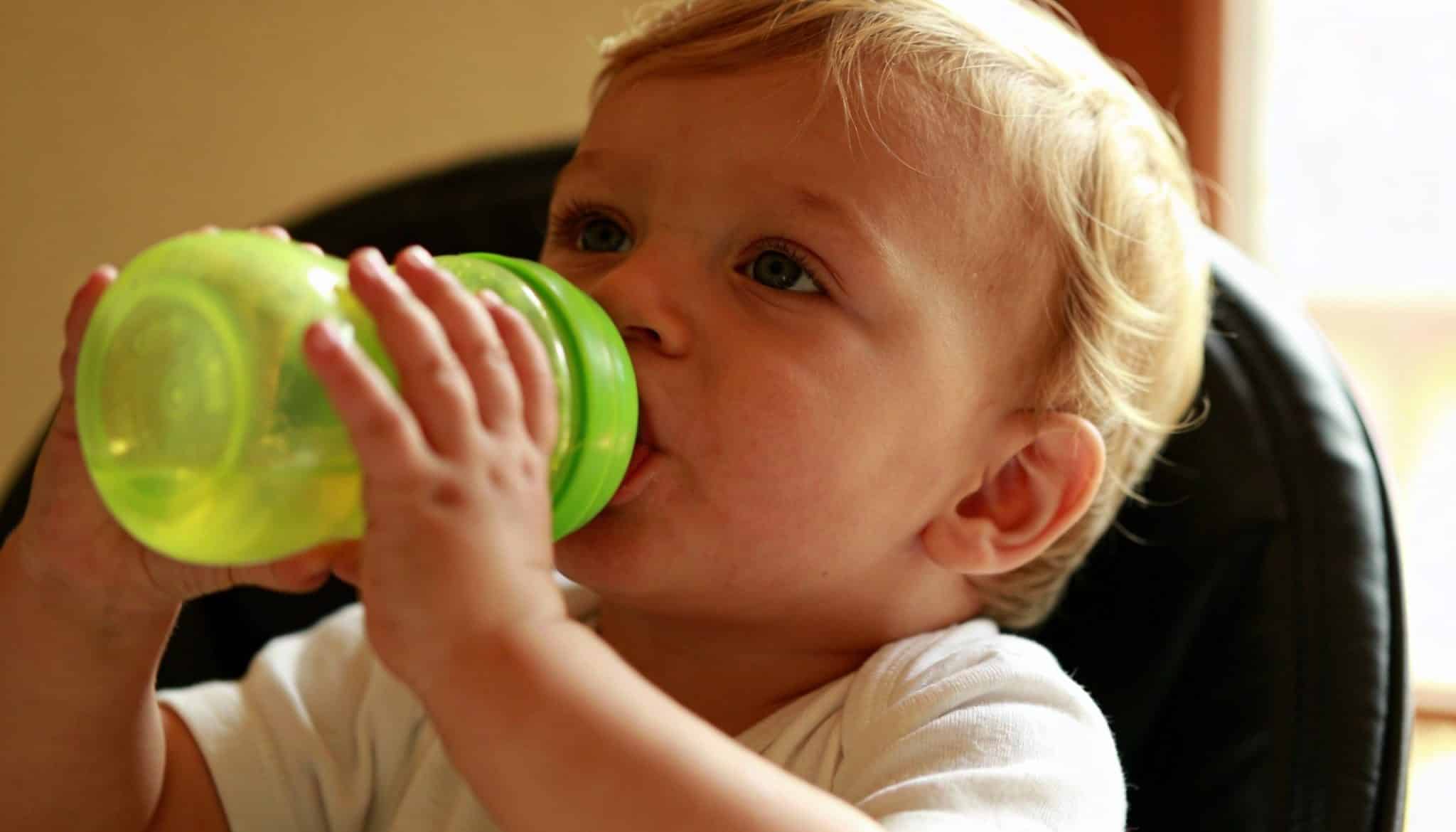
Now everyone’s telling you it’s time for a sippy cup. But you’re wondering if your little one is really ready.
Should you start now or wait? What type of cup should you buy? And how do you teach a baby who’s only known bottles to drink from something completely different?
This blog covers when to introduce sippy cup, which cup to choose, and how to make the switch smooth for both of you.
Why Experts Recommend Introducing a Sippy Cup Around 6 Months
The 6-month mark is perfect for your baby’s development. Most babies can sit up with support and hold objects at this age.
Their digestive systems can handle small amounts of water alongside milk or formula.
Pediatricians like this timing because it matches when babies start solid foods.
Starting at 6 months prevents bottle dependency and helps babies wean from bottles more smoothly.
Babies at this age are naturally curious and willing to try new things. Wait too long, and you might face resistance from a toddler attached to their bottle.
Signs Your Baby Is Ready for a Sippy Cup
- Your baby can sit up without much support: This milestone shows they have the core strength needed to drink safely from a cup.
- They’re grabbing at your cup or glass during mealtimes: This curiosity signals they’re interested in drinking as the big kids do.
- Your little one can hold toys and bring them to their mouth: these motor skills translate directly to managing a sippy cup.
- They’ve started eating solid foods: Babies ready for purees are typically ready to sip water from a cup, too.
- Your baby shows interest when you drink: they watch intently or reach for your beverage, showing they understand what cups are for.
- They can coordinate a sucking and swallowing motion: if they’re nursing or bottle-feeding well, they have the oral skills for a sippy cup.
- Your baby is around 6 months old or older: Age isn’t everything, but it’s a good baseline when combined with these other signs.
What Type of Cup Should You Start With?
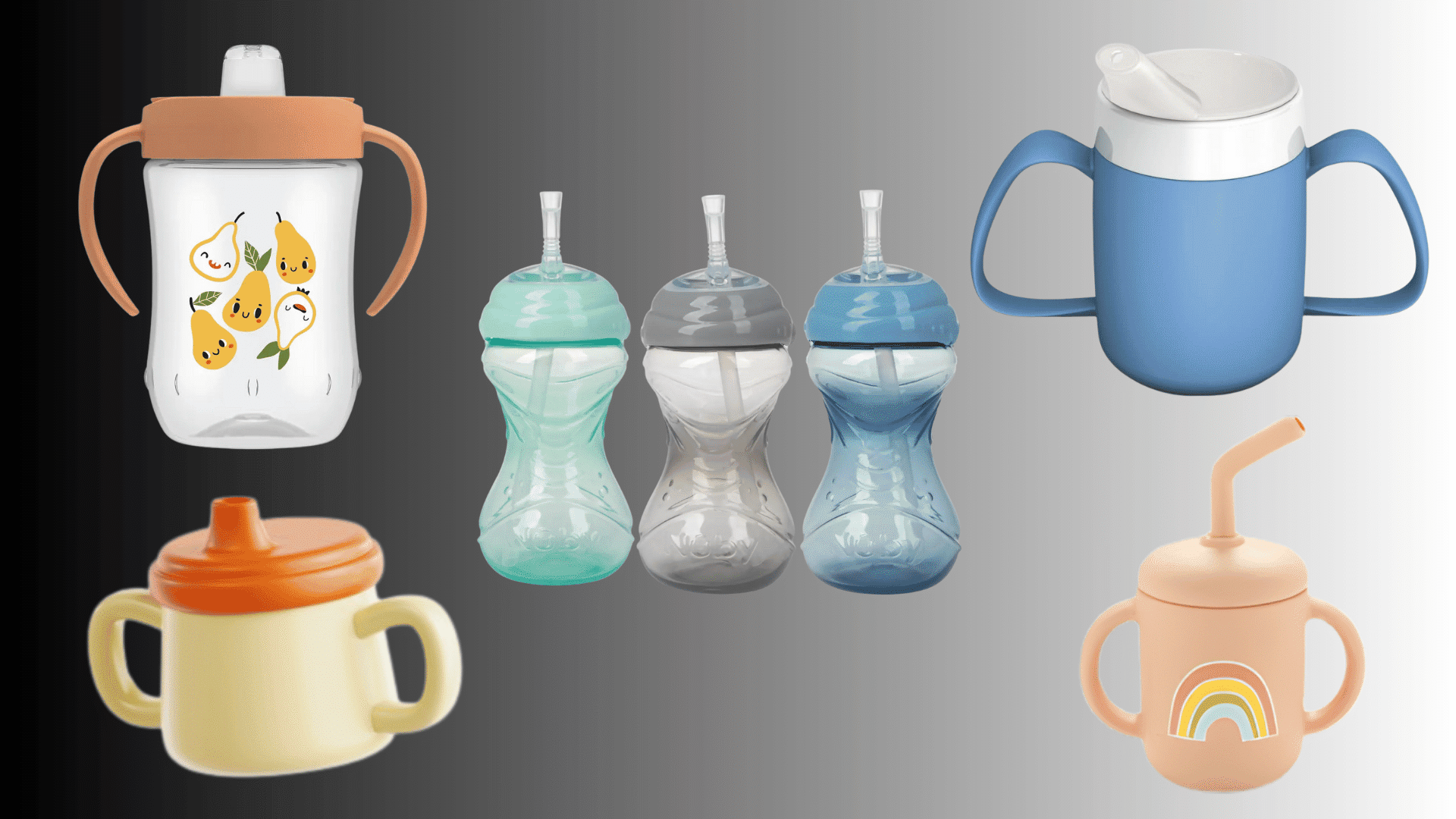
The right first cup makes learning easier. Look for soft spouts, easy-grip handles, and lightweight designs that work for beginners.
1. Soft-Spout Cups
The gentle silicone spout feels familiar to babies used to bottles or nursing. It makes the transition less intimidating.
These spouts are easy on tender gums and require minimal effort to drink from.
My recommendation:NUK Learner Cup
2. Cups with Two Handles
Two handles give your baby a better grip and more control while learning. They can use both hands to steady the cup, which builds confidence.
Look for ergonomic handles that fit comfortably in small palms.
3. Small 4-6 Ounce Size
Bigger cups are too heavy for tiny hands. A lightweight option helps your baby succeed from day one.
The smaller size also means less mess when spills happen during the learning process.
4. Spill-Proof but Not Sealed
Your baby needs to get liquid with reasonable effort. Cups requiring too much suction can frustrate them and discourage practice.
A gentle valve system works best for beginners.
5. Weighted or Anti-Tip Design
These stay upright when your baby drops them. Less mess means more practice opportunities. The weighted base also makes it easier for your baby to pick the cup back up.
6. No Straws Yet
Straws require more coordination and a different sucking technique. Save those for when your baby masters the basic sippy cup around 9-12 months.
Straw cups are a great next step after soft spouts.
7. Bright Colors or Fun Designs
An exciting cup captures your baby’s attention and makes them want to use it. Characters or patterns can turn drinking into a fun activity rather than a chore.
My recommendation: Sophie La Girafe Baby Non-Spill Cup
What Should You Put in a Sippy Cup?
| Liquid | Recommendation | Why |
|---|---|---|
| Water | Best first choice | Safe, healthy, won’t cause tooth decay. Start with 1-2 ounces. |
| Breast milk or formula | Good for hesitant babies | Familiar taste makes transition easier. Clean thoroughly after use. |
| Juice | Avoid for 12 months | Contains sugar that harms developing teeth when sipped all day. |
| Milk at bedtime | Never | Sugars sit on teeth overnight and cause cavities. Only at mealtimes. |
| Sugary drinks | Skip completely | Teaches a preference for sweet drinks and creates unhealthy habits. |
| Temperature | Room temperature first | Cold drinks might discourage the baby. Introduce cooler drinks gradually. |
How to Introduce a Sippy Cup (Step-by-Step)
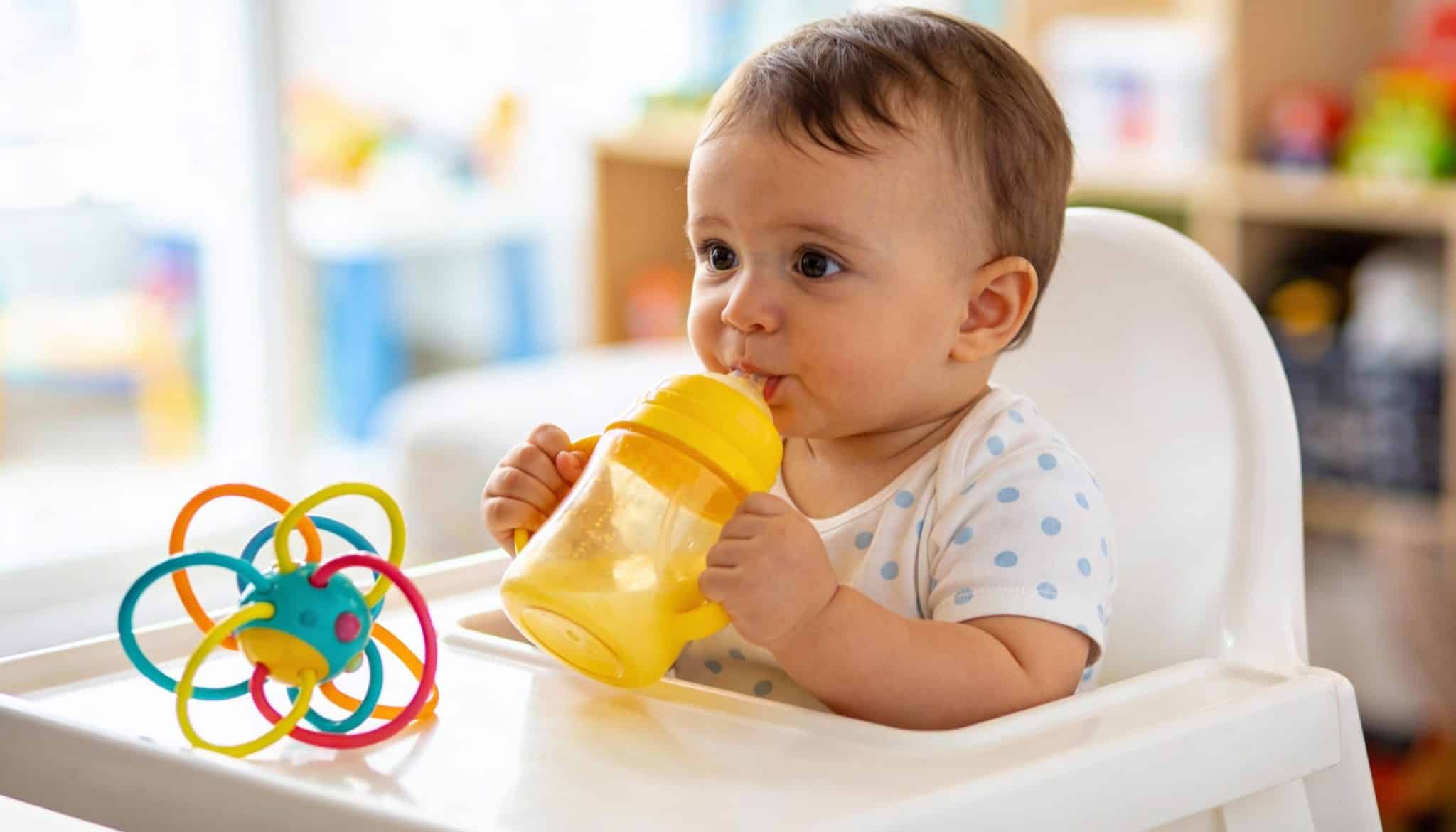
This guide provides a straightforward, step-by-step approach on when to introduce sippy cup to your baby to their first sippy cup, from the initial demonstration to the development of daily practice habits that ensure success.
Step 1: Start during a relaxed mealtime
Offer the sippy cup when your baby is calm and happy, not hungry or fussy.
Step 2: Demonstrate how it works
Take a sip yourself or pretend to drink. Babies learn by watching, so make it look fun.
Step 3: Let them explore the cup
Hand it to your baby and let them play with it. They might shake it, chew on it, or drop it. This helps them get comfortable.
Step 4: Guide it to their mouth gently
Tip the cup slightly so a small amount reaches their lips. Don’t force it, just give them a taste.
Step 5: Practice once or twice daily
Start with one or two short sessions per day. Gradually increase as your baby gets more comfortable over several weeks.
Step 6: Stay consistent and patient
Offer the cup regularly and praise their efforts. Some babies take weeks to warm up, and that’s completely normal.
Are Sippy Cups Bad for Teeth or Speech?
Sippy cups aren’t bad when used correctly. Problems happen when babies use them too long or all day.
Sipping sugary liquids throughout the day causes tooth decay. Use water only in sippy cups and save milk for mealtimes.
Using sippy cups past age 2 can delay speech sounds. The sucking motion differs from normal drinking.
Extended use causes overbites by pushing front teeth forward. Dentists recommend switching to open cups by 15-18 months.
Use sippy cups only at mealtimes as a transition tool. Switch to open cups by 12-18 months and fill between-meal cups with plain water only.
Special Situations Parents Ask About
Answers to common questions about when to introduce sippy cups for premature babies, breastfed babies, twins, children with special needs, and other unique situations parents face.
1. My Baby Was Born Premature. When should I start?
Wait until your baby reaches their adjusted age of 6 months, not their birth age.
Premature babies need extra time to develop the necessary skills. Consult your pediatrician for personalized timing.
2. Can I Use a Sippy Cup for a Breastfed Baby Who Refuses Bottles?
Yes, sippy cups can be a great alternative. Many breastfed babies skip bottles entirely and go straight to cups around 6 months.
Start with breast milk in the cup to make it more appealing.
3. My Baby Has Reflux. Should I Wait Longer?
Not necessarily. A sippy cup might actually help since babies sit more upright while drinking.
Talk to your pediatrician, but most babies with reflux can start at the normal 6-month mark.
4. We’re Starting Daycare. Should I Introduce a Sippy Cup Earlier?
If your baby is under 6 months, stick with bottles at daycare. Wait until they’re developmentally ready.
Starting too early can frustrate both you and your baby.
5. My Baby Has Low Muscle Tone. Will Sippy Cups Work?
Babies with low muscle tone might need occupational therapy guidance.
Special cups with different spout types or grips can help. Your therapist can recommend the best options.
6. Can Twins Share Sippy Cups?
Never share cups between children, even twins. Each baby needs their own to prevent spreading germs and illnesses.
Label them clearly to avoid mix-ups.
7. My Older Baby Never Used a Sippy Cup. Is It Too Late?
It’s never too late. Older babies and toddlers can go straight to open cups or straw cups. Skip sippy cups entirely if your child is past 18 months.
Common Problems and How to Solve Them
- Your baby refuses to hold the cup: Place their hands on the handles and gently guide it to their mouth. Practice daily with hand-over-hand assistance.
- They chew the spout instead of drinking: Let them chew, then gently tip the cup so liquid flows. This is normal exploration behavior.
- Your baby throws the cup on the floor: Pick it up calmly and hand it back. Consider a weighted cup or sippy cup strap.
- They won’t drink anything from it: try breast milk or formula instead of water. Experiment with different cup styles and spout types.
- Your baby prefers the bottle: Start replacing one bottle feeding with a sippy cup at lunch. Gradually replace more bottles over the weeks.
- The cup leaks everywhere: Check that all parts are assembled correctly and the valve is positioned properly. Try a different brand if needed.
Conclusion
Introducing a sippy cup doesn’t have to be complicated. Start around 6 months when your baby shows readiness signs.
Choose a soft-spout cup with handles and offer it at mealtimes with patience.
Every baby learns at their own pace. Use sippy cups as a transition tool and switch to open cups by 15-18 months. Keep use limited to mealtimes and fill between-meal cups with plain water only.
Ready to start? Pick up a beginner-friendly sippy cup and introduce it at your baby’s next meal!